
Business
Netherlands Embassy provides entrepreneurs awareness program – Kabul

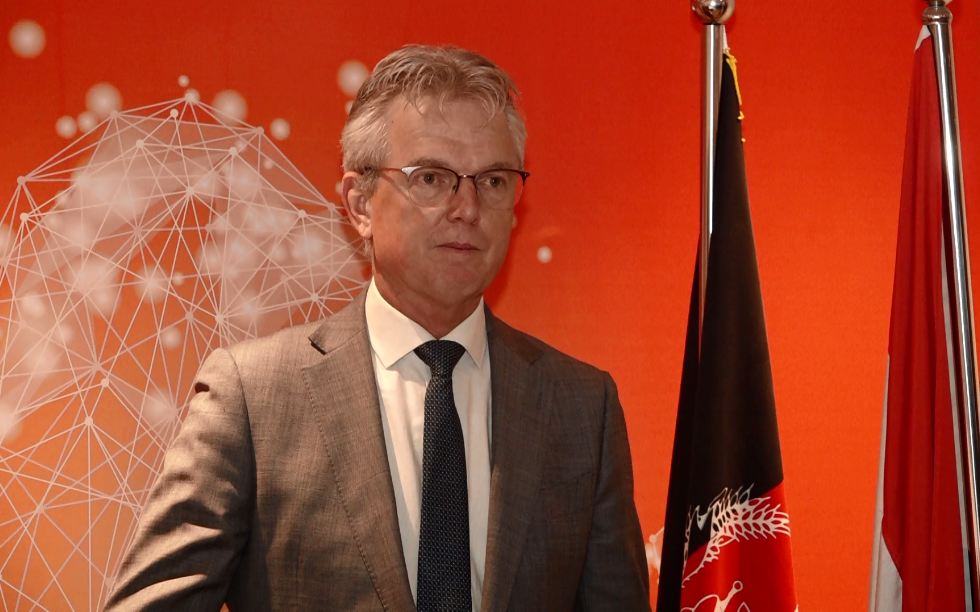
 The Dutch ambassador said that the “Orange Business Network” program will continue on a monthly basis for a year-long to technically support and motivate the young entrepreneurs.
The Minister of Economy also supports the program and said that he would meet the entrepreneurs’ problems in person.
The Orange Business Network will train 15 chosen entrepreneurs in different areas of commerce.
Ernst Norman, the Dutch ambassador, said the Dutch Embassy head-hunted the participants from different fields – energy, agriculture, and many more.
According to him, the participants will be trained in taxpaying policies, business proposals, and promoting products in the market.
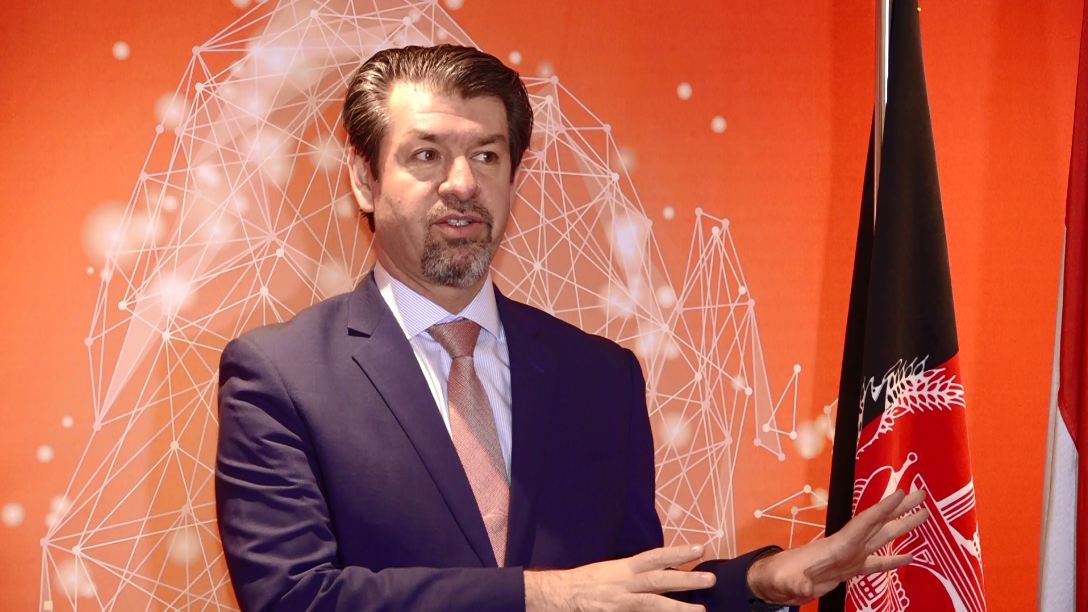 Mustafa Mastoor, the Minister of Economy, said, “I don’t know how big or small these entrepreneurs are, but I know if they are small or medium, the government will take the responsibility to help.”
Some of the participants of the Orange Business Network view the program effective in motivating the young entrepreneurs.
Shabir Ahmad, one of the participants said, “The Dutch Embassy supports the new entrepreneurs who come to the market to present their products in a standard way to the national and international market.”
It is worth mentioning that this marks the first time for the Dutch Embassy in Kabul to supports the young entrepreneurs.


Business
Afghanistan, Belarus discuss expanding industrial and trade cooperation
Particular attention was given to companies producing tractors, industrial machinery, and equipment and vehicles used in the mining sector.
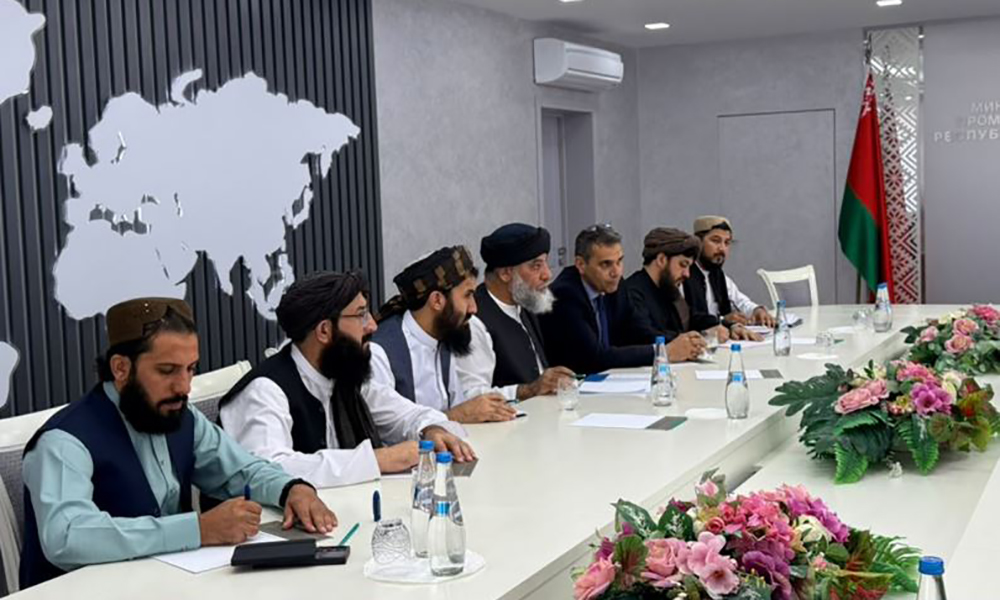
Afghanistan’s Minister of Industry and Commerce, Nooruddin Azizi, met with Belarus’ Minister of Industry during an official visit to the country.
The two sides discussed the establishment of manufacturing plants in Afghanistan, the regular organization of the Afghanistan-Belarus Business Forum, and follow-up on issues raised through the countries’ economic commission.
Belarusian officials expressed appreciation for Afghanistan’s participation in the country’s international industrial exhibition and voiced interest in expanding the presence of Belarusian manufacturing companies in Afghanistan.
Particular attention was given to companies producing tractors, industrial machinery, and equipment and vehicles used in the mining sector.
The second International Industrial Exhibition of Belarus is being held with the participation of around 500 companies from different countries. The exhibition has also attracted visitors from European and Asian countries.
Business
Afghanistan, Tajikistan seek stronger trade and investment ties
The two sides discussed increasing trade exchanges, establishing direct links between traders and investors, and organizing joint economic programs.
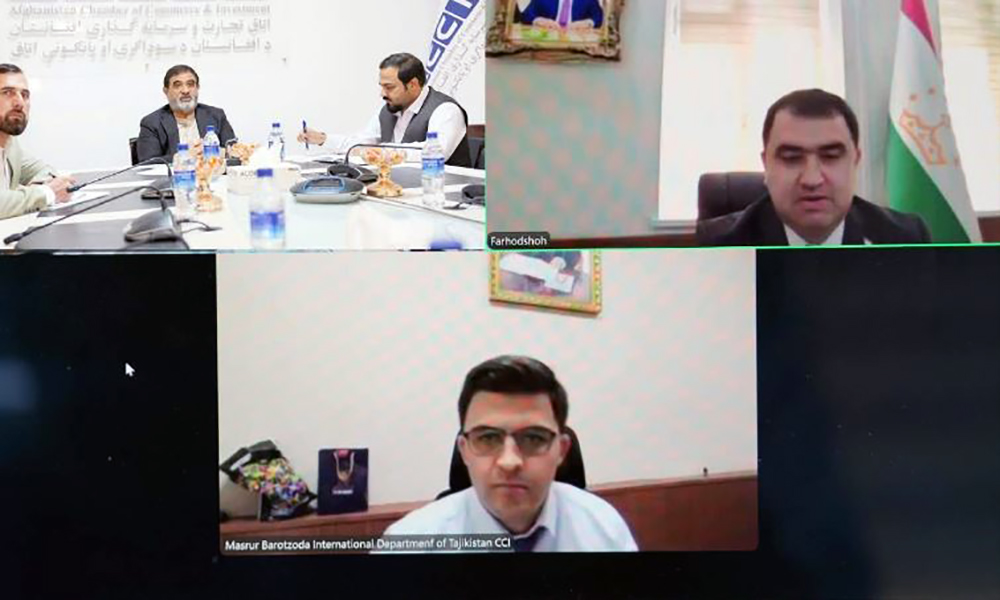
The heads of the chambers of commerce and industry of Afghanistan and Tajikistan have agreed to strengthen bilateral trade, promote investment and expand cooperation between the private sectors of the two countries.
Sayed Karim Hashemi, head of the Afghanistan Chamber of Commerce and Investment (ACCI), held an online meeting with Farhad Shah Rahman Alizoda, head of the Chamber of Commerce and Industry of Tajikistan, to discuss ways to expand economic ties.
The two sides discussed increasing trade exchanges, establishing direct links between traders and investors, and organizing joint economic programs.
Hashemi invited Tajik traders and investors to participate in the fifth Imam Abu Hanifa International Exhibition in Kabul.
Alizoda, meanwhile, invited an Afghan business delegation to attend a major trade and industrial exhibition in Dushanbe.
The two sides also stressed the importance of exchanging business delegations and developing long-term cooperation between the private sectors of Afghanistan and Tajikistan.
Business
Kazakhstan grain shipments to Afghanistan rise over 4-fold
Of the total, 7.2 million tons were transported for export, while 2.1 million tons were supplied to the domestic market.
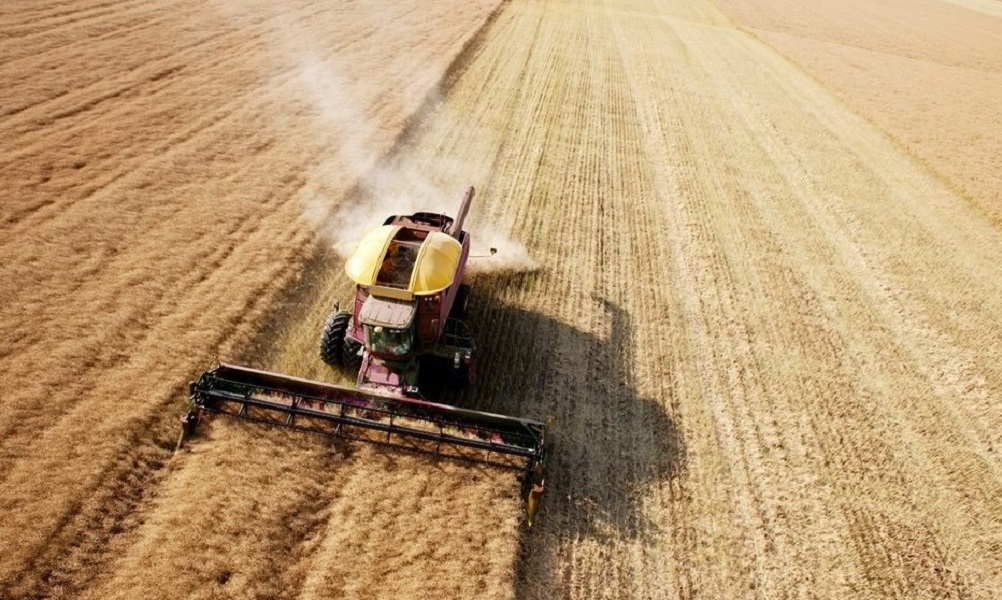
Grain shipments from Kazakhstan to Afghanistan increased 4.4 times in the first eight months of the year, reaching 655,000 tons, according to Kazakhstan’s Transport Vice Minister Zhanibek Taizhanov.
Speaking at a government meeting, Taizhanov said Kazakhstan transported 9.3 million tons of grain by rail during the period, a 13% increase compared with the same period in 2025.
Of the total, 7.2 million tons were transported for export, while 2.1 million tons were supplied to the domestic market.
Taizhanov said grain shipments to Central Asia increased by 37%, while shipments to China rose by 34%. Grain exports through Russian ports also increased by 9%.
Meanwhile, combined fodder exports rose by 38% to 2.6 million tons.
Earlier, Kazakhstan’s Vice Minister of Agriculture Azat Sultanov said the country plans to commission 15 additional vegetable storage facilities by the end of 2026, with a combined capacity of 129,000 tons.


Four members of one family killed in Helmand in Pakistan airstrike

UNAMA acting chief visits Islam Qala border to assess support for returnees

Rashid Khan, Azmatullah Omarzai maintain top spots in ICC ODI rankings

Trump: Unlike Afghanistan, US took all equipment from Iraq

Afghanistan, Belarus discuss expanding industrial and trade cooperation

Saudi energy group signs major Afghanistan deals covering gas exploration and pipeline plans

Iranian clubs to face Gulf opponents at neutral venues in Asian Champions League Elite

Khalilzad: Afghanistan ready to attract major investment

Ariana Television Network secures exclusive rights to Afghanistan’s 2026/27 cricket series

El Niño likely to intensify, may become strongest ever recorded, WMO says

Tahawol: Improvement in Afghanistan-China relations discussed

Saar: Expanding ties with regional and global countries discussed

Tahawol: Absence of Afghanistan’s envoy at UNGA discussed

Saar: Assessment of war between Afghanistan and US discussed

Saar: Afghanistan’s image at UNGA
-

 Sport4 days ago
Afghan bodybuilder Ali Bilal finishes runner-up at Mr Olympia for third straight year
-

 Latest News4 days ago
Afghanistan says 28 killed, 32 captured in Nuristan operation
-
 World4 days ago
Trump rejects Iranian proposal to open Hormuz and end fighting
-

 Sport5 days ago
Afghanistan Champions League: Omar Zawak Herat beat Toofan Herat 1-0
-
 Sport3 days ago
Afghanistan vs India Asian Games quarter-final abandoned without a toss
-
 Latest News4 days ago
UNDP, UN Women launch financing initiative for Afghan women entrepreneurs
-
 Latest News4 days ago
Germany reports 488 Afghans for possible deportation, 267 have no criminal convictions
-
 Regional4 days ago
Aimal Wali Khan calls Dera Ismail Khan attack a ‘state failure’