
Latest News
Taliban state they ‘are not ready’ for the Istanbul Conference


The Taliban’s spokesman Mohammad Naeem said on Monday the group is not ready to participate at the Istanbul Conference scheduled to start on April 16.
Naeem told Ariana News that if a later date is set, the group will hold discussions on whether to attend and will then “share the details of our decisions.”
Meanwhile, the Afghan government and the High Council for National Reconciliation (HCNR) are working to finalize the list of Turkey conference participants that will represent the Republic.
Sources said that 19 people – including politicians, government officials, and representatives of Afghan women – are expected to attend the conference.
According to the source, Chairman of the HCNR Abdullah Abdullah, Former President Hamid Karzai, Former Mujahidin leader Abdul Rasul Sayyaf, Marshal Abdul Rashid Dostum, Foreign Minister Mohammad Haneef Atmar, Jamiat-e-Islami Leader Salahuddin Rabbani, Former Vice President Mohammad Karim Khalili, Former Vice President Yunus Qanuni, Former Balkh Governor Atta Mohammad Noor, NSA Hamdullah Mohib, Sayeed Hamid Gailani, President’s Advisor for Political and Security Affairs Mohammad Mohaqiq, Chief Negotiator Masoom Stanekzai, Salam Rahimi, Deputy HCNR Hajji Din Mohammad, Habiba Sarabi, Fawzia Koofi, Fatima Gailani, and Hizb-e-Islami Leader Gulbuddin Hekmatyar are expected to attend the Istanbul Conference from the Islamic Republic side.
The HCNR, however, said this list is not finalized, adding “changes could be made in the list. Most of the participants are leading politicians.”
This comes as the US, UN, Turkey, and Qatar have handed over guiding principles for the Istanbul Summit to the Afghan government and the Taliban.
A document seen by Ariana News shows that there are nine guiding principles that could help the negotiating parties reach an agreement on some key points ahead of the Istanbul conference.
The principles include:
1- A permanent and comprehensive ceasefire is needed for the country
2- Conducting joint work for the restoration of peace without mutual accusation
3- Political partnership under Islamic principles
4- Formation of an inclusive and accountable participatory government
5- Future political arrangements need to reflect the diversity of Afghan society by way of providing equal rights for all citizens and without discrimination
6- Protecting and supporting human rights in Afghanistan
7- Future government will implement a balanced socio-economic development program to cope with poverty in Afghanistan
8- Afghanistan will maintain friendly relations with its neighbors, the region, and the international community
9- The two parties have to engage in peaceful negotiations in order to implement these principles







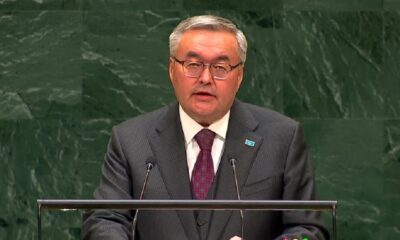




Kazakhstan’s Foreign Minister Mukhtar Tileuberdi has called for pragmatic and coordinated international engagement with Afghanistan, saying the country’s long-term stability is closely linked to the security and sustainable development of Central Asia.
Speaking during the general debate of the 81st session of the United Nations General Assembly in New York on Friday, Tileuberdi said humanitarian assistance to Afghanistan remains essential but alone cannot break the cycle of poverty, displacement and dependency.
He said Kazakhstan supports a “pragmatic, coordinated and step-by-step” approach to international engagement with Afghanistan, with the United Nations playing a central role.
Tileuberdi also said Kazakhstan is working with the UN to operationalize the United Nations Regional Centre for the Sustainable Development Goals for Central Asia and Afghanistan in Almaty.
He said the success of the centre should be measured by the results and assistance it delivers to the region.


Saar: Concerns over Pakistan’s political crisis discussed

Afghanistan Champions League: Omar Zawak Herat beat Toofan Herat 1-0

Blast in Pakistan’s Dera Ismail Khan kills 11, injures 30

Ariana Afghan Airlines increases Kabul-Delhi cargo flights

Khalilzad questions Pakistan’s commitment to Afghan welfare

Saudi energy group signs major Afghanistan deals covering gas exploration and pipeline plans

Trump floats idea of renaming Atlantic or Pacific Ocean

US hits Egyptian bank branches with Iran sanctions as war marks six months

Nepal flood rescue mission enters critical phase as thousands remain missing

Iranian clubs to face Gulf opponents at neutral venues in Asian Champions League Elite
Saar: Concerns over Pakistan’s political crisis discussed

Exclusive interview with Abdul Latif Mansoor, Minister of MRRD

Tawsia: Overview of Afghanistan’s iron mines

Tahawol: Discussion on fresh Pakistani airstrikes on Afghanistan

Saar: Calls for international support for Afghanistan discussed
-

 World5 days ago
CNN, MS NOW and Politico sue Trump, challenging White House ban
-

 Latest News3 days ago
Ariana Afghan Airlines ranks seventh among 45 Central Asian airlines
-

 Latest News4 days ago
UN reiterates call for respect for international law after Kunar airstrikes
-

 Regional3 days ago
US and Iran hold first talks since June after Trump’s ‘annihilation’ threat
-

 Latest News3 days ago
Silk Road highway in Wakhan corridor now reaches the China border
-

 Latest News4 days ago
Afghan Official: Pakistan’s airstrikes will not go unanswered
-
 Sport4 days ago
Afghan boxing referee heads to China for international festival
-
 Regional4 days ago
G7 foreign ministers call on Iran to stop arming Houthis