
Latest News
Khalili labels attacks on Hazaras an act of genocide

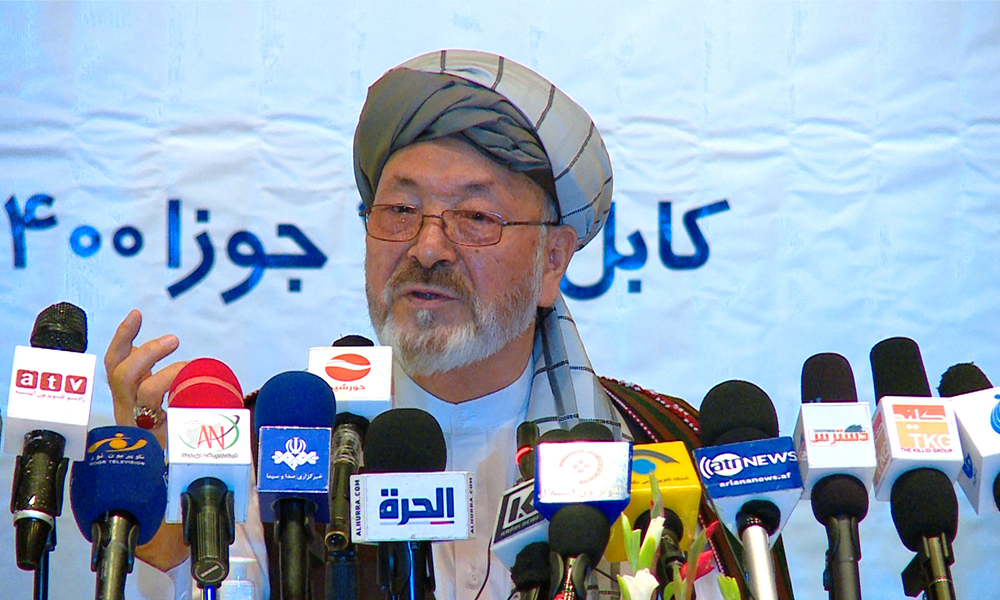
Mohammad Karim Khalili, leader of Hezb-e-Wahdat-e-Islami Afghanistan party, on Sunday warned insurgents against continuing attacks targeting western parts of Kabul and “systematic massacres of Hazaras” and said that the perpetrators of these “tragedies” would force the Hazara people to rise up and defend themselves.
Khalili, who was also second vice president under former president Hamid Karzai, said that if Hazaras are forced to defend themselves, they would be able to defend themselves in other ways.
Speaking at a press conference in Kabul, Khalili said that in recent months, the Hazara people have been killed in “catastrophic” ways, in the name of “ethnic and tribal” targeted killings or by “suicide bombings.”
He said based on the interpretation of jurists and scientific discussions, any type of ethnic-specific killings is a clear example of genocide.
Khalili said the Hazara people have been consistently targeted over the past 20 years.
“When these people stand against this kind of movement and shout the voice of justice, it does not mean confronting other ethnic groups,” Khalili said.
Khalili also pointed out that over the past few years, all the people of Afghanistan have been victims of violence and war and all the people have shared in these sacrifices. However, he added that there is no justification for this and the goal is to annihilate a nation.
Khalili explained that during this period, the Hazara people were however specifically targeted because of their ethnicity, on roads, at mosques, schools, training centers, wedding halls and sports clubs, “and were covered in dust and blood”.
Khalili asked what the interpretation of this act was – if not genocide?
“We have two types of casualties, one on the battlefield, in which we have casualties from all the tribes, and the people take their martyrs and bury them in honor, and we stand by the rest of the people; but once again in another way – they kill and want to de-identify the people, and according to their lawyers, de-identification is a type of genocide,” Khalili added.
He pointed out that other Hazara people had raised their voices just because of the recent incident and called on all the people of the country to unite with this nation.
“The boredom of the people of Hazara is over and it is not against any people or side, but against criminal gangs.
We wish all the tribes to comply with the sufferings of the Hazara people and we ask the people to help the people in this indictment,” Khalili said.
“We demand the Pashtun brothers, Uzbeks, Tajiks and other ethnic group’s lawyers support the Hazara people in this matter,” he said.
“Criminals are trying to strip this nation (Hazara) of their identity by any means.”
Khalili also called on the Independent Human Rights Commission and international organizations to examine recent incidents and attacks that happened in the Hazara and Shiite communities.
On the other hand, the leader of Hezb-e-Wahdat-e-Islami Afghanistan criticized the government for failing to provide security to Hazaras. He said that the leaders of the government have a responsibility to ensure the safety and security of the people in accordance with the constitution.
Khalili added that the government cannot distance itself by accusing criminals.
“According to the constitution, the leadership of the government is responsible for ensuring the security of the people, the government cannot shower itself lightly here, and the government must clarify who is the perpetrator and who is behind these incidents,” Khalili said.
Khalili also said that the president must help the people.
On the other hand, the Khalili stated that if the goal of massacring Hazara people was to destroy this group – it would not be possible.
“If the aim of this action is to eliminate the Hazara people, it is not possible at all.The restlessness of a Hazara people does not mean fear,” Khalili said.
His comments come after at least six bombings took place in western Kabul in the past two weeks, which is home to mostly Hazaras. The blasts mainly targeted passenger cars and killed at least 28 people and injured nearly 30 others.
Talking about peace in Afghanistan Khalili called for an “agreed peace” settlement.
“We will achieve lasting peace when all the people, parties and stakeholders are partners and you find yourself in the peace process. Imported peace is not effective at all,” Khalili said.
Khalili also called on all parties including the Taliban to grab the opportunity for peace and urged parties to “not let this opportunity be wasted.”
“I also say to the Taliban that we want such a peace that all parties see themselves in.”
“The roots of the conflict are resolved when compromise is reached, not through political compromise, and the peace process will succeed when it becomes a process of reconciliation,” he said.












Kazakhstan’s Foreign Minister Mukhtar Tileuberdi has called for pragmatic and coordinated international engagement with Afghanistan, saying the country’s long-term stability is closely linked to the security and sustainable development of Central Asia.
Speaking during the general debate of the 81st session of the United Nations General Assembly in New York on Friday, Tileuberdi said humanitarian assistance to Afghanistan remains essential but alone cannot break the cycle of poverty, displacement and dependency.
He said Kazakhstan supports a “pragmatic, coordinated and step-by-step” approach to international engagement with Afghanistan, with the United Nations playing a central role.
Tileuberdi also said Kazakhstan is working with the UN to operationalize the United Nations Regional Centre for the Sustainable Development Goals for Central Asia and Afghanistan in Almaty.
He said the success of the centre should be measured by the results and assistance it delivers to the region.


Abu Muslim Farah defeat Khurasan Faryab 2-0 in ACL season six

Saar: Concerns over Pakistan’s political crisis discussed

Afghanistan Champions League: Omar Zawak Herat beat Toofan Herat 1-0

Blast in Pakistan’s Dera Ismail Khan kills 11, injures 30

Ariana Afghan Airlines increases Kabul-Delhi cargo flights

Saudi energy group signs major Afghanistan deals covering gas exploration and pipeline plans

Trump floats idea of renaming Atlantic or Pacific Ocean

US hits Egyptian bank branches with Iran sanctions as war marks six months

Nepal flood rescue mission enters critical phase as thousands remain missing

Iranian clubs to face Gulf opponents at neutral venues in Asian Champions League Elite
Saar: Concerns over Pakistan’s political crisis discussed

Exclusive interview with Abdul Latif Mansoor, Minister of MRRD

Tawsia: Overview of Afghanistan’s iron mines

Tahawol: Discussion on fresh Pakistani airstrikes on Afghanistan

Saar: Calls for international support for Afghanistan discussed
-

 World5 days ago
CNN, MS NOW and Politico sue Trump, challenging White House ban
-

 Latest News4 days ago
Ariana Afghan Airlines ranks seventh among 45 Central Asian airlines
-

 Latest News5 days ago
UN reiterates call for respect for international law after Kunar airstrikes
-

 Regional4 days ago
US and Iran hold first talks since June after Trump’s ‘annihilation’ threat
-

 Latest News4 days ago
Silk Road highway in Wakhan corridor now reaches the China border
-

 Regional3 days ago
Iran airlines cancel flights as US sanctions hit
-

 Latest News5 days ago
Afghan Official: Pakistan’s airstrikes will not go unanswered
-
 Regional5 days ago
G7 foreign ministers call on Iran to stop arming Houthis