
Science & Technology
Lick it up: Japan professor creates ‘tele-taste’ TV screen

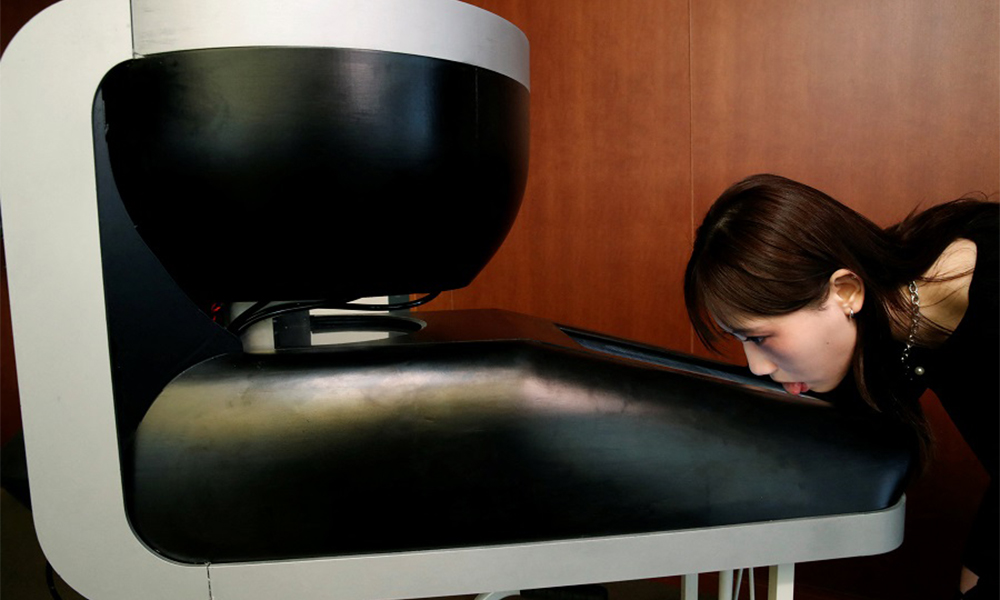
A Japanese professor has developed a prototype lickable TV screen that can imitate food flavours, another step towards creating a multi-sensory viewing experience.
The device, called Taste the TV (TTTV), uses a carousel of 10 flavour canisters that spray in combination to create the taste of a particular food. The flavour sample then rolls on hygienic film over a flat TV screen for the viewer to try, Reuters reported.
In the COVID-19 era, this kind of technology can enhance the way people connect and interact with the outside world, said Meiji University professor Homei Miyashita.
“The goal is to make it possible for people to have the experience of something like eating at a restaurant on the other side of the world, even while staying at home,” he said.
Miyashita works with a team of about 30 students that has produced a variety of flavour-related devices, including a fork that makes food taste richer. He said he built the TTTV prototype himself over the past year and that a commercial version would cost about 100,000 yen ($875) to make, Reuters reported.
Potential applications include distance learning for sommeliers and cooks, and tasting games and quizzes, he said.
Miyashita has also been in talks with companies about using his spray technology for applications like a device that can apply a pizza or chocolate taste to a slice of toasted bread.
Meiji student Yuki Hou, 22, demonstrated TTTV for reporters, telling the screen she wanted to taste sweet chocolate. After a few tries, an automated voice repeated the order and flavour jets spritzed a sample onto a plastic sheet.
“It’s kind of like milk chocolate,” she said. “It’s sweet like a chocolate sauce.”


Science & Technology
Afghanistan adds more than 2,000 telecom towers, ministry says
Nearly 10,000 telecommunications towers are currently operational across the country.
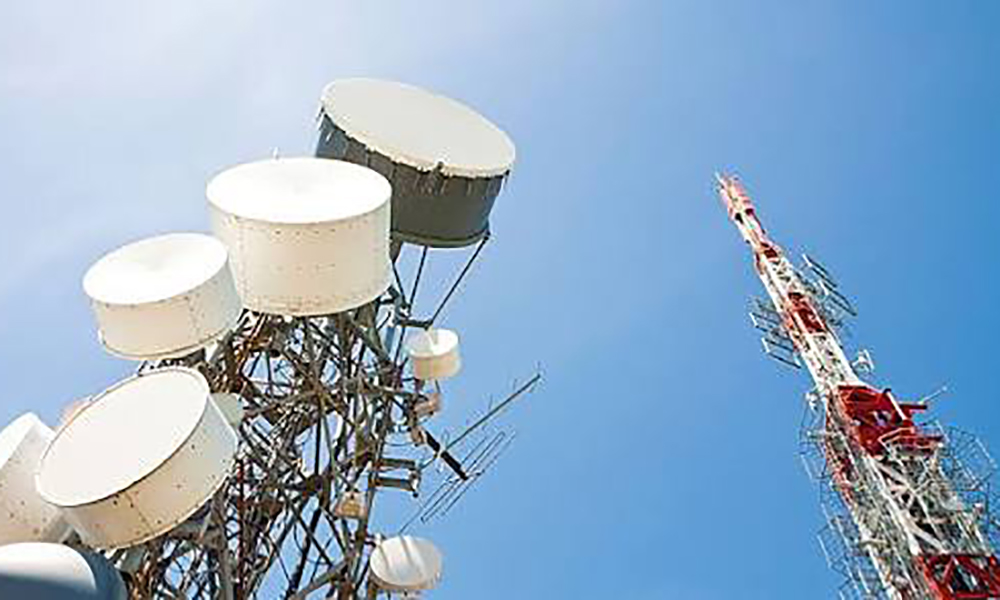
Afghanistan’s Ministry of Communications and Information Technology says more than 2,000 telecommunications towers have been installed and activated nationwide since the Islamic Emirate returned to power, as part of efforts to expand mobile and internet coverage, particularly in remote and underserved areas.
Ministry officials said the Afghanistan Telecom Regulatory Authority (ATRA) constructed 450 of the new towers, while telecommunications companies installed the remainder in cooperation with the authority.
The ministry said expanding network coverage, improving service quality and ensuring access to mobile and internet services in remote communities remain key priorities.
It added that nearly 10,000 telecommunications towers are currently operational across the country.
The number of telecommunications subscribers has also risen from 22 million to 32 million over the past five years, according to ministry figures.
Despite the reported expansion, residents in some remote areas continue to face difficulties accessing reliable telecommunications services and social media platforms, underscoring the need for further investment in the sector.
Reliable telecommunications and internet access are essential for education, business, economic development and public communication, particularly in communities with limited digital infrastructure.
The ministry said it would continue working to expand network coverage and improve the quality of telecommunications services across Afghanistan.
Science & Technology
Astronomers observe a huge puffy star merge with smaller companion
This cosmic connection occurred about 2.5 million light-years from Earth on the outskirts of the Andromeda Galaxy, one of our Milky Way’s closest galactic neighbors. A light-year is the distance light travels in a year, 5.9 trillion miles (9.5 trillion km).
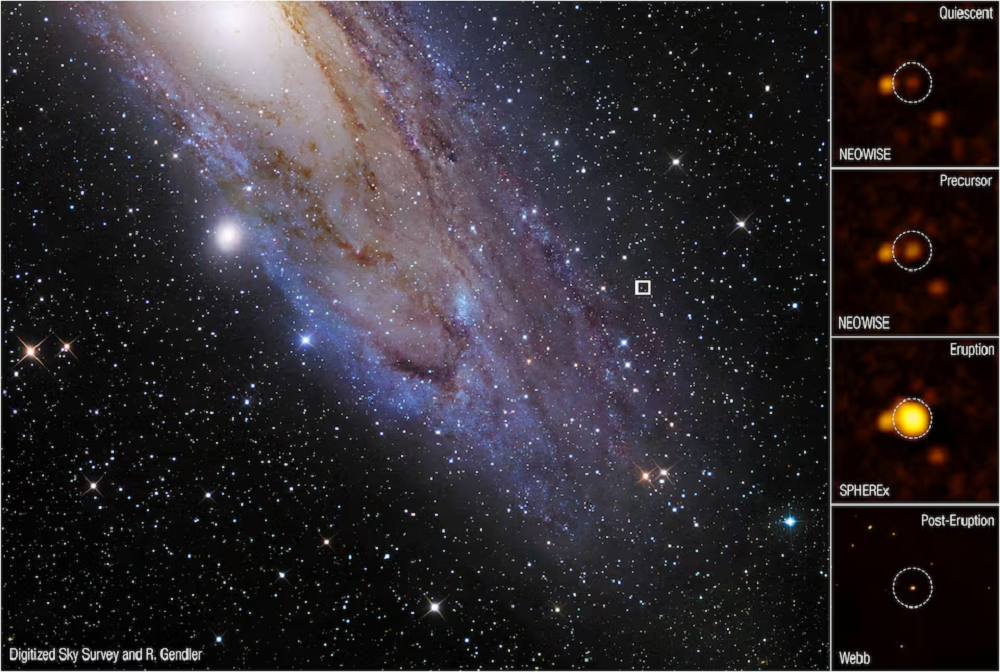
Astronomers have observed a large dying star, seven times more massive and 18,000 times brighter than the sun, engulfing a smaller companion in a stellar merger unlike any other previously witnessed.
The merger involved a pair of stars that were bound gravitationally — known as a binary system — in which the larger one greatly expanded in its death throes into what is called a puffy supergiant and enveloped the smaller one, with the two stars then combining into one, Reuters reported.
This cosmic connection occurred about 2.5 million light-years from Earth on the outskirts of the Andromeda Galaxy, one of our Milky Way’s closest galactic neighbors. A light-year is the distance light travels in a year, 5.9 trillion miles (9.5 trillion km).
The researchers identified the impending engulfment nearly three years before it occurred and then watched as the merger unfolded, step by step.
“Giant stars engulfing their companion stars have been theorized for many decades, and understanding the outcomes of this process has important implications for explaining a wide range of systems that we see today in the universe,” said Viraj Karambelkar, a postdoctoral researcher and NASA Hubble Fellow at Columbia University in New York, lead author of the research published in the journal Nature
“The system presented in this study provides the first direct observations of this process happening — the first time a giant star engulfing its companion was caught in the act,” Karambelkar said.
Large stars near the end of their lifespan can swell up as their cores run out of fuel and shrink while the inner stellar heat pushes the outer layers outward. The larger star in this study puffed up to 350 times the sun’s diameter. The smaller star, whose diameter was about 70% that of the sun, orbited its companion at roughly the same distance as between Mars and the sun, and was engulfed in the bigger star’s expansion.
‘SET OFF A BOMB’
The researchers detected brightening when this occurred in 2018, and the smaller star began to spiral inward toward the core of the bigger star over the next seven years. Toward the end of 2025, the smaller star finally merged with the core of the larger one, triggering an eruption a million times brighter than the sun in what Karambelkar called “a unification event.”
“This violent collision set off a bomb inside the star, producing the bright eruption that we saw,” Karambelkar said.
The researchers first spotted the stars using data from the infrared WINTER telescope at Palomar Observatory in California and NASA’s NEOWISE space telescope, then watched the events with the orbiting SPHEREx and James Webb space telescopes and various ground-based observatories.
“We have observed mergers of stars in the past,” said Columbia astrophysics professor and study co-author Kishalay De.
“The difference is in the nature of the stars that merged. In the past, stellar mergers were observed from two stars that were fairly small and compact, and their merger was almost inevitable once they came into physical contact. However, the bigger star in this event was a very puffed-up star where its outer envelope was loosely bound. This configuration is exactly the kind in which a merger may or may not happen,” De said.
In some cases, an engulfed smaller star might release enough energy to blow away the larger star’s puffy outer layers, leaving behind the remaining core of the original bigger star orbiting the smaller one, De said.
While the larger of the two stars in this instance was nearing the end of its life, the merger may have produced a rejuvenated star with a new lease on life, the researchers said.
The researchers gave the merged star the nickname Bao, the name of popular steamed buns in Chinese cuisine.
“The auto-assigned name to this eruption was AT2025abao — ‘Astronomical Transient in 2025 abao.’ We called it Bao as an affectionate term derived from this. The similarity with the Chinese buns definitely encouraged us to adopt the nickname,” Karambelkar said.
Science & Technology
North Korea shows off AI chatbot at IT exhibition
The chatbot can answer questions on science and technology in Korean or English and provide translations.
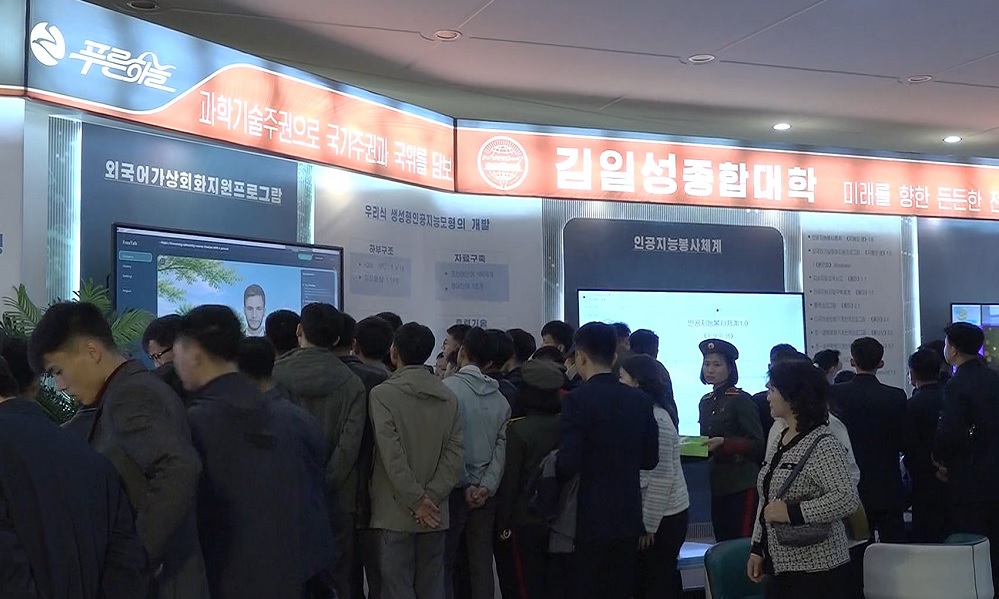
North Korea appears to have developed its first artificial intelligence chatbot, according to analysis by 38 North, a think tank that monitors North Korea, of footage broadcast on state television.
The system, called “AI Service System 1.0, Fountain of Wisdom”, was displayed at the National Exhibition of IT Successes in Pyongyang, held from October 19 to 30, according to 38 North. It featured in a report on Ryongnamsan TV on November 17.
It was built by Kim Il Sung University’s Artificial Intelligence Technology Research Institute and Phurunhanul Trading Co, a Pyongyang software developer, 38 North said, Reuters reported.
The chatbot can answer questions on science and technology in Korean or English and provide translations.
An on-screen warning instructs users not to ask socio-political questions, according to 38 North. The footage also appears to show a classifier screening queries before they reach the AI engine.
The hardware running the system was not disclosed. The 38 North report said the model behind the interface was more likely an open-weight system from a US or Chinese laboratory, such as Google’s Gemma or Alibaba’s Qwen, than one developed entirely in North Korea.
The report said the lack of large-scale data centres in North Korea could hamper deployment of the most advanced models.


FIFA confirms cyberattack led to theft of internal data

Pakistan, Saudi, Turkey to hold Mecca alliance meeting in Islamabad

ASQA strengthens regional cooperation through ISO Asia-Pacific meeting
Afghanistan adds more than 2,000 telecom towers, ministry says
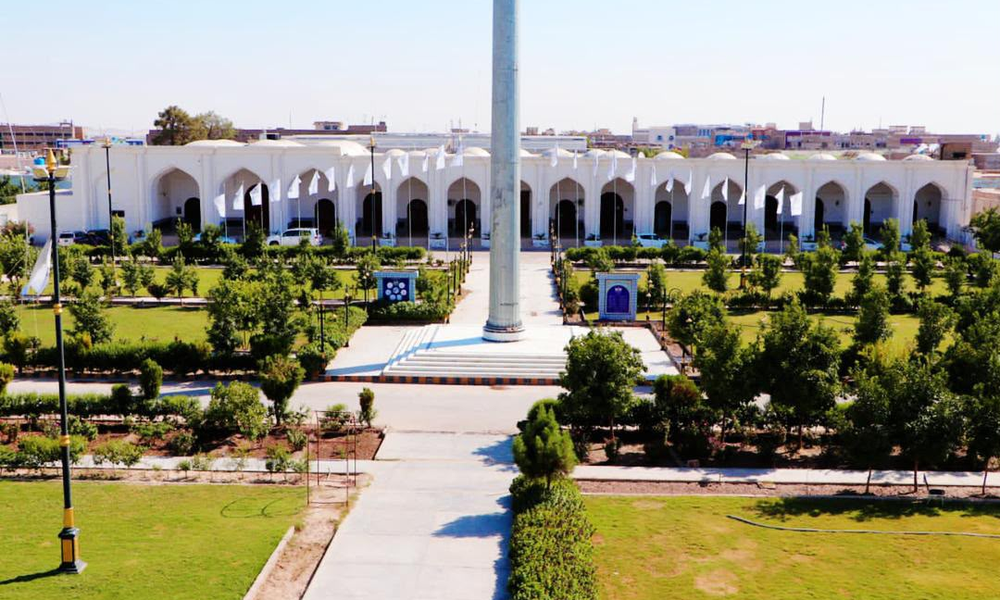
Joint security delegation visits Kandahar to strengthen coordination

US sanctions and blockade measures disrupt Iran’s trade with Afghanistan and regional neighbors

Afghanistan to launch nationwide polio vaccination campaign

Afghanistan futsal team thrash Panama 5-0 in flying start to Dakar Youth Olympics

Iran defends two-day proposal for peace talks after US rejects conditions

Portugal beat Afghanistan 2-0 in Dakar Youth Olympics futsal semi-finals

Five killed in Turkish military helicopter crash in western Turkiye
Tahawol: Discussion on shifting views within Pakistan

Qatar warns Middle East cannot afford renewed US-Iran escalation
Saar: Return of millions of Afghans to their homeland

Saar: Pakistan FM’s remarks on Afghanistan
-
 Latest News4 days ago
SNEAKO claims US authorities questioned him for eight hours after Afghanistan visit
-
 Latest News5 days ago
AfD leader calls for return of 2.6 million foreigners from Germany
-
 Latest News4 days ago
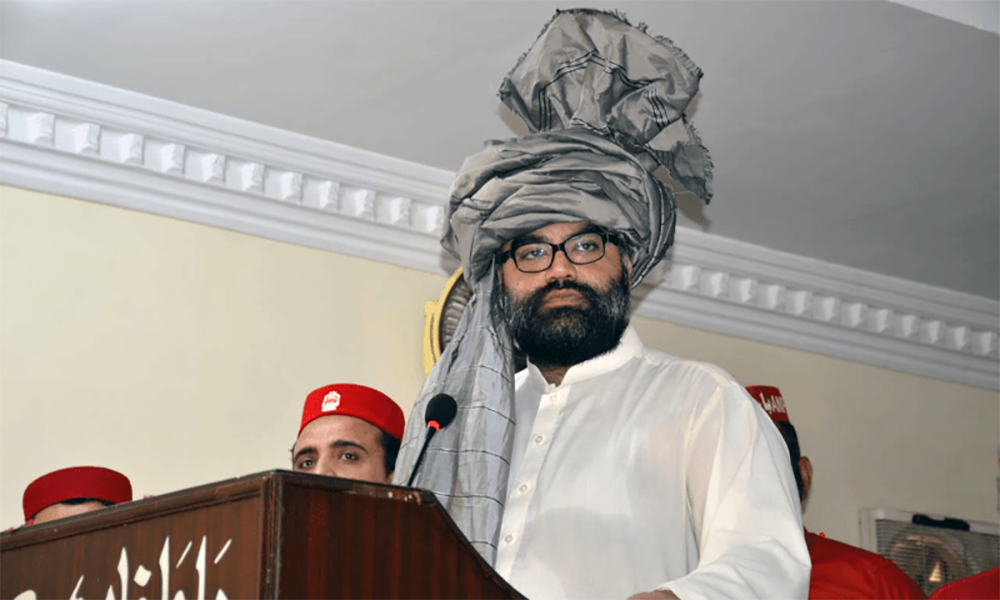
ANP leader calls for reopening of Afghanistan-Pakistan trade routes
-
 Business5 days ago
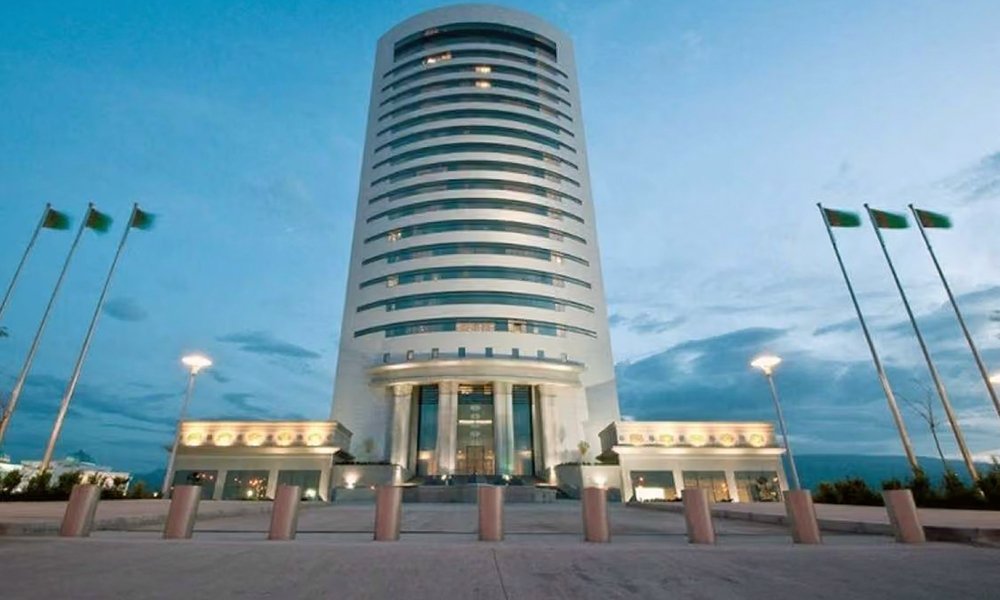
Turkmenistan records nearly $100 million in trade deals with Afghan, UAE buyers
-
 Business4 days ago
World Bank warns Afghanistan faces mounting economic and water security challenges
-
 Climate Change5 days ago
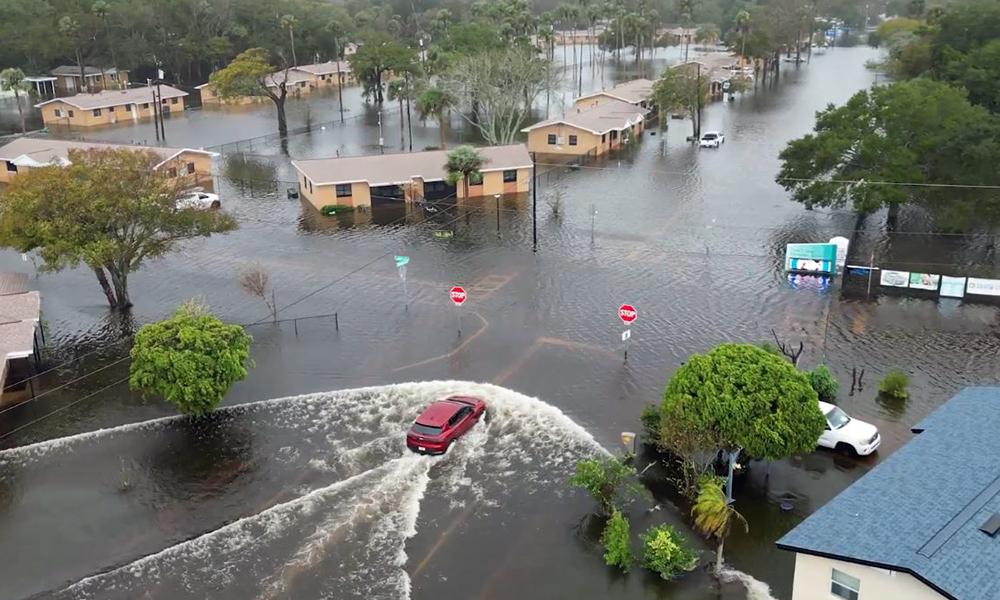
Florida flooding continues as California braces for historic high tides
-
 World3 days ago
Trump to meet NATO Chief Mark Rutte in Florida amid tensions over Ukraine peace talks
-
 Latest News3 days ago
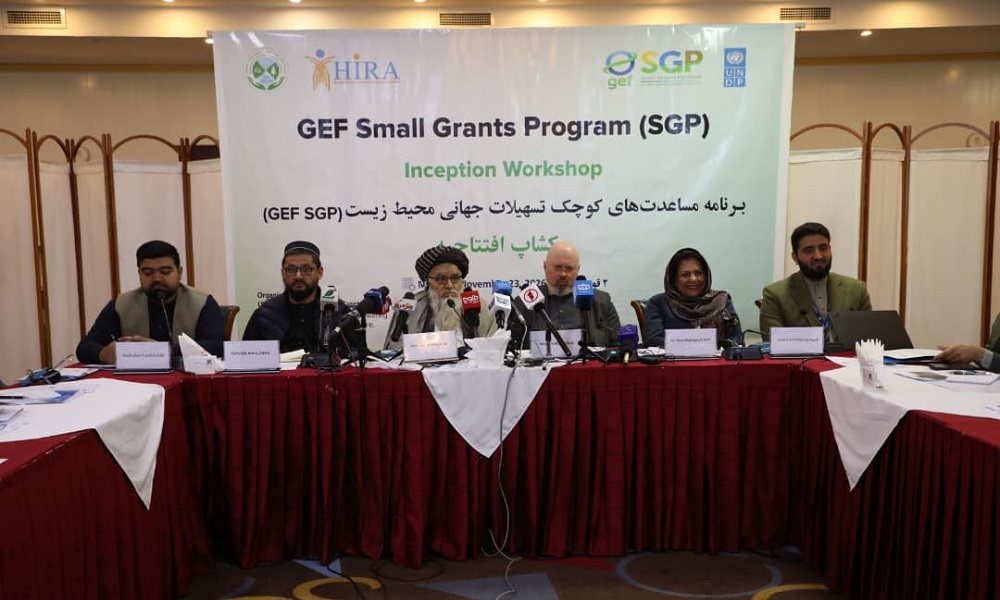
Global environmental grants programme resumes in Afghanistan