
Latest News
EU provides 500,000 euros for Afghan earthquake relief efforts

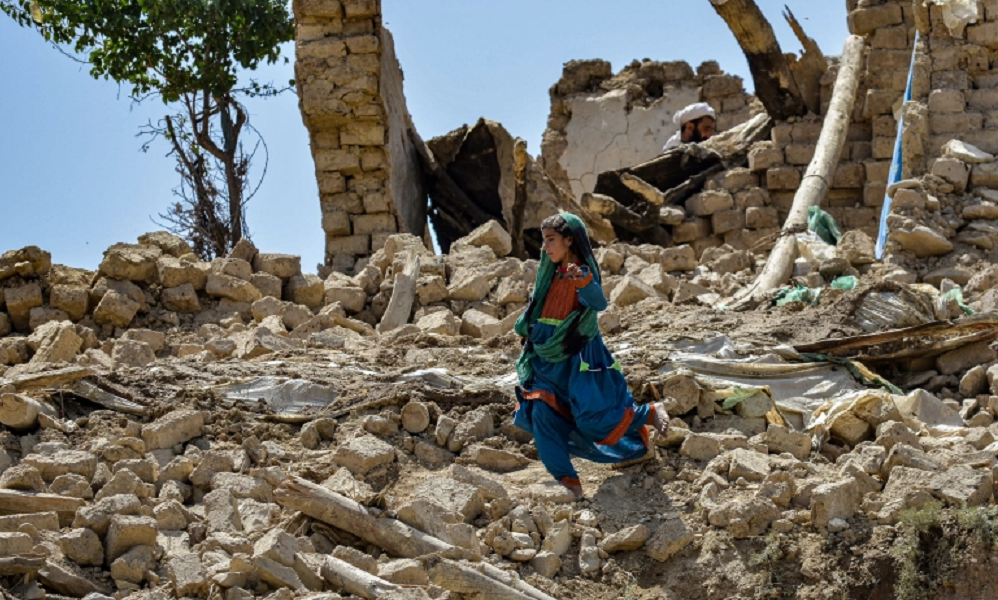
The European Union has contributed 500,000 euros to support the food needs of communities in the Afghan provinces of Paktika and Khost which were affected by an earthquake in late June, The United Nations World Food Programme (WFP) said on Thursday.
The funds will help WFP deliver emergency food assistance to more than 170,000 earthquake-affected people over six months
“The majority of the people of Afghanistan are reeling from the effects of the ongoing economic crisis and cannot absorb any exacerbating shocks, including the earthquake that has hit these provinces,” said Marianna Franco, who oversees EU humanitarian programmes in Afghanistan. “We are stepping up our support to ensure WFP has dedicated funding for this environmental disaster that comes as an emergency on top of an emergency.”
The 5.9 magnitude earthquake that struck eastern Afghanistan on 22 June 2022 – the strongest the country has known in over 20 years – further devastated families already struggling to meet their basic needs during a time of acute economic and political upheaval. More than two months later, families are still living in emergency shelters as their destroyed homes are structurally unsafe, and communities still rely largely on humanitarian assistance for survival, WFP said.
“WFP was on the ground immediately to assess the damage and respond,” said WFP Afghanistan’s Country Director Mary-Ellen McGroarty. “Through heavy rain and winds and poor internet connectivity, WFP and our partners have been working to reach those affected with food and supplies, but the communities in these provinces will need our support for several months as they rebuild. We are thankful to the EU for being one of the first donors to contribute towards this urgent need, which enabled our swift deployment of food and logistics equipment.”
The new funding will help boost WFP’s ability to replenish its food supplies over several months and to transition from distributing emergency High-Energy Biscuits (HEB) to full food baskets of wheat flour, vegetable oil, pulses and salt in the districts of Giyan and Bamal in Paktika Province, and Spera in Khost Province.
One year into an economic collapse, humanitarian needs in Afghanistan are at an all-time high, further strained by soaring global food and energy prices due to the conflict in Ukraine. Hunger is cutting across socioeconomic divides, with 18.9 million people experiencing acute levels of food insecurity and 6 million one step away from famine, WFP noted.
The EU’s Civil Protection and Humanitarian Aid department has been a long-time donor for WFP Afghanistan, having contributed over EUR 75.5 million since 2021 towards WFP’s emergency assistance to people affected by conflict and natural hazards in the country.












Kazakhstan’s Foreign Minister Mukhtar Tileuberdi has called for pragmatic and coordinated international engagement with Afghanistan, saying the country’s long-term stability is closely linked to the security and sustainable development of Central Asia.
Speaking during the general debate of the 81st session of the United Nations General Assembly in New York on Friday, Tileuberdi said humanitarian assistance to Afghanistan remains essential but alone cannot break the cycle of poverty, displacement and dependency.
He said Kazakhstan supports a “pragmatic, coordinated and step-by-step” approach to international engagement with Afghanistan, with the United Nations playing a central role.
Tileuberdi also said Kazakhstan is working with the UN to operationalize the United Nations Regional Centre for the Sustainable Development Goals for Central Asia and Afghanistan in Almaty.
He said the success of the centre should be measured by the results and assistance it delivers to the region.


Abu Muslim Farah defeat Khurasan Faryab 2-0 in ACL season six

Saar: Concerns over Pakistan’s political crisis discussed

Afghanistan Champions League: Omar Zawak Herat beat Toofan Herat 1-0

Blast in Pakistan’s Dera Ismail Khan kills 11, injures 30

Ariana Afghan Airlines increases Kabul-Delhi cargo flights

Saudi energy group signs major Afghanistan deals covering gas exploration and pipeline plans

Trump floats idea of renaming Atlantic or Pacific Ocean

US hits Egyptian bank branches with Iran sanctions as war marks six months

Nepal flood rescue mission enters critical phase as thousands remain missing

Iranian clubs to face Gulf opponents at neutral venues in Asian Champions League Elite
Saar: Concerns over Pakistan’s political crisis discussed

Exclusive interview with Abdul Latif Mansoor, Minister of MRRD

Tawsia: Overview of Afghanistan’s iron mines

Tahawol: Discussion on fresh Pakistani airstrikes on Afghanistan

Saar: Calls for international support for Afghanistan discussed
-

 World5 days ago
CNN, MS NOW and Politico sue Trump, challenging White House ban
-

 Latest News4 days ago
Ariana Afghan Airlines ranks seventh among 45 Central Asian airlines
-

 Latest News5 days ago
UN reiterates call for respect for international law after Kunar airstrikes
-

 Regional4 days ago
US and Iran hold first talks since June after Trump’s ‘annihilation’ threat
-

 Latest News4 days ago
Silk Road highway in Wakhan corridor now reaches the China border
-

 Regional3 days ago
Iran airlines cancel flights as US sanctions hit
-

 Latest News5 days ago
Afghan Official: Pakistan’s airstrikes will not go unanswered
-

 Regional5 days ago
G7 foreign ministers call on Iran to stop arming Houthis