
Regional
Iranian President Ebrahim Raisi killed in helicopter crash

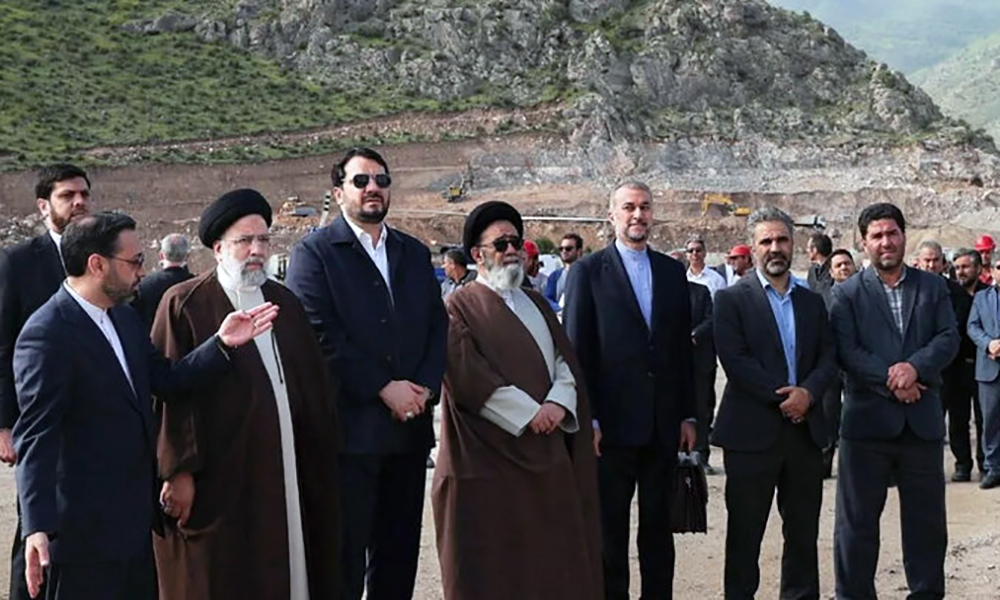
Iranian President Ebrahim Raisi and his foreign minister were killed in a helicopter crash in mountainous terrain and icy weather, an Iranian official said on Monday, after search teams located the wreckage in East Azerbaijan province, Reuters reported.
“President Raisi, the foreign minister and all the passengers in the helicopter were killed in the crash,” the senior Iranian official told Reuters, asking not to be named because of the sensitivity of the matter.
Iran’s Mehr news agency confirmed the deaths, reporting that “all passengers of the helicopter carrying the Iranian president and foreign minister were martyred”.
An Iranian official earlier told Reuters the helicopter carrying Raisi and Foreign Minister Hossein Amirabdollahian was completely burned in the crash on Sunday.
State TV reported that images from the site showed the aircraft slammed into a mountain peak, although there was no official word on the cause of the crash.
State news agency IRNA said Raisi was flying in a U.S.-made Bell 212 helicopter.
Raisi, 63, was elected president in 2021, and since taking office has ordered a tightening of morality laws, overseen a bloody crackdown on anti-government protests and pushed hard in nuclear talks with world powers.
Iranian Supreme Leader Ayatollah Ali Khamenei, who holds ultimate power with a final say on foreign policy and Iran’s nuclear programme, had earlier sought to reassure Iranians, saying there would be no disruption to state affairs.
PRAYERS, SEARCHES
Rescue teams fought blizzards and difficult terrain through the night to reach the wreckage in the early hours of Monday.
“With the discovery of the crash site, no signs of life have been detected among the helicopter’s passengers,” the head of Iran’s Red Crescent, Pirhossein Kolivand, told state TV.
Earlier, the national broadcaster had stopped all regular programming to show prayers being held for Raisi across the country, read the report.
In the early hours of Monday, it showed a rescue team, wearing bright jackets and head torches, huddled around a GPS device as they searched a pitch-black mountainside on foot in a blizzard.
Several countries expressed concern and offered assistance in any rescue.
The White House said U.S. President Joe Biden had been briefed on reports about the crash. China said it was deeply concerned. The European Union offered emergency satellite mapping technology.
HARDLINER, POSSIBLE SUCCESSOR TO KHAMENEI
The crash comes at a time of growing dissent within Iran over an array of political, social and economic crises. Iran’s clerical rulers face international pressure over Tehran’s disputed nuclear programme and its deepening military ties with Russia during the war in Ukraine.
Since Iran’s ally Hamas attacked Israel on Oct. 7, provoking Israel’s assault on Gaza, conflagrations involving Iran-aligned groups have erupted throughout the Middle East.
In Iran’s dual political system, split between the clerical establishment and the government, it is Raisi’s 85-year-old mentor Khamenei, supreme leader since 1989, who holds decision-making power on all major policies.
For years many have seen Raisi as a strong contender to succeed Khamenei, who has endorsed Raisi’s main policies.
Raisi’s victory in a closely managed election in 2021 brought all branches of power under the control of hardliners, after eight years when the presidency had been held by pragmatist Hassan Rouhani and a nuclear deal negotiated with powers including Washington.
However, Raisi’s standing may have been dented by widespread protests against clerical rule and a failure to turn around Iran’s economy, hamstrung by Western sanctions, Reuters reported.
Raisi had been at the Azerbaijani border on Sunday to inaugurate the Qiz-Qalasi Dam, a joint project. Azerbaijan’s President Ilham Aliyev, who said he had bid a “friendly farewell” to Raisi earlier in the day, offered assistance in the rescue.









Regional
Iran says no progress on reviving interim peace deal with US
Throughout the conflict, Trump has alternated between threats of escalation and claims that a peace deal is imminent.
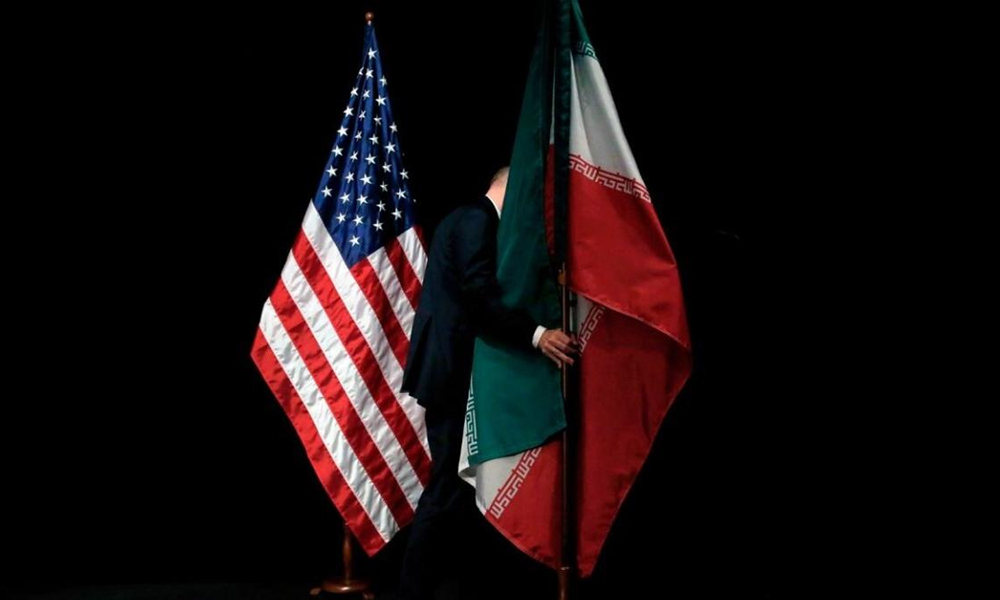
Iran and the United States remain at loggerheads over efforts to agree a permanent end to the war in the Gulf, according to a senior Iranian source, who said there had been no progress in talks to revive the interim deal agreed in June and define a time frame to implement it, Reuters reported.
The comments came as U.S. President Donald Trump issued yet another broadside against Iran’s leaders, dealing a further blow to hopes for a resolution to the crisis, following new attacks on shipping in the region on Tuesday.
The deal agreed in June declared an “immediate and permanent termination of military operations on all fronts”, but quickly unravelled, with Trump saying it was “over” on July 7 and Iran’s foreign ministry declaring it “suspended” a week later.
The U.S. accuses Iran of failing to honor an agreement under the deal to reopen the vital Strait of Hormuz shipping route. Tehran says Washington has reneged on its commitments, including lifting a blockade of Iranian ports and releasing frozen Iranian assets.
“One of the issues that is being discussed via mediators is the U.S. returning to the interim agreement and defining a time frame for implementing the commitments. There has been absolutely no progress on this issue,” the Iranian source said.
Trump said on Wednesday that the U.S. has “total control” over the Strait of Hormuz.
But the Persian Gulf Strait Authority, the body Iran set up to manage the waterway, said it remains blocked and will not be reopened until Iran’s conditions are accepted.
“Iran is all talk and no action, the Bully of the Middle East No Longer,” Trump said on his Truth Social platform.
Throughout the conflict, Trump has alternated between threats of escalation and claims that a peace deal is imminent.
Thousands of people have been killed in the conflict, mainly in Iran and Lebanon, since the U.S. and Israel launched attacks on Iran on February 28, read the report.
Iran has struck U.S. assets and infrastructure in countries including Oman, Jordan, Kuwait, Israel, the United Arab Emirates and Saudi Arabia.
The June interim ceasefire agreement set a 60-day period, extendable by mutual consent, within which Iran and the U.S. were expected to reach a final deal limiting Tehran’s nuclear program and lifting U.S. sanctions.
The Iranian source dismissed a report on Wednesday from Turkey’s Anadolu news agency that quoted Pakistani government sources as saying they had agreed to extend that 60-day period.
“There is no talk of an extension because, from Iran’s perspective, there is no period that began and therefore nothing to extend. The United States violated the interim agreement 48 hours after it was reached and withdrew from it a few days later,” the source told Reuters.
The Strait of Hormuz, a narrow waterway between Iran and Oman and the entrance to the Gulf, handled a fifth of global oil and liquefied natural gas flow before the war.
Benchmark Brent crude futures have surged since the start of the war in February, hitting a peak of $126 a barrel, roughly 75% above pre-war levels, with choppy trade reflecting concerns over disruptions to Gulf oil supplies and shifting signals on peace talks.
On Tuesday, in separate incidents, a suspected and a U.S. Navy MH-60 helicopter fired two Hellfire missiles to , the U.S. military said.
Oil prices rose but then steadied in volatile trading on Wednesday, after forecasters cut projections for 2026 oil demand. Brent crude futures were trading at around $88 a barrel and U.S. West Texas Intermediate crude at around $83 a barrel.
Regional
New attacks on shipping as Iran war talks hit fresh impasse
Oil prices gained and global shares retreated amid renewed pessimism about a quick end to the conflict. Brent crude futures climbed 1.4% to settle at $88.91 per barrel and U.S. crude rose 1.3% to $83.20.
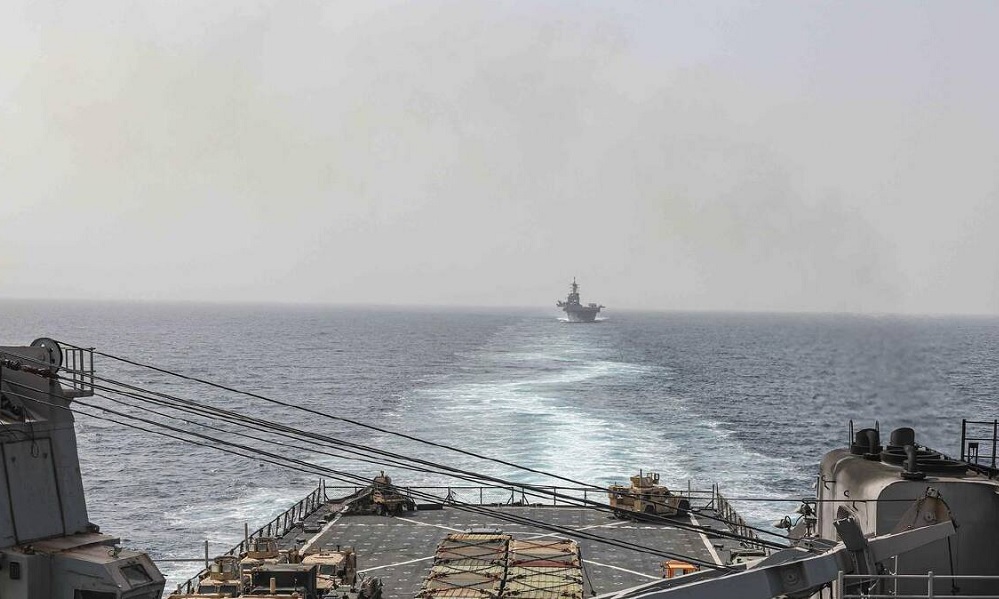
The U.S. and Yemen’s Iran-aligned Houthis reported separate attacks on shipping on Tuesday as prospects for ending the Iran war appeared to dim, with Tehran saying the Strait of Hormuz would remain closed unless Washington accepts its conditions.
The attacks, in the Gulf of Oman leading to the strait and at the entrance to the Red Sea — both vital chokepoints for global oil supplies — come as the war shows no signs of ending despite repeated assertions from U.S. President Donald Trump of a deal being imminent, Reuters reported.
Oil prices gained and global shares retreated amid renewed pessimism about a quick end to the conflict. Brent crude futures climbed 1.4% to settle at $88.91 per barrel and U.S. crude rose 1.3% to $83.20.
At the southern end of the Red Sea, four crew members were killed in a suspected Houthi attack on a small cargo vessel in the Bab el-Mandeb Strait on Tuesday, Yemen’s Transport Ministry said. Two Yemeni rescuers from an anti-Houthi military group were also killed, Yemen’s Coast Guard said.
The fatalities aboard the Egyptian-owned Tihamah would be the first deaths on shipping by Yemen’s Iran-aligned Houthis since the Iran war began.
The Houthi-run news agency Saba reported that the group, which said last month it would impose a naval blockade on Saudi Arabia in the Red Sea, attacked a Saudi ship carrying military equipment in the Bab el-Mandeb Strait. It did not name the ship, and there was no immediate Saudi response to the report.
The U.S. military, meanwhile, said a U.S. Navy MH-60 helicopter fired two Hellfire missiles to disable the steering gear of a Panama-flagged cargo ship.
The ship ignored repeated warnings to stop violating a naval blockade on Iranian ports, the U.S. Central Command said. Maritime sources told Reuters the ship was hit off Pakistan while sailing into the Gulf of Oman.
STEPPED UP RHETORIC
Both Iran and the United States have stepped up rhetoric in the past two days.
Iran’s top security official, Mohsen Rezaei, said on Tuesday that the vital Strait of Hormuz shipping route will remain closed unless the U.S. accepts Iran’s conditions to end the war – the release of Iran’s frozen assets and an end to conflicts throughout the region, including in Lebanon and Gaza.
That followed a new demand from Trump on Monday that Iran should pay compensation for people killed in 50 years of wars, attacks and protests.
Throughout the conflict, Trump has alternated between threats of escalation and claims that a peace deal is imminent.
In an interview released late on Monday, he suggested the uncertainty could last for a while, saying he might just “bop along” and let Tehran fail economically, or hit them “really, really hard.”
“I’m sort of negotiating,” Trump told Real America’s Voice. “They’re very devious negotiators.”
Speaking to reporters after a visit to Ohio on Tuesday, Trump said “Iran is going fine, going just absolutely fine.”
“We totally control the Strait of Hormuz … Nobody else, only us,” he said.
“At some point, maybe they’ll do something and then they get blown away,” he said of Iran. “But right now, we’re in a very good position. We have a country that has been the bully of the Middle East for 50 years, really 51 if you think about it … and they’re no longer the bully of the Middle East.”
Asked about an incident in which he switched planes in Turkey last month because of worries over reports of a potential Iranian assassination threat, Trump suggested the alternative aircraft may have faced greater risk.
“That would be the plane I think that they would be more likely to go for,” he told reporters after The Washington Post broke the story about him secretly taking a military flight instead of Air Force One in an operation involving him being moved between aircraft in a catering truck.
“Any consequential president has a lot of threats,” Trump added. “I don’t worry about anything.”
The comments from Rezaei, appointed on Sunday as second-in-command of the body that coordinates Iran’s security and foreign policy, were the strongest indication the Strait of Hormuz would not reopen to shipping anytime soon. The waterway handled a fifth of global oil and liquefied natural gas flow before the war.
“As long as America does not change its behaviour and does not accept Iran’s conditions, the Strait of Hormuz will not be opened,” Rezaei said, according to the semi-official Tasnim news agency.
There was no immediate comment from Washington on Iran’s latest comments.
Thousands of people have been killed in the conflict since the U.S. and Israel launched attacks on Iran on February 28.
Iran has struck U.S. assets and infrastructure in countries including Oman, Jordan, Kuwait, Israel, the United Arab Emirates and Saudi Arabia.
Raising the prospect of further escalation, Mohammad Reza Naqdi, an adviser to the commander of Iran’s Revolutionary Guards, said on Iranian state TV on Tuesday that the corps was developing the ability to carry out operations “on enemy soil.”
“We need to be able to move the operations to the enemy’s soil, whenever this is needed and ordered,” he said. “This is the characteristic of the offensive doctrine that has to be attained.”
Regional
Syria sentences absent Bashar al-Assad to death over killings, torture
Assad fled the capital Damascus as rebel fighters approached nearly two years ago, and is currently in Moscow.
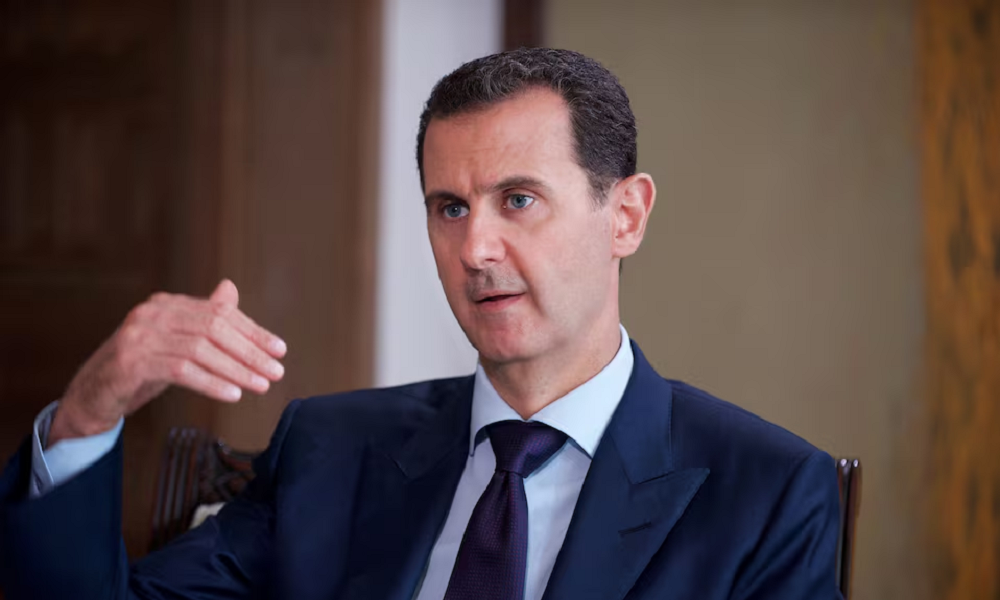
A Syrian court sentenced ousted leader Bashar al-Assad to death on Tuesday after a trial in absentia, convicting him of crimes including killings, torture, and arbitrary arrest during the country’s nearly 14-year war.
It was the first conviction against Assad, who was ousted in a rebel offensive in December 2024 that ended decades of his family’s iron-fisted rule over Syria, and the brutal war that killed hundreds of thousands of Syrians, Reuters reported.
Assad fled the capital Damascus as rebel fighters approached nearly two years ago, and is currently in Moscow.
In a trial of former government officials on Tuesday, a judge handed down a death sentence to Assad over the crimes of “premeditated and intentional murder of more than one person and of children, torture, arbitrary arrest and crimes against humanity”.
Atef Najib, a security official under Assad, was also sentenced to death.
Assad, who was born in 1965, became president in 2000 after his father Hafez died. He maintained the family’s rule and the dominance of their Alawite sect in the Sunni Muslim-majority country and Syria’s status as an Iranian ally hostile to Israel and the U.S.
Shaped in its early years by the Iraq war and crisis in Lebanon, Assad’s rule was defined by civil war, which spiralled out of the 2011 Arab Spring, when Syrians demanding democracy took to the streets, to be met with deadly force.


Tahawol: Trade cooperation between Afghanistan and Iran discussed

Saar: Discussion on Islamic Emirate’s five-year journey

IEA FM Muttaqi, Iranian agriculture minister discuss economic cooperation

Da Afghanistan Bank unveils visa card and new HesabPay app

Human Rights Watch urges IEA to release detained UN, NGO staff

Pakistan’s governance system has ‘collapsed’: Mohsin Naqvi

Spain sweep FIFA World Cup player awards after historic triumph

Iran, Afghanistan and Tajikistan discuss expanding regional transit cooperation

Afghanistan temporarily eases fuel import standards to help curb rising prices

OCHA warns Afghanistan’s maternal health system under mounting strain
Tahawol: Trade cooperation between Afghanistan and Iran discussed
Saar: Discussion on Islamic Emirate’s five-year journey

Tahawol: Afghanistan’s future in the global press discussed

Saar: The Islamic Emirate’s five-year rule discussed

Tahawol: Hamid Karzai’s call for Afghan reconciliation discussed
-

 Sport4 days ago
Afghanistan secure direct qualification for 2027 Men’s ODI World Cup
-
 Latest News4 days ago
Pakistan-backed armed groups in Balochistan using former Afghan government forces: report
-
 Sport3 days ago
Abasin Defenders stun Kabul Zalmi in Kabul Premier League
-
 Regional4 days ago
Turkey, Pakistan, Saudi Arabia defence pact technically same as NATO’s Article 5, Turkish minister says
-

 Sport4 days ago
Kabul Premier League gets underway with high-scoring opener
-

 Latest News5 days ago
Russia eyes railway route via Afghanistan as alternative to Strait of Hormuz
-
 Latest News4 days ago
Ariana Airlines brings $2.3 million Boeing 737 engine from US to Kabul
-
 Regional4 days ago
Iran ties Hormuz reopening to US concessions on several demands