
Latest News
Afghans dealt serious challenges through year 1400

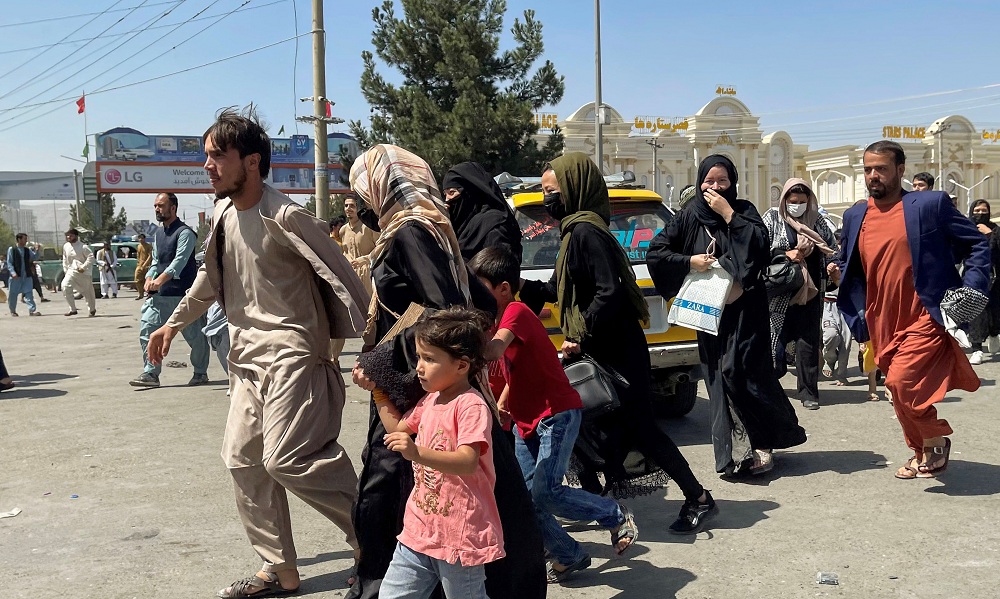
Solar year 1400 was a painful year for Afghans who faced many challenges and dealt with many changes.
The first five months of 1400 were scarred by serious insecurity while the level of corruption reached its peak. Former president Ashraf Ghani was in that time named the world’s most corrupt leader.
With plummeting government revenue, Afghanistan was also named the saddest country in the world on the global happiness index.
Peace talks between an Afghan delegation of 21 members and the Islamic Emirate of Afghanistan (IEA) got underway in spring but did not amount to much.
Despite spending months in Doha for talks, all negotiations ground to a halt within a few weeks and the ongoing war escalated – leaving thousands of families displaced.
On August 15, Ghani fled the country, sparking a chaotic evacuation of foreign troops, foreign diplomats, foreign nationals and thousands of Afghans.
The IEA immediately took control of a country whose economy was in freefall.
All education institutions were closed at the time, due to COVID-19, while hospitals ran short of supplies, food became scarce and hundreds of thousands of jobs were lost.
These major changes had a direct impact on the Afghan people, of which at least 23 million now live below the poverty line and face severe food insecurity, the UN has stated.
The World Health Organization (WHO) also warned that the country’s health system is collapsing. Most hospitals treating COVID-19 patients in the country have closed while medical supplies and medicine have become extremely scarce.
One sector that paid an extremely high price through all the changes in 1400 was the media.
Following developments in the country, 186 media outlets out of a total of 476 closed their doors in 1400, leaving thousands of workers without jobs.
While the IEA is committed to improving the situation in the country, officials have warned that 1401 will continue to mete out challenges. They have said poverty levels could worsen and that the unemployment rate could increase.
However, while they put a stop to the education of girls above Grade 7, officials have indicated that this will change in the coming year and that all girls will be allowed to return to school and women will be allowed to work.












Kazakhstan’s Foreign Minister Mukhtar Tileuberdi has called for pragmatic and coordinated international engagement with Afghanistan, saying the country’s long-term stability is closely linked to the security and sustainable development of Central Asia.
Speaking during the general debate of the 81st session of the United Nations General Assembly in New York on Friday, Tileuberdi said humanitarian assistance to Afghanistan remains essential but alone cannot break the cycle of poverty, displacement and dependency.
He said Kazakhstan supports a “pragmatic, coordinated and step-by-step” approach to international engagement with Afghanistan, with the United Nations playing a central role.
Tileuberdi also said Kazakhstan is working with the UN to operationalize the United Nations Regional Centre for the Sustainable Development Goals for Central Asia and Afghanistan in Almaty.
He said the success of the centre should be measured by the results and assistance it delivers to the region.


Abu Muslim Farah defeat Khurasan Faryab 2-0 in ACL season six

Saar: Concerns over Pakistan’s political crisis discussed

Afghanistan Champions League: Omar Zawak Herat beat Toofan Herat 1-0

Blast in Pakistan’s Dera Ismail Khan kills 11, injures 30

Ariana Afghan Airlines increases Kabul-Delhi cargo flights

Saudi energy group signs major Afghanistan deals covering gas exploration and pipeline plans

Trump floats idea of renaming Atlantic or Pacific Ocean

US hits Egyptian bank branches with Iran sanctions as war marks six months

Nepal flood rescue mission enters critical phase as thousands remain missing

Iranian clubs to face Gulf opponents at neutral venues in Asian Champions League Elite
Saar: Concerns over Pakistan’s political crisis discussed

Exclusive interview with Abdul Latif Mansoor, Minister of MRRD

Tawsia: Overview of Afghanistan’s iron mines

Tahawol: Discussion on fresh Pakistani airstrikes on Afghanistan

Saar: Calls for international support for Afghanistan discussed
-

 World5 days ago
CNN, MS NOW and Politico sue Trump, challenging White House ban
-

 Latest News3 days ago
Ariana Afghan Airlines ranks seventh among 45 Central Asian airlines
-

 Latest News5 days ago
UN reiterates call for respect for international law after Kunar airstrikes
-

 Regional4 days ago
US and Iran hold first talks since June after Trump’s ‘annihilation’ threat
-

 Latest News3 days ago
Silk Road highway in Wakhan corridor now reaches the China border
-

 Latest News5 days ago
Afghan Official: Pakistan’s airstrikes will not go unanswered
-
 Regional5 days ago
G7 foreign ministers call on Iran to stop arming Houthis
-

 Regional3 days ago
Iran airlines cancel flights as US sanctions hit