
Latest News
Biden, Netanyahu speak, Israel vows lethal retaliation against Iran
Wednesday’s call was “a positive call, and we appreciate the support of the U.S.,” Israel’s U.N. Ambassador Danny Danon told reporters.

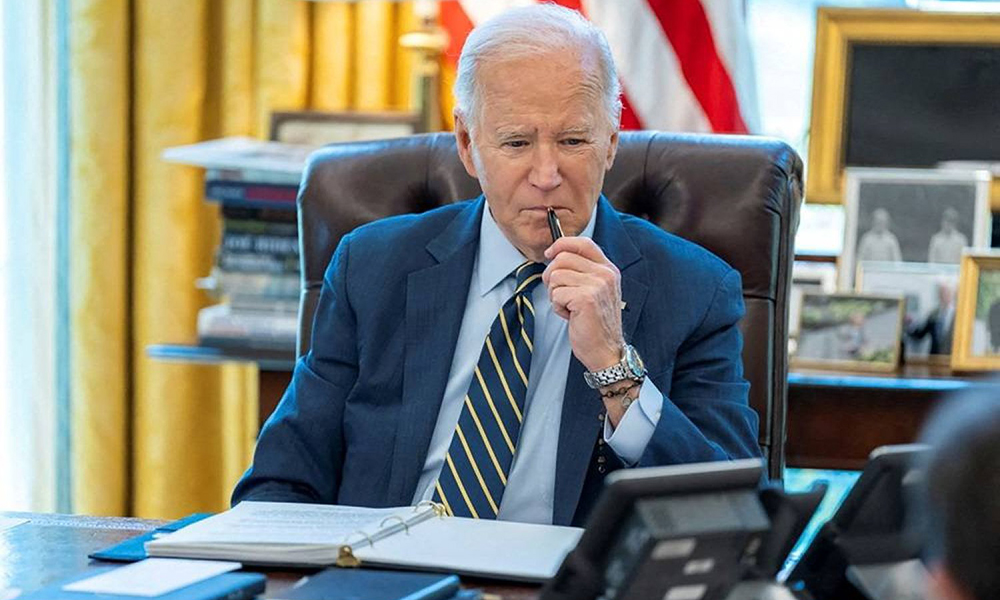
U.S. President Joe Biden and Israeli Prime Minister Benjamin Netanyahu had a call on Wednesday amid tensions with Iran, while Israeli Defence Minister Yoav Gallant promised an Israeli strike against Iran will be “lethal, precise and surprising.”
The 30-minute call was the first known chat for Biden and Netanyahu since August and coincides with a sharp escalation of Israel’s conflict with Iran and the Iran-backed Lebanese Hezbollah, but with no sign of an imminent ceasefire to end the conflict with Iran-backed Hamas in Gaza.
The call was “direct and very productive,” White House press secretary Karine Jean-Pierre told reporters, while acknowledging the two leaders have disagreements and are open about them.
The Middle East has been on edge awaiting Israel’s response to a missile attack last week that Tehran carried out in retaliation for Israel’s military escalation in Lebanon. The Iranian attack ultimately killed no one in Israel.
After describing Iran’s Oct. 1 missile attack as a failure, Gallant said in a video issued by his office after the Biden-Netanyahu call had ended: “Whoever attacks us will be hurt and will pay a price. Our attack will be deadly, precise and above all surprising, they will not understand what happened and how it happened, they will see the results.”
Netanyahu has promised that arch-foe Iran will pay for its missile attack, while Tehran has said any retaliation would be met with vast destruction, raising fears of a wider war in the oil-producing region which could draw in the United States.
The United States has said it supports Israel going after Iran-backed targets like Hezbollah and Hamas but has tried, unsuccessfully, to stem rising conflict, to broker a ceasefire in Gaza and to persuade Israel to curb rocket attacks on residential areas that have killed thousands of people.
Relations between Biden and Netanyahu have been tense, strained over the Israeli leader’s handling of the war in Gaza and the conflict with Hezbollah. Israel has said it will pursue its military operations until Israelis are safe.
In “War,” a book out next week, journalist Bob Woodward reports that Biden regularly accused Netanyahu of having no strategy, and shouted “Bibi, what the fuck?” at him in July, after Israeli strikes near Beirut and in Iran.
Asked about the book, one U.S. official familiar with the two leaders’ past interactions said Biden has used sharp, direct, unfiltered and colorful language both with and about Netanyahu while in office.
Wednesday’s call was “a positive call, and we appreciate the support of the U.S.,” Israel’s U.N. Ambassador Danny Danon told reporters.
“And as we stated earlier, Israel will retaliate for the attack … We will choose the locations. It will be painful for the Iranian regime,” Danon said.
Gallant canceled a Wednesday visit to the Pentagon, the Pentagon said. Gallant said in a statement he had postponed the visit at Netanyahu’s request until after the prime minister spoke with Biden.
Tensions have increased in recent weeks as U.S. officials were repeatedly blindsided by Israeli actions, according to a person familiar with the matter. These included Israel’s killing of Hezbollah leader Hassan Nasrallah and the detonation of pagers and walkie-talkies used by Hezbollah members in Lebanon that Israel has neither confirmed nor denied carrying out.
Israel has also been slow to share details of its planning for retaliation against Iran’s ballistic missile attack, the person said.
Biden said last Friday he would think about alternatives to striking Iranian oil fields if he were in Israel’s shoes, adding he thought Israel had not concluded how to respond to Iran. Last week, he also said he would not support Israel striking Iranian nuclear sites.
Biden has been hit by sharp criticism from international partners as well as members of his own Democratic Party over his inability to use leverage, including the U.S. role as Israel’s chief arms supplier, to curb Netanyahu’s attacks.
By extension, Kamala Harris, Biden’s vice president and the Democrats’ presidential candidate in the Nov. 5 election, has been challenged to defend the administration’s policy on the campaign trail. Harris joined the call with Biden and Netanyahu, according to a person familiar with the matter.
Some Arab American voters in Michigan are backing independent candidate Jill Stein, a move that could cost Harris the battleground state and perhaps the White House in a race with Republican former President Donald Trump that opinion polls show to be very tight.
Harris is trailing Trump in Michigan with 47% of voters to his 50%, new Quinnipiac University polling showed on Wednesday. In a Sept. 18 poll, Harris held 50% of the vote and Trump 45%.
Israel and Netanyahu in particular have faced widespread condemnation over the nearly 42,000 Palestinians killed in the Gaza war, according to the Palestinian health ministry in Hamas-ruled Gaza, and the deaths of over 2,000 people in Lebanon.
Israel says it is defending itself after Hamas militants attacked southern Israel on Oct. 7, 2023, killing 1,200 people and taking 250 hostages, according to Israeli tallies, and from attacks by other militants including Hezbollah who support Hamas.









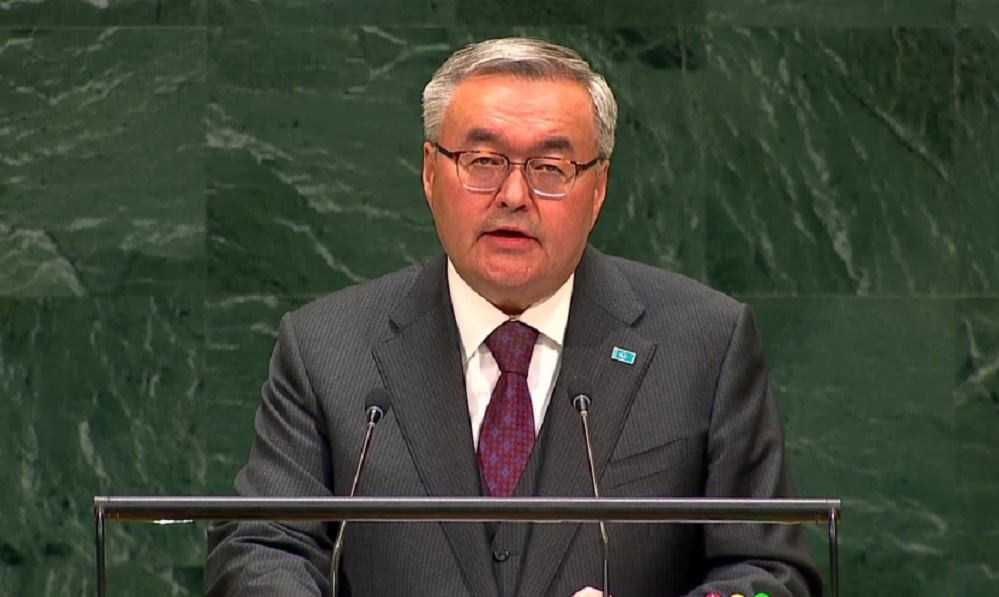
Kazakhstan’s Foreign Minister Mukhtar Tileuberdi has called for pragmatic and coordinated international engagement with Afghanistan, saying the country’s long-term stability is closely linked to the security and sustainable development of Central Asia.
Speaking during the general debate of the 81st session of the United Nations General Assembly in New York on Friday, Tileuberdi said humanitarian assistance to Afghanistan remains essential but alone cannot break the cycle of poverty, displacement and dependency.
He said Kazakhstan supports a “pragmatic, coordinated and step-by-step” approach to international engagement with Afghanistan, with the United Nations playing a central role.
Tileuberdi also said Kazakhstan is working with the UN to operationalize the United Nations Regional Centre for the Sustainable Development Goals for Central Asia and Afghanistan in Almaty.
He said the success of the centre should be measured by the results and assistance it delivers to the region.


Abu Muslim Farah defeat Khurasan Faryab 2-0 in ACL season six

Saar: Concerns over Pakistan’s political crisis discussed

Afghanistan Champions League: Omar Zawak Herat beat Toofan Herat 1-0

Blast in Pakistan’s Dera Ismail Khan kills 11, injures 30

Ariana Afghan Airlines increases Kabul-Delhi cargo flights

Saudi energy group signs major Afghanistan deals covering gas exploration and pipeline plans

Trump floats idea of renaming Atlantic or Pacific Ocean

US hits Egyptian bank branches with Iran sanctions as war marks six months

Nepal flood rescue mission enters critical phase as thousands remain missing

Iranian clubs to face Gulf opponents at neutral venues in Asian Champions League Elite
Saar: Concerns over Pakistan’s political crisis discussed

Exclusive interview with Abdul Latif Mansoor, Minister of MRRD

Tawsia: Overview of Afghanistan’s iron mines

Tahawol: Discussion on fresh Pakistani airstrikes on Afghanistan

Saar: Calls for international support for Afghanistan discussed
-

 World5 days ago
CNN, MS NOW and Politico sue Trump, challenging White House ban
-

 Latest News3 days ago
Ariana Afghan Airlines ranks seventh among 45 Central Asian airlines
-

 Latest News5 days ago
UN reiterates call for respect for international law after Kunar airstrikes
-

 Regional4 days ago
US and Iran hold first talks since June after Trump’s ‘annihilation’ threat
-

 Latest News3 days ago
Silk Road highway in Wakhan corridor now reaches the China border
-

 Regional3 days ago
Iran airlines cancel flights as US sanctions hit
-

 Latest News5 days ago
Afghan Official: Pakistan’s airstrikes will not go unanswered
-

 Sport5 days ago
Afghan boxing referee heads to China for international festival