
International Sports
Boxing legend George Foreman dies at 76

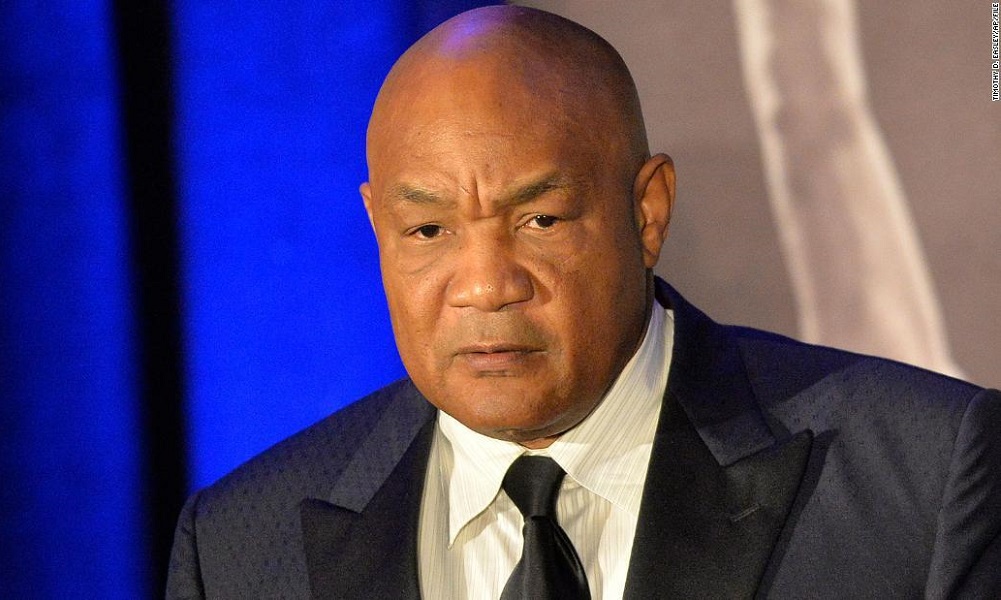
American George Foreman, one of the great second acts in sports, who reclaimed the heavyweight boxing title at age 45 and became a celebrated product pitchman, died on Friday at age 76.
“With profound sorrow, we announce the passing of our beloved George Edward Foreman Sr. who peacefully departed on March 21, 2025 surrounded by loved ones,” his family said in an Instagram post.
An intimidating, thunderous puncher who lost his first title to Muhammad Ali in their famous “Rumble in the Jungle” in 1974, “Big George” was a more rotund, jovial figure when he knocked out Michael Moorer for his second crown two decades later.
Foreman’s comeback and the fortune he made selling fat-wicking electric cooking grills made him an icon of self-improvement and success for the Baby Boom generation.
Born in Marshall, Texas, on Jan. 10, 1949, Foreman’s family soon moved to Houston where he and his six siblings were raised by a single mother. Growing up poor in the segregated American South, Foreman dropped out of junior high school and used his size and fists in street robberies.
“George’s journey from the streets of Fifth Ward to boxing and business success was an inspiration,” Houston Mayor John Whitmire said in a statement.
“He never forgot where he came from … Houston will forever be proud to call George Foreman one of our own.”
The Job Corps, part of President Lyndon B. Johnson’s “Great Society” reforms, “rescued me from the gutter,” Foreman later wrote. Through the program, 16-year-old Foreman moved out of Texas and was encouraged to channel his rage and growing bulk into boxing.
At age 19 and in his 25th amateur fight, Foreman captured the heavyweight boxing gold medal at the 1968 Olympics in Mexico City. Turning pro, he won 37 straight matches on his way to face reigning champion Joe Frazier in Kingston, Jamaica, winning by technical knockout in round two.
Foreman defended the belt twice more before meeting Ali in Kinshasa, Zaire, now the Democratic Republic of the Congo, in one of the most celebrated boxing matches in history.
Ali had been stripped of his crown seven years prior for refusing to be drafted into the Vietnam War and came into the match a heavy underdog against the bigger, younger champion. But for seven rounds, Ali laid against the ropes and fended off Foreman’s clubbing blows, tiring him before knocking him out in the eighth round.
“I was one strong heavyweight punching fighter,” Foreman told Reuters in 2007. “I was one punching machine and that was the first time I delivered everything I had and nothing worked.”
The loss devastated Foreman. He took a year off before returning to the ring and then, after a second professional loss, retired in 1977 to become an ordained minister in the Church of the Lord Jesus Christ.
A decade later and considerably heavier at 315 pounds (143 kg), Foreman staged an unlikely return to the ring to raise money for a youth center he founded in Texas.
He went on to win 24 straight matches, gradually slimming along the way, before losing to Evander Holyfield in a 12-round decision in 1991. Three years later, he knocked out undefeated southpaw Moorer to become the oldest ever heavyweight champion at age 45.
Foreman’s last match was in 1997, ending his career with a professional record of 76 wins and five losses.
Foreman was married four times in the 1970s and 1980s. In 1985, he married for the fifth time to Mary Joan Martelly, with whom he remained for the rest of his life. He had five sons – all called George – five biological daughters, and two adopted daughters.
Throughout the 1990s and after retirement, he was an enthusiastic pitchman for various products, most notably an electric grill from home appliance maker Salton Inc. In 1999, the company paid Foreman and his partners $137.5 million to put his name on the grill and other goods.
“What I do is fall in love with every product I sell,” Foreman wrote in his autobiography, “By George.”
“That’s what sells. Just like with preaching.”
(Reuters)





International Sports
Crystal Palace cruise into EFL Cup fourth round
Strand Larsen doubled the advantage eight minutes after the restart, meeting Ben Chilwell’s cross from the left to score his second of the night.

Crystal Palace advanced to the fourth round of the English Football League (EFL) Cup with a comfortable 3-0 victory over Championship side Middlesbrough at Selhurst Park.
Jørgen Strand Larsen scored twice with headers, one in each half, before substitute Daichi Kamada added a superb third to seal Palace’s progress.
Palace, who made eight changes from their 3-2 Premier League win over Fulham, took the lead when Óscar Mingueza delivered a cross from the right for Strand Larsen to head home.
Strand Larsen doubled the advantage eight minutes after the restart, meeting Ben Chilwell’s cross from the left to score his second of the night.
Kamada then completed the victory shortly after coming on, expertly chipping the ball over Middlesbrough goalkeeper Sol Brynn from outside the penalty area.
Middlesbrough struggled to create clear chances, with Amario Cozier-Duberry forcing Palace goalkeeper Walter Benítez into a save with 15 minutes remaining.
Strand Larsen was named Player of the Match after a standout performance.
Chelsea vs Leeds live on ATN
Football fans in Afghanistan can watch tonight’s EFL Cup action live and exclusively on Ariana Television Network (ATN), with Chelsea taking on Leeds United.
ATN will broadcast Chelsea vs Leeds live tonight, giving fans across Afghanistan the chance to watch the match exclusively on Ariana Television.
International Sports
Messi returns to Inter Miami after Argentina retirement
The Argentine superstar marked his return by creating both of Miami’s goals, underlining his continued importance to the club after revealing his decision to step away from the Argentina national team.
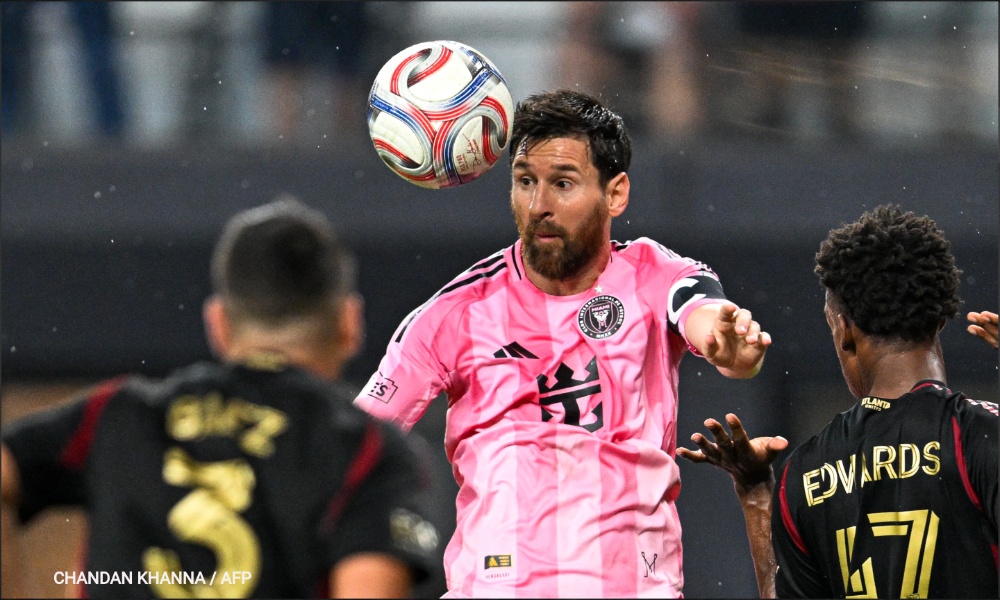
Lionel Messi returned to Inter Miami action on Saturday following his announcement that he is retiring from international football, helping the Major League Soccer champions to a 2-2 draw with Atlanta United.
The Argentine superstar marked his return by creating both of Miami’s goals, underlining his continued importance to the club just days after revealing his decision to step away from the Argentina national team.
The match was delayed by 90 minutes because of thunderstorms and lightning, but Messi provided plenty of fireworks once play finally got underway.
Miami opened the scoring in the 32nd minute when Brazilian midfielder Casemiro rose to head home Messi’s corner.
Atlanta hit back just three minutes later, with former Newcastle forward Miguel Almirón firing a low shot beyond the Miami defence.
Messi was again at the centre of the action just before half-time. He started a move down the left that eventually allowed former Liverpool and Barcelona striker Luis Suárez to calmly finish and restore Miami’s lead.
But Atlanta refused to surrender, with Swiss striker Breel Embolo converting an 87th-minute penalty to earn the visitors a point.
For Messi, the match represented his first appearance since announcing his international retirement and offered an early glimpse of the next chapter of his career, with his focus now firmly on Inter Miami.
The result came during a busy night of MLS action.
Toronto and Chicago played out a remarkable 4-4 draw, while Philadelphia defeated Montreal 2-0, with 16-year-old Cavan Sullivan scoring his fourth goal of the season.
Sullivan now has 11 goal contributions this season, surpassing Freddy Adu’s previous record of 10 for a 16-year-old.
In Orlando, Antoine Griezmann scored in the 28th minute to give the hosts a 1-0 victory over San Diego, while Austin rescued a 1-1 draw against San Jose through Guilherme Biro’s seventh-minute stoppage-time equaliser.
International Sports
Iranian clubs to face Gulf opponents at neutral venues in Asian Champions League Elite
Tehran-based Esteghlal and Tabriz-based Tractor will face UAE sides Al Ain, Al Wasl and Shabab Al Ahli, as well as Qatar’s Al Gharafa, Al Sadd and Al Shamal.
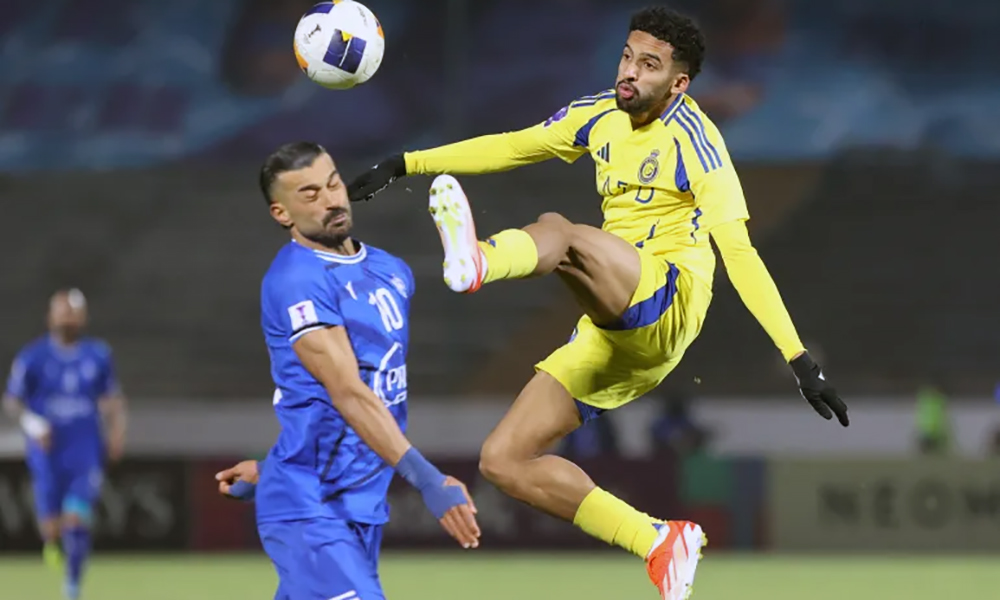
Iranian clubs Esteghlal and Tractor will play their AFC Champions League Elite matches against teams from Qatar and the United Arab Emirates at neutral venues, following the August 18 league-stage draw in Kuala Lumpur.
The Asian Football Confederation’s (AFC) premier club competition is scheduled to begin on September 14, with matches involving the Iranian clubs to be played at neutral venues.
Tehran-based Esteghlal and Tabriz-based Tractor will face UAE sides Al Ain, Al Wasl and Shabab Al Ahli, as well as Qatar’s Al Gharafa, Al Sadd and Al Shamal.
The 2026/27 AFC Champions League Elite features an expanded 32-team format, with 16 clubs competing in each of the Western and Eastern zones. The top eight teams from each zone will advance to the round of 16.
The knockout stages will continue through the regional rounds, with the quarterfinals, semifinals and final scheduled to be played in Saudi Arabia from April 23 to May 1, 2027.
Meanwhile, Ariana Television Network (ATN) will broadcast AFC Champions League Elite matches across Afghanistan, bringing fans nationwide live coverage of some of the biggest club football fixtures in Asia.
Fans across Afghanistan are urged to stay tuned to ATN for more updates, match schedules and broadcast details.


Afghanistan central bank and ACGF sign cooperation agreement

Saar: Afghanistan’s image at UNGA

Tajikistan reaffirms support for peace and stability in Afghanistan

Germany reports 488 Afghans for possible deportation, 267 have no criminal convictions

Afghanistan says 28 killed, 32 captured in Nuristan operation

Saudi energy group signs major Afghanistan deals covering gas exploration and pipeline plans

Trump floats idea of renaming Atlantic or Pacific Ocean

Nepal flood rescue mission enters critical phase as thousands remain missing

US hits Egyptian bank branches with Iran sanctions as war marks six months

Iranian clubs to face Gulf opponents at neutral venues in Asian Champions League Elite
Saar: Afghanistan’s image at UNGA

Saar: Concerns over Pakistan’s political crisis discussed

Exclusive interview with Abdul Latif Mansoor, Minister of MRRD

Tawsia: Overview of Afghanistan’s iron mines

Tahawol: Discussion on fresh Pakistani airstrikes on Afghanistan
-

 Latest News4 days ago
Ariana Afghan Airlines ranks seventh among 45 Central Asian airlines
-

 Regional5 days ago
US and Iran hold first talks since June after Trump’s ‘annihilation’ threat
-

 Regional4 days ago
Iran airlines cancel flights as US sanctions hit
-

 Latest News4 days ago
Silk Road highway in Wakhan corridor now reaches the China border
-
 Business5 days ago
Afghanistan, Turkmenistan agree to establish joint road transport commission
-

 Latest News5 days ago
India condemns Pakistani airstrikes on Afghanistan
-
 Sport4 days ago
Afghanistan open Asian Games cricket campaign with win over Japan
-
 World4 days ago
Trump welcomes Chinese President Xi as US-China summit gets underway