
Latest News
Environment is being destroyed due to the world’s profiteering: Hanafi

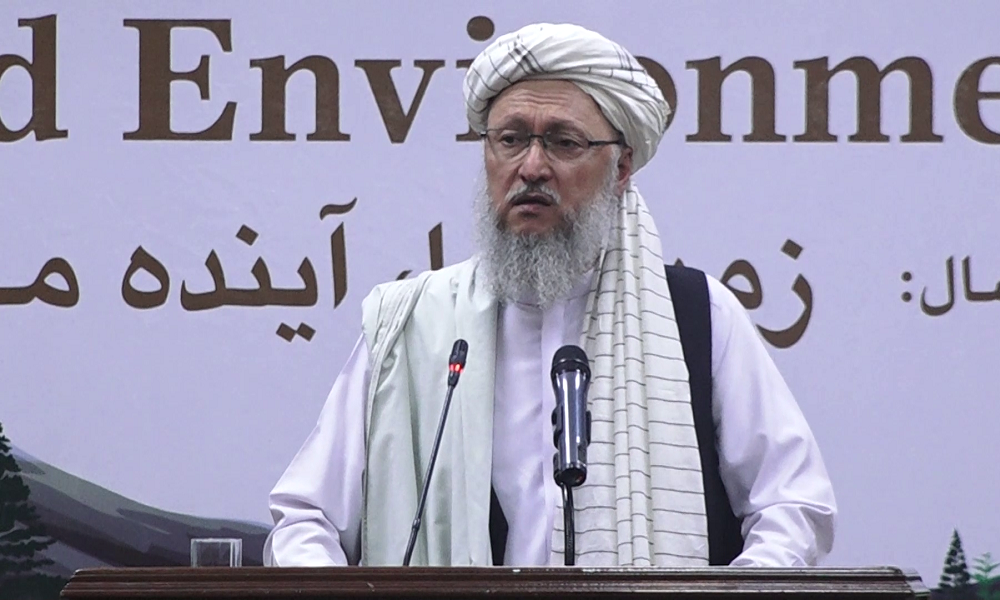
Deputy Prime Minister for Administrative Affairs Abdul Salam Hanafi said Wednesday that over the last four decades, the use of various weapons in Afghanistan has destroyed the environment, and the countries that produce the most greenhouse gasses should cooperate with affected countries.
Marking World Environment Day in Kabul, Hanafi said that climate change has destroyed half of Afghanistan’s forests and water has not been managed in the country.
“Today, the environment has been endangered and destroyed more than ever due to the profiteering of the world’s industrial powers. The increasing pollution of soil, water, air and sound has threatened the environment and caused irreparable damage to it,” said Hanafi.
However, he added that the Islamic Emirate has undertaken large and national programs to prevent desertification, resilience against drought, and land restoration.
Meanwhile, UN envoy Roza Otunbayeva also warned that Afghanistan’s beautiful and unique environment is under threat.
She called for urgent adaptation, better resource management and ecosystem restoration to halt climate-related floods, drought, and desertification.
Otunbayeva emphasized that the country is severely affected by climate change and environmental degradation.
Referring to recent floods in Afghanistan, she highlighted that at least 20,000 homes were destroyed. In response to the floods, the United Nations provided food supplies to 10,000 people and shelter to another 2,500, she said.
Otunbayeva also pointed out that decades of war have inflicted significant damage on Afghanistan’s environment. She stressed the importance of collective efforts to preserve the country’s natural beauty.
“Afghanistan has a beautiful environment, and we must strive to protect it,” she concluded.





Latest News
UNAMA calls for greater transparency and accountability in Afghanistan’s security institutions
The report also says fear of reprisals, a lack of trust in authorities and barriers to accessing institutions discourage people from reporting alleged misconduct.
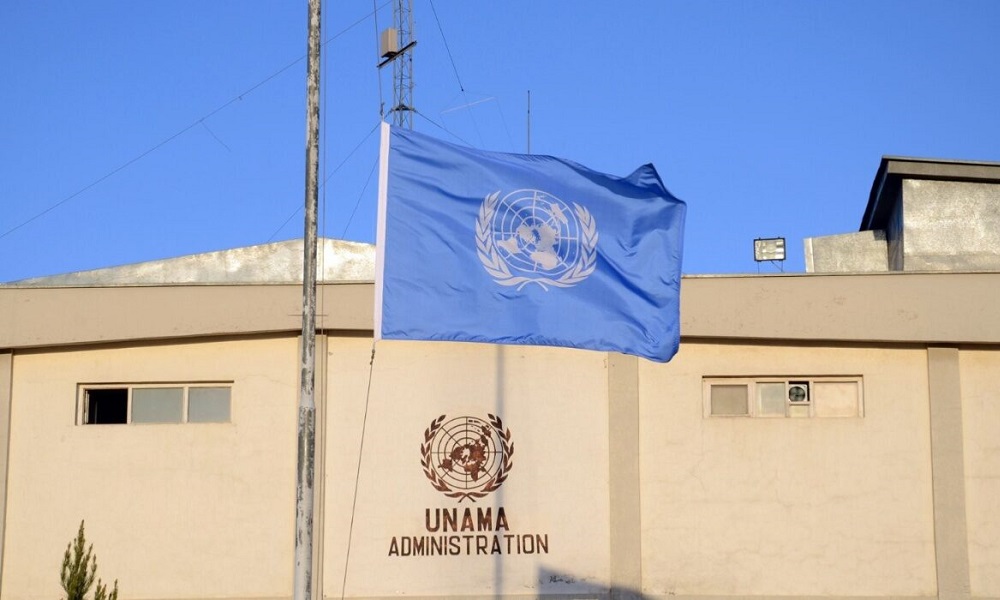
The United Nations Assistance Mission in Afghanistan (UNAMA) has called on the Islamic Emirate of Afghanistan (IEA) to strengthen transparency, oversight and accountability within the country’s security institutions.
In a new 38-page report, UNAMA examines measures taken by the IEA since August 2021 to oversee security institutions and address misconduct by security personnel.
The report says the authorities have taken some steps to promote discipline and oversight, including issuing directives, establishing internal monitoring units and creating new bodies tasked with addressing misconduct by security personnel.
However, UNAMA says these measures have not been accompanied by sufficient public information about complaints, investigations and disciplinary or judicial actions.
The report identifies several bodies responsible for oversight, including the Security and Filtration Commission, the High Directorate of Supervision and Monitoring of Decrees and Edicts, the Ministry of Propagation of Virtue and Prevention of Vice Commission for Hearing Complaints, and the Supreme Court.
“The limited amount of public information on complaints received, investigations conducted, and disciplinary or judicial actions taken by relevant de facto bodies undermine confidence and weaken deterrence,” said Georgette Gagnon, UNAMA’s Deputy Special Representative of the Secretary-General and Officer-in-Charge.
UNAMA documented cases in which IEA authorities arrested and investigated security personnel accused of misconduct and referred some cases to military courts. However, the mission said many complaints reportedly remain unresolved.
The report also says fear of reprisals, a lack of trust in authorities and barriers to accessing institutions discourage people from reporting alleged misconduct. Women, in particular, face additional obstacles because of restrictions affecting their daily lives, UNAMA said.
UNAMA has recommended that the IEA authorities establish and consistently enforce clear rules and codes of conduct for security personnel, in line with international standards. It also called for clearer regulations governing the use of force, arrests, detention, searches and crowd control.
The UN mission further urged the authorities to establish safe, accessible and inclusive complaint mechanisms that allow people to report misconduct without fear of retaliation or discrimination, while protecting victims, witnesses and whistleblowers.
UNAMA also called for regular public reporting on complaints, investigations and disciplinary or judicial measures, as well as stronger systems for collecting and maintaining data on misconduct.
According to the report, greater transparency and consistent accountability could improve professionalism, strengthen public trust in security institutions and contribute to better governance, respect for human rights and Afghanistan’s engagement with the international community.
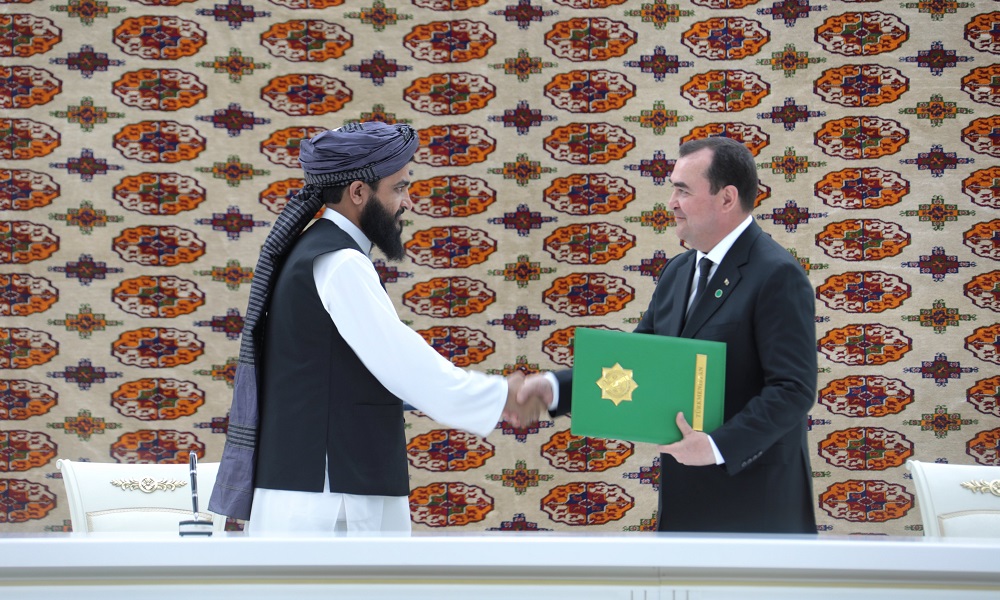
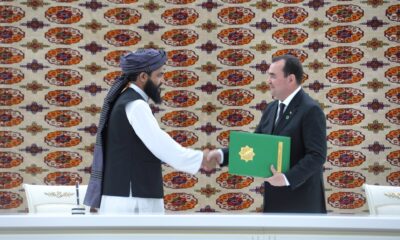
The Office of the Deputy Prime Minister for Economic Affairs has announced that a memorandum of understanding (MoU) on the purchase of gas under the TAPI project was signed on Monday in Torghundi, Herat province, between the state-owned Afghan Gas Company and
Turkmenistan’s Türkmengaz Company, in the presence of Mullah Abdul Ghani Baradar, Deputy Prime Minister for Economic Affairs, and Gurbanguly Berdimuhamedov, the National Leader of Turkmenistan.
According to the Deputy Prime Minister’s Office, the MoU will determine the price of gas, the required volume of gas, and the gas distribution process.
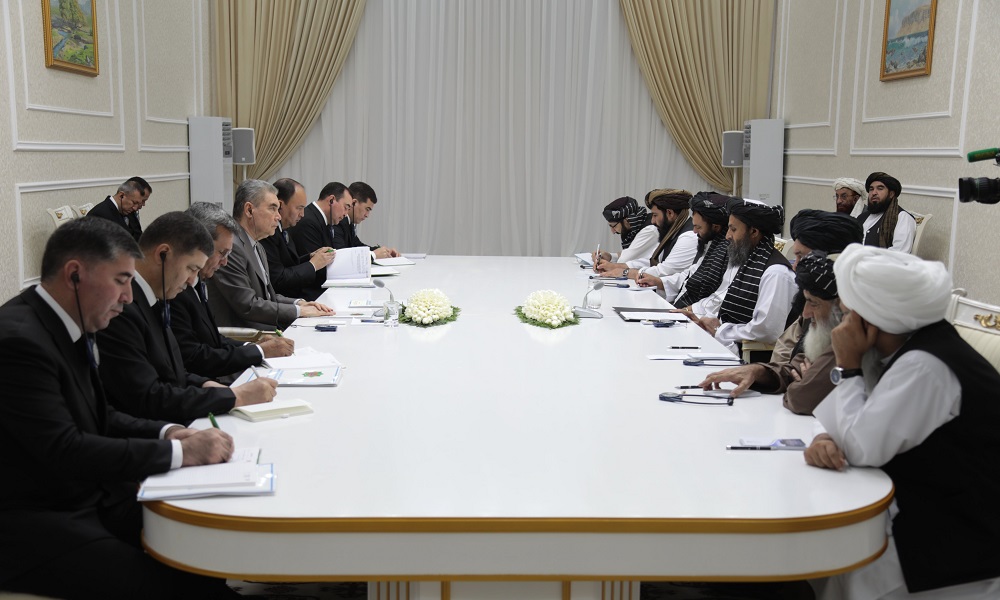
Mullah Abdul Ghani Baradar, Deputy Prime Minister for Economic Affairs, during his visit to Herat province, met with Turkmenistan’s National Leader, Gurbanguly Berdimuhamedow, in Torghundi on Monday to discuss the latest progress on the TAPI project and future economic cooperation between Afghanistan and Turkmenistan.
According to a statement from the Office of the Deputy Prime Minister for Economic Affairs, Baradar said during the meeting that work on the TAPI project in Herat is progressing well and that the remaining work is expected to be completed within the scheduled timeframe.
Baradar urged the Turkmen side to reach an agreement on the price of gas and called for the gas pricing formula to be adjusted in a way that would prevent sharp fluctuations in European markets from affecting gas prices.
He also proposed that the gas agreement be concluded for a long-term period, with simple terms and a flexible mechanism for reviewing the contract.
Baradar called for Turkmenistan’s cooperation in constructing a gas distribution and consumption network in Herat, establishing a joint technical and legal commission to address the remaining issues related to the TAPI project, and making joint efforts to create more job opportunities for Afghans through the project.
He said the TAPI project has strengthened strategic cooperation between Afghanistan and Turkmenistan and stressed the need for the two sides to work together to expand trade by reopening the Aqina border crossing for oil transit, facilitating Afghan transit goods at the Turkmenbashi port, resolving existing obstacles to the reactivation of the Lapis Lazuli Corridor, and rebuilding and expanding the Herat–Torghundi railway.
Baradar also called on Turkmenistan to support major economic projects in Afghanistan in the electricity and transport sectors.
During the meeting, Gurbanguly Berdimuhamedov said relations between Turkmenistan and Afghanistan have been strengthened on the basis of goodwill and good-neighborly relations, creating opportunities for cooperation in various fields.
Berd Berdimuhamedov added that Turkmenistan is ready to cooperate not only on extending the TAPI pipeline to Herat, but also on constructing a gas distribution network in the province and launching practical work on the TAP project. He said a number of foreign companies have expressed readiness to invest in the TAP project.
He further said Ashgabat is ready to provide all necessary facilities at Turkmenbashi port for Afghan transit and commercial goods.
He also stressed the need for joint efforts to reactivate the Lapis Lazuli Corridor to boost trade between the two countries and the wider region.
He assured the Afghan side that work on projects already launched in Afghanistan’s electricity and railway sectors would be completed on schedule and at an accelerated pace.
At the end of the meeting, the two sides agreed to establish a technical committee led by senior officials to follow up on and implement the TAPI, TAP, fiber-optic and railway projects and ensure that work on these projects progresses more effectively.


Afghanistan beat Ireland by 3 wickets in third ODI

Tahawol: Iran’s acknowledgment of Afghanistan’s cooperation discussed

Saar: Five years of Islamic Emirate rule in Afghanistan reviewed

UNAMA calls for greater transparency and accountability in Afghanistan’s security institutions

MoU on TAPI gas purchase signed between Afghan Gas and Türkmengaz

Pakistan’s governance system has ‘collapsed’: Mohsin Naqvi

India offers 1,000 online scholarships for Afghan students for 2026-27 academic year

FIFA’s inaugural YouTube Creator Cup to stream live on Ariana Television and Ariana Sport YouTube channels

FIFA World Cup semi-final line-up confirmed

ATN secures exclusive rights to broadcast Afghanistan vs Ireland cricket tour
Tahawol: Iran’s acknowledgment of Afghanistan’s cooperation discussed
Saar: Five years of Islamic Emirate rule in Afghanistan reviewed

Tahawol: Afghanistan: An Alternative to the Strait of Hormuz?

Saar: Pakistan-Saudi-Turkey Pact: Regional Impact

Tahawol: Escalating disputes over Iran war discussed
-

 Sport5 days ago
Afghanistan holds Russia to 3-3 draw, earns first point at Continental Futsal Championship
-
 Regional3 days ago
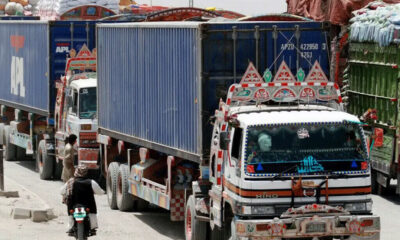
Goods transporters to go on strike from Saturday after talks with Pakistan govt fail
-

 Sport3 days ago
Rashid Khan takes six as Afghanistan thrash Ireland by 92 runs
-

 Sport1 day ago
Afghanistan secure direct qualification for 2027 Men’s ODI World Cup
-
 Business4 days ago
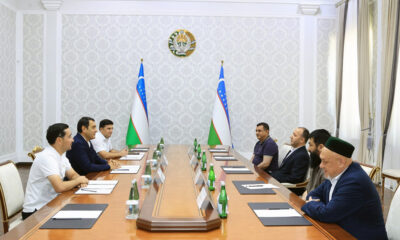
Uzbekistan’s Fergana region strengthens economic ties with Afghanistan
-
 Regional5 days ago
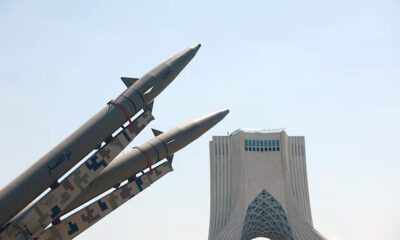
Iran threatens to hit Gulf states if US launches new strikes
-
 World3 days ago
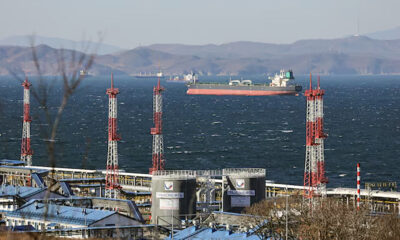
US Senate passes Russia sanctions championed by Graham; US House next
-
 Sport4 days ago
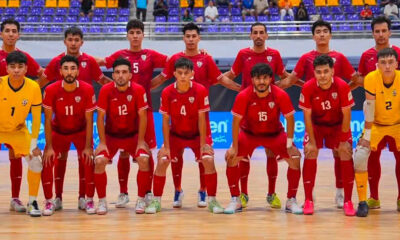
Afghanistan ends continental futsal championship with dominant win over New Zealand