
Regional
Gaza ceasefire and hostage release set to begin
During the first phase the Israeli army will pull back from some of its positions in Gaza and Palestinians displaced from areas in northern Gaza will be allowed to return.

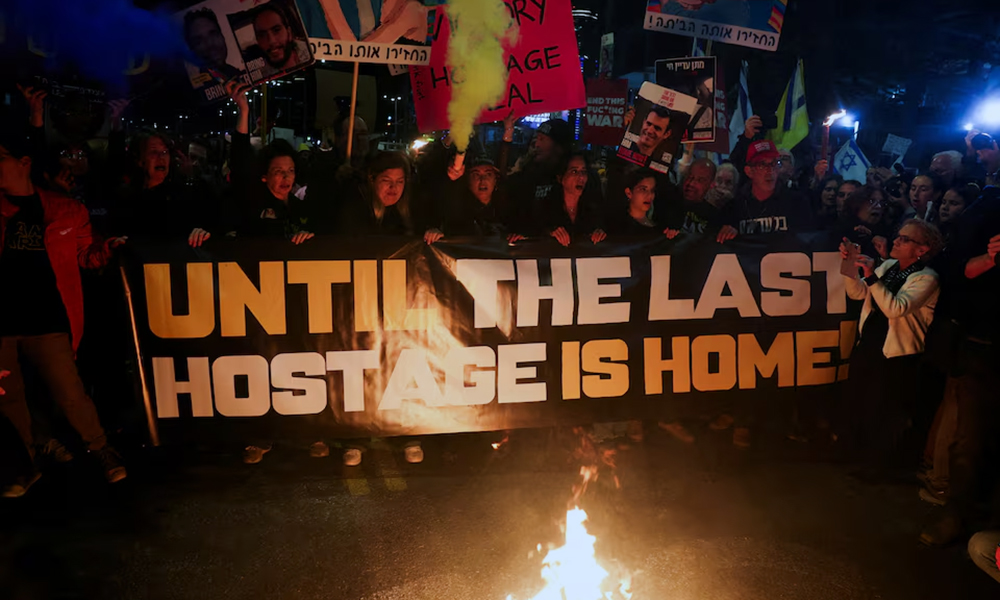
A ceasefire in Gaza between Israel and Hamas is set to come into effect on Sunday morning with a hostage release to follow hours later, opening the way to a possible end to a 15-month war that has upended the Middle East, Reuters reported.
Israeli forces started withdrawing from areas in Gaza’s Rafah to the Philadelphi corridor along the border between Egypt and Gaza, pro-Hamas media reported early on Sunday.
The ceasefire agreement followed months of on-off negotiations brokered by Egypt, Qatar and the United States, and came just ahead of the Jan. 20 inauguration of U.S. President-elect Donald Trump.
The three-stage ceasefire will come into effect at 0630 GMT on Sunday.
Its first stage will last six weeks, during which 33 of the remaining 98 hostages – women, children, men over 50, the ill and wounded – will be released in return for almost 2,000 Palestinian prisoners and detainees.
They include 737 male, female and teen-aged prisoners, some of whom are members of militant groups convicted of attacks that killed dozens of Israelis, as well as hundreds of Palestinians from Gaza in detention since the start of the war, read the report.
Three female hostages are expected to be released on Sunday afternoon through the Red Cross, in return for 30 prisoners each.
After Sunday’s hostage release, lead U.S. negotiator Brett McGurk said, the accord calls for four more female hostages to be freed after seven days, followed by the release of three further hostages every seven days thereafter.
During the first phase the Israeli army will pull back from some of its positions in Gaza and Palestinians displaced from areas in northern Gaza will be allowed to return.
U.S. President Joe Biden’s team worked closely with Trump’s Middle East envoy Steve Witkoff to push the deal over the line.
As his inauguration approached, Trump had repeated his demand that a deal be done swiftly, warning repeatedly that there would be “hell to pay” if the hostages were not released.
But what will come next in Gaza remains unclear in the absence of a comprehensive agreement on the postwar future of the enclave, which will require billions of dollars and years of work to rebuild.
And although the stated aim of the ceasefire is to end the war entirely, it could easily unravel.
Hamas, which has controlled Gaza for almost two decades, has survived despite losing its top leadership and thousands of fighters, Reuters reported.
Israel has vowed it will not allow Hamas to return to power and has cleared large stretches of ground inside Gaza, in a step widely seen as a move towards creating a buffer zone that will allow its troops to act freely against threats in the enclave.
In Israel, the return of the hostages may ease some of the public anger against Prime Minister Benjamin Netanyahu and his right-wing government over the Oct. 7 security failure that led to the deadliest single day in the country’s history.
But hardliners in his government have already threatened to quit if war on Hamas is not resumed, leaving him pressed between Washington’s desire to see the war end, and his far-right political allies at home.
And if war resumes, dozens of hostages could be left behind in Gaza.
Outside Gaza, the war sent shockwaves across the region, triggering a war with the Tehran-backed Lebanese Hezbollah movement and bringing Israel into direct conflict with its arch-foe Iran for the first time, Reuters reported.
More than a year later, the Middle East has been transformed. Iran, which spent billions building up a network of militant groups around Israel, has seen its “Axis of Resistance” wrecked and was unable to inflict more than minimal damage on Israel in two major missile attacks.
Hezbollah, whose huge missile arsenal was once seen as the biggest threat to Israel, has been humbled, with its top leadership killed and most of its missiles and military infrastructure destroyed.
In the aftermath, the decades-long Assad regime in Syria was overturned, removing another major Iranian ally and leaving Israel’s military effectively unchallenged in the region.
But on the diplomatic front, Israel has faced outrage and isolation over the death and devastation in Gaza.
Netanyahu faces an International Criminal Court arrest warrant on war crimes allegations and separate accusations of genocide at the International Court of Justice.
Israel has reacted with fury to both cases, rejecting the charges as politically motivated and accusing South Africa, which brought the original ICJ case as well as the countries that have joined it, of antisemitism.
The war was triggered by Hamas’ Oct. 7, 2023, attack on southern Israel in which 1,200 people were killed and more than 250 taken hostage, according to Israeli tallies. More than 400 Israeli soldiers have been killed in combat in Gaza since.
Israel’s 15-month campaign in Gaza has killed nearly 47,000 Palestinians, according to Gaza health ministry figures, which do not distinguish between fighters and civilians, and left the narrow coastal enclave a wasteland of rubble.
Health officials say most of the dead are civilians. Israel says more than a third are fighters.







Regional
Floods, landslides kill 56 in India and 14 in Nepal
In India, the Central Water Commission said 30 river-monitoring stations across seven states indicated a “severe situation”.
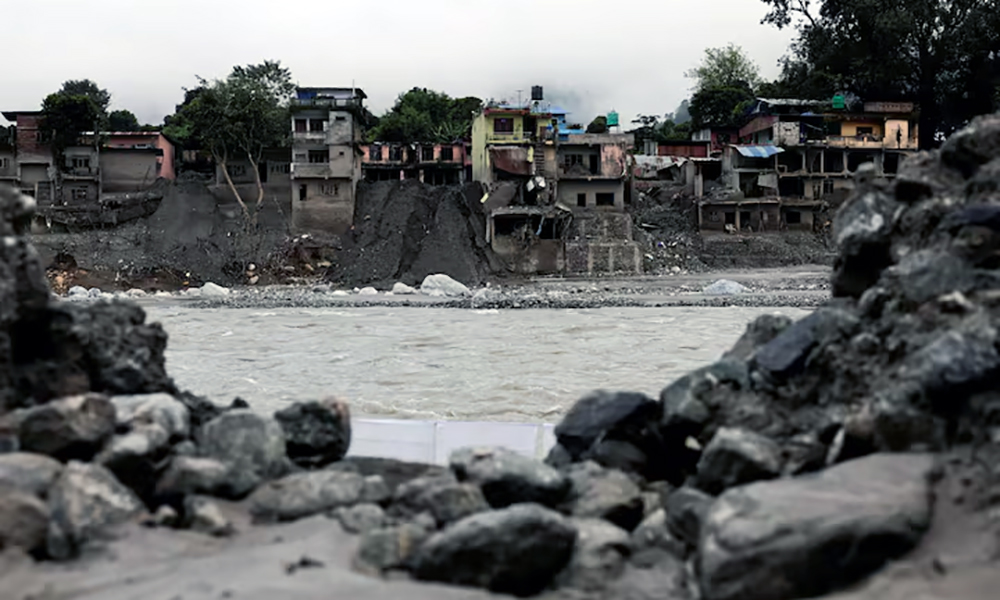
Heavy rain and storms have triggered floods and landslides that killed 56 people in India, while in Nepal, 14 have died and another 11 are missing, with authorities there warning on Sunday that more flash floods are possible, Reuters reported.
India’s northern state of Uttar Pradesh recorded 66.5 mm of rain between September 25 and the morning of September 27, compared with a normal 7.6 mm for the period, Hrishikesh Bhaskar Yashod, the state’s relief commissioner, said on Sunday.
Authorities are carrying out rescue operations in waterlogged areas and distributing relief, while officials have been told to assess crop damage and provide compensation.
In addition to the 56 deaths, 46 people have been injured and more than 1,000 houses have been damaged.
Nepali authorities warned of possible flash floods in 49 of the country’s 77 districts, with more than half facing high flood or flash-flood risks as water levels in major rivers and tributaries continued to rise.
Shanti Mahat, a spokesperson for the National Disaster Risk Reduction and Management Authority, said Rasuwa and Nuwakot, areas hit by last month’s deadly floods that killed more than 1,450 people and left thousands still missing, should remain “alert” but were not currently considered high-risk areas.
Power supply has been completely disrupted in the Manang, Mustang, Myagdi and Baglung districts, with authorities working to restore electricity, energy ministry officials said.
Flooding of the Rahuganga River damaged the structure and transmission-line towers of a 40-megawatt hydropower project, Water Resources and Energy Minister Biraj Bhakta Shrestha said.
In India, the Central Water Commission said 30 river-monitoring stations across seven states indicated a “severe situation”.
Several major rivers, including the Ganga, Gandak, Kosi, Bagmati and Narmada, were above danger levels, read the report.
Floods and landslides also disrupted telecommunications in parts of Nepal after damage to optical fibres and power supplies, Communications Minister Bikram Timilsinha said.
In a separate incident in Nepal, 10 local workers were also missing after an avalanche buried the base camp of the 7,126-metre (23,379-ft) Himlung Himal in the northern Manang district, hiking officials said.
The workers had been setting up tents for foreign climbers, who were not present when the avalanche struck.
Regional
Aimal Wali Khan calls Dera Ismail Khan attack a ‘state failure’
Khan called on the federal and Khyber Pakhtunkhwa governments to take greater responsibility for protecting citizens and addressing the deteriorating security situation in the province.
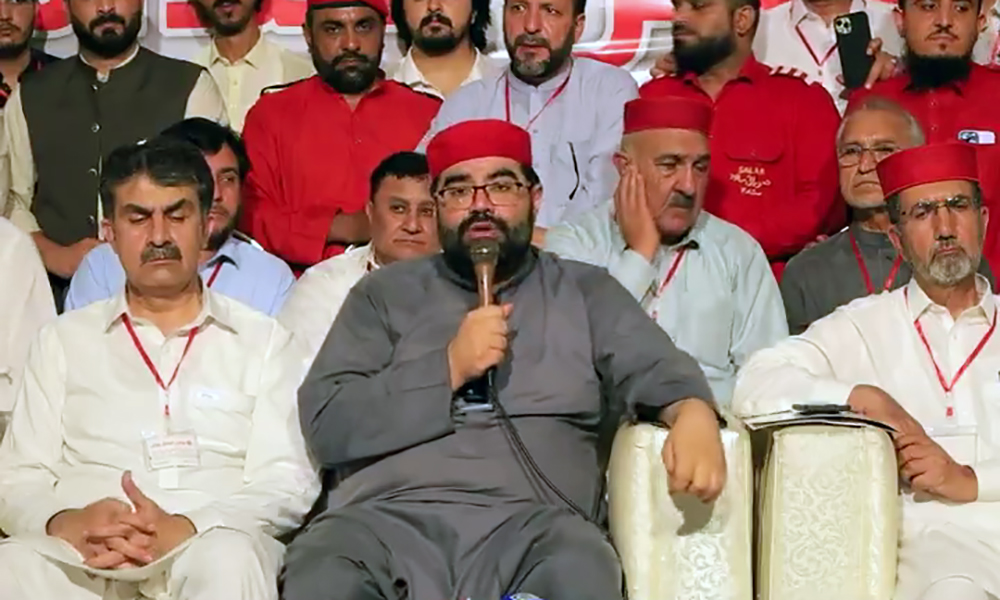
Awami National Party (ANP) President and Senator Aimal Wali Khan has condemned the suicide attack on the Aman Mela checkpoint in the Darazinda area of Pakistan’s Dera Ismail Khan district, describing it as a failure by the state to ensure the security of citizens.
According to Dawn, Khan called on the federal and Khyber Pakhtunkhwa governments to take greater responsibility for protecting citizens and addressing the deteriorating security situation in the province.
In a statement, Khan said Khyber Pakhtunkhwa is experiencing one of the darkest periods in its history. He alleged that the Pashtun population is facing systematic violence and said prolonged insecurity has left the province deeply affected by terrorism.
Khan also condemned an attack on an ambulance reportedly carrying the body of a person killed in the blast, describing it as an “inhumane act.”
The ANP leader questioned the government’s response to the worsening security situation, saying that blaming groups referred to by authorities as “Fitna al-Khawarij” and “Fitna al-Hindustan” does not absolve the state of its responsibility to protect citizens.
He urged the federal and provincial governments to stop blaming each other and instead focus on restoring peace and strengthening security across Khyber Pakhtunkhwa.
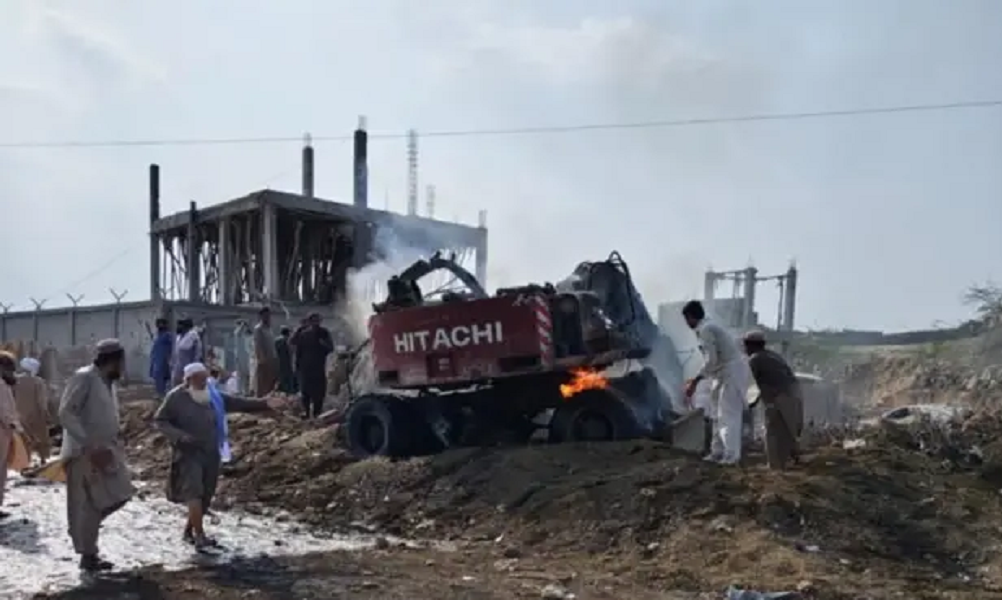
Eleven people were killed and 30 injured in a blast in Dera Ismail Khan in northwestern Pakistan on Saturday, emergency service Rescue 1122 said.
The Tehreek-e-Taliban Pakistan claimed responsibility for Saturday’s attack.
The blast occurred near Aman Mela in the Darazinda area of the district, Rescue 1122 said in a statement.
Rescue teams from the Darazinda station reached the scene and began relief operations, providing medical assistance to the wounded and taking them to hospital, the service said.
Security incidents have continued in the district this month, including attacks involving the Pakistani Taliban.


Sarsabz Yashlar edge Arman FC 1-0 in Afghanistan Champions League

Kunduz football ground to be built with FIFA funding

ACL: Sorkh Poshan Khafi maintain perfect record with 1-0 win over Ariana Khost

Health minister visits Belarus to expand medical cooperation

Afghanistan vs India Asian Games quarter-final abandoned without a toss

Saudi energy group signs major Afghanistan deals covering gas exploration and pipeline plans

Trump floats idea of renaming Atlantic or Pacific Ocean

Nepal flood rescue mission enters critical phase as thousands remain missing

Iranian clubs to face Gulf opponents at neutral venues in Asian Champions League Elite

Khalilzad: Afghanistan ready to attract major investment

Saar: Afghanistan’s image at UNGA

Saar: Concerns over Pakistan’s political crisis discussed

Exclusive interview with Abdul Latif Mansoor, Minister of MRRD

Tawsia: Overview of Afghanistan’s iron mines

Tahawol: Discussion on fresh Pakistani airstrikes on Afghanistan
-

 Regional5 days ago
Iran airlines cancel flights as US sanctions hit
-

 Sport5 days ago
Afghanistan open Asian Games cricket campaign with win over Japan
-

 World5 days ago
Trump welcomes Chinese President Xi as US-China summit gets underway
-

 Sport2 days ago
Afghan bodybuilder Ali Bilal finishes runner-up at Mr Olympia for third straight year
-

 World2 days ago
Trump rejects Iranian proposal to open Hormuz and end fighting
-

 Latest News2 days ago
Afghanistan says 28 killed, 32 captured in Nuristan operation
-
 Latest News4 days ago
Khalilzad warns Pakistan-Afghanistan tensions likely to worsen after fresh airstrikes
-

 Sport3 days ago
Afghanistan to face India in Asian Games cricket quarter-final