Connect with us

Latest News

Ghani, NATO Secretary-General discuss current situation in Afghanistan

Published

on

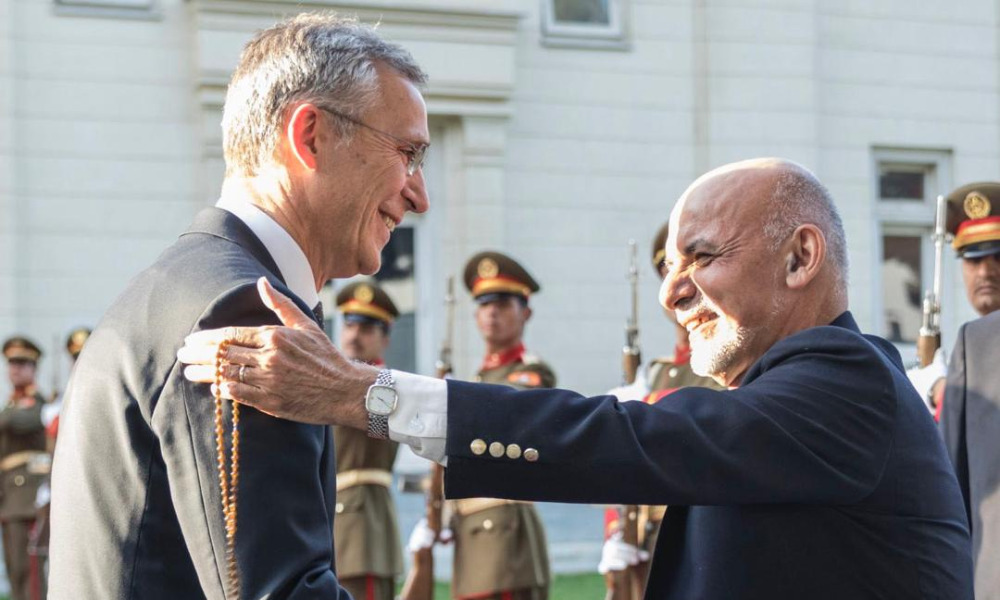
President Mohammad Ashraf Ghani Thursday in a phone conversation with NATO Secretary-General Jens Stoltenberg discussed the situation in Afghanistan including the Afghan peace process.

The Presidential Palace stated on Twitter that the two sides discussed, “the ongoing situation of Afghanistan, the peace process, and NATO’s support for the Afghan Defense and Security Forces.”

“Spoke with President Ashraf Ghani on the situation in Afghanistan where it has been a long and hard road towards the peace talks,” Jens Stoltenberg tweeted.

Reiterating NATO’s commitment to Afghanistan’s security, the NATO Chief stated that the peace talks are “fragile but offer the best chance for peace.”

It comes as the US-brokered intra-Afghan peace talks have made little progress, and the two sides yet to resolved disputes over contentious issues.

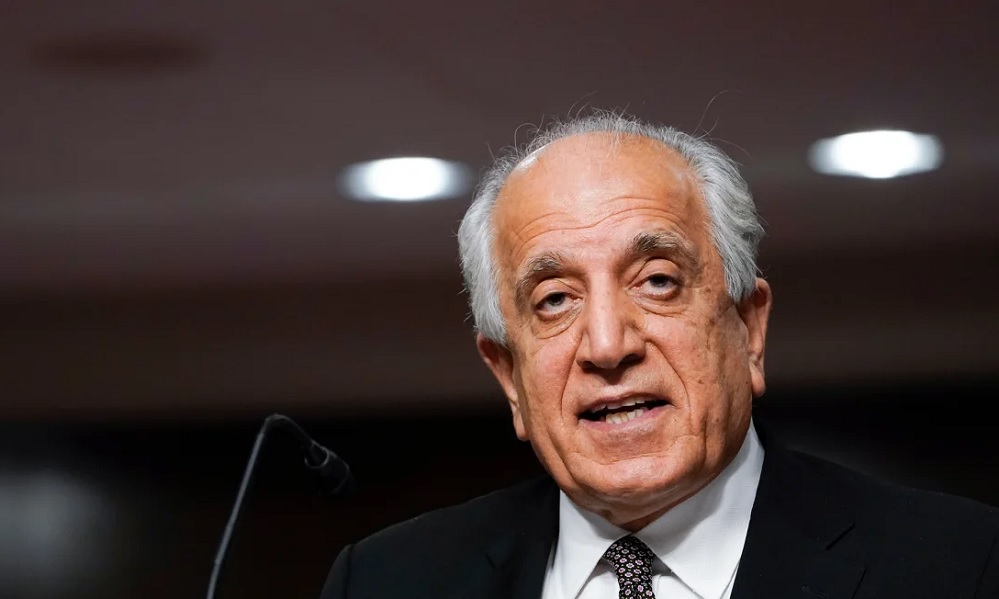
Meanwhile, US Special Representative for Afghanistan Reconciliation Zalmay Khalilzad Thursday met with Turkey’s Foreign Minister Mevlüt Çavuşoğlu in Ankara to discuss regional developments.

“Discussed latest developments in Afghanistan peace process with US Special Representative for Afghanistan Reconciliation Zalmay Khalilzad. Will continue our strong support to efforts aiming at peace and stability in Afghanistan,” Çavuşoğlu tweeted.


Latest News

Pakistan reaffirms commitment to talks with IEA, urges action against terrorism

Published

on

Pakistan’s Ministry of Foreign Affairs has reaffirmed its commitment to continued dialogue with the Islamic Emirate of Afghanistan (IEA) to address bilateral issues but emphasized that Kabul must take “serious and visible steps” to prevent the use of Afghan territory by terrorist groups.

Foreign Ministry spokesperson Tahir Andarabi, responding to media queries on Sunday about the third round of Pakistan-Afghanistan talks held in Istanbul on November 6, said that Islamabad remains open to engagement but considers terrorism a “core and non-negotiable concern.”

The Istanbul talks, mediated by Türkiye and Qatar, concluded without a final agreement.

“Pakistan remains committed to addressing bilateral issues through dialogue,” the ministry said in a statement. “However, our foremost concern—terrorism emanating from Afghan soil—must be prioritized.”

According to Islamabad, Pakistan has made consistent efforts to foster constructive relations with Kabul, including trade concessions, humanitarian assistance, and proposals for economic cooperation. However, Pakistani officials accuse the Islamic Emirate of offering “empty promises and inaction” in response.

The ministry also alleged that the Islamic Emirate continues to shelter Pakistani militants under the guise of refugees, claiming that many of these individuals fled to Afghanistan following Pakistan’s 2015 military operations and later fought alongside the IEA against NATO forces.

Pakistan reiterated that while it remains open to dialogue with Afghan authorities, it will not engage with any terrorist organization.

Meanwhile, IEA Foreign Minister Amir Khan Muttaqi on Sunday confirmed that Pakistan had requested the transfer of members of the Tehreek-e-Taliban Pakistan (TTP) from Pakistan to Afghanistan.

“Afghanistan is not foolish enough to bring someone else’s problem into its home,” Muttaqi said. “First, you accuse us of harboring TTP, then you ask us to take those militants from your own territory—this is contradictory and unacceptable.”

Muttaqi also criticized Pakistan’s treatment of Afghan refugees and Durand Line closures. “It is unfortunate that a country which calls itself a nuclear power and claims to have a strong army uses its strength against refugees and traders,” he said. “How can a nuclear power be used against onions and tomatoes? What kind of logic is this, and in whose interest?”


Continue Reading

Latest News

Almost 154,000 Afghan refugees return home from neighboring countries in past two weeks

Deputy Special Representative of the UN Secretary-General and UN Humanitarian Coordinator for Afghanistan, said during a meeting with Deputy Prime Minister Abdul Salam Hanafi on Sunday that over 4.5 million Afghan refugees have returned to the country since 2023.

Published

on

The Ministry of Refugees and Repatriation of Afghanistan on Tuesday told Ariana News that almost 154,000 Afghan refugees have returned to the country from Pakistan, Iran, and Turkey over the past 15 days.

Abdul Mutalib Haqqani, spokesperson for the ministry, said that during the past two weeks, 26,044 families, totaling 136,169 individuals, have returned voluntarily or through forced deportation from neighboring countries.

According to Haqqani, 24,787 families returned from Pakistan; 1,251 families from Iran; and six families from Turkey. In addition, 16,603 single individuals were deported from these countries, while 1,132 Afghans were released from prisons in Pakistan. With these figures included, the total number of returnees over the past 15 days totals 153,931 people.

Haqqani added that the Islamic Emirate of Afghanistan (IEA) has provided initial assistance to returnees, including food, water, clothing, healthcare services, free SIM cards, cash aid, and transportation to help them resettle.

UN puts returnees at 4.3 million since 2023

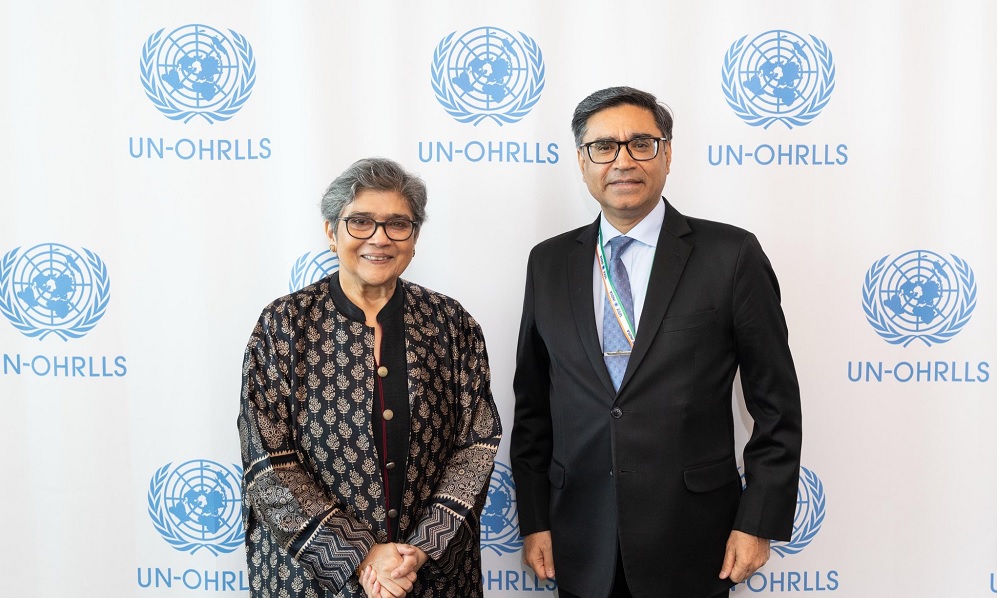
Indrika Ratwatte, Deputy Special Representative of the UN Secretary-General and UN Humanitarian Coordinator for Afghanistan, said during a meeting with Deputy Prime Minister Abdul Salam Hanafi on Sunday that over 4.5 million Afghan refugees have returned to the country since 2023.

Ratwatte noted that managing such a large influx of returnees would pose a major challenge for any country, but the Islamic Emirate has effectively handled the process, ensuring essential services and support for those coming back.

A report by the Mixed Migration Center (MMC) for the third quarter of 2025 meanwhile stated that Afghan returns from Iran and Pakistan continued to rise between 3 July and 24 September.

Returns meanwhile from Iran peaked in early July, with 43,000 recorded on 1 July alone. The surge followed regional instability linked to the June conflict with Israel and Iran’s late May announcement requiring all undocumented Afghans to leave the country by 6 July.

Although daily return figures declined later in the quarter, more than 2.1 million Afghans have returned from Iran in 2025.

Iran’s Interior Minister, Eskandar Momeni, announced on 17 August that the government intends to deport two million Afghans by March 2026.

In Pakistan, authorities announced on 31 July that Afghans holding Proof of Registration (PoR) cards would be subject to deportation under the “Illegal Foreigners Repatriation Plan.”

Over 1.3 million Afghans hold PoR cards, many of whom have lived in Pakistan for decades.

On 25 September, the Pakistan government announced plans to close 16 Afghan refugee camps in Khyber Pakhtunkhwa, Balochistan, and Punjab, affecting over 90,000 refugees. Many of these camps, established during the 1980s Soviet invasion, have become long-term settlements for multiple generations.

Turkey takes action

In addition to the repatriation measures undertaken by Pakistan and Iran, Turkey has also intensified its actions against Afghan migrants in the country.

In the latest round of operations targeting undocumented Afghan refugees, police in Sakarya province detained 24 Afghan citizens who had entered Turkey illegally in a truck.

Authorities reported that the truck driver was also arrested on human trafficking charges and referred to judicial authorities for further investigation. The detained individuals were transferred to a special immigration detention center on Saturday, November 7.

This development came just a day after Turkish police apprehended another group of Afghan nationals in the cities of Sakarya and Karadeniz.

According to the Turkish Interior Ministry, more than 30,000 Afghan refugees have been identified and detained across various cities in Turkey since the beginning of this year.

Continue Reading

Latest News

Afghanistan remains one of the most energy-insecure countries in the world

Through the installation of solar panels and mini-grids, UNDP is bringing electricity to schools, hospitals, and businesses.

Published

on

Afghanistan continues to struggle with severe energy insecurity, with more than 80% of its population lacking reliable access to electricity. In rural areas, most families still depend on firewood and other solid fuels for cooking and heating, leading to health hazards, safety risks, and environmental degradation.

The United Nations Development Programme (UNDP) is however working to change this reality by expanding renewable energy access across the country.
Through the installation of solar panels and mini-grids, UNDP is bringing electricity to schools, hospitals, and businesses—providing power, light, and new opportunities for Afghan communities.

Since 2021, UNDP’s renewable energy initiatives have powered:
• 6,469 facilities, including 5,462 health centers
• 153 educational institutions
• 854 businesses, many of them women-led, supported through grants and partnerships to make energy solutions affordable

These projects have given more than two million Afghan women access to cleaner, safer, and more sustainable energy—enhancing their daily lives and helping to create brighter futures for families and communities.

By reducing reliance on firewood and promoting renewable energy, UNDP’s efforts are strengthening Afghanistan’s health, education, and economic sectors, proving that sustainable power can foster both stability and growth.

Continue Reading

Trending

Copyright © 2025 Ariana News. All rights reserved!