
Latest News
Ghani outlines Afghanistan’s path to peace

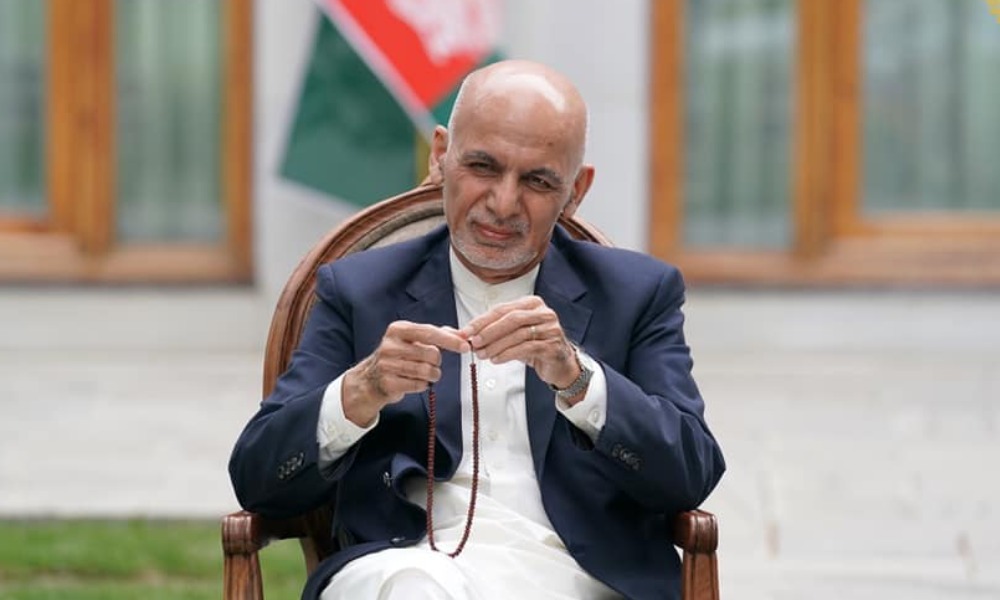
Afghan President Ashraf Ghani says President Joe Biden’s decision to withdraw the remaining 2,500 U.S. troops from Afghanistan by September represents a turning point for the country and its neighbors.
In an article written by Ghani for Foreign Affairs, he says the Afghan government respects the decision to withdraw troops “and views it as a moment of both opportunity and risk for itself, for Afghans, for the Taliban, and for the region.”
“For me, as the elected leader of the Islamic Republic of Afghanistan, it is another opportunity to reiterate and further my commitment to peace. In February 2018, I made an unconditional offer of peace to the Taliban. That was followed by a three-day cease-fire in June of that year.
“In 2019, a loya jirga (grand council) that I convened mandated negotiations with the Taliban, and since then, my government has worked to build a national consensus on the need for a political settlement that would comport with the values of the Afghan constitution and the UN’s Universal Declaration of Human Rights. My government remains ready to continue talks with the Taliban. And, if it meant peace would be secured, I am willing to end my term early,” he wrote.
He says the announcement of the U.S. withdrawal is another phase in Afghanistan’s long-term partnership with the United States.
“Afghanistan has been through consequential withdrawals before. In 2014, the year I first took office, 130,000 U.S. and NATO forces withdrew, allowing Afghans full leadership of the security sector and of the institutions that our international partners had helped us build.
“Since then, the Afghan National Defense and Security Forces (ANDSF) have protected and upheld the republic and made it possible for the country to carry out two national elections. Today, our government and our security forces are on a much stronger footing than we were seven years ago, and we are fully prepared to continue serving and defending our people after American troops depart,” he wrote.
He says the withdrawal also represents an opportunity for the Afghan people to achieve real sovereignty and that soon all decisions regarding military approaches to the Taliban and other terrorist groups will be made by the Afghan government.
“Indeed, the Taliban’s justification for war—jihad against a foreign power—will cease to apply,” he wrote.
Ghani says the U.S. decision to fully withdraw surprised not only the Taliban but also “their patrons in Pakistan”. He says this has forced them to make a choice.
“Will they become credible stakeholders, or will they foster more chaos and violence?”
If the Taliban choose the latter path, the ANDSF will fight them. And if the Taliban still refuse to negotiate, they will be choosing the peace of the grave, he says.
Ghani also stated that in order to avoid such a fate, the Taliban must answer critical questions about their vision for Afghanistan.
“Will they accept elections, and will they will commit to uphold the rights of all Afghans, including girls, women, and minorities?
“Negative answers to those questions were suggested by the Taliban’s recent decision to pull out of a peace conference that was supposed to begin in Istanbul at the end of April.”
He said the Taliban, it seems, remain more interested in power than in peace. A political settlement and the integration of the Taliban into society and government is the only way forward. But the ball is in their court.
Ghani wrote that Afghans cannot and absolutely will not go back to the horrors of the 1990s and are “not idly waiting for peace to chance upon us but continue to take steps to create the environment and platform for it to take hold.”
He says that while all Afghans want peace, it is far less clear what the Taliban want.
“They demand an Islamic system – but that already exists in Afghanistan. For any negotiations over a political settlement between the Afghan government and the Taliban to succeed, the Taliban must articulate their desired end state with clarity and detail.”
The first topics of negotiation must be reaching the desired end state and putting in place a comprehensive cease-fire to bring peace and respite to the daily lives of the Afghan people and to restore credibility and faith in the peacemaking process. Because cease-fires established during peace negotiations often fall apart, however, it is critical that we have international monitoring, Ghani wrote.
“Next, the parties would have to discuss and decide on a transitional administration. Although the structure of the republic must remain intact, a peace administration would maintain order and continuity while elections were planned and held.
“This transitional authority would have a short tenure, and it would end as soon as presidential, parliamentary, and local elections determined the country’s new leadership. I would not run for office in such an election, and I would readily resign the presidency before the official end of my current term if it meant that my elected successor would have a mandate for peace,” he said.
He also noted that the negotiations would confront difficult issues, such as whether and how the Taliban would end their relationship with Pakistan.
The talks must also address the Taliban’s ongoing connections to al-Qaeda, which the UN detailed in a 2020 report, he said.
In line with this, the Afghan government and the Taliban must also agree on an approach against the Islamic State (or ISIS/Daesh), al-Qaeda, and other terrorist groups and that any agreement includes a framework for counterterrorism that secures guarantees of support from other countries in the region and from international organizations.
“The agreement must also ensure the continuation of high-level regional diplomacy and welcome the involvement of the UN secretary-general’s personal representative.”
Once the Afghan government and the Taliban have reached a settlement, the Afghan people would need to publicly endorse it through a loya jirga, a grand meeting of male and female community leaders from every province.
“The Taliban have been deprived of immersion in Afghan society for the past 20 years, and a loya jirga would offer an ideal opportunity for their leadership to interact with all segments of the population,” he said.
The Afghan people want a country that is sovereign, Islamic, democratic, united, and neutral.
After a political settlement has been negotiated, inked, and endorsed, the hard work of implementation would begin. This is the process of building peace. There is always a temptation to make the temporary permanent, which is why the peace government must prioritize elections, he said.
In the interim, however, the transitional leadership would have to make a series of hard decisions about how to govern. Economic development, education and health services, and other key functions of the state would have to continue without disruption, Ghani stated.
“Any stoppage would have disastrous ramifications for the Afghan people and for the economy. There would also be new priorities, such as releasing prisoners of war; integrating members of the Taliban in all levels of government, the military, and society; and addressing the grievances of those who have lost loved ones, property, and livelihoods during the past two decades of war.”
He went on to state a newly elected government will have an important mandate to sustain peace and implement the agreement. That may require making amendments to the constitution. The constitution makes clear that, except for the Islamic character of the state and the fundamental rights of citizens, all else is subject to amendment, and there are mechanisms in place to enact those changes.
He said a new government would also need to deal with the reintegration of refugees (particularly those who fled to Iran and Pakistan), the resettlement of internally displaced people, and the often overlooked issue of national reconciliation.
Meanwhile, the transitional cease-fire would have to give way to a situation in which state institutions command a legitimate monopoly on the use of force. And Afghanistan would need to commit to permanent neutrality in order to mitigate the risk of regional conflicts. The UN General Assembly or the UN Security Council would be the ideal venues for establishing and formalizing Afghanistan’s neutral status, he stated.
The Path Ahead
“Even in an ideal environment, achieving a just and lasting peace would not be an easy journey. And unfortunately, the environment we are operating in is not ideal. There are many risks that this process could be derailed or disrupted, and Afghans may lose yet another opportunity for peace.
“For one, the perception of uncertainty, fueled by dire predictions in the media, may incline many Afghans to leave the country. This could lead to a repeat of the refugee crisis that unfolded in 2015 and would deprive the country of talented people right at the moment when they are most needed,” he wrote.
Another risk is that a disrupted or disorderly transition could threaten command and control within the country’s security sector. There must be an orderly political process to transfer authority so that the security forces are not left without leadership and direction, he said.
“Moreover, it is critically important that the United States and NATO fulfill their existing commitments to fund the ANDSF. This is perhaps the single most important contribution that the international community can make to a successful transition to peace in Afghanistan.
“There is also a risk that Afghan political figures will not galvanize around an orderly peace process. Thus we are reaching out to ensure that the process is inclusive, not only of internal political figures and different strata of Afghan society but also of regional actors who could potentially attempt to spoil the process.
“The main risk to peace, however, is a Taliban miscalculation. The Taliban still believe their own narrative that they have defeated NATO and the United States. They feel emboldened, and because their political leaders have never encouraged their military branch to accept the idea of peace, the greatest risk is that the Taliban will continue to show no earnest interest in making a political deal and will instead opt for continued military aggression,” Ghani said.
He went on to say however that it is not too late for Pakistan to emerge as a partner and stakeholder in an orderly peace process.
“If that is what happens, the Afghan government and the security forces are ready. As we prepare for peace talks with the Taliban, we are also prepared to face them on the battlefield.
“Over the last two years, more than 90 percent of Afghan military operations have been conducted entirely by Afghan security forces. Should the Taliban choose violence, it would mean a major confrontation over the spring and summer months, at the end of which the Taliban would be left with no good options except to come back to the negotiating table.”
He said Pakistan might also miscalculate in a way that threatens peace. There have been positive signs that Pakistan will choose the path of regional connectivity, peace, and prosperity, as indicated in remarks delivered in March at the Islamabad Security Dialogue by Pakistani Prime Minister Imran Khan and the Pakistani army chief of staff, General Qamar Javed Bajwa.
“Those remarks could signify an important pivot from a destructive to a constructive approach to relations with Afghanistan. Now is the opportunity to put those words into action.
“If Pakistan chooses to support the Taliban, however, then Islamabad would be opting for enmity with the Afghan nation and would be foregoing the enormous economic benefits that peace and regional connectivity would offer.
“Pakistan would become an international pariah, as it would be left with no leverage in the aftermath of the U.S. troop withdrawal. The Pakistani government miscalculated in its response to the United States’ plan of action for Afghanistan and the region, but it is not too late for Islamabad to emerge as a partner and stakeholder in an orderly peace process,” he said.
In conclusion, Ghani stated: “As we move into uncharted waters for Afghanistan, I am focused on achieving the best possible outcome of this long period of conflict: a sovereign, Islamic, democratic, united, neutral, and connected Afghanistan. I am willing to compromise and sacrifice to achieve that. The withdrawal of U.S. troops is an opportunity to get us closer to that end state, but only if all Afghans and their international partners commit to a clear path forward and stay the course.”








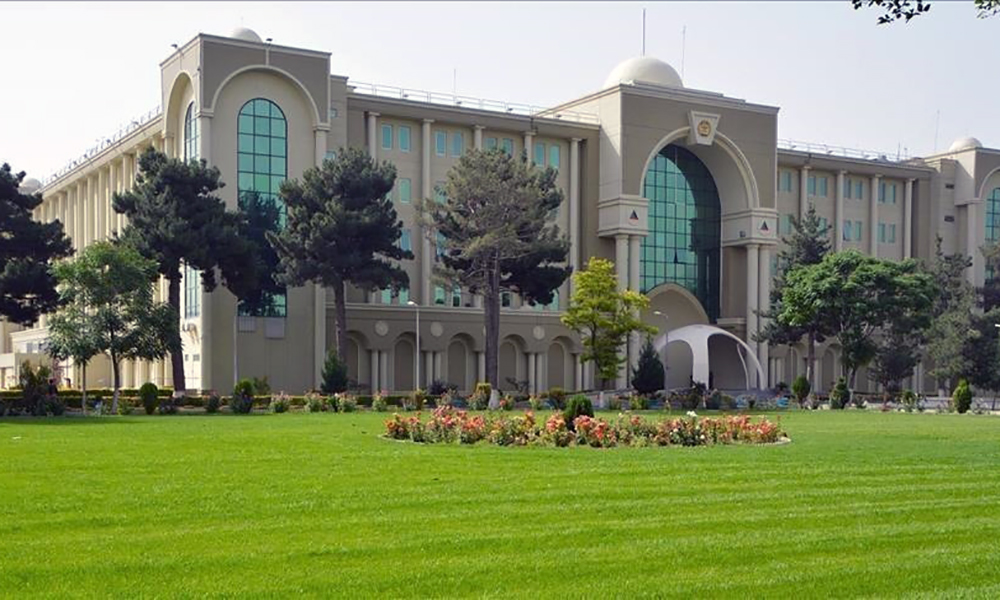
Afghanistan’s Ministry of Defense says a Pakistani military post near Spin Boldak was targeted and destroyed after Pakistani forces opened fire toward Afghanistan.
Ministry spokesperson Enayatullah Khwarazmi said in a post on X that Afghan forces suffered no casualties or damage in the clash.
Khwarazmi also rejected claims made by the Pakistani side about the incident, describing them as “propaganda.”
Latest News
Mujahid: Pakistan attacking Afghanistan to evade Mecca Pact responsibilities
He warned that the Islamic Emirate would give an “appropriate response” to what he called the Pakistani military regime’s “bullying.”
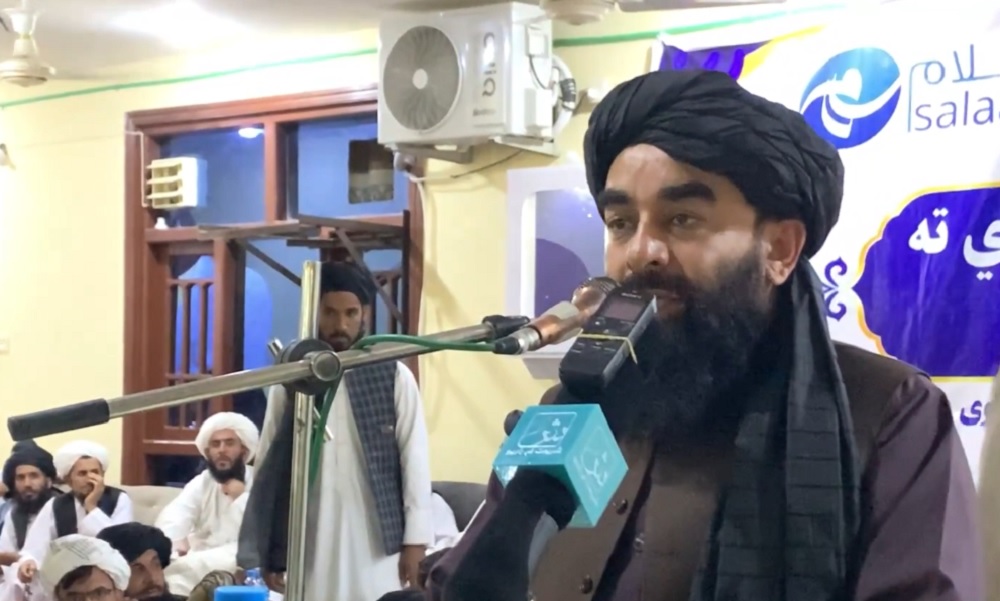
Islamic Emirate spokesperson Zabihullah Mujahid has accused Pakistan of carrying out attacks on Afghanistan to divert attention from its domestic problems and to evade responsibilities under the “Mecca Pact.”
Speaking at a religious seminary in Kandahar, Mujahid said Pakistan was facing political and economic challenges at home and was using attacks on Afghanistan to shift public attention away from protests and its internal problems.
“Pakistan, by violating the territory of its neighboring Islamic country, wants to divert attention from its failures,” he said.
Mujahid also criticized Pakistan’s political situation, claiming that political space had been restricted and that freedoms guaranteed under the country’s laws were not being allowed.
He said Pakistan’s economic problems had also increased significantly and accused the country of seeking to distract the public from those problems by engaging in conflict with Afghanistan.
Mujahid further accused Pakistan’s military leadership of putting the Pakistani people at risk through what he described as its “false position.”
He warned that the Islamic Emirate would give an “appropriate response” to what he called the Pakistani military regime’s “bullying.”
His remarks followed Pakistani airstrikes on Kandahar, Paktia and Khost provinces on Thursday, which Afghan authorities said killed four civilians.
The strikes came three days after attacks on Kunar and Paktika provinces, in which Afghan authorities said three civilians were killed.
Latest News
Kabul rejects U.S. claim that meth seized in Pakistan was of Afghan origin
Balkhi said the Islamic Emirate of Afghanistan (IEA) has imposed an absolute ban on the production, trafficking and use of all types of narcotics in Afghanistan.
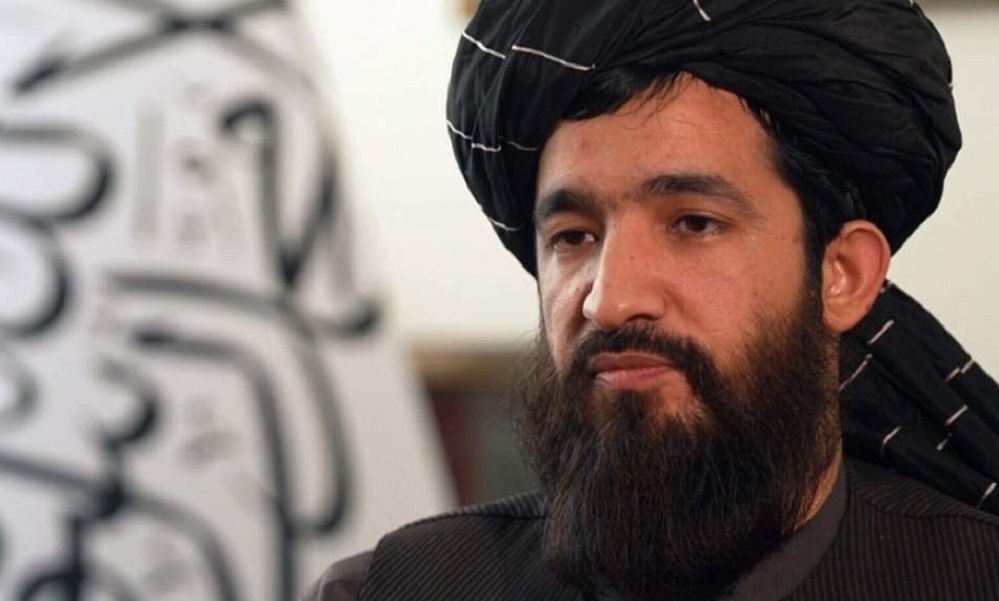
Afghanistan’s Foreign Ministry spokesperson Abdul Qahar Balkhi has rejected a U.S. claim that 463 kilograms of synthetic drugs seized in Pakistan were of Afghan origin, calling the attribution “unfounded and politically motivated.”
Balkhi said the U.S. Embassy in Islamabad should investigate the origin of the seized drugs in Pakistan rather than attributing them to Afghanistan.
“The attribution by the U.S. Embassy in Islamabad of the synthetic drugs bound for Sri Lanka and intercepted in Pakistan through joint U.S.-Pakistani efforts as ‘Afghan-origin’ is an unfounded and politically motivated allegation,” Balkhi said.
He said the Islamic Emirate of Afghanistan (IEA) has imposed an absolute ban on the production, trafficking and use of all types of narcotics in Afghanistan.
Balkhi also claimed that following the ban in Afghanistan, the cultivation, production and trafficking of narcotics have increased “on the other side of the Durand Line.”
He further argued that Afghanistan does not have the capacity to produce synthetic drugs and said crossing points along the Durand Line have been completely closed to all movement for nearly a year.
His remarks came after the U.S. Embassy in Islamabad said U.S. and Pakistani anti-narcotics authorities had seized 463 kilograms of crystal methamphetamine worth an estimated $21 million and bound for Sri Lanka.
The embassy said the operation led to multiple arrests and highlighted ongoing U.S. cooperation and training with Pakistani authorities to disrupt international drug-trafficking networks.


Exclusive interview with Abdul Latif Mansoor, Minister of MRRD

Sorkh Poshan Khafi rout Istiqlal Kabul 6-0 in ACL season six

Tawsia: Overview of Afghanistan’s iron mines

Afghanistan Champions League: Arman FC and Aino Mina play out goalless draw

Afghanistan says Pakistani military post destroyed near Spin Boldak

Saudi energy group signs major Afghanistan deals covering gas exploration and pipeline plans

ATN secures exclusive rights to broadcast T20I series in India across Afghanistan

Trump floats idea of renaming Atlantic or Pacific Ocean

US hits Egyptian bank branches with Iran sanctions as war marks six months

Nepal flood rescue mission enters critical phase as thousands remain missing
Exclusive interview with Abdul Latif Mansoor, Minister of MRRD
Tawsia: Overview of Afghanistan’s iron mines

Tahawol: Discussion on fresh Pakistani airstrikes on Afghanistan

Saar: Calls for international support for Afghanistan discussed

Tahawol: Opening of the 81st UN General Assembly Session
-

 Sport5 days ago
Afghanistan to face Japan and Nepal in Asian Games cricket group stage
-
 Regional5 days ago
Iran and US trade threats after Houthi attacks escalate regional conflict
-

 World4 days ago
CNN, MS NOW and Politico sue Trump, challenging White House ban
-
 Health5 days ago
Four-day polio vaccination campaign begins across Afghanistan
-

 Latest News4 days ago
UN reiterates call for respect for international law after Kunar airstrikes
-
 Latest News4 days ago
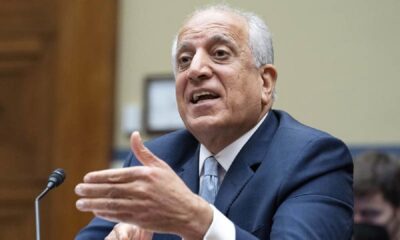
Khalilzad condemns Pakistan airstrikes, says current strategy is not working
-

 Latest News2 days ago
Ariana Afghan Airlines ranks seventh among 45 Central Asian airlines
-

 Latest News4 days ago
Afghan Official: Pakistan’s airstrikes will not go unanswered