
Latest News
IEA takes massive anti-drug step, bans poppy cultivation

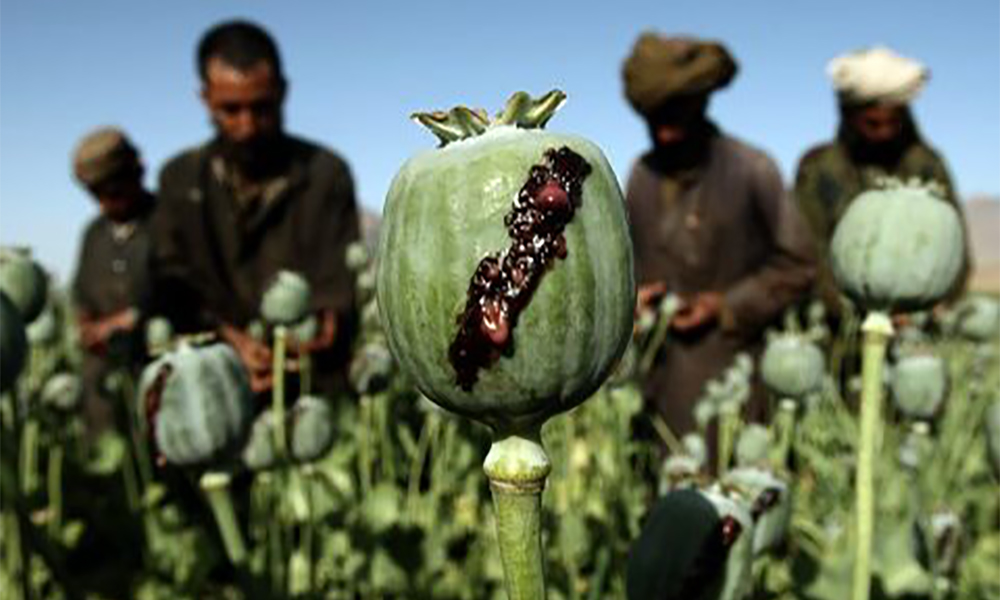
In a major crackdown on illegal practices in the country, the Islamic Emirate of Afghanistan’s (IEA) supreme leader on Sunday issued a decree banning the cultivation of poppies.
According to the decree, “all Afghans are informed that from now on, cultivation of poppy has been strictly prohibited across the country.
“If anyone violates the decree, the crop will be destroyed immediately and the violator will be treated according to the Sharia law,” read the decree.
The decree stated that in addition to this, usage, transportation, trade, export and import of all types of narcotics such as alcohol, heroin, Tablet K (which can contain methamphetamine and/or heroin), hashish and all drug manufacturing factories in Afghanistan are strictly banned.
The decree noted that “enforcement of this decree is mandatory” . In addition, anyone breaking this law with be “prosecuted and punished”.
Afghanistan has long been known as the biggest opium producer in the world and according to a UN study last year, the country accounted for at least 85 percent of global opium production in 2020 and supplied some 80% of all opiate users in the world.
United Nations Office on Drugs and Crime (UNODC) said in a November report that the 2021 opium harvest, completed in July, marked the fifth year in a row with production at historic highs of more than 6,000 tons, potentially yielding up to 320 tons of pure heroin to be trafficked to markets around the world.
UNODC estimated in its report that income from opiates in Afghanistan amounted to some $1.8-$2.7 billion in 2021 but noted that much larger sums are accrued along illicit drug supply chains outside Afghanistan.
The report also noted that at the end of the annual opium cultivation season in July 2021, the area under opium poppy cultivation in Afghanistan was estimated at 177,000 hectares.
Opium poppy cultivation has been increasing steadily over the past two decades, with an average rise of 4,000 hectares each year since systematic monitoring began in 1994 – albeit with strong yearly fluctuations.
Estimated opium production in 2021 was 6,800 tons or 8 percent more
than in 2020, meaning production has exceeded 6,000 tons for an unprecedented fifth consecutive year.
This amount of opium could be converted into some 270-320 tons of pure heroin, UNODC stated.












Kazakhstan’s Foreign Minister Mukhtar Tileuberdi has called for pragmatic and coordinated international engagement with Afghanistan, saying the country’s long-term stability is closely linked to the security and sustainable development of Central Asia.
Speaking during the general debate of the 81st session of the United Nations General Assembly in New York on Friday, Tileuberdi said humanitarian assistance to Afghanistan remains essential but alone cannot break the cycle of poverty, displacement and dependency.
He said Kazakhstan supports a “pragmatic, coordinated and step-by-step” approach to international engagement with Afghanistan, with the United Nations playing a central role.
Tileuberdi also said Kazakhstan is working with the UN to operationalize the United Nations Regional Centre for the Sustainable Development Goals for Central Asia and Afghanistan in Almaty.
He said the success of the centre should be measured by the results and assistance it delivers to the region.


Abu Muslim Farah defeat Khurasan Faryab 2-0 in ACL season six

Saar: Concerns over Pakistan’s political crisis discussed

Afghanistan Champions League: Omar Zawak Herat beat Toofan Herat 1-0

Blast in Pakistan’s Dera Ismail Khan kills 11, injures 30

Ariana Afghan Airlines increases Kabul-Delhi cargo flights

Saudi energy group signs major Afghanistan deals covering gas exploration and pipeline plans

Trump floats idea of renaming Atlantic or Pacific Ocean

US hits Egyptian bank branches with Iran sanctions as war marks six months

Nepal flood rescue mission enters critical phase as thousands remain missing

Iranian clubs to face Gulf opponents at neutral venues in Asian Champions League Elite
Saar: Concerns over Pakistan’s political crisis discussed

Exclusive interview with Abdul Latif Mansoor, Minister of MRRD

Tawsia: Overview of Afghanistan’s iron mines

Tahawol: Discussion on fresh Pakistani airstrikes on Afghanistan

Saar: Calls for international support for Afghanistan discussed
-

 World5 days ago
CNN, MS NOW and Politico sue Trump, challenging White House ban
-

 Latest News3 days ago
Ariana Afghan Airlines ranks seventh among 45 Central Asian airlines
-

 Latest News5 days ago
UN reiterates call for respect for international law after Kunar airstrikes
-

 Regional4 days ago
US and Iran hold first talks since June after Trump’s ‘annihilation’ threat
-

 Latest News3 days ago
Silk Road highway in Wakhan corridor now reaches the China border
-

 Regional3 days ago
Iran airlines cancel flights as US sanctions hit
-

 Latest News5 days ago
Afghan Official: Pakistan’s airstrikes will not go unanswered
-

 Sport5 days ago
Afghan boxing referee heads to China for international festival