
Latest News
IEA to open high schools for girls next week

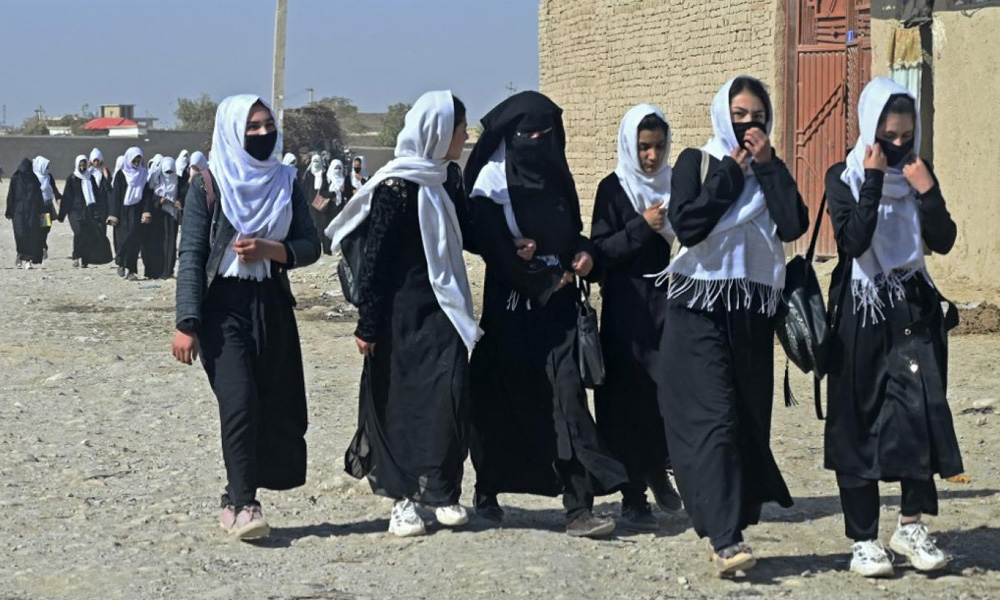
The Islamic Emirate of Afghanistan (IEA) will allow girls around Afghanistan to return to class when high schools open next week, an education official said on Thursday, after months of uncertainty over whether the IEA would allow full access to education for girls and women, Reuters reported.
“All schools are going to open to all boys and girls,” Aziz Ahmad Rayan, a spokesman for the Ministry of Education, told Reuters.
“But there are some conditions for girls,” he said, adding that female students would be taught separately from males and only by female teachers.
In some rural areas where there was a shortage of female teachers, he said that older male teachers would be allowed to teach girls, Reuters reported.
“There is no school that will close for this year. If there is any school that closes, it is the responsibility of the education ministry to open it,” Rayan added.
Allowing girls and women into schools and colleges has been one of the key demands the international community has made of the IEA since it toppled the Western-backed government last August.
Most countries have so far refused to formally recognise the IEA, amid concerns over their treatment of girls and women and allegations of human rights abuses against former soldiers and officials from the ousted administration.
The IEA have vowed to investigate alleged abuses, and say they are not seeking revenge on their former enemies.
The last time the IEA ruled Afghanistan, from 1996 to 2001, they banned female education and most employment. Since regaining power, boys and men have returned to education in far greater number than girls and women, Reuters reported.
The Islamic Emirate (IE) is seeking to run the country according to its interpretation of Islamic law while at the same time accessing billions of dollars in development aid that it desperately needs to stave off widespread poverty and hunger.
Sanctions against some leading members of the group have complicated the situation.
The IEA say they respect women’s rights in accordance with Islamic law and local custom. But many women have reported restrictions on access to public life, including jobs, forcing some to drop out of the workforce.
Heather Barr, associate women’s rights director at Human Rights Watch, urged the international community against complacency after the announcement.
“There has been a huge focus by donors on girls’ secondary schools — multiple donors have told me they see this issue as ‘totemic’,” she said.
Barr added that reopening schools would not necessarily mean that the broader rights of women and girls in society would be protected.
Seventeen-year-old Farzana said she was already washing and ironing her uniform as she anticipated joining her friends in her Kabul classroom. After six months at home, she said she and others had struggled mentally being away from studies.
“I feel very powerful. We can show not only (the Taliban) but also the world (that) we never stop, and Afghanistan won’t return to previous decades,” she said.









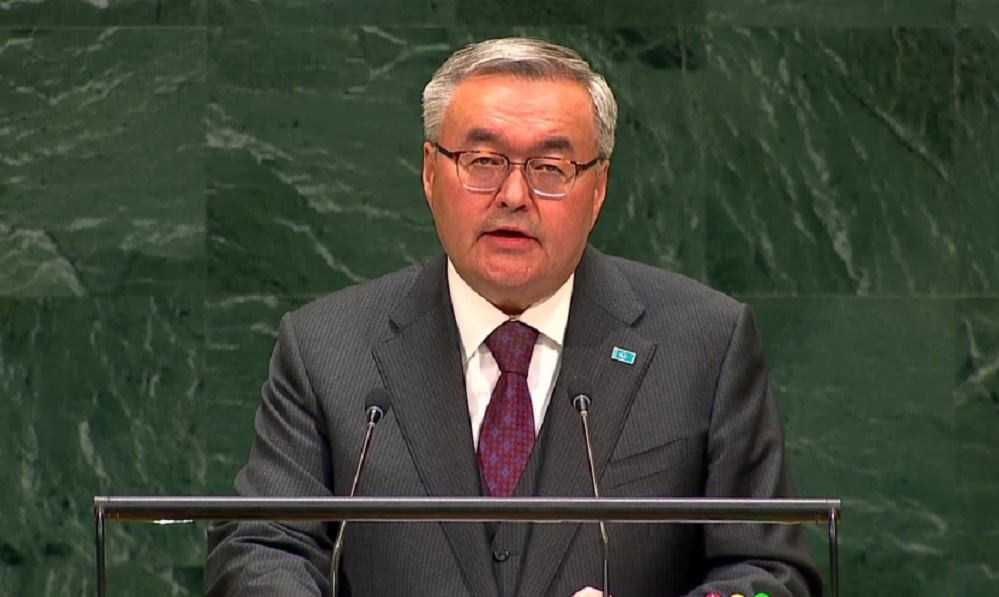
Kazakhstan’s Foreign Minister Mukhtar Tileuberdi has called for pragmatic and coordinated international engagement with Afghanistan, saying the country’s long-term stability is closely linked to the security and sustainable development of Central Asia.
Speaking during the general debate of the 81st session of the United Nations General Assembly in New York on Friday, Tileuberdi said humanitarian assistance to Afghanistan remains essential but alone cannot break the cycle of poverty, displacement and dependency.
He said Kazakhstan supports a “pragmatic, coordinated and step-by-step” approach to international engagement with Afghanistan, with the United Nations playing a central role.
Tileuberdi also said Kazakhstan is working with the UN to operationalize the United Nations Regional Centre for the Sustainable Development Goals for Central Asia and Afghanistan in Almaty.
He said the success of the centre should be measured by the results and assistance it delivers to the region.


Abu Muslim Farah defeat Khurasan Faryab 2-0 in ACL season six

Saar: Concerns over Pakistan’s political crisis discussed

Afghanistan Champions League: Omar Zawak Herat beat Toofan Herat 1-0

Blast in Pakistan’s Dera Ismail Khan kills 11, injures 30

Ariana Afghan Airlines increases Kabul-Delhi cargo flights

Saudi energy group signs major Afghanistan deals covering gas exploration and pipeline plans

Trump floats idea of renaming Atlantic or Pacific Ocean

US hits Egyptian bank branches with Iran sanctions as war marks six months

Nepal flood rescue mission enters critical phase as thousands remain missing

Iranian clubs to face Gulf opponents at neutral venues in Asian Champions League Elite
Saar: Concerns over Pakistan’s political crisis discussed

Exclusive interview with Abdul Latif Mansoor, Minister of MRRD

Tawsia: Overview of Afghanistan’s iron mines

Tahawol: Discussion on fresh Pakistani airstrikes on Afghanistan

Saar: Calls for international support for Afghanistan discussed
-

 World5 days ago
CNN, MS NOW and Politico sue Trump, challenging White House ban
-

 Latest News3 days ago
Ariana Afghan Airlines ranks seventh among 45 Central Asian airlines
-

 Latest News4 days ago
UN reiterates call for respect for international law after Kunar airstrikes
-

 Regional3 days ago
US and Iran hold first talks since June after Trump’s ‘annihilation’ threat
-

 Latest News3 days ago
Silk Road highway in Wakhan corridor now reaches the China border
-

 Latest News4 days ago
Afghan Official: Pakistan’s airstrikes will not go unanswered
-
 Sport4 days ago
Afghan boxing referee heads to China for international festival
-

 Regional5 days ago
G7 foreign ministers call on Iran to stop arming Houthis