
Latest News
IFRC calls for rethink of approaches to humanitarian aid to Afghanistan

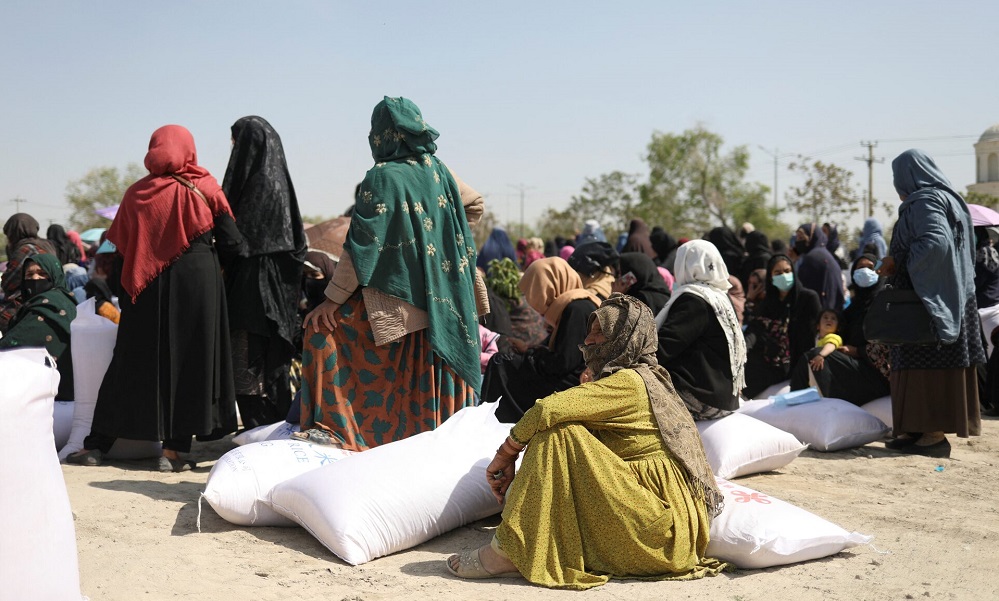
The humanitarian situation in Afghanistan is gravely deteriorating, and a new approach is urgently needed, the International Federation of the Red Cross and Red Crescent Societies (IFRC) said on Friday.
In a statement, IFRC said that without a radical rethink of approaches to humanitarian aid, the root causes of the crisis cannot be tackled sustainably, as time and funding are running out.
“We have been responding with emergency aid in Afghanistan for years now, and it is time for a rethink,” said Alexander Matheou, IFRC Regional Director for Asia Pacific. “We need to focus on Afghan institutions like the Afghan Red Crescent, which have a permanent role in the country. Their capacity is durable and will serve people before and after aid operations. We need to adapt our programming to focus on resilience and economic independence while still showing solidarity and providing assistance after sudden shocks like the Herat earthquake and the current floods.”
He went on to reiterate the IFRC’s call for investment in people.
“With limited access to education and jobs, we need a focus on youth, on professional and vocational training, and other learning opportunities—interventions designed to boost confidence and give hope. Otherwise, the future really does look grim.”
This call comes ahead of a partnership meeting hosted in Doha by the Afghan Red Crescent Society in cooperation with the Qatar Red Crescent Society and attended by participating national societies from Britain, Canada, Denmark, Finland, Germany, Italy, Japan, Kuwait, Norway, Sweden, Singapore, and Türkiye, as well as the Hong Kong Special Administrative Region of China.
“Communities are lurching from crisis to crisis at a time when their resilience is sub-zero and their coping mechanisms are exhausted. We ask our valued partners to take a long-term view and commit to tackling the root causes of the humanitarian crisis sustainably by investing in Afghan capacity, people, and systems,” said Mutiul Haq Khales, the Acting President of the Afghan Red Crescent Society.
“The needs of over 24 million people are vast and interconnected. Many have been caused by a combination of lingering impacts from decades-long conflict, climate shocks, and a deep economic crisis. The country’s resources are stretched, but capacities exist, and it is important that solutions are implemented to address the root causes of all these overlapping needs,” he added.








Afghanistan’s Ministry of Defense says a Pakistani military post near Spin Boldak was targeted and destroyed after Pakistani forces opened fire toward Afghanistan.
Ministry spokesperson Enayatullah Khwarazmi said in a post on X that Afghan forces suffered no casualties or damage in the clash.
Khwarazmi also rejected claims made by the Pakistani side about the incident, describing them as “propaganda.”
Latest News
Mujahid: Pakistan attacking Afghanistan to evade Mecca Pact responsibilities
He warned that the Islamic Emirate would give an “appropriate response” to what he called the Pakistani military regime’s “bullying.”
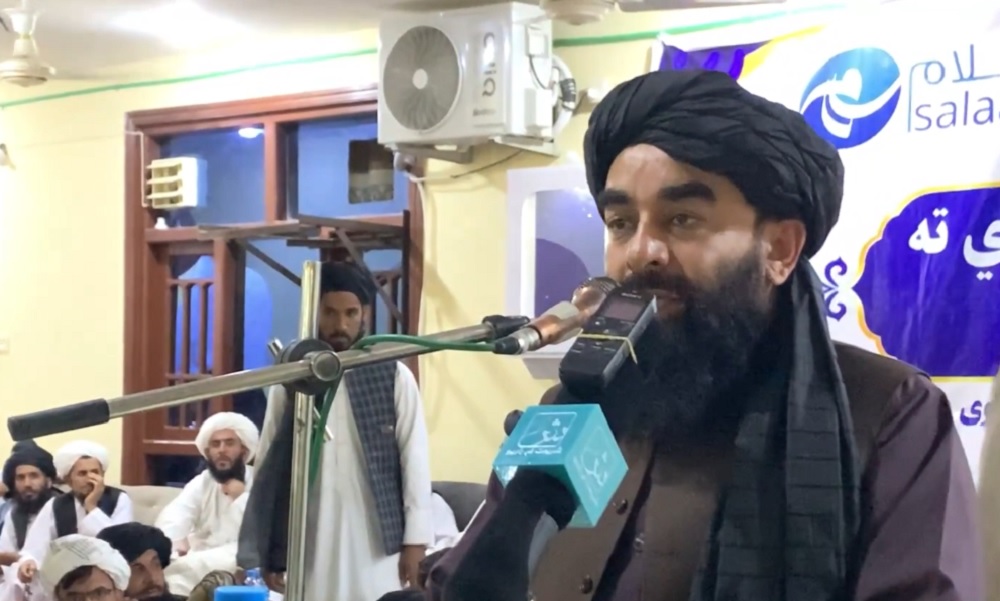
Islamic Emirate spokesperson Zabihullah Mujahid has accused Pakistan of carrying out attacks on Afghanistan to divert attention from its domestic problems and to evade responsibilities under the “Mecca Pact.”
Speaking at a religious seminary in Kandahar, Mujahid said Pakistan was facing political and economic challenges at home and was using attacks on Afghanistan to shift public attention away from protests and its internal problems.
“Pakistan, by violating the territory of its neighboring Islamic country, wants to divert attention from its failures,” he said.
Mujahid also criticized Pakistan’s political situation, claiming that political space had been restricted and that freedoms guaranteed under the country’s laws were not being allowed.
He said Pakistan’s economic problems had also increased significantly and accused the country of seeking to distract the public from those problems by engaging in conflict with Afghanistan.
Mujahid further accused Pakistan’s military leadership of putting the Pakistani people at risk through what he described as its “false position.”
He warned that the Islamic Emirate would give an “appropriate response” to what he called the Pakistani military regime’s “bullying.”
His remarks followed Pakistani airstrikes on Kandahar, Paktia and Khost provinces on Thursday, which Afghan authorities said killed four civilians.
The strikes came three days after attacks on Kunar and Paktika provinces, in which Afghan authorities said three civilians were killed.
Latest News
Kabul rejects U.S. claim that meth seized in Pakistan was of Afghan origin
Balkhi said the Islamic Emirate of Afghanistan (IEA) has imposed an absolute ban on the production, trafficking and use of all types of narcotics in Afghanistan.
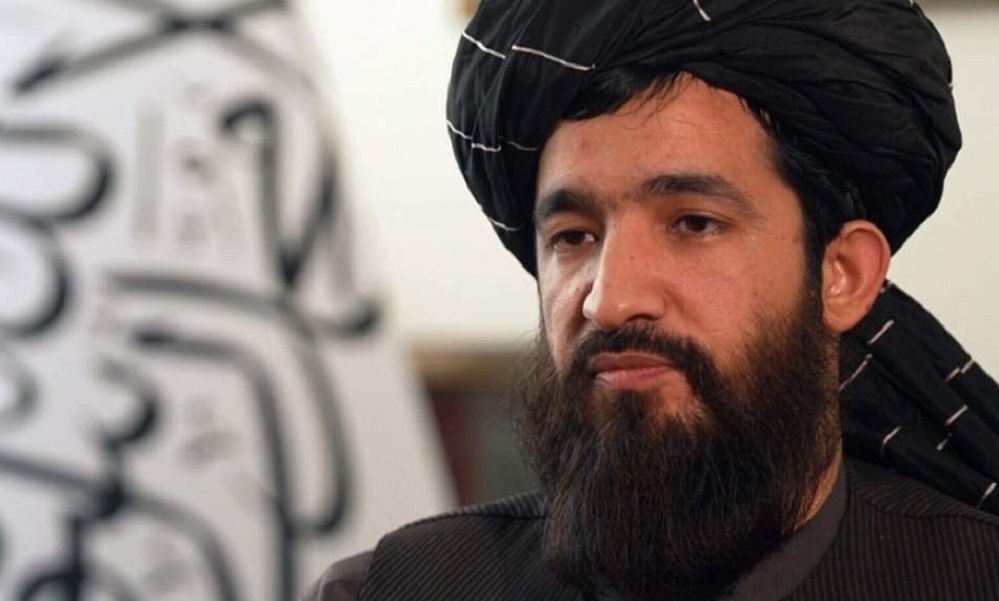
Afghanistan’s Foreign Ministry spokesperson Abdul Qahar Balkhi has rejected a U.S. claim that 463 kilograms of synthetic drugs seized in Pakistan were of Afghan origin, calling the attribution “unfounded and politically motivated.”
Balkhi said the U.S. Embassy in Islamabad should investigate the origin of the seized drugs in Pakistan rather than attributing them to Afghanistan.
“The attribution by the U.S. Embassy in Islamabad of the synthetic drugs bound for Sri Lanka and intercepted in Pakistan through joint U.S.-Pakistani efforts as ‘Afghan-origin’ is an unfounded and politically motivated allegation,” Balkhi said.
He said the Islamic Emirate of Afghanistan (IEA) has imposed an absolute ban on the production, trafficking and use of all types of narcotics in Afghanistan.
Balkhi also claimed that following the ban in Afghanistan, the cultivation, production and trafficking of narcotics have increased “on the other side of the Durand Line.”
He further argued that Afghanistan does not have the capacity to produce synthetic drugs and said crossing points along the Durand Line have been completely closed to all movement for nearly a year.
His remarks came after the U.S. Embassy in Islamabad said U.S. and Pakistani anti-narcotics authorities had seized 463 kilograms of crystal methamphetamine worth an estimated $21 million and bound for Sri Lanka.
The embassy said the operation led to multiple arrests and highlighted ongoing U.S. cooperation and training with Pakistani authorities to disrupt international drug-trafficking networks.


Afghanistan Champions League: Arman FC and Aino Mina play out goalless draw

Afghanistan says Pakistani military post destroyed near Spin Boldak

Nepal beat Afghanistan in Asian Games cricket

Mujahid: Pakistan attacking Afghanistan to evade Mecca Pact responsibilities

Kabul rejects U.S. claim that meth seized in Pakistan was of Afghan origin

Saudi energy group signs major Afghanistan deals covering gas exploration and pipeline plans

ATN secures exclusive rights to broadcast T20I series in India across Afghanistan

Trump floats idea of renaming Atlantic or Pacific Ocean

US hits Egyptian bank branches with Iran sanctions as war marks six months

Nepal flood rescue mission enters critical phase as thousands remain missing

Tahawol: Discussion on fresh Pakistani airstrikes on Afghanistan

Saar: Calls for international support for Afghanistan discussed

Tahawol: Opening of the 81st UN General Assembly Session

Saar: OIC Assessment of Afghanistan’s humanitarian and development situation discussed

Tahawol: Reactions to Pakistan’s attacks on Afghanistan discussed
-

 Sport4 days ago
Afghanistan to face Japan and Nepal in Asian Games cricket group stage
-
 Regional4 days ago
Iran and US trade threats after Houthi attacks escalate regional conflict
-

 World4 days ago
CNN, MS NOW and Politico sue Trump, challenging White House ban
-
 Health4 days ago
Four-day polio vaccination campaign begins across Afghanistan
-

 Latest News3 days ago
UN reiterates call for respect for international law after Kunar airstrikes
-
 Latest News4 days ago
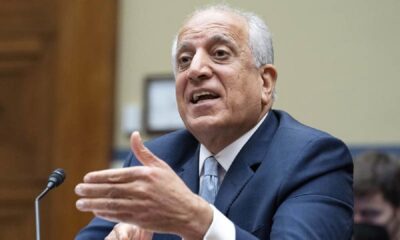
Khalilzad condemns Pakistan airstrikes, says current strategy is not working
-

 Latest News2 days ago
Ariana Afghan Airlines ranks seventh among 45 Central Asian airlines
-

 Latest News3 days ago
Afghan Official: Pakistan’s airstrikes will not go unanswered