
Latest News
Indonesian delegation vows cooperation on healthcare, education during Kabul visit

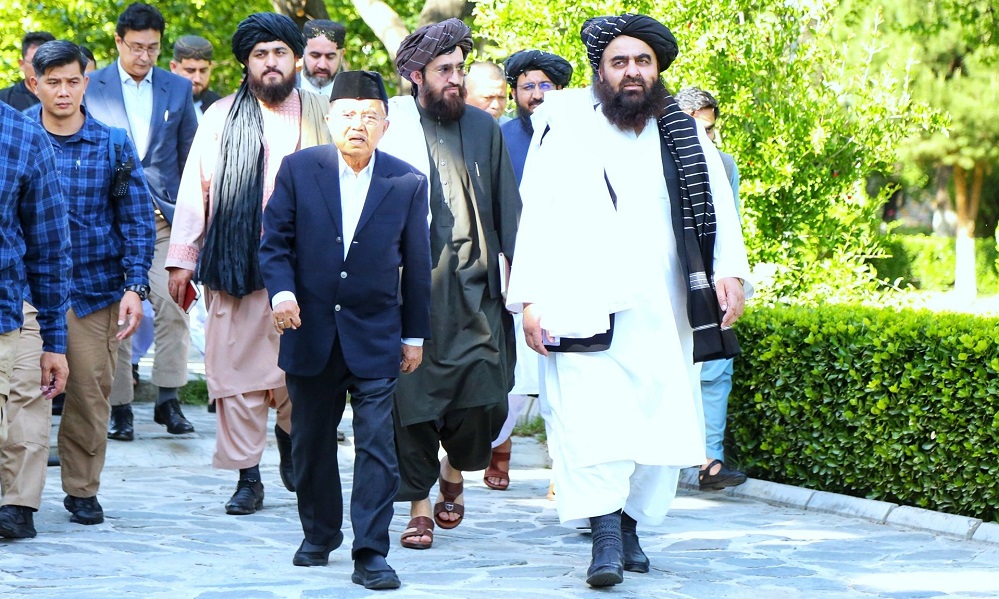
An Indonesian delegation in a meeting with Acting Foreign Minister Amir Khan Muttaqi in Kabul assured that Indonesia will cooperate with Afghanistan in the area of healthcare and will offer scholarships to students.
The delegation comprised Muhammad Yusuf Kalla, the Chairman of the Indonesian Red Crescent Society and Mosque Council, Hamid Awaludin, former minister of law and human rights, and Sudirman Said and former minister of energy and mineral resources.
The Ministry of Foreign Affairs in a statement said that discussions focused on the expansionof bilateral relations between Afghanistan and Indonesia, encompassing political, economic, trade, and people-to-people aspects.
Muttaqi highlighted the shared religious and cultural respect between the two nations and expressed Afghanistan’s desire to strengthen and enhance relations with its friendly and brotherly country, Indonesia.
He noted that after 45 years of war, peace has finally been established in Afghanistan, creating favorable opportunities for trade and foreign investment in sectors such as energy, mining, agriculture, road construction, and industry.
He noted that Afghanistan’s relations with the international community are expanding, and it maintains positive ties with neighboring countries and the region, adding that Afghanistan is keen on expanding its relations with Southeast Asian countries.
Muttaqi went on to say that given its strategic location, Afghanistan has established facilities in the areas of trade, investment, and transit between Central and South Asia. Additionally, it is actively engaged in major regional economic projects, including the CASA-1000 energy project, TAPI (Turkmenistan-Afghanistan-Pakistan-India) pipeline, and Trans-Afghan Railway Project, he said.
Muttaqi emphasized that the Islamic Emirate of Afghanistan has successfully tackled threats posed by Daesh and drug trafficking, assuring all countries that Afghanistan is not a threat to any nation.
According to the statement, Kalla expressed a positive evaluation of Afghanistan’s political and security situation. He expressed Indonesia’s desire to expand relations with Afghanistan across various fields and pledged to provide accurate information about Afghanistan to the Indonesian government and people.
He stated that Indonesia hopes to cooperate with Afghanistan in the field of healthcare, and offering scholarships and fellowships to Afghan students.
Both sides emphasized the importance of expanding and strengthening relations between Afghanistan and Indonesia in political, economic, trade, cultural, and educational fields.



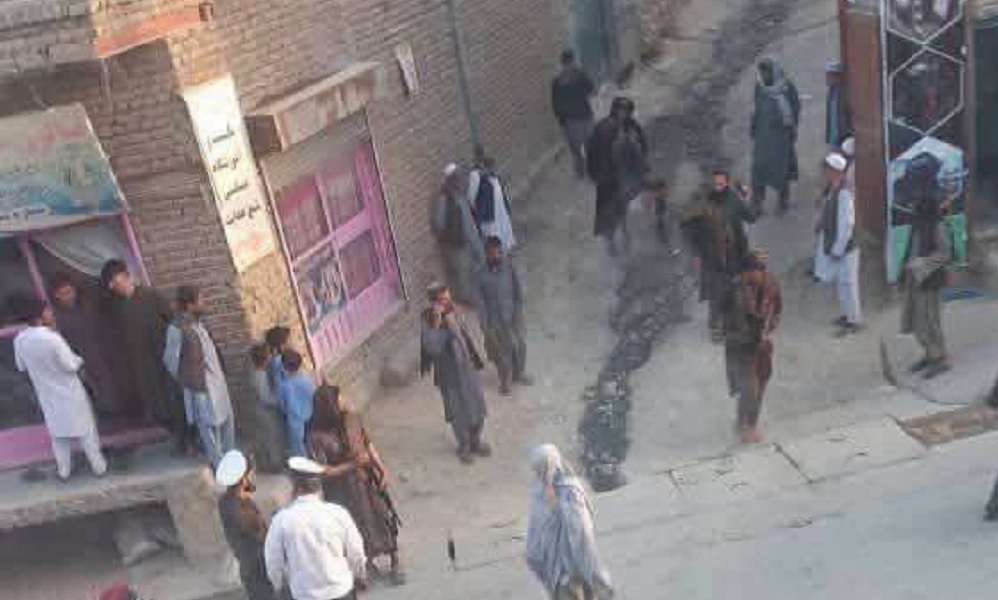
An explosion at a school in Afghanistan’s capital, Kabul, on Monday injured at least 52 people, according to sources.
The blast, caused by a hand grenade, occurred at around 4:55 p.m. at Sham-e Hedayat Private School in Mahdiya Township, located in Kabul’s 18th security district.
According to sources, the grenade was in the hands of a student when it exploded.
Latest News
Juma Khan Fateh surrenders to IEA forces in Badakhshan
According to the sources, Fateh’s remaining associates are expected to be disarmed, while IEA forces are set to establish full control over the area.
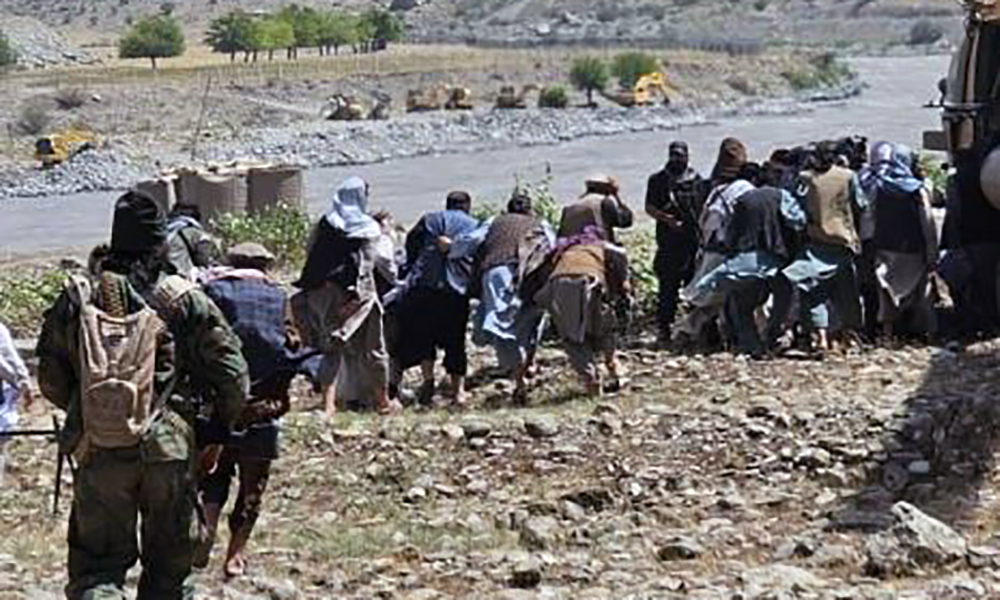
Juma Khan Fateh and his forces have surrendered to the Islamic Emirate of Afghanistan (IEA) in Nusay district of Badakhshan province following several days of pressure and encirclement, security sources told Ariana News.
Sources said increasing pressure on Fateh’s group left them with no option but to surrender. Fateh and his fighters reportedly laid down their weapons at positions held by IEA forces in Nusay.
Qari Fasihuddin Fitrat, the IEA’s Army Chief of Staff, had travelled to Nusay to oversee the situation and the operation against Fateh’s group.
According to the sources, Fateh’s remaining associates are expected to be disarmed, while IEA forces are set to establish full control over the area.
The reported surrender marks the latest development in the security situation in Nusay, although further details about the terms of the surrender and the number of fighters involved were not immediately available.
Latest News
Afghanistan Supreme Court says rights of almost 119,000 women addressed over five years
The courts also handled 8,904 cases related to women’s maintenance and other associated rights, according to Hamza.
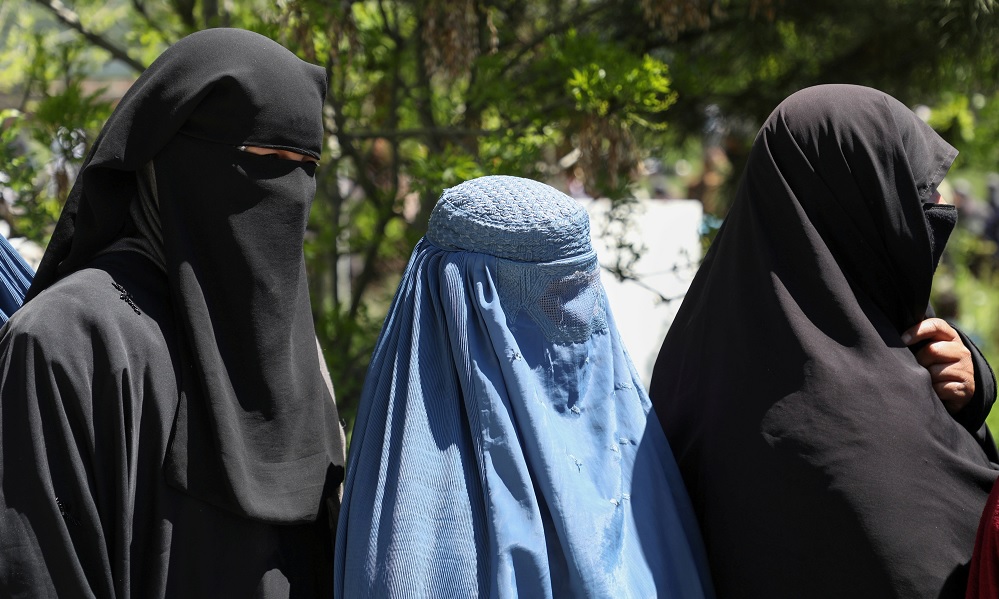
Afghanistan’s Supreme Court says the country’s courts have addressed the legal and Sharia-based rights of 118,869 women over the past five years.
Mansoor Ahmad Hamza, deputy spokesman for the Supreme Court, said the cases covered a range of issues, including inheritance, property, maintenance, documentation and other legal matters.
Hamza said courts handled 12,976 cases involving women’s inheritance and property rights during the five-year period. Another 9,021 inheritance-related cases were registered for information gathering and review.
He added that 18,750 cases involving the registration, verification and certification of women’s property and related documents were addressed, while 22,703 cases concerned the processing of inheritance and property documents.
The courts also handled 8,904 cases related to women’s maintenance and other associated rights, according to Hamza.
He said inheritance, property, dowry, maintenance and other rights granted to women under Islamic Sharia are recognized as established rights, and that courts are required to examine such cases carefully and impartially in accordance with Sharia and applicable laws.
Hamza added that judicial proceedings involving women’s rights will continue, with the aim of ensuring that eligible individuals receive their legal and religious rights and preventing those rights from being denied or lost.


Blast at Kabul school injures at least 52

Trump envoy discusses Gaza plan with Netanyahu after rare Hamas meeting

Darwish Rasooli named captain as Afghanistan unveil Asian Games squad

Juma Khan Fateh surrenders to IEA forces in Badakhshan

Afghanistan Supreme Court says rights of almost 119,000 women addressed over five years

Pakistan’s governance system has ‘collapsed’: Mohsin Naqvi

Spain sweep FIFA World Cup player awards after historic triumph

First Chinese transit shipment arrives in Herat via Iran’s railway corridor

Afghanistan exports first stone shipment to US in $100,000 trade milestone

AFC confirms clubs for 2026/27 competitions; draw set for August 18

Tahawol: U.S. non-recognition of IEA

Saar: Tensions between Iran and the United States

Debate with Nooruddin Azizi, Minister of Industry and Commerce

Saar: Marking IEA’s fifth anniversary in Afghanistan discussed

Tawsia: $420M investment in TAPI gas distribution network in Herat discussed
-
 Latest News4 days ago
HesabPay unveils new visa card and digital payment app in Kabul
-

 International Sports4 days ago
AFC Champions League Elite draw nears as Al-Nassr seeded above Al-Hilal
-
 Latest News4 days ago
Afghan envoy invites Fazlur Rehman to embassy event marking IEA’s return to power
-
 Regional5 days ago
Iran says no progress on reviving interim peace deal with US
-

 Sport4 days ago
Afghanistan clinch Ireland series with record ODI score
-
 Latest News4 days ago
Afghanistan’s future depends on inclusive progress and sustained international engagement: UNAMA
-
 Health4 days ago
Save the Children warns of rising child malnutrition amid funding cut crisis
-
 Regional3 days ago
Turkey lays out plans for defence pact with Pakistan and Saudi Arabia