
Regional
Iran launches retaliatory attack on Israel with hundreds of drones, missiles

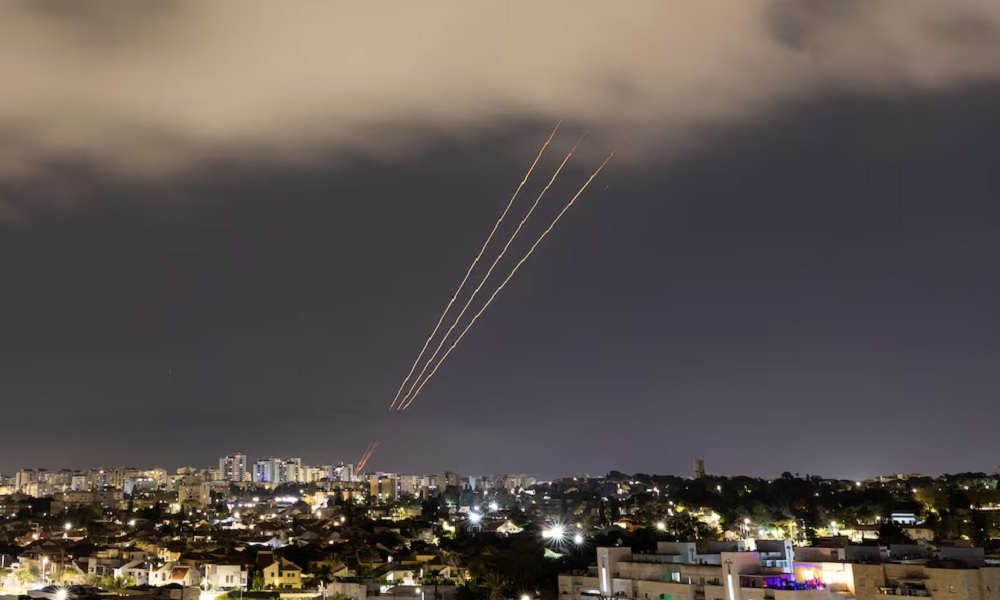
Iran launched explosive drones and fired missiles at Israel late on Saturday in its first direct attack on Israeli territory, a retaliatory strike that raised the threat of a wider regional conflict, as the U.S pledged “ironclad” backing for Israel.
Sirens wailed and Reuters journalists in Israel heard distant heavy thuds and bangs from what local media called aerial interceptions of explosive drones. Authorities said a 7-year-old girl was critically injured.
Israel’s military spokesperson Rear Admiral Daniel Hagari said Iran launched dozens of ground-to-ground missiles at Israel, most of them intercepted outside Israeli borders. They included more than 10 cruise missiles, he said.
The Iranian salvo came to more than 200 drones and missiles so far, Hagari said, and had caused light damage to one Israeli military facility.
The Israeli military later said it was not advising any residents to prepare to take shelter. This revision of an earlier alert appeared to signal the end of the threat.
Israel’s Channel 12 TV cited an unnamed Israeli official as saying there would be a “significant response” to the attack.
Iran had vowed retaliation for what it called an Israeli strike on its Damascus consulate on April 1 that killed seven officers of the Islamic Revolutionary Guard Corps including two senior commanders and said its strike was a punishment for “Israeli crimes”. Israel has neither confirmed nor denied responsibility for the consulate attack.
“Should the Israeli regime make another mistake, Iran’s response will be considerably more severe,” the Iranian mission to the United Nations said, warning the U.S. to “stay away”. However, it also said Iran now “deemed the matter concluded”.
United Nations Secretary-General Antonio Guterres condemned Iran’s attack, saying he was “deeply alarmed about the very real danger of a devastating region-wide escalation.”
The U.N. Security Council was set to meet at 4 p.m. ET (2000 GMT) on Sunday after Israel requested it condemn Iran’s attack and designate the Iranian Revolutionary Guard Corps a terrorist organization, according to a schedule released late on Saturday.
U.S. President Joe Biden and Israeli Prime Minister Benjamin Netanyahu spoke by telephone on Saturday night, the White House said, without immediately giving details. The White House said it would provide a summary of the call.
Biden, who on Friday had warned Iran against an attack, cut short a weekend visit to his home state of Delaware and returned to Washington to meet with his national security advisers, including his secretaries of defense and state, in the White House Situation Room. He pledged to stand with Israel.
“Our commitment to Israel’s security against threats from Iran and its proxies is ironclad,” Biden said on X after the meeting.
The Gaza war between Israel and Hamas, now in its seventh month, has ratcheted up tensions in the region, spreading to fronts with Lebanon and Syria and drawing long-range fire at Israeli targets from as far away as Yemen and Iraq.
British maritime security company Ambrey said in a statement that drones were also reportedly launched against Israel by Yemen’s Iran-aligned Houthi group.
Those clashes now threaten to morph into a direct open conflict pitting Iran and its regional allies against Israel and its main supporter, the United States. Regional power Egypt urged “utmost restraint”.
While Israel and Iran have been bitter foes for decades, their long feud has mostly unfolded via proxies or by targeting each other’s forces operating in third countries.
U.S. and British warplanes were involved in shooting down some Israel-bound drones over the Iraq-Syria border area, Channel 12 reported. Two American officials said the U.S. military had shot down dozens of drone aircraft headed for Israel.
ESCALATION
Netanyahu convened Israel’s war cabinet at a military headquarters in Tel Aviv, his office said.
Israel and Lebanon said they were closing their airspace on Saturday night. Jordan, which lies between Iran and Israel, had readied air defences to intercept any drone or missile that violated its territory, two regional security sources said.
Residents in several Jordanian cities said they heard heavy aerial activity.
Syria, an ally of Iran, said it was putting its ground-to-air defence systems around the capital and major bases on high alert, army sources there said.
The European Union, Britain, Czech Republic, Denmark, France, Mexico, the Netherlands and Norway condemned Iran’s attack.
Biden’s Republican rival in November’s presidential election, Donald Trump, briefly referred to the airstrikes at a rally in Pennsylvania, criticizing his Democratic rival.
“They’re under attack right now,” Trump said. “That’s, because we show great weakness. This would not happen, the weakness that we’ve shown, it’s unbelievable, and it would not have happened if we were in office.”
Israel had been bracing for an Iranian response to the Damascus consulate strike since last week, when Iran’s Supreme Leader Ayatollah Ali Khamenei said Israel “must be punished and shall be” for an operation he called equivalent to one on Iranian soil.
Iran’s main ally in the region, the Lebanese Shi’ite group Hezbollah that has been exchanging fire with Israel since the Gaza war began on Oct. 7, said early on Sunday it had fired rockets at an Israeli base.
(Reuters)





Regional
Aimal Wali Khan calls Dera Ismail Khan attack a ‘state failure’
Khan called on the federal and Khyber Pakhtunkhwa governments to take greater responsibility for protecting citizens and addressing the deteriorating security situation in the province.
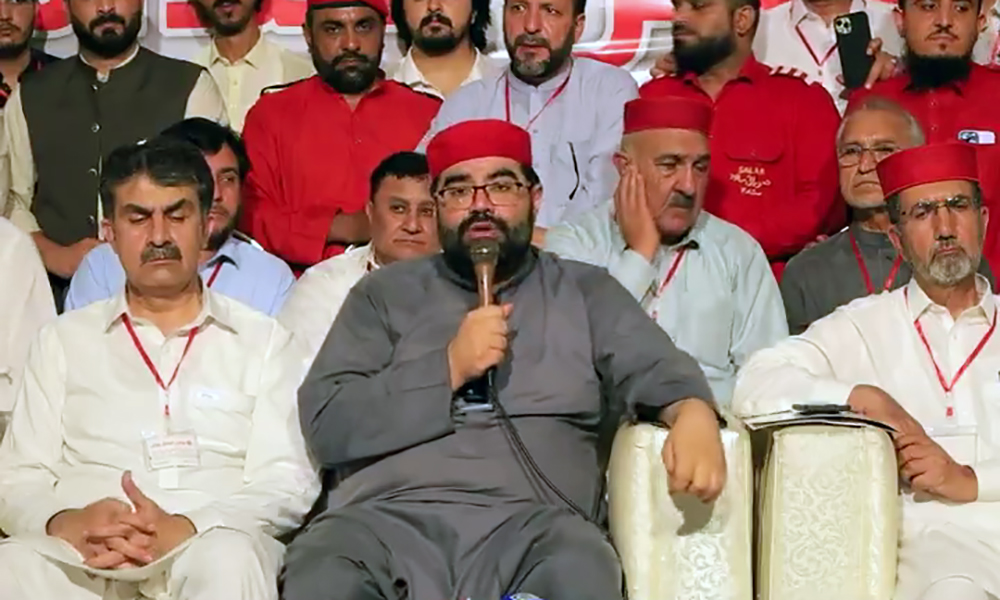
Awami National Party (ANP) President and Senator Aimal Wali Khan has condemned the suicide attack on the Aman Mela checkpoint in the Darazinda area of Pakistan’s Dera Ismail Khan district, describing it as a failure by the state to ensure the security of citizens.
According to Dawn, Khan called on the federal and Khyber Pakhtunkhwa governments to take greater responsibility for protecting citizens and addressing the deteriorating security situation in the province.
In a statement, Khan said Khyber Pakhtunkhwa is experiencing one of the darkest periods in its history. He alleged that the Pashtun population is facing systematic violence and said prolonged insecurity has left the province deeply affected by terrorism.
Khan also condemned an attack on an ambulance reportedly carrying the body of a person killed in the blast, describing it as an “inhumane act.”
The ANP leader questioned the government’s response to the worsening security situation, saying that blaming groups referred to by authorities as “Fitna al-Khawarij” and “Fitna al-Hindustan” does not absolve the state of its responsibility to protect citizens.
He urged the federal and provincial governments to stop blaming each other and instead focus on restoring peace and strengthening security across Khyber Pakhtunkhwa.
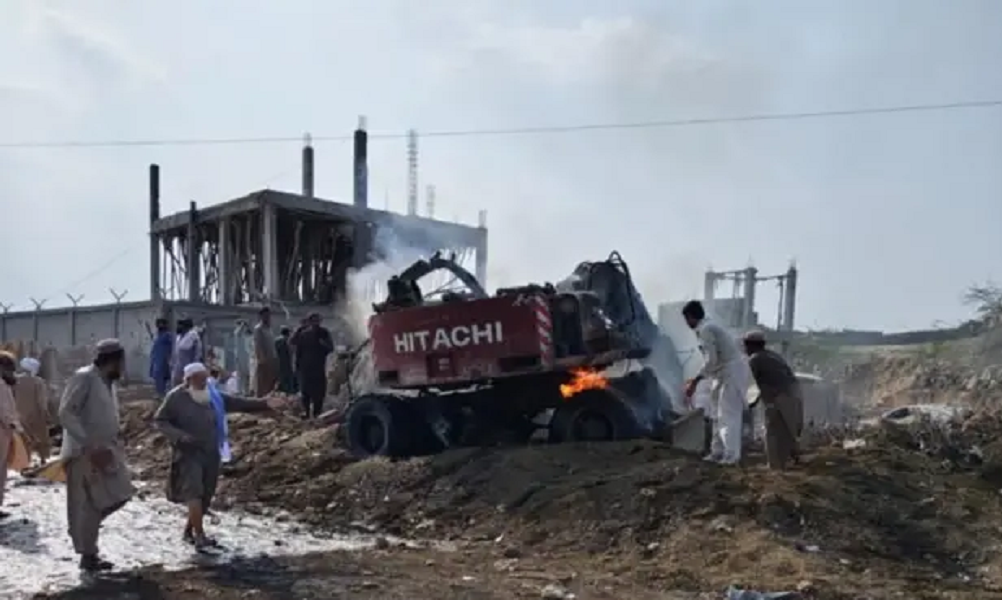
Eleven people were killed and 30 injured in a blast in Dera Ismail Khan in northwestern Pakistan on Saturday, emergency service Rescue 1122 said.
The Tehreek-e-Taliban Pakistan claimed responsibility for Saturday’s attack.
The blast occurred near Aman Mela in the Darazinda area of the district, Rescue 1122 said in a statement.
Rescue teams from the Darazinda station reached the scene and began relief operations, providing medical assistance to the wounded and taking them to hospital, the service said.
Security incidents have continued in the district this month, including attacks involving the Pakistani Taliban.
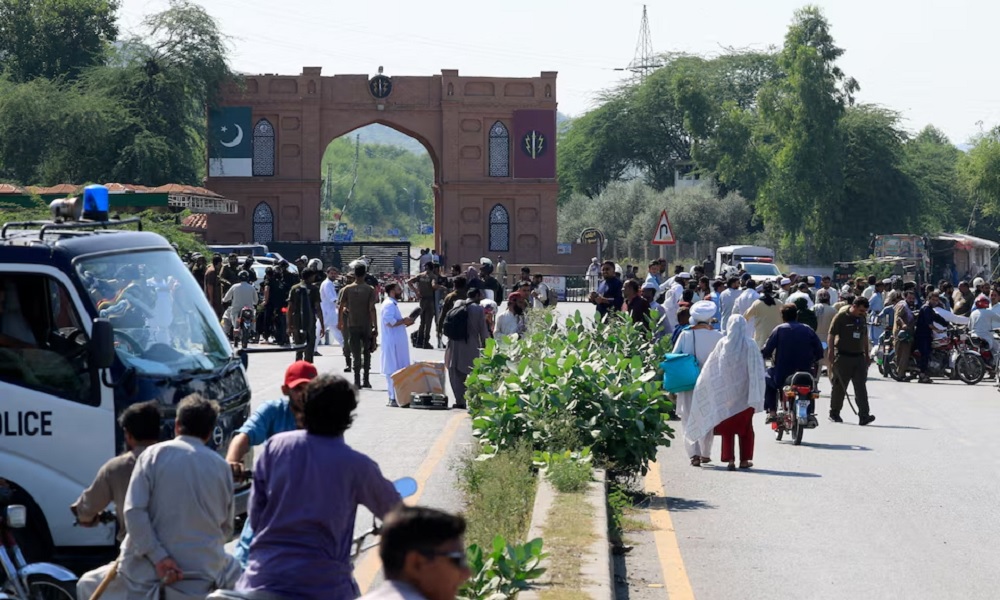
Jailed former prime minister Imran Khan’s Pakistan Tehreek-e-Insaf party has postponed a planned long march from Peshawar to Islamabad until October 4, the chief minister of the PTI-ruled Khyber Pakhtunkhwa province, Sohail Afridi, told reporters on Friday.
PTI had planned to begin the march on September 27 to press for the release of Khan, who has been in jail since 2023. The PTI’s last large-scale protest two years ago ended in deadly clashes with security forces, Reuters reported.
Earlier this week, Pakistan curbed access to its capital, Islamabad, by blocking major highways with shipping containers and deploying tens of thousands of security forces, ahead of the march planned by Khan’s supporters.
Party spokesperson Zulfi Bukhari, however, told Reuters that although they had moved the planned date to October 4, they could launch the march earlier.
“We can now do it whenever we deem fit. The question is to the government, as to how long they’re willing to keep the country closed off?”, Bukhari said.
Authorities have detained three of Khan’s sisters and hundreds of party activists in recent days, citing a need to maintain public order.
Khan, 73, a former cricket star ousted by parliament in a 2022 no-confidence vote, has claimed to be a political prisoner.


Tajikistan reaffirms support for peace and stability in Afghanistan

Germany reports 488 Afghans for possible deportation, 267 have no criminal convictions

Afghanistan says 28 killed, 32 captured in Nuristan operation

Afghan bodybuilder Ali Bilal finishes runner-up at Mr Olympia for third straight year

UNDP, UN Women launch financing initiative for Afghan women entrepreneurs

Saudi energy group signs major Afghanistan deals covering gas exploration and pipeline plans

Trump floats idea of renaming Atlantic or Pacific Ocean

US hits Egyptian bank branches with Iran sanctions as war marks six months

Nepal flood rescue mission enters critical phase as thousands remain missing

Iranian clubs to face Gulf opponents at neutral venues in Asian Champions League Elite

Saar: Concerns over Pakistan’s political crisis discussed

Exclusive interview with Abdul Latif Mansoor, Minister of MRRD

Tawsia: Overview of Afghanistan’s iron mines

Tahawol: Discussion on fresh Pakistani airstrikes on Afghanistan

Saar: Calls for international support for Afghanistan discussed
-

 Latest News4 days ago
Ariana Afghan Airlines ranks seventh among 45 Central Asian airlines
-

 Regional4 days ago
US and Iran hold first talks since June after Trump’s ‘annihilation’ threat
-

 Regional3 days ago
Iran airlines cancel flights as US sanctions hit
-

 Latest News4 days ago
Silk Road highway in Wakhan corridor now reaches the China border
-
 Business4 days ago
Afghanistan, Turkmenistan agree to establish joint road transport commission
-

 Latest News4 days ago
India condemns Pakistani airstrikes on Afghanistan
-

 Sport3 days ago
Afghanistan open Asian Games cricket campaign with win over Japan
-
 World3 days ago
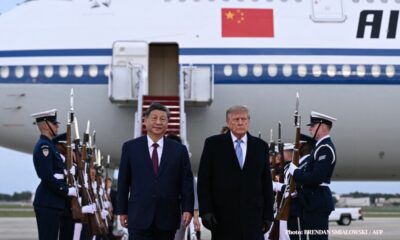
Trump welcomes Chinese President Xi as US-China summit gets underway