
Latest News
Kashmir Avalanches Kill Dozens, Destroy Villages

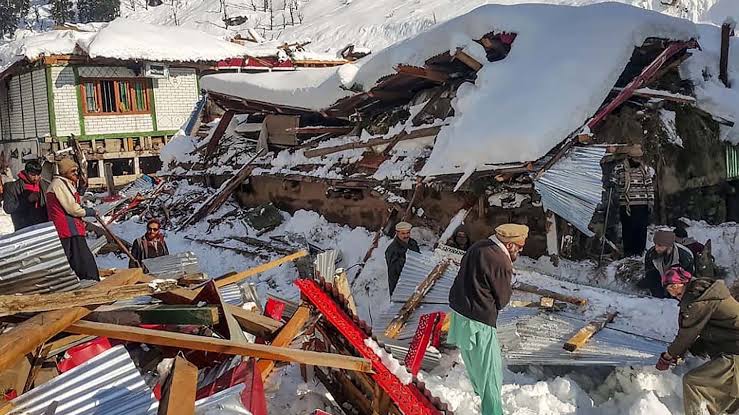
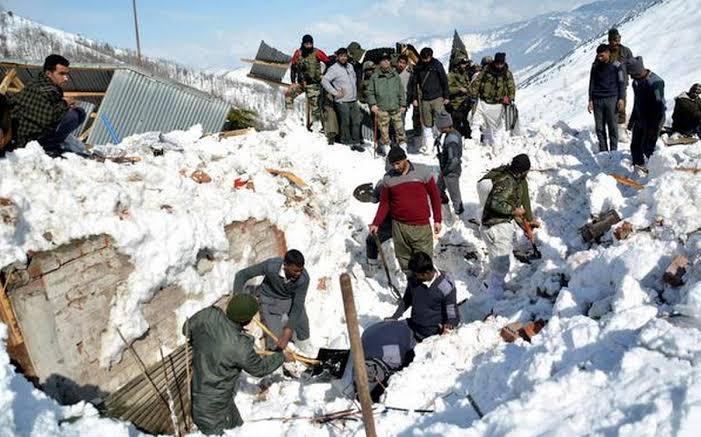 At least 69 people died after avalanches hit the Pakistani and Indian administered Kashmir during the last 24 hours, Reuters reported.
According to the report, at least 59 people were killed and many more were missing after avalanches in Pakistan-controlled Kashmir over the last 24 hours, senior government officials said, Tuesday.
In the Indian administered Kashmir too, at least 10 people were killed after several avalanches hit the northern part of Kashmir.
Two Pakistani officials said many villagers were still stranded by the avalanches in the Neelum Valley following heavy rain and landslides. Many people were reported missing and feared dead as rescue efforts got underway, an official told Reuters.
 Rescuers had managed to extract more than 50 people from the snow and airlifted them out of the area for treatment. Authorities also scrambled to provide relief to local people with another spell of heavy snow expected on Friday.
At least 53 houses have been completely destroyed by avalanches in the Pakistani administered region known as Azad Jammu and Kashmir abbreviated as AJK, officials said.
“I have asked the National Disaster Management Authority, the military, and all our federal ministers to immediately provide all humanitarian assistance on an emergency footing to the affected people in AJK,” Pakistan’s Prime Minister Imran Khan tweeted.
A senior Indian police official said five soldiers were among the 10 killed near the border between India and Pakistan.
The area is one of the world’s most militarily tense frontiers, where the neighboring armies have confronted each other over disputed territory for decades. Kashmir has been divided between Indian and Pakistan since their independence in 1947.
In 2012, an avalanche engulfed a Pakistani army battalion headquarters near the Indian border, killing at least 124 soldiers and 11 civilians.
 Meanwhile in western Pakistan, heavy snowfall in southwestern Balochistan destroyed several houses in the mountainous region, killing 17 people.
The disaster management authority declared an emergency in seven districts of the mineral-rich province and sought the army’s help for relief and rescue operations.
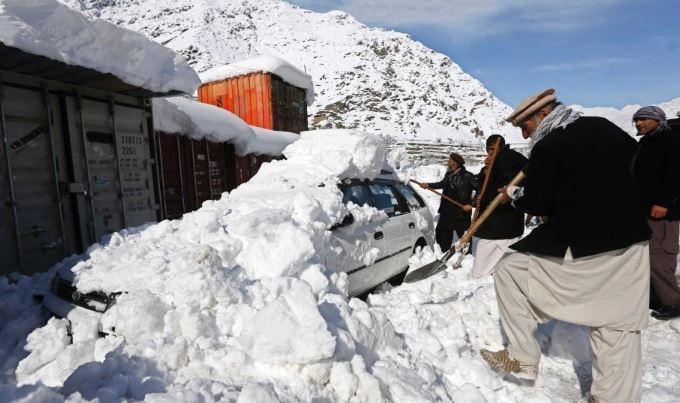
Key highways connecting Pakistan and Afghanistan were blocked due to heavy snow, forcing officials to suspend transportation of essential goods into Afghanistan.
In addition, severe cold and heavy snow led to the death of 39 people in six provinces of Afghanistan in the past two weeks said Tamim Azimi, a spokesman for Afghanistan’s Natural Disaster Management Authority in Kabul.
“We are distributing emergency assistance, including cash to the affected families,” said Azimi, adding that heavy rain and snow have hampered the rescuers.







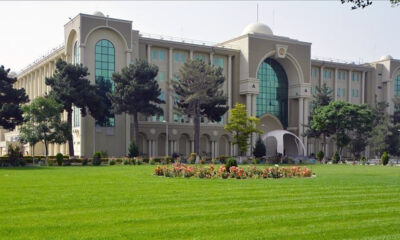






Kazakhstan’s Foreign Minister Mukhtar Tileuberdi has called for pragmatic and coordinated international engagement with Afghanistan, saying the country’s long-term stability is closely linked to the security and sustainable development of Central Asia.
Speaking during the general debate of the 81st session of the United Nations General Assembly in New York on Friday, Tileuberdi said humanitarian assistance to Afghanistan remains essential but alone cannot break the cycle of poverty, displacement and dependency.
He said Kazakhstan supports a “pragmatic, coordinated and step-by-step” approach to international engagement with Afghanistan, with the United Nations playing a central role.
Tileuberdi also said Kazakhstan is working with the UN to operationalize the United Nations Regional Centre for the Sustainable Development Goals for Central Asia and Afghanistan in Almaty.
He said the success of the centre should be measured by the results and assistance it delivers to the region.


Abu Muslim Farah defeat Khurasan Faryab 2-0 in ACL season six

Saar: Concerns over Pakistan’s political crisis discussed

Afghanistan Champions League: Omar Zawak Herat beat Toofan Herat 1-0

Blast in Pakistan’s Dera Ismail Khan kills 11, injures 30

Ariana Afghan Airlines increases Kabul-Delhi cargo flights

Saudi energy group signs major Afghanistan deals covering gas exploration and pipeline plans

Trump floats idea of renaming Atlantic or Pacific Ocean

US hits Egyptian bank branches with Iran sanctions as war marks six months

Nepal flood rescue mission enters critical phase as thousands remain missing

Iranian clubs to face Gulf opponents at neutral venues in Asian Champions League Elite
Saar: Concerns over Pakistan’s political crisis discussed

Exclusive interview with Abdul Latif Mansoor, Minister of MRRD

Tawsia: Overview of Afghanistan’s iron mines

Tahawol: Discussion on fresh Pakistani airstrikes on Afghanistan

Saar: Calls for international support for Afghanistan discussed
-

 World5 days ago
CNN, MS NOW and Politico sue Trump, challenging White House ban
-

 Latest News3 days ago
Ariana Afghan Airlines ranks seventh among 45 Central Asian airlines
-

 Latest News4 days ago
UN reiterates call for respect for international law after Kunar airstrikes
-

 Regional4 days ago
US and Iran hold first talks since June after Trump’s ‘annihilation’ threat
-

 Latest News3 days ago
Silk Road highway in Wakhan corridor now reaches the China border
-

 Latest News5 days ago
Afghan Official: Pakistan’s airstrikes will not go unanswered
-

 Sport4 days ago
Afghan boxing referee heads to China for international festival
-

 Regional5 days ago
G7 foreign ministers call on Iran to stop arming Houthis