Connect with us

Climate Change

Millions without power as cyclone Remal pounds Bangladesh and India

Published

on

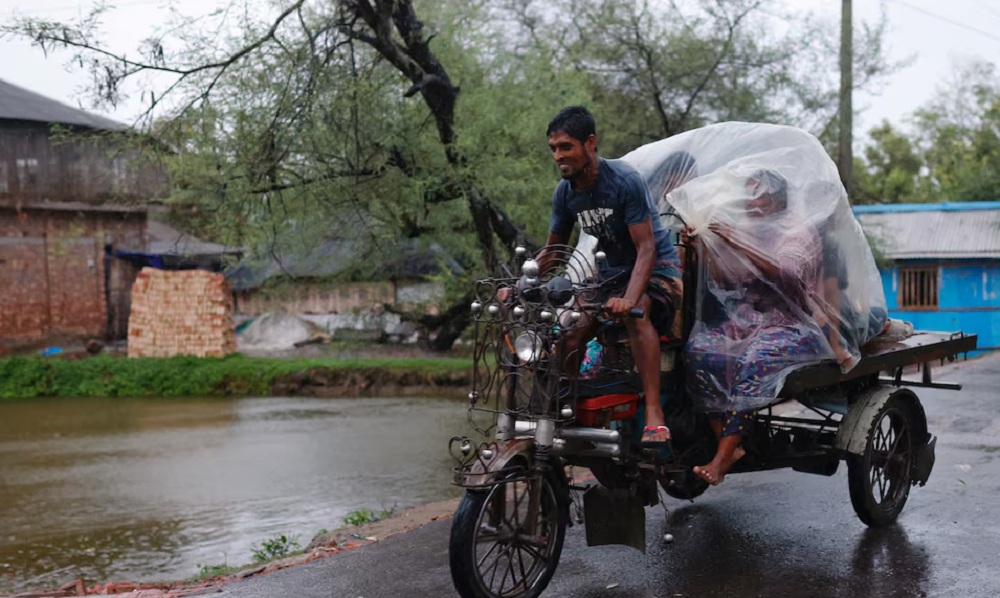
Strong winds and heavy rain pounded the coastal regions of Bangladesh and India as severe cyclone Remal made landfall late on Sunday, leaving millions without electricity after power poles fell and some trees were uprooted by gusty winds.

The storm crossed the coastal regions of Bangladesh’s Mongla port and the adjoining Sagar Islands in India’s West Bengal state with wind speed measuring up to 135 kmph (about 84 mph), the India Meteorological Department (IMD) said, Reuters reported.

The storm will gradually weaken into a cyclone during the morning on Monday and then move northeast and gradually weaken further, the IMD said in its latest weather update.

The landfall process began around 9 pm local time in India on Sunday and continued for about five hours, the regional meteorological office in Kolkata said.

One person was killed in the major metropolitan city of Kolkata when concrete chunks fell on him during the peak of the storm, police said. Roofs of thatched huts were blown away while mud houses were flattened in the coastal areas of both countries as authorities waited to ascertain the full scale of losses.

The low-lying coasts of South Asian neighbours Bangladesh and India have experienced frequent severe storms in recent years as climate change forces a rise in sea surface temperatures. Remal is the year’s first cyclone in the region.

Bangladesh moved about 800,000 people from the port areas of Mongla and Chittagong and nine coastal districts to storm shelters from Sunday morning. As many as 110,000 people were also taken to shelters in India.

Dhaka set up nearly 8,000 cyclone shelters and mobilised 78,000 volunteers ahead of the storm while the Indian navy said it had kept ships, aircraft, divers and medical supplies on standby for deployment if required.

While early warnings and timely evacuations helped both countries avert major casualties from the storm, there was a heavy toll on power infrastructure.

Authorities in Bangladesh shut down electricity supply to many areas in advance to avoid accidents while many coastal towns were left in the dark as fallen trees and broken lines disrupted supply, power ministry officials said.

“We have no electricity since night, my mobile battery will run out anytime. By the grace of Allah, the cyclone was not as violent as we thought,” said Rahat Raja, a resident in the coastal district of Satkhira in Bangladesh.

Reports of at least 356 uprooted electricity poles and damage to scores of transformers were received during the first hour of the landfall process, Arup Biswas, the minister for power in West Bengal government, said.

More than 50 international and domestic flights had to be cancelled in Kolkata city as operations were suspended from Sunday noon. Bangladesh also suspended operations at Mongla and Chittagong ports.

“Normal airport operations will resume from 9 am,” said C Pattavi, the director of the Kolkata airport, adding that the airport’s operational areas were clear from waterlogging.

River embankments in the Sundarbans delta, the largest mangrove forest in the world, shared by India and Bangladesh, also suffered heavy damage with high tides breaching protective embankments at many places.

Kolkata, like the state’s coastal belt, was also lashed by heavy rains with water logging in many areas, television footage showed. At least six trees were uprooted, which blocked roads, while there were also reports of wall collapses, police said.

The cyclone also brought heavy rains to Bangladesh capital Dhaka, causing flooding of roads and severely impacting commuters.


Climate Change

Afghanistan among world’s five most climate-vulnerable countries

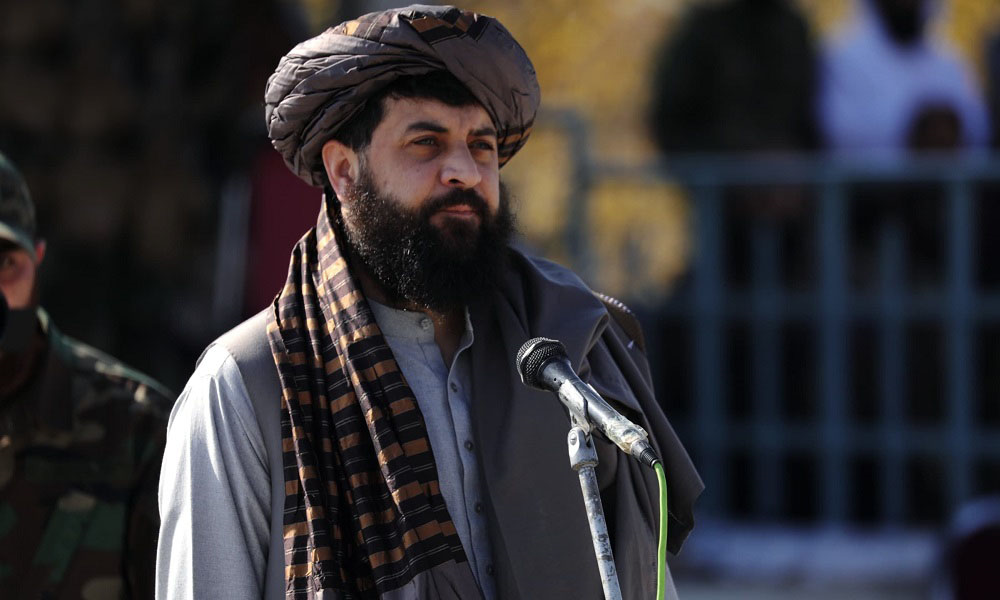
Meanwhile, Shir Ahmad Haqqani, Minister of Information and Culture, highlighted the important role of media organisations in reporting the negative impacts of climate change.

Published

on

Afghanistan ranks among the five countries most vulnerable to the impacts of climate change, despite contributing little to global greenhouse gas emissions, the head of the country’s National Environmental Protection Agency has said.

Matiul Haq Khalis, Director General of the National Environmental Protection Agency (NEPA), made the remarks at a scientific conference in Kabul, saying Afghanistan could rank as the world’s third most climate-vulnerable country if comprehensive global research is conducted.

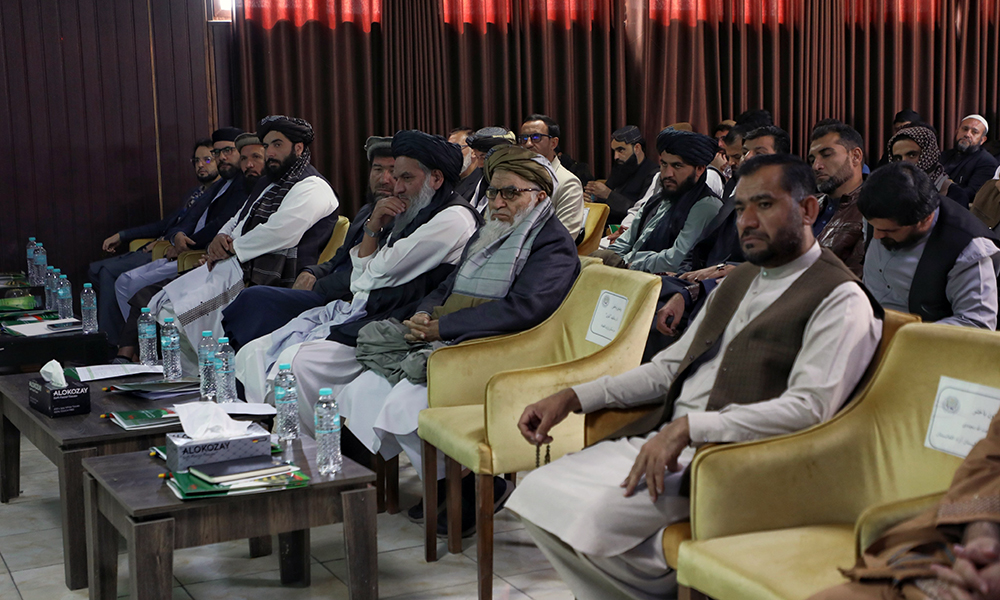
The conference, titled “Afghanistan’s Media and Climate Diplomacy: Opportunities and Challenges,” was organised at a private university and brought together government officials and media representatives to discuss the country’s climate challenges.

Khalis stressed that Afghanistan faces serious climate-related risks despite having a negligible role in producing global greenhouse gas emissions.

Meanwhile, Shir Ahmad Haqqani, Minister of Information and Culture, highlighted the important role of media organisations in reporting the negative impacts of climate change.

He called on media outlets to take a more active role in raising public awareness and informing communities about climate-related challenges.

Media representatives attending the conference also expressed their readiness to cooperate with government institutions in public awareness campaigns and efforts to address the consequences of climate change.

The discussions come ahead of an international climate conference scheduled to take place in Türkiye, where Afghan representatives have also been invited to participate and present the country’s views, with the aim of drawing greater international attention to Afghanistan’s climate challenges.

However, several international projects aimed at supporting climate change mitigation and adaptation efforts in Afghanistan have currently been suspended, raising concerns about the country’s ability to respond effectively to growing environmental threats.

The conference highlighted the importance of stronger media engagement, international cooperation and continued support for Afghanistan as it faces increasing climate-related challenges.

These developments come as a climate change conference is set to be held in Turkey in one day’s time; representatives from Afghanistan have also been invited to participate, present their perspectives, and draw the international community’s attention to the country’s climate situation.

Continue Reading

Climate Change

90 million displaced people at risk from climate threats, UN refugee agency says

In ​the first half of 2026, more than two-thirds of refugee returns were to countries highly exposed to climate hazards, placing them ​at risk of renewed displacement, the report said.

Published

on

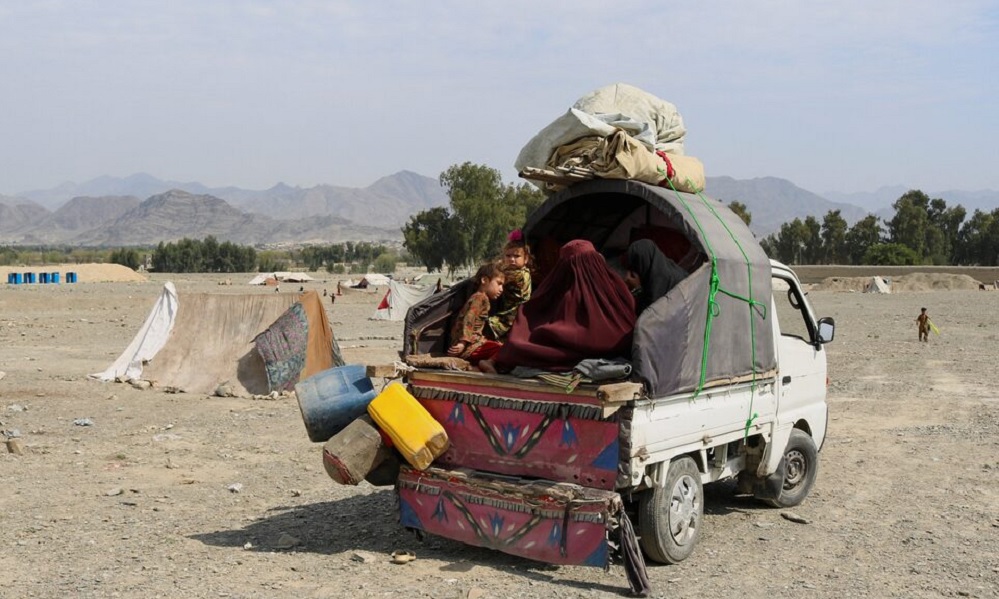
Nearly 90 million forcibly displaced people are living in countries increasingly exposed to climate-related ​droughts, floods and extreme heat, the UN refugee agency said on Friday, warning ahead of the COP31 climate ‌summit that more funding is needed to help vulnerable communities adapt.

Nearly three-quarters of the world’s forcibly displaced people are living in countries such as Afghanistan and Bangladesh that are exposed to severe climate-related risks, according to the report by the agency, known as UNHCR, published ahead of the UN ​Climate Change Conference in Antalya, Turkey. The findings show the overlap between conflict, displacement and climate change, the report ​said.

“Climate adaptation in fragile and displacement-affected areas is a matter of survival,” said Anton Leis Garcia, UNHCR’s ⁠assistant high commissioner for operations.

“We need climate financing to reach the communities where the needs are greatest,” he said.

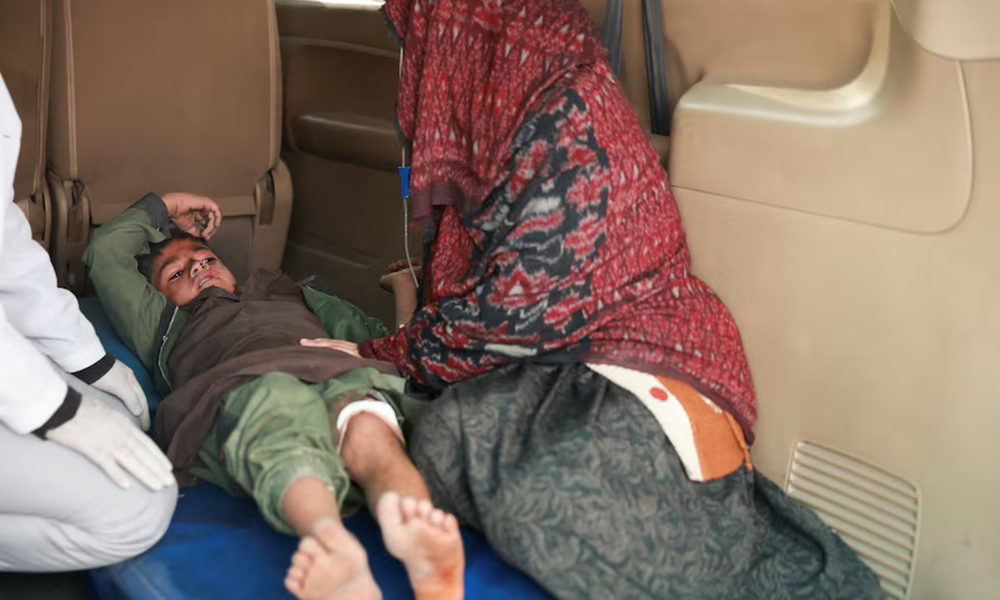
The report ​highlighted the experience of a Sudanese refugee who fled conflict in al-Fashir in June 2023 to the Farchana refugee settlement in eastern ​Chad. The refugee said she sometimes goes a week without finding safe water and must walk increasingly long distances for alternative sources as nearby seasonal riverbeds dry up amid intensifying heat.

RETURNS AT RISK

It also warned that climate change is making it harder for displaced people to return home sustainably.

In ​the first half of 2026, more than two-thirds of refugee returns were to countries highly exposed to climate hazards, placing them ​at risk of renewed displacement, the report said.

In Syria, where nearly 4 million displaced people have recently returned, people face worsening water scarcity ‌and erratic ⁠rainfall, while flooding along the Euphrates River in May damaged homes and displaced thousands of people, the report said.

Across sub-Saharan Africa, one in three refugee settlements could experience at least 100 days of dangerous heat each year by 2050, threatening health and livelihoods, the report said. In some settlements in Ethiopia, including Helaweyn, dangerous heat could persist for more than 200 days a year, increasing ​the risks of heatstroke and ​premature death.

“Refugees often have limited ⁠access to cooling, water and reliable energy, making it harder to escape dangerous temperatures,” the report said.

UNHCR also warned that a forecast supersized El Niño could worsen climate-related risks in many refugee-hosting countries ​and trigger further displacement.

In East Africa, severe flooding could displace up to 3 million people ​in Somalia, Kenya, ⁠South Sudan and Uganda by the end of this year, UNHCR said. In the Sahel, drought, flooding and conflict could intensify competition over scarce resources, while parts of Asia face heightened risks of droughts, floods and cyclones.

UNHCR called on governments and climate-finance institutions meeting at ⁠COP31 to ​increase funding for climate adaptation, highlighting that only about 10% of climate finance ​reaches fragile or conflict-affected countries.

On Wednesday, a separate UN report found rich countries were falling well short of the $305 billion needed each year to help developing nations ​adapt to climate change, even as extreme weather events become more frequent and severe.

Continue Reading

Climate Change

IEA to attend UN climate summit for second time since returning to power

The IEA previously attended COP29 in Baku, Azerbaijan, in 2024. Observer status allows delegates to participate in discussions but does not grant them formal negotiating or decision-making powers.

Published

on

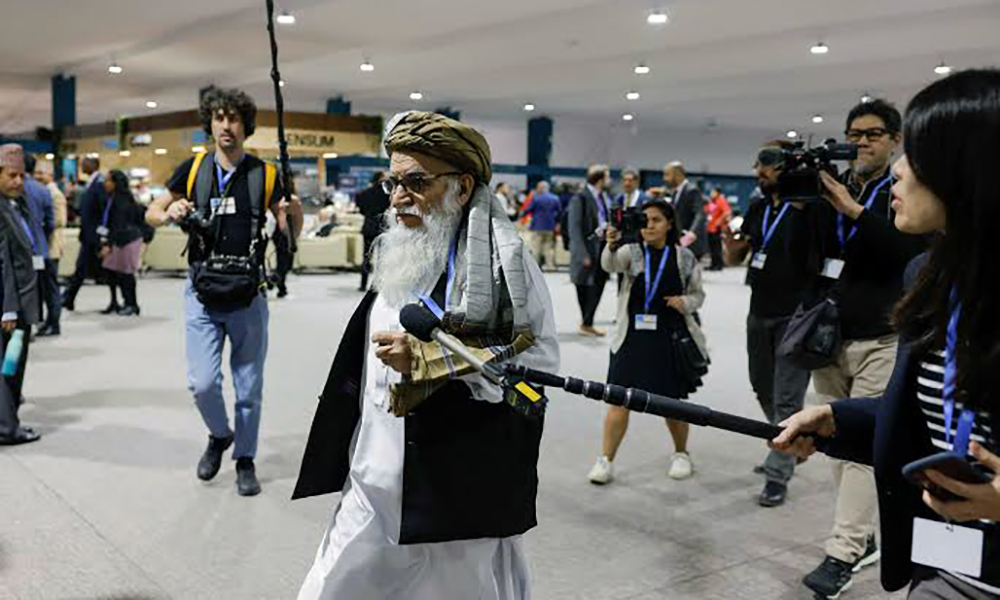
Afghanistan’s Islamic Emirate (IEA) is expected to send representatives to the COP31 United Nations climate summit in Antalya, Turkey, marking its second participation in the global climate conference process since returning to power in 2021.

According to the Associated Press, Rohullah Amin, head of climate change at the National Environmental Protection Agency, confirmed that Kabul plans to send a delegation. A Turkish official also confirmed that IEA representatives had been invited as observers.

The IEA previously attended COP29 in Baku, Azerbaijan, in 2024. Observer status allows delegates to participate in discussions but does not grant them formal negotiating or decision-making powers.

Afghanistan remains among the countries most vulnerable to climate change, facing recurring droughts, water shortages, extreme temperatures and devastating floods. These challenges threaten agricultural production, livelihoods and food security, while contributing to internal displacement.

The planned participation comes amid continuing disagreements over Afghanistan’s international representation and access to climate financing, with the United Nations yet to recognize the IEA administration as the country’s official government.

COP31 is expected to provide another opportunity to highlight Afghanistan’s growing environmental challenges and its need for international climate support.

Continue Reading
Advertisement
Advertisement
Advertisement
Advertisement

Trending

Copyright © 2026 Ariana News. All rights reserved!