
Morning News Show: Khalilzad begins new tour on Afghan peace


Sport
Abu Muslim cruise to 4-0 win over Aino Mina as Panahi hits hat-trick
Abu Muslim Farah will face Arman FC on October 5, while Aino Mina Kandahar will take on Istiqlal Kabul on October 6.
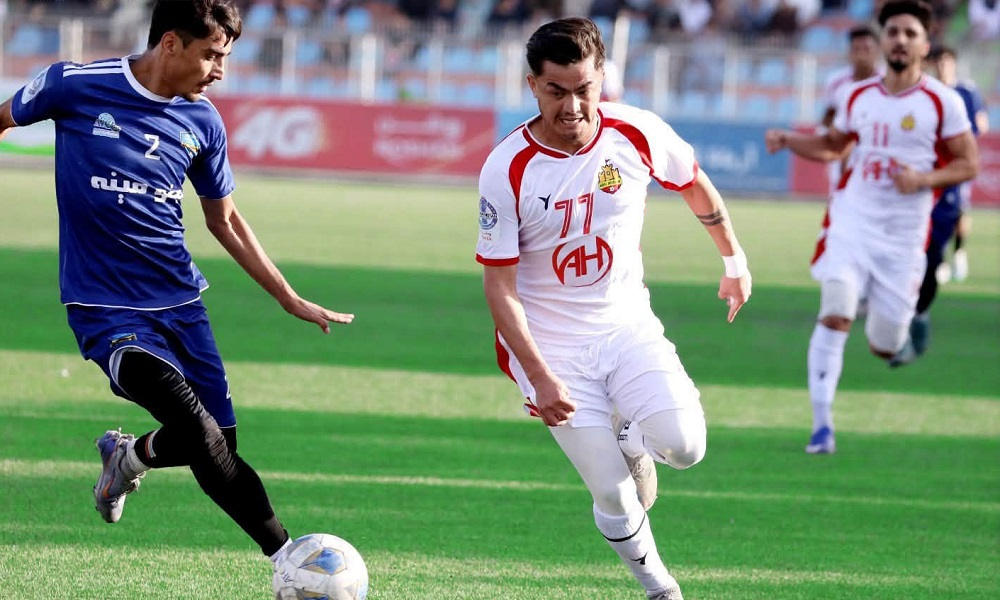
Abu Muslim Farah produced an impressive performance to beat Aino Mina Kandahar 4-0 in the 34th match of the sixth season of Afghanistan Champions League Roshan in Kabul on Friday.
Alireza Panahi opened the scoring in the 30th minute with a close-range finish before doubling Abu Muslim Farah’s lead six minutes later. The Farah-based side went into halftime with a comfortable 2-0 advantage.
Abu Muslim Farah continued to dominate after the break, with captain Sharif Mohammad extending the lead in the 79th minute with a stunning long-range free kick.
Panahi completed his hat-trick late in the match, scoring Abu Muslim Farah’s fourth goal and sealing a convincing 4-0 victory.
Aino Mina Kandahar were unable to find the back of the net in either half.
Abu Muslim Farah will face Arman FC on October 5, while Aino Mina Kandahar will take on Istiqlal Kabul on October 6.
The sixth season of Afghanistan Champions League Roshan is being broadcast live and exclusively on Ariana Television Network.
Sport
ACB announces Afghanistan squads for Bangladesh, Zimbabwe series
For cricket fans across Afghanistan, Ariana Television Network (ATN) will broadcast all these series live and exclusively.
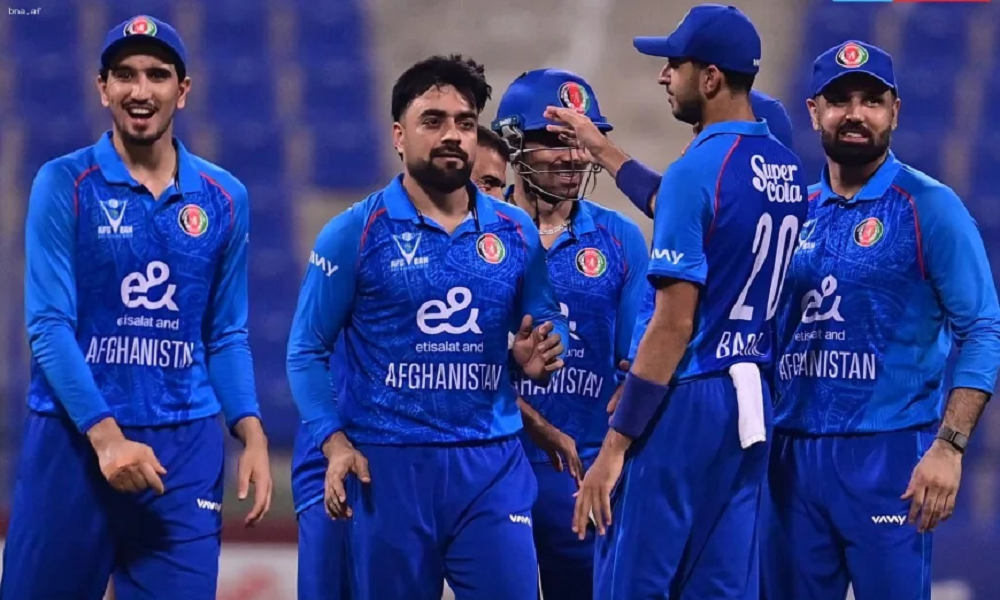
The Afghanistan Cricket Board (ACB) has announced Afghanistan’s Test, ODI and T20I squads for a busy international schedule against Bangladesh and Zimbabwe.
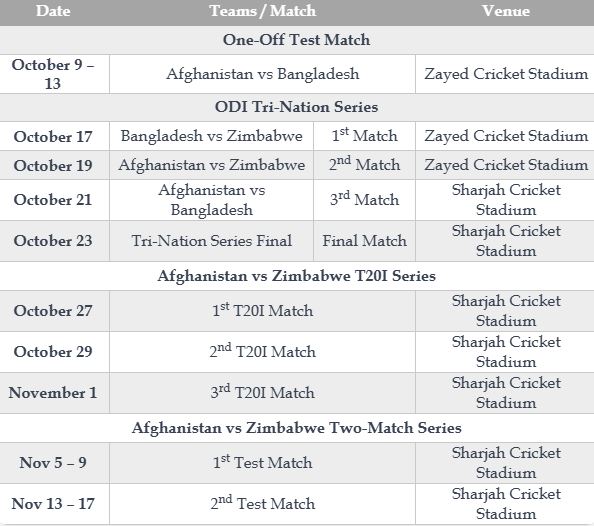
Afghanistan will face Bangladesh in a one-off Test from October 9 to 13 at the Zayed Cricket Stadium in Abu Dhabi. The match will be followed by an ODI Tri-Nation Series featuring Afghanistan, Bangladesh and Zimbabwe, scheduled for October 17 to 23.
The first two matches of the tri-series will be played in Abu Dhabi, while the remaining two matches will take place in Sharjah.
Afghanistan will then play a three-match T20I series against Zimbabwe on October 27, October 29 and November 1, followed by a two-match Test series from November 5 to 9 and November 13 to 17. All five matches will be played at the Sharjah Cricket Stadium.
Rahmat Shah will lead Afghanistan in both Test and ODI cricket after recently being appointed captain in the two formats. He guided Afghanistan to a 4-0 ODI series victory over Ireland in August. The upcoming Test against Bangladesh will be his first assignment as Afghanistan’s full-time Test captain.
Fast-bowling all-rounder Ismat Alam returns to the Test squad after missing the recent Test against India. Middle-order batter Shahidullah Kamal and fast bowler Yamin Ahmadzai have also been recalled following strong performances in the ongoing Ahmad Shah Abdali First Class Tournament.
Shahidullah has scored 538 runs at an average of 76.85, while Yamin has taken 42 wickets at an average of 12.73, with both currently leading the respective batting and bowling charts in the tournament.
Experienced left-arm spinner Zia Ur Rahman Akbar also returns to the Test squad after being sidelined by injury for almost a year. Leg-spinner Khalil Gurbaz, who was part of Afghanistan’s Test squad for the Ireland Test in 2024, has also been recalled.
Rashid Khan and Ibrahim Zadran remain rested from Test cricket following medical advice against their participation in the longer format at this stage.
In white-ball cricket, middle-order batter Darwish Rasooli has been left out of both the ODI and T20I squads, while Mohammad Nabi has been omitted from the T20I squad.
Mohammad Akram, who recently made his T20I debut at the 2026 Asian Games, has earned a place in the T20I squad for the Zimbabwe series. Young fast-bowling all-rounder Abdullah Tarakhil has also been rewarded for his performances in the 11th edition of the Shpageeza Cricket League.
Ijaz Ahmadzai and Shahidullah Kamal have also been recalled to the T20I squad, while Fareed Ahmad Malik, who was among the reserves for Afghanistan’s recent T20I series against India, has been promoted to the main 15-member squad.
ACB CEO Naseeb Khan said Test cricket remains a major priority for Afghanistan and described the upcoming matches against Bangladesh and Zimbabwe as important opportunities for the team, particularly its emerging players, to gain experience in the longer format.
He also said the ODI Tri-Nation Series will form part of Afghanistan’s preparations for the ICC Men’s Cricket World Cup 2027, while emphasizing the ACB’s commitment to providing the national team with regular, high-quality international cricket.
Afghanistan Test squad
Rahmat Shah (Captain), Ikram Alikhil (Vice-Captain & WK), Afsar Zazai (WK), Sediqullah Atal, Abdul Malik, Hashmatullah Shahidi, Rahmanullah Zadran, Shahidullah Kamal, Ismat Alam, Qais Ahmad, Zia Ur Rahman Akbar, Khalil Gurbaz, Mohammad Saleem Safi, Zia Ur Rahman Sharifi, Yamin Ahmadzai.
Reserves: Baheer Shah Mahboob, Naseer Khan Maroofkhil, Bilal Sami, Bashir Ahmad.
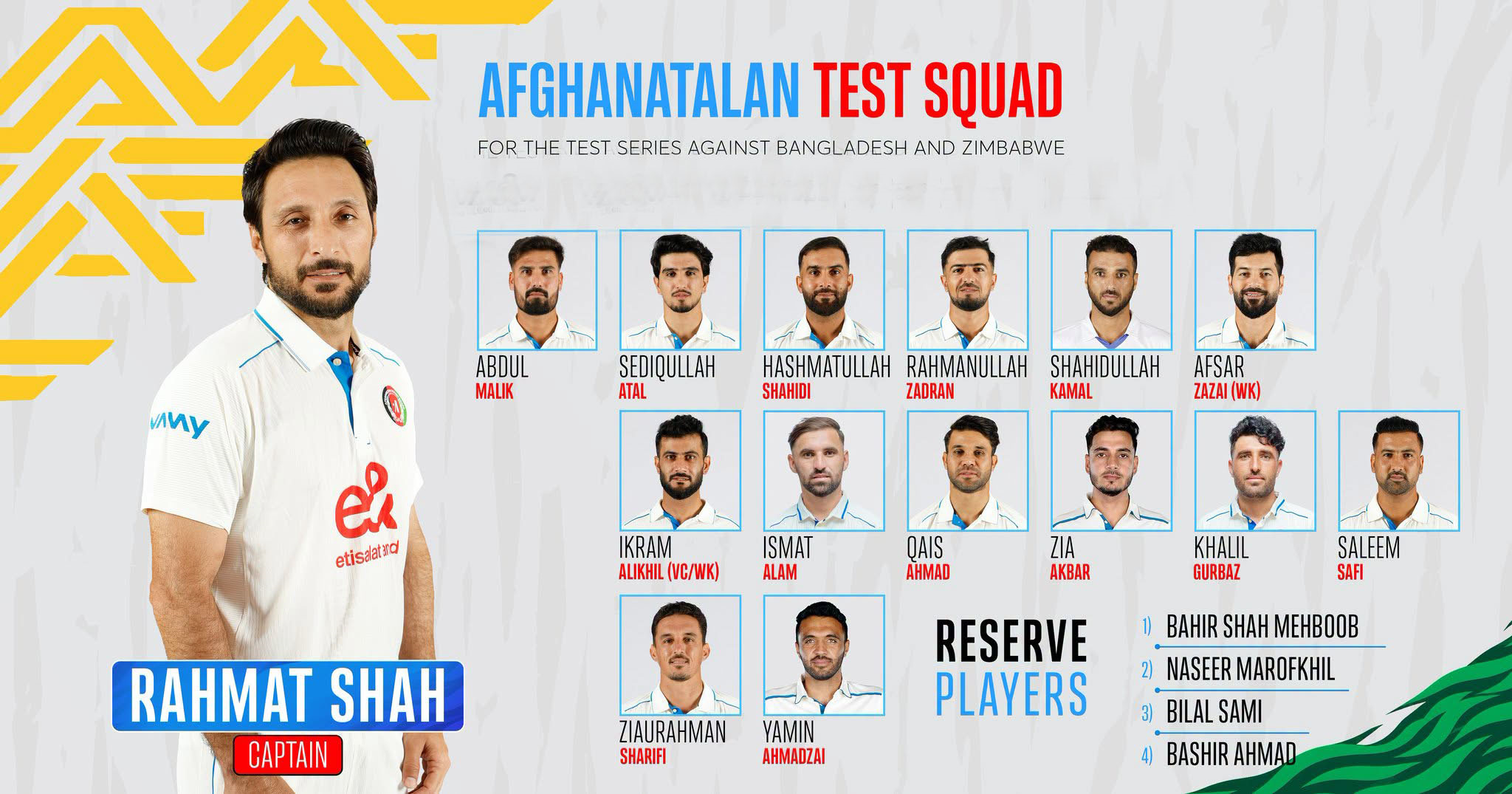
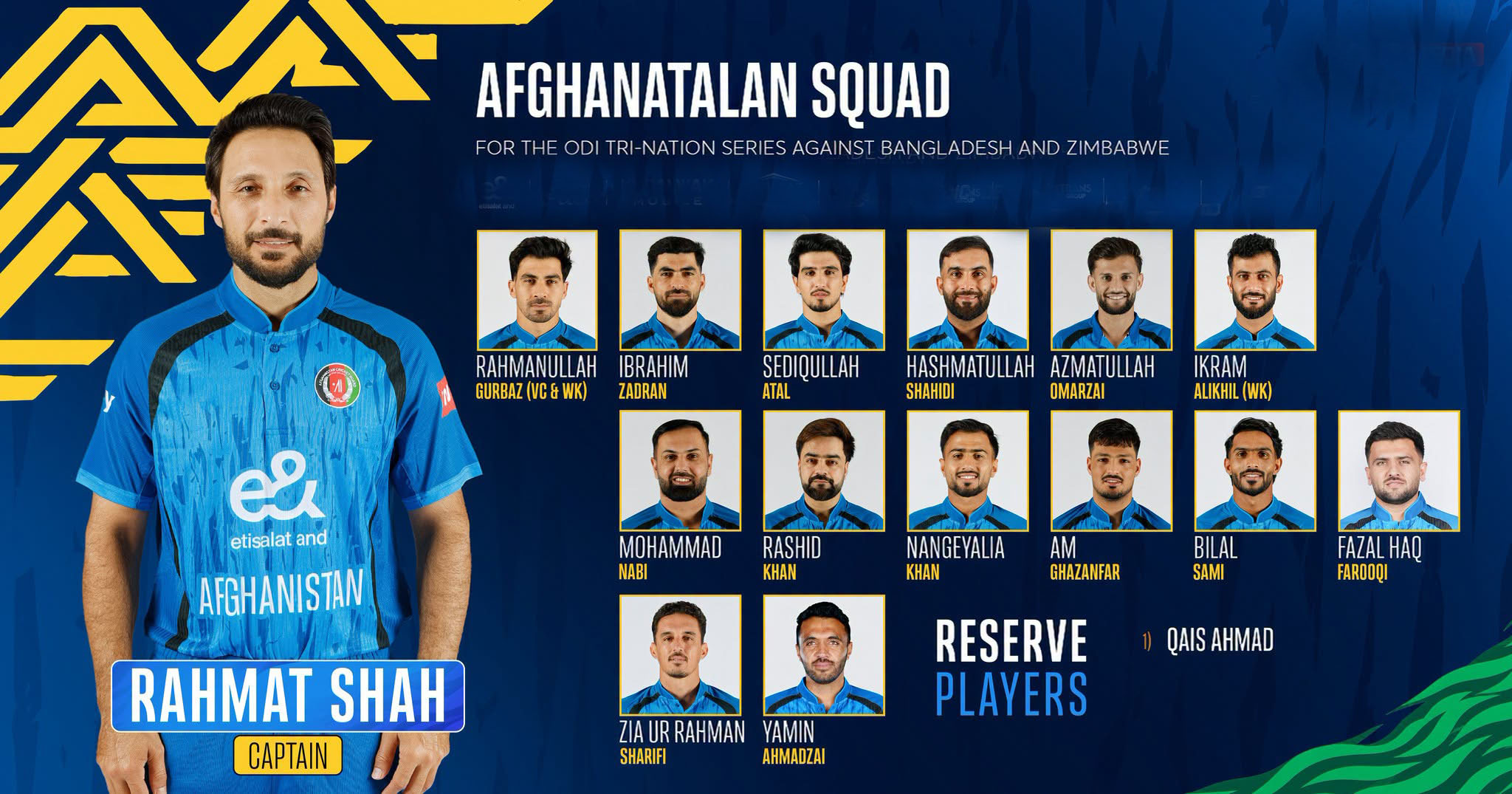
Afghanistan ODI squad
Rahmat Shah (Captain), Rahmanullah Gurbaz (Vice-Captain & WK), Ikram Alikhil (WK), Sediqullah Atal, Ibrahim Zadran, Hashmatullah Shahidi, Azmatullah Omarzai, Mohammad Nabi, Rashid Khan, Nangyalai Khan, AM Ghazanfar, Bilal Sami, Zia Ur Rahman Sharifi, Fazal Haq Farooqi, Yamin Ahmadzai.
Travelling reserve: Qais Ahmad.
Afghanistan T20I squad
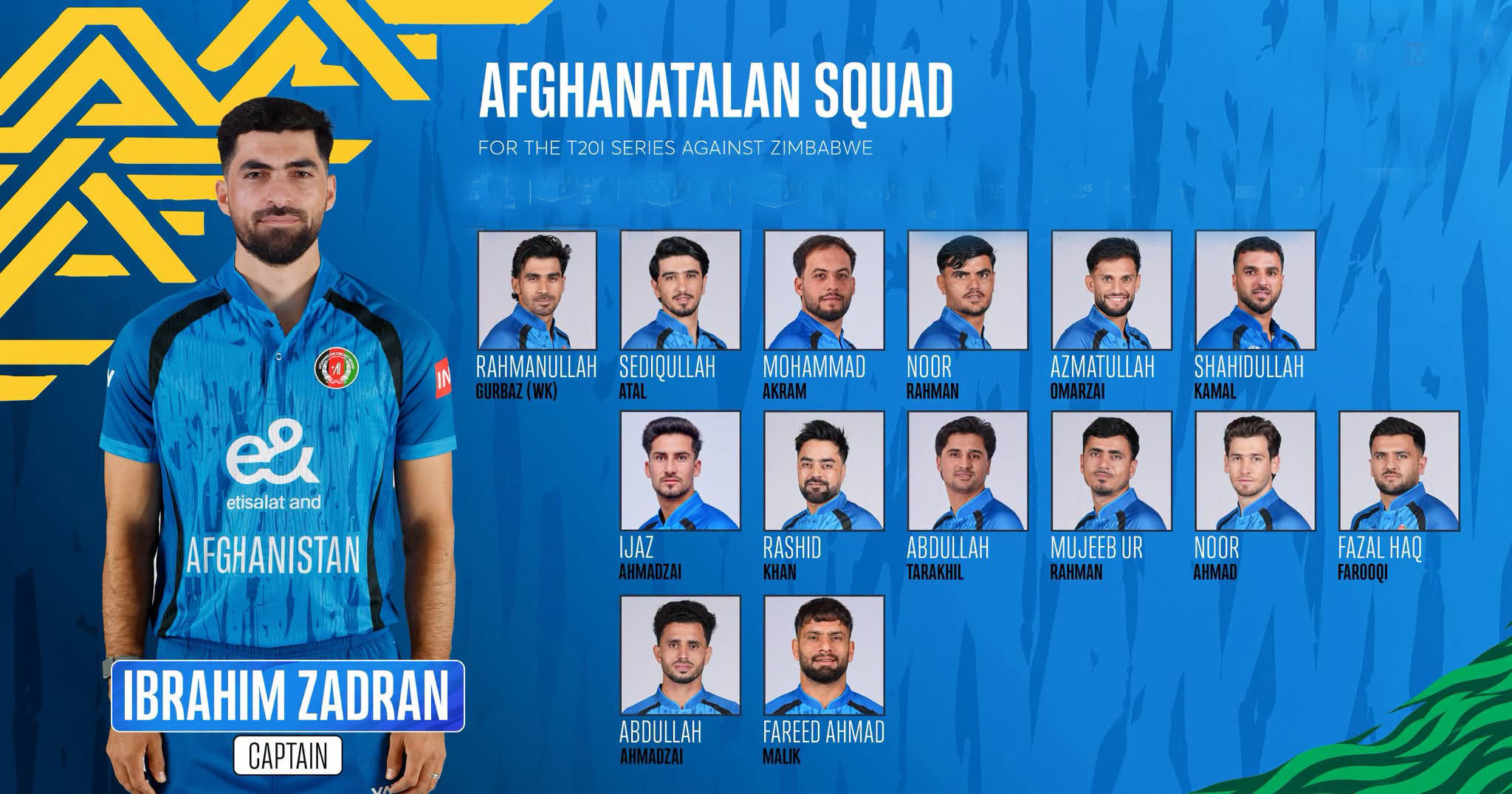
Ibrahim Zadran (Captain), Rahmanullah Gurbaz (WK), Noor Rahman (WK), Sediqullah Atal, Mohammad Akram, Shahidullah Kamal, Ijaz Ahmadzai, Azmatullah Omarzai, Abdullah Tarakhil, Rashid Khan, Noor Ahmad, Mujeeb Ur Rahman, Fazal Haq Farooqi, Abdullah Ahmadzai, Farid Ahmad Malik.
Reserves: Faridoon Dawoodzai, Qais Ahmad, Nangyalai Khan.
Series Schedule:
For cricket fans across Afghanistan, Ariana Television Network (ATN) will broadcast all these series live and exclusively.
Stay tuned to Ariana Television Network for the latest news, updates, and live coverage of these exciting cricket events.


Tawsia: Review of three key economic developments in Afghanistan

Abu Muslim cruise to 4-0 win over Aino Mina as Panahi hits hat-trick

ACB announces Afghanistan squads for Bangladesh, Zimbabwe series

US rejects American University of Afghanistan’s funding request

Cargo stacks up as Pakistan seizes containers to block capital routes

Saudi energy group signs major Afghanistan deals covering gas exploration and pipeline plans

Khalilzad: Afghanistan ready to attract major investment

El Niño likely to intensify, may become strongest ever recorded, WMO says

Khyber Chamber demands reopening of Torkham crossing

Messi returns to Inter Miami after Argentina retirement
Tawsia: Review of three key economic developments in Afghanistan

Tahawol: Pakistan’s airstrikes on civilians in Afghanistan discussed

Tahawol: Improvement in Afghanistan-China relations discussed

Saar: Expanding ties with regional and global countries discussed

Tahawol: Absence of Afghanistan’s envoy at UNGA discussed
-
 Sport5 days ago
Afghanistan vs India Asian Games quarter-final abandoned without a toss
-
 Regional5 days ago
Floods, landslides kill 56 in India and 14 in Nepal
-

 World5 days ago
Trump says men arrested at UK air base used by US planned ‘big damage’
-
 Regional4 days ago
US, Iran separately talk with mediators in latest bid to end war
-

 World5 days ago
Serbia’s President Vucic resigns ahead of October parliamentary elections
-
 Business5 days ago
Afghanistan raises import tariffs on several goods to support domestic industry
-
 Latest News5 days ago
Khalilzad calls for end to Pakistan’s ‘double game’, urges new chapter with Afghanistan
-
 Business5 days ago
Afghanistan-Kazakhstan trade reaches $581 million in six months