
Latest News
No need for an interim govt: Sarwar Danish

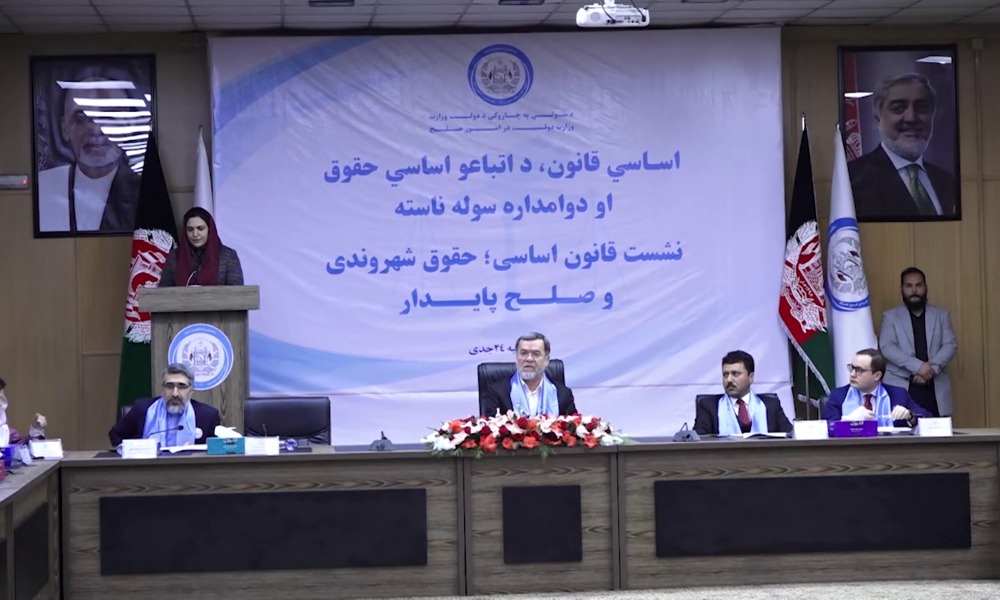
Second Vice President Sarwar Danish said on Wednesday that Afghanistan does not need an interim government in order to reach a peace agreement with the Taliban.
Speaking at an event in Kabul, Danish said that it does not make sense to live under the Republic’s flat and to seek an interim government.
“Those who say that we are pro-republic and against the emirate, meanwhile seek an interim government – they either don’t know the terms of policies or are unfamiliar with historic events… or they have strong relations with foreigners against Afghanistan,” he said.
Danish also warned that a peace deal without preserving democratic principles will intensify the war in Afghanistan.
“If voting processes, republic norms and general citizenship rights are not considered in the peace talks, lasting peace will not be reached,” Danish said.
Meanwhile, Inayatullah Babar Farahmand, deputy head of the High Council for National Reconciliation (HCNR) said that the Afghan constitution needs to be amended and the current republic system is not in the interests of the people.
“Such a republic system is not in the interest of people and political participation is on paper,” said Farahmand.
On the other hand, Fazl Ahmad Manawi, minister of justice, said that no one can impose their will by using force.
This comes after a number of Afghan politicians said last week that the Zalmay Khalilzad, US Special Representative for Afghanistan Reconciliation, carried a message to meetings recently about the establishment of an interim government.
Sources close to President Ashraf Ghani said at the time that he refused to meet with Khalilzad because of this. On Saturday Ghani addressed a gathering and stated he would only hand over power to an elected successor.
However, on Wednesday, US Chargé d’Affaires in Kabul Ross Wilson rejected the claims of the US wanting an interim government.
“We have not advocated, and the United States is not advocating, an interim government,” Wilson said in a series of tweets.
He said the United States is committed to bringing about an end to conflict in Afghanistan through a political settlement that ensures the country remains sovereign, unified and democratic, is at peace with itself and its neighbors and can preserve gains made over the last 19 years.
He stated that the first phase of Afghanistan Peace Negotiations in Doha constituted an important step forward, “but much remains to be done”.
“The United States remains firm in its call for an immediate reduction of violence and ceasefire,” he said.
Wilson also stated that he had spoken with the US Special Representative for Afghanistan Reconciliation Zalmay Khalilzad and that he has “and will continue to talk with Afghans about the need to accelerate the talks in Doha and solicited from those we have met their ideas, as well as their concerns.”







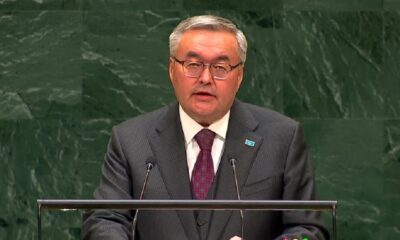




Kazakhstan’s Foreign Minister Mukhtar Tileuberdi has called for pragmatic and coordinated international engagement with Afghanistan, saying the country’s long-term stability is closely linked to the security and sustainable development of Central Asia.
Speaking during the general debate of the 81st session of the United Nations General Assembly in New York on Friday, Tileuberdi said humanitarian assistance to Afghanistan remains essential but alone cannot break the cycle of poverty, displacement and dependency.
He said Kazakhstan supports a “pragmatic, coordinated and step-by-step” approach to international engagement with Afghanistan, with the United Nations playing a central role.
Tileuberdi also said Kazakhstan is working with the UN to operationalize the United Nations Regional Centre for the Sustainable Development Goals for Central Asia and Afghanistan in Almaty.
He said the success of the centre should be measured by the results and assistance it delivers to the region.


Saar: Concerns over Pakistan’s political crisis discussed

Afghanistan Champions League: Omar Zawak Herat beat Toofan Herat 1-0

Blast in Pakistan’s Dera Ismail Khan kills 11, injures 30

Ariana Afghan Airlines increases Kabul-Delhi cargo flights

Khalilzad questions Pakistan’s commitment to Afghan welfare

Saudi energy group signs major Afghanistan deals covering gas exploration and pipeline plans

Trump floats idea of renaming Atlantic or Pacific Ocean

US hits Egyptian bank branches with Iran sanctions as war marks six months

Nepal flood rescue mission enters critical phase as thousands remain missing

Iranian clubs to face Gulf opponents at neutral venues in Asian Champions League Elite
Saar: Concerns over Pakistan’s political crisis discussed

Exclusive interview with Abdul Latif Mansoor, Minister of MRRD

Tawsia: Overview of Afghanistan’s iron mines

Tahawol: Discussion on fresh Pakistani airstrikes on Afghanistan

Saar: Calls for international support for Afghanistan discussed
-

 World5 days ago
CNN, MS NOW and Politico sue Trump, challenging White House ban
-

 Latest News3 days ago
Ariana Afghan Airlines ranks seventh among 45 Central Asian airlines
-

 Latest News4 days ago
UN reiterates call for respect for international law after Kunar airstrikes
-

 Regional3 days ago
US and Iran hold first talks since June after Trump’s ‘annihilation’ threat
-

 Latest News3 days ago
Silk Road highway in Wakhan corridor now reaches the China border
-

 Latest News4 days ago
Afghan Official: Pakistan’s airstrikes will not go unanswered
-

 Sport4 days ago
Afghan boxing referee heads to China for international festival
-
 Regional4 days ago
G7 foreign ministers call on Iran to stop arming Houthis