
Regional
Russia concerned about weapons abandoned by the West in Afghanistan

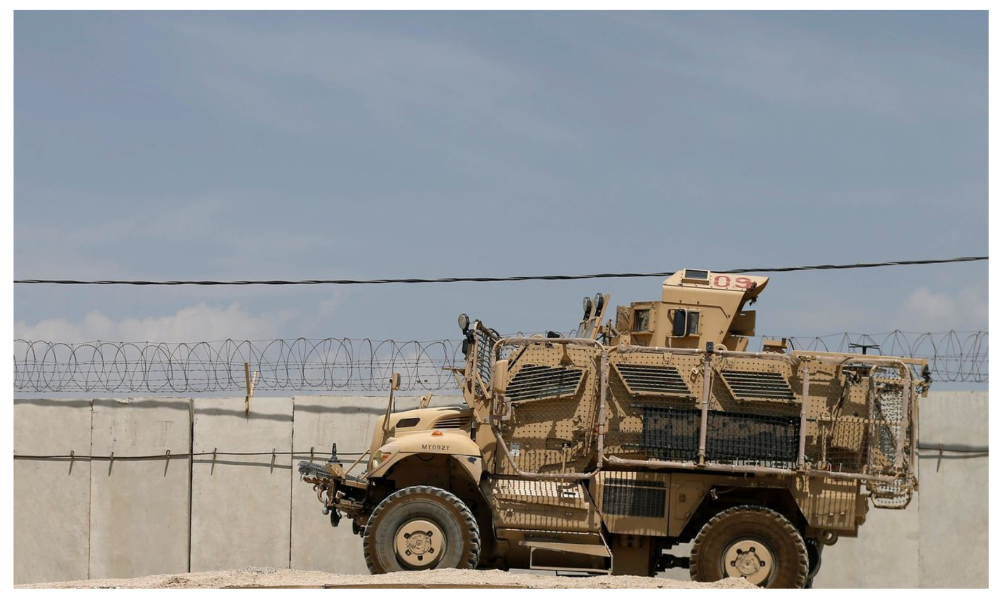
The large hotbed of instability in Afghanistan created by the West could spread to all countries of the region, Russian Security Council Secretary Nikolay Patrushev said on Wednesday at a meeting of regional countries on Afghanistan.
Patrushev explained that this was also due to arms “abandoned by the Western coalition in enormous amounts” when troops withdrew from Afghanistan.
“We are talking about more than a thousand armored vehicles and armored personnel carriers, dozens of aircraft and helicopters, hundreds of artillery pieces, mortars, anti-tank and anti-aircraft systems, as well as hundreds of thousands of heavy and light small arms worth tens of billions of dollars,” the security chief listed as reported by TASS news agency.
According to him, these weapons can be used both to intensify the armed struggle between intra-Afghan groups and sold on the black market, including to terrorists in third countries.
He said that Washington and its allies seek to maintain old and create new hotbeds of tension around the world.
“Uniting our efforts in solving security tasks is especially important at the current stage, when the US and its allies are pursuing policies aimed at maintaining old or creating new hotbeds of tension around the world,” he said.
According to Patrushev, one of these hotbeds is Afghanistan, where “over 20 years of the presence of Western military contingents, preconditions for long-term challenges and threats” to the countries of the entire region have been consistently formed.
“In particular, the West indulged in stepping up the activities of international terrorist organizations, first of all ISIS and al-Qaeda, which swelled its ranks thanks to fighters from Iraq, Syria and some other countries. We all remember quite well the unmarked helicopters that delivered weapons and ammunition to the ISIS mercenaries in the American airspace control zone,” he noted.
In addition, the Russian security chief recalled that the Americans had contributed to the growth of drug trafficking in Afghanistan. “Today the incumbent Kabul authorities are still reaping the fruits of the chaos left by the Americans, and the situation in the socio-economic sphere is rapidly deteriorating,” he summarized.
Meanwhile, Secretary of the Supreme National Security Council of Iran Ali Shamkhani said at the meeting that the crisis in Iraq, the creation of Daesh, as well as the conflict in Ukraine are results of US policies.
“Peace, stability and progress in Afghanistan are our priority, [the priority] of all those seated around this table. We believe and proceed from the fact that the presence of the United States destabilizes the region. Afghanistan confirms this. The events in Iraq, the creation of the Islamic State in the Levant region, and also, the events in Ukraine occurred as a result of arrogant actions by the United States. The people of Ukraine have fallen victim to US aims,” he said.
The fifth meeting of the secretaries of national councils from the countries of Central Asia, Pakistan, India and China on Afghanistan is taking place in Moscow on Wednesday.








Regional
Saudi Grand Mufti tells troops to be ready to sacrifice their lives fighting Houthis
State TV has in recent weeks aired footage of an alleged Houthi strike on a mosque in the kingdom’s south, and authorities have also accused the Houthis of launching an attack on Mecca, Islam’s holiest site.
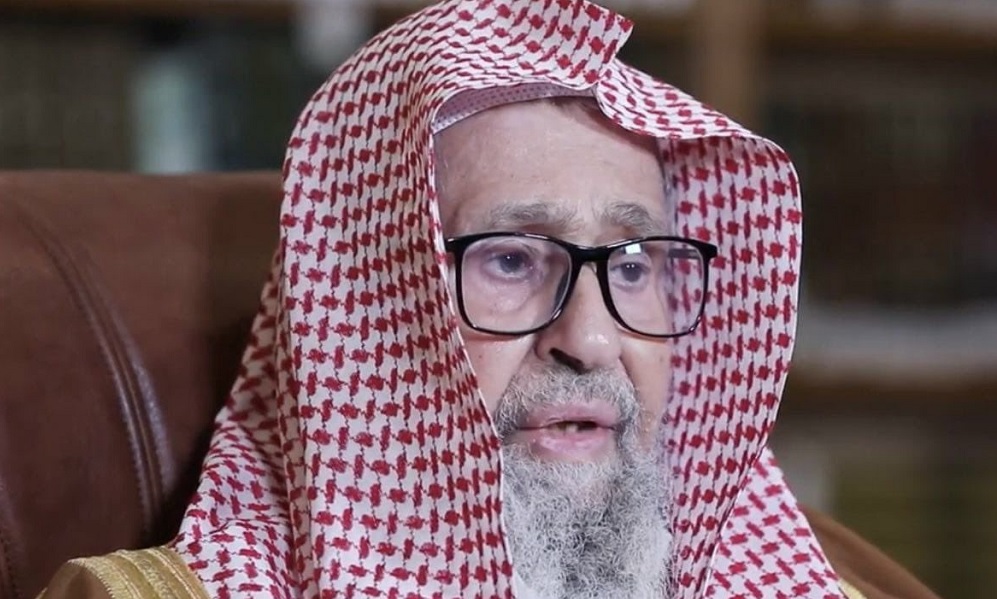
Saudi Arabia’s top religious authority called on soldiers in the kingdom to be ready to lay down their lives to fight the Iran-backed Houthis until the group is ousted from power, a statement posted on the Saudi state news agency said.
The rare and strongly worded message by Saudi Grand Mufti Sheikh Saleh bin Fawzan Al-Fawzan was addressed to soldiers stationed at the country’s borders and drew heavily on Quranic verses and recorded sayings of the Prophet Mohammad related to sacrifice and struggle in defence of God, Reuters reported.
It comes after weeks of escalating violence between Saudi Arabia and the Houthis which has seen the Iran-backed group attack the kingdom with salvos of missiles and drones and Saudi Arabia respond with airstrikes.
Observers have been questioning whether Saudi Arabia will launch a broader military operation along with Yemeni government forces it backs.
“Protecting this great nation… and punishing anyone who seeks to lay a hand on even an inch of its territory are among the greatest duties and most virtuous acts of devotion, for which lives and souls may be sacrificed in seeking God’s pleasure,” said the statement, issued late Thursday.
Asserting the authority of the Saudi-backed internationally recognized Yemeni government over the entire country was “among the most pressing obligations,” it added.
Those government forces lost control of the vital Bab el-Mandeb waterway to the Houthis two weeks back, a blow to the kingdom, which has been mired in the conflict since 2015 after it launched an unsuccessful operation to oust the Houthis from the Yemeni capital Sanaa.
The recent fighting is the latest episode in 12 years of civil war in Yemen which had largely been frozen since a 2022 but has escalated again and has become linked to the wider Iran war.
“We ask God Almighty to grant you all his support, and to protect our countries and beloved Yemen from all harm. We also ask him to bring about the complete defeat of the Houthi group and those who assist and support them,” the statement said.
The Mufti’s letter adds to a growing religiously centered narrative by authorities in the conservative Sunni Muslim kingdom aimed at discrediting the Houthis, who follow a different sect of Islam.
State TV has in recent weeks aired footage of an alleged Houthi strike on a mosque in the kingdom’s south, and authorities have also accused the Houthis of launching an attack on Mecca, Islam’s holiest site.
“It is incumbent upon you, brothers serving on the front lines, to remain constantly prepared to perform your duty, to obey the rulers and your field commanders, and to carry out orders with the utmost precision, as God Almighty commanded the companions of his Prophet to do,” the statement said.
“You are following in the footsteps of the Prophet’s companions, defending the sacred sites of Muslims.”
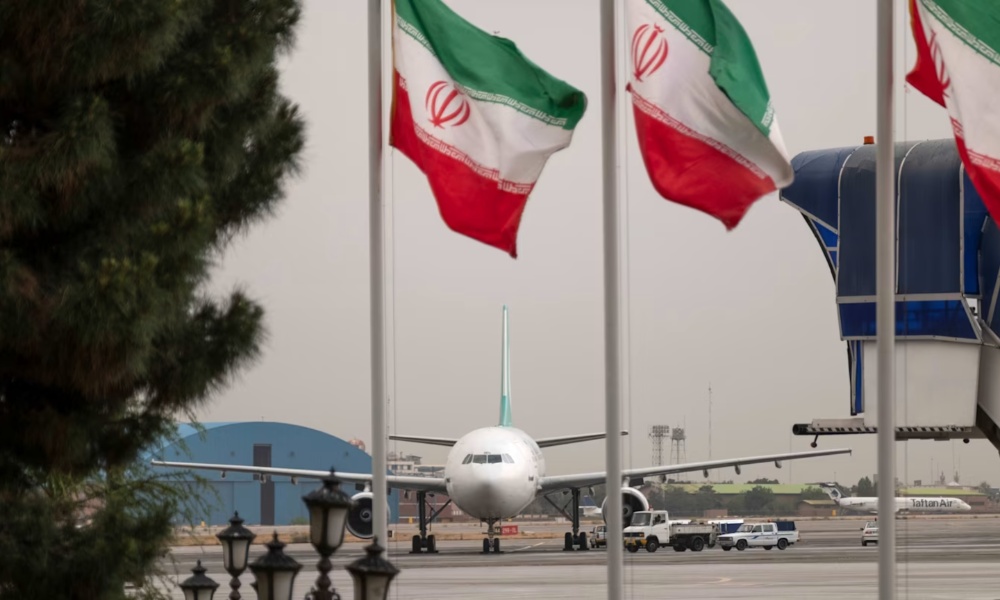
Iranian airlines cancelled some international flights on Wednesday after the United States imposed new sanctions targeting Iran’s aviation sector.
Georgia and Azerbaijan confirmed the suspension of flights to Iran, while a travel agent in Tehran told AFP that flights to Baghdad, Muscat and Qatar had also been halted. Flights to several other destinations, including China, continued.
The new US measures were announced by Treasury Secretary Scott Bessent on Monday as Washington seeks to increase economic pressure on Tehran amid the ongoing conflict.
“We are squeezing the Iranians like they’ve never seen,” Bessent told Fox News on Wednesday, claiming that more than 80% to 90% of Iran’s international flights had been affected.
Iranian President Masoud Pezeshkian, who is attending the United Nations General Assembly in New York, rejected the pressure.
“The resistance of the Iranian people will only intensify in the face of sanctions, mounting pressure and growing intimidation” from the United States, Pezeshkian said.
Iran’s aviation industry has faced US sanctions for years, but the latest measures could further restrict international connections.
Despite the new sanctions, flight-tracking data showed a Mahan Air flight from Tehran arriving in Guangzhou, China, on Wednesday. A flight to Shanghai was also scheduled to depart from Tehran’s international airport.
China has opposed the new US sanctions, describing them as illegal.
Some flights to Istanbul also continued, although others were cancelled, according to the Tehran-based travel agent, who said the situation remained uncertain.
“The situation is unstable and we are no longer selling tickets for the time being for fear of cancellations,” the agent told AFP.
Flights connecting Iran with Turkey and Armenia were also still possible on some smaller Iranian airlines, while flights to Najaf in Iraq and Dubai in the United Arab Emirates were listed as scheduled.
Mohsen Rezaei, head of Iran’s Supreme National Security Council, warned neighbouring countries against complying with the US measures.
“If a country cooperates with or embarks on adventures with the United States, its airports will no longer be able to operate flights” to Iran, he told Iranian state television.
The possible suspension of flights between Iran and Iraq has raised particular concerns because of the large number of Iranian religious pilgrims who travel to Iraq.
Iranian media reported that authorities were considering rerouting flights from Baghdad to Najaf. AFP also reported that several sources in Iraq said Baghdad would comply with the US sanctions, although the Iraqi government had not publicly announced a flight ban.
Travel agents in Najaf said passengers were seeking information about possible cancellations and considering travelling by land instead.
Regional
US and Iran hold first talks since June after Trump’s ‘annihilation’ threat
WATCH Donald Trump’s speech to UNGA on Iran, including his ‘annihilation’ threat
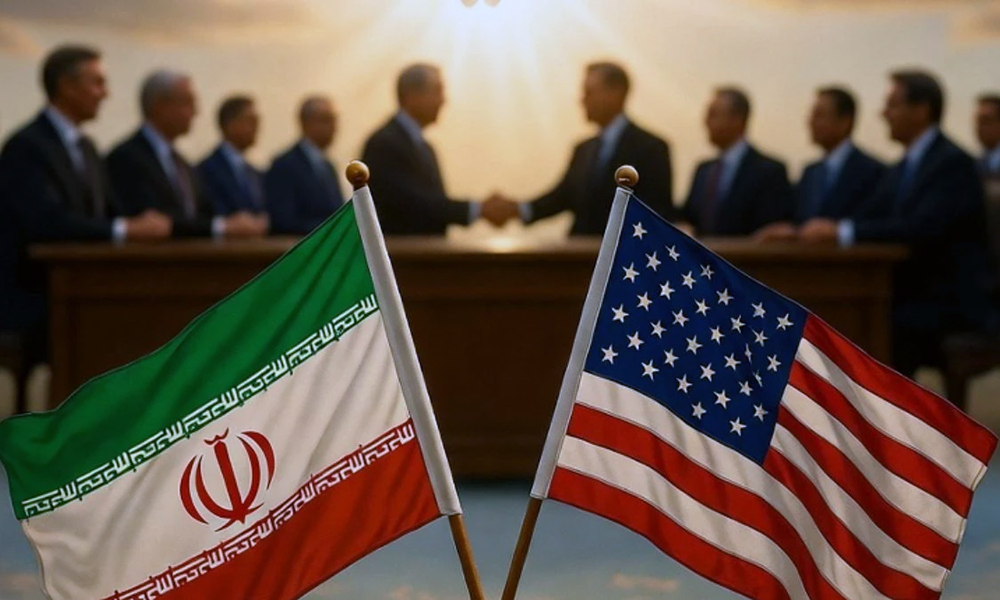
The United States and Iran have held their first high-level talks since June, with discussions taking place on the sidelines of the United Nations General Assembly in New York amid continued fighting and growing international pressure to end the conflict.
Iranian Foreign Minister Abbas Araghchi and US special envoy Steve Witkoff took part in the talks, which were mediated by Qatar. US envoy Jared Kushner also participated on the American side, according to reports.
No breakthrough was immediately reported. Witkoff said the two sides had completed a round of discussions that he hoped would prove “constructive and promising”, adding that mediators would continue their efforts.
Iranian officials said Araghchi conveyed Tehran’s conditions, including an end to what Iran describes as US acts of aggression and the lifting of measures affecting Iranian shipping and assets.
The talks came just hours after US President Donald Trump warned in his address to the UN General Assembly that he could “annihilate” Iran if no agreement was reached.
Trump said Iran faced a choice between reaching a deal and what he described as destruction, while also saying he believed an agreement could be reached after the US midterm elections in November.
Trump later described the three-hour discussions as very productive. Witkoff, however, clarified that the two sides communicated through mediators who shuttled between the delegations rather than holding direct face-to-face negotiations.
The latest contact follows months of conflict between Iran, Israel and the United States. The fighting has also disrupted shipping through the Strait of Hormuz, one of the world’s most important energy routes.
Iran has indicated that it could reopen the strategic waterway if Washington takes steps to ease military and economic pressure on Tehran. Iranian officials have linked the issue to demands including the lifting of the US naval blockade and the release of frozen Iranian assets.
The Strait of Hormuz is a key route for global energy supplies, and its closure has contributed to volatility in international oil markets.
Despite the renewed diplomatic contact, significant differences remain between Washington and Tehran over the war, Iran’s nuclear programme, sanctions, shipping through the Strait of Hormuz and US military operations in the region.
Iranian President Masoud Pezeshkian is due to address the UN General Assembly on Wednesday, with further diplomatic efforts expected to continue in New York.


Exclusive interview with Abdul Latif Mansoor, Minister of MRRD

Sorkh Poshan Khafi rout Istiqlal Kabul 6-0 in ACL season six

Tawsia: Overview of Afghanistan’s iron mines

Afghanistan Champions League: Arman FC and Aino Mina play out goalless draw

Afghanistan says Pakistani military post destroyed near Spin Boldak

Saudi energy group signs major Afghanistan deals covering gas exploration and pipeline plans

ATN secures exclusive rights to broadcast T20I series in India across Afghanistan

Trump floats idea of renaming Atlantic or Pacific Ocean

US hits Egyptian bank branches with Iran sanctions as war marks six months

Nepal flood rescue mission enters critical phase as thousands remain missing
Exclusive interview with Abdul Latif Mansoor, Minister of MRRD
Tawsia: Overview of Afghanistan’s iron mines

Tahawol: Discussion on fresh Pakistani airstrikes on Afghanistan

Saar: Calls for international support for Afghanistan discussed

Tahawol: Opening of the 81st UN General Assembly Session
-

 Sport4 days ago
Afghanistan to face Japan and Nepal in Asian Games cricket group stage
-
 Regional5 days ago
Iran and US trade threats after Houthi attacks escalate regional conflict
-

 World4 days ago
CNN, MS NOW and Politico sue Trump, challenging White House ban
-
 Health4 days ago
Four-day polio vaccination campaign begins across Afghanistan
-

 Latest News3 days ago
UN reiterates call for respect for international law after Kunar airstrikes
-
 Latest News4 days ago
Khalilzad condemns Pakistan airstrikes, says current strategy is not working
-

 Latest News2 days ago
Ariana Afghan Airlines ranks seventh among 45 Central Asian airlines
-

 Latest News4 days ago
Afghan Official: Pakistan’s airstrikes will not go unanswered