
World
Serbia’s President Vucic resigns ahead of October parliamentary elections
He had said in late June that he planned to resign and that Serbia would hold early parliamentary and presidential elections.

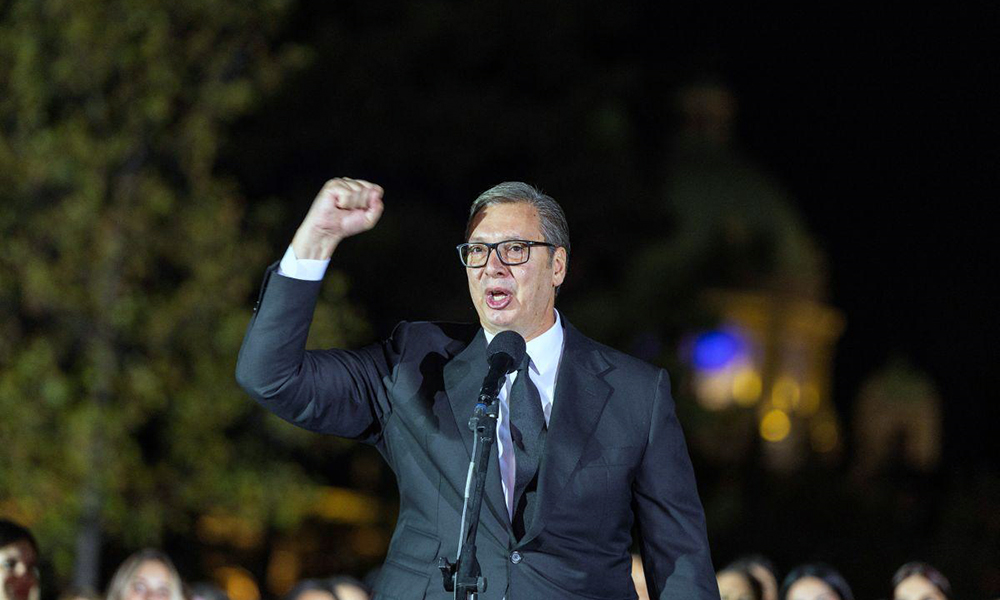
Serbia’s populist President Aleksandar Vucic announced his resignation on Sunday, ending his second and final five-year term and paving the way for early presidential elections, Reuters reported.
Vucic’s resignation, seven months before his term ends, comes amid campaigning for Serbia’s October 25 snap parliamentary vote and allows him to be appointed prime minister if his Serbian Progressive Party (SNS) forms the new government.
He had said in late June that he planned to resign and that Serbia would hold early parliamentary and presidential elections.
Rights groups have accused Vucic and his allies of increasingly authoritarian rule, with anti-government protesters saying they have been beaten by police and unfairly detained. Authorities have denied those allegations.
On Sunday, hundreds of Vucic’s supporters cheered him in front of the Presidency building in Belgrade’s city centre.
“This is the last evening for me in this building,” he told the flag-waving crowd minutes before resigning.
“I have faithfully served you and my fatherland, Serbia, … I am proud of what we have done together,” he said.
Under Serbia’s constitution, outgoing Parliament Speaker Ana Brnabic will serve as interim president until a new one is elected. The presidential election must be completed within 90 days, with the campaign lasting between 30 and 60 days.
“By the end of December … we will have the first round of presidential elections,” Vucic said.
Next month’s snap parliamentary election will pit Vucic’s SNS and its allies against Students Win, a student-led anti-corruption movement, and European Serbia, an alliance of pro-Western opposition parties.
Students Win, European Serbia and other parties have yet to nominate their presidential candidates.
Vucic, 56, has dominated Serbian politics for more than a decade, read the report.
He was a hardline nationalist and information minister during the era of the late Slobodan Milosevic and the wars of the 1990s, and later served as deputy prime minister from 2012-14 and prime minister from 2014-17.
He moved to the largely ceremonial position of president in 2017, but kept tight control over his party and the government.
In foreign policy, Vucic has pursued a balancing act that seeks closer ties with China, a major investor, and Russia, Serbia’s principal supplier of natural gas, while maintaining a long-term goal of joining the EU. He also has sought to bolster ties with the United States and Israel.
Vucic’s term in office suffered a major blow in November 2024 when an awning of a newly reconstructed railway station in the northern city of Novi Sad collapsed, killing 16 people.
The disaster sparked nationwide protests by students and the opposition, who demanded accountability for those responsible, transparency in public procurement, an end to systemic corruption, and an early parliamentary vote.
The government repeatedly denied accusations by the protesters, although several officials, including two ministers, were arrested or resigned after the incident.
On Sunday, Vucic said he has granted amnesty and a pardon to 49 people, including 12 activists and 11 of his own supporters, who were arrested or tried in connection with the protests.


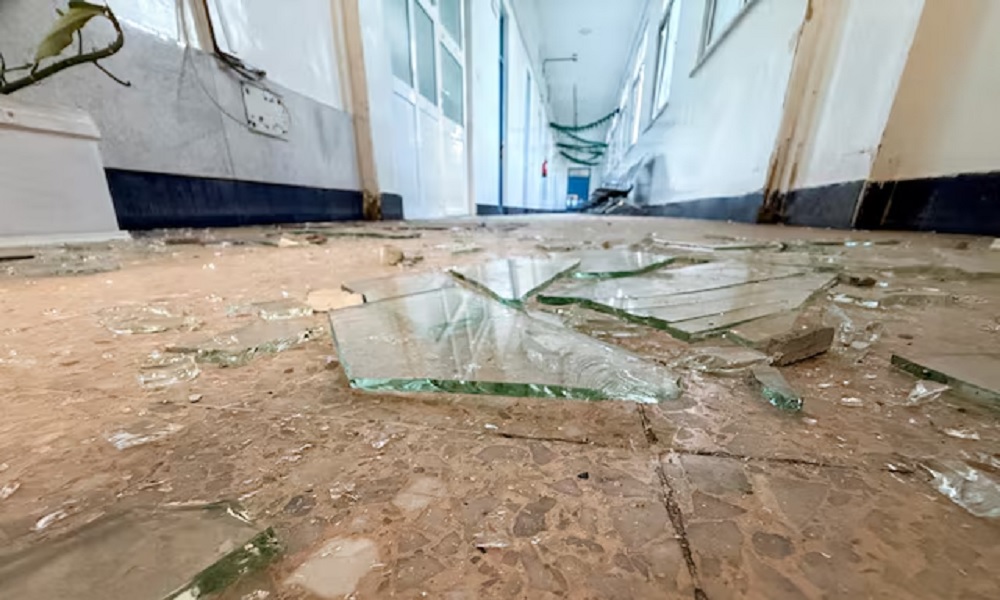
Hospitals across Yemen are struggling to cope with a sharp rise in war casualties as intensified fighting along multiple front lines strains its already fragile health system, the Red Cross said on Wednesday.
Front-line hospitals in areas including Marib, Taiz and Yemen’s Red Sea coast were seeing unprecedented numbers of weapon-wounded patients, with some facilities admitting more than 700 casualties in a single week, according to the humanitarian agency, Reuters reported.
More than 200,000 people have been displaced from their homes since fighting in the country began in recent weeks, sparked by renewed fighting between the Iran-backed Houthi group and Saudi-backed government forces in Yemen, according to the United Nations’ International Organization for Migration.
“Trauma care staff are under enormous pressure,” ICRC health coordinator Feras Abusamra said in a statement. Only a small proportion of Yemen’s functioning health facilities are capable of providing comprehensive trauma care, he said, while hospitals face large numbers of wounded people amid shortages of surgical supplies, anesthesia, oxygen and medicines.
Yemen’s health services, battered by more than a decade of conflict, economic crisis, displacement and disease outbreaks, may have limited capacity to absorb a new surge in mass casualties if fighting intensifies further, the ICRC warned.
World
One dead in new attack on Saudi airport, a day after Houthi strike kills 13
US aviation authorities issued a notice to US airlines to use caution while flying to or over the kingdom, Reuters reported.

One person was killed and nearly a dozen hurt in a new attack Riyadh’s international airport on Sunday, Saudi authorities reported, a day after a strike claimed by Yemen’s Iran-aligned Houthis that killed 13 people and wounded more than 300, Reuters reported.
Saudi-led coalition forces in Yemen said an unidentified projectile had targeted Riyadh’s international airport Terminal 4 on Sunday, causing a fire. Eleven people were wounded in addition to the fatality, the Saudi civil aviation authority said.
Coalition forces also said Saudi air defences had intercepted a cruise missile in the vicinity of King Khalid International Airport. They later added that a drone had been intercepted and destroyed in the country’s Eastern Province, and a ballistic missile launched towards Khamis Mushait had been intercepted. Emergency alerts were also issued in Abha, in the south, early on Monday but the danger had since passed, the Saudi Civil Defense said.
The strikes have exposed vulnerabilities in Saudi defence capabilities as the kingdom wages an air campaign against the Houthis, who are fighting a ground war in Yemen against the Saudi-backed Yemeni government.
Footage released by Saudi state television of the Saturday attack on the Riyadh airport showed scores of religious pilgrims lined up at a gate as they prepared to travel to Islam’s two holiest sites. A bright orange flash sent people running in panic, while parts of the roof appeared to cave in, read the report.
The airport was closed after the attack, the deadliest in the kingdom in more than a decade.
In a televised speech on Sunday, Houthi military spokesperson Yahya Saree claimed responsibility for Saturday’s attack and said the group had also struck the airport in Dammam in Saudi Arabia’s Eastern Province and two facilities of Saudi oil giant Saudi Aramco.
The Saudi government’s media office and Aramco did not respond to requests for comment.
The Saudi civil aviation authority confirmed the strike on Dammam’s King Fahd International Airport late on Sunday, adding that “damage assessments and safety inspections of airport facilities are under way.”
An eyewitness aboard a taxiing aircraft at Dammam told Reuters that around 8:30 p.m. (1730 GMT) on Sunday, they saw a projectile strike the tarmac beside several parked aircraft, causing a fire. The witness said the aircraft returned to the gate. Passengers disembarked and were told to leave.
Flight-tracking website Flightradar24 showed several delays and cancellations on Sunday for arrivals and departures at Dammam airport, the kingdom’s third-largest.
The Houthis earlier on Sunday had renewed their warning against using Saudi airports. “We urge everyone to take our warnings seriously, and Saudi Arabia bears responsibility for any failed interceptions,” the group said.
Britain’s embassy in Saudi Arabia in a post on X advised British citizens against all but essential travel to Jeddah, Dammam and all airports in the kingdom except the airport in Medina.
US aviation authorities issued a notice to US airlines to use caution while flying to or over the kingdom, Reuters reported.
Saudi Arabia has recently stepped up its military involvement in Yemen, launching strikes against the Houthis and backing a government counteroffensive after the Houthis seized strategic territory along the Red Sea coast last month.
The Houthis said on Sunday that Saudi Arabia carried out 124 air strikes in Yemen in the past 24 hours. “Unless the Saudi enemy stops its aggression and interference in Yemen, worse is yet to come, God willing,” Yemen’s Houthi-run foreign ministry said in statements carried by Al Masirah television.
US President Donald Trump said on Saturday the United States was considering joining Saudi strikes on the Houthis in the conflict, a spillover from the wider war with Iran that the US and Israel launched in February.
In a post on Telegram, Iran’s foreign minister Abbas Araqchi said he told his Saudi counterpart that Tehran was ready to help facilitate dialogue between Saudi Arabia and Yemen.
A five-day conference of international energy organization WPC Energy opened as planned on Sunday at a convention centre about 10 km (6 miles) from the Riyadh airport, the Saudi energy ministry said.
A ministerial meeting of the International Energy Forum also went ahead, according to a media advisory from the ministry. It was not clear which ministers attended.
Italy’s energy minister, Gilberto Pichetto Fratin, whose country was co-hosting, had said on Friday he would participate remotely via video link.
German officials were trying to organise a return flight for economy minister Katherina Reiche, read the report.
She was supposed to return to Berlin from Riyadh on Monday but the ministry said it appeared likely her flight would be unable to take off.
Separately, Saudi authorities announced that in-person classes at schools in Riyadh would be shifted to remote learning from Sunday until Thursday.
Sunday’s attack brought the death toll in attacks on Riyadh’s airport to 18 for the week. In Saturday’s attack, the dead included four Saudis while the remainder were foreign nationals, Saudi authorities said.
World
14 killed in two separate mass shootings across the United States
Pennsylvania Governor Josh Shapiro expressed his support for the affected community, describing the incident as a tragic loss of life.
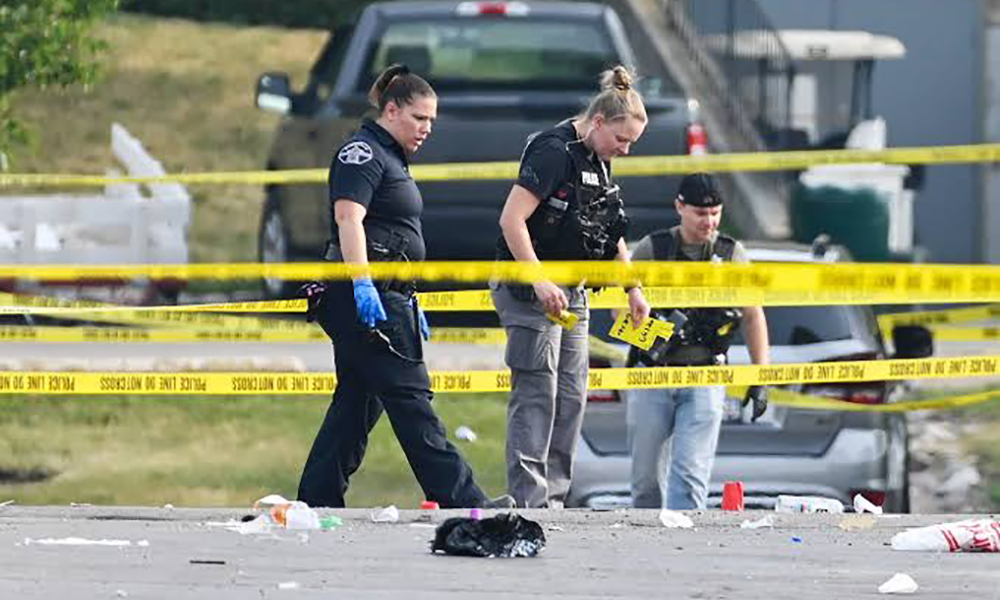
At least 14 people have been killed in two separate mass shootings in the United States within hours of each other, according to local authorities.
Five people were shot dead at a home in Douglas, Georgia, on Friday evening, police said.
In a separate incident in Erie, Pennsylvania, nine people were killed, including two children and a pregnant woman. Authorities confirmed that the suspected assailant was also among the dead.
Erie Police Chief Rick Lorah described the scene as one of the most devastating incidents of his career, saying the motive for the shooting had not yet been established.
Pennsylvania Governor Josh Shapiro expressed his support for the affected community, describing the incident as a tragic loss of life.
Authorities are continuing to investigate the circumstances surrounding both shootings.


Tahawol: Kyrgyzstan’s rejection of Afghan refugees discussed

Saar: Central Asia’s trade alternative to Pakistan discussed

ARCS, UK envoy discuss humanitarian needs of vulnerable Afghans

FM Muttaqi says IEA values ties with India under its balanced foreign policy

Afghanistan and UK stress expanding bilateral cooperation

Cricket Bonanza: Afghanistan set for packed international schedule

UN warns of mounting humanitarian and human rights pressures in Afghanistan

Afghanistan says 28 killed, 32 captured in Nuristan operation

CNN, MS NOW and Politico sue Trump, challenging White House ban

Silk Road highway in Wakhan corridor now reaches the China border
Tahawol: Kyrgyzstan’s rejection of Afghan refugees discussed
Saar: Central Asia’s trade alternative to Pakistan discussed

Tahawol: Warnings over worsening insecurity in Pakistan discussed

Saar: Concerns over potential return of US military bases to Afghanistan discussed

Tahawol: Kabul’s criticism of Islamabad’s policy toward Afghanistan
-
 Latest News5 days ago
Pakistan issues new directives for Afghan medical students and doctors
-
 Latest News4 days ago
Iranian lawmaker praises Afghanistan’s support, accuses Pakistan of ‘hypocrisy’
-
 Regional4 days ago
Houthis warn airlines to avoid Saudi airports after deadly Riyadh attack
-
 Business4 days ago
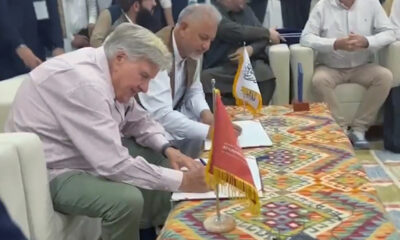
Afghan-Austrian partnership aims to boost carpet exports to European markets
-

 World3 days ago
One dead in new attack on Saudi airport, a day after Houthi strike kills 13
-

 Sport3 days ago
Afghanistan Champions League second half to kick off on October 16
-

 World4 days ago
14 killed in two separate mass shootings across the United States
-

 Business3 days ago
Afghanistan signs nearly $400 million in regional trade and investment deals