
Latest News
Taliban carry out strategic attacks close to three key cities

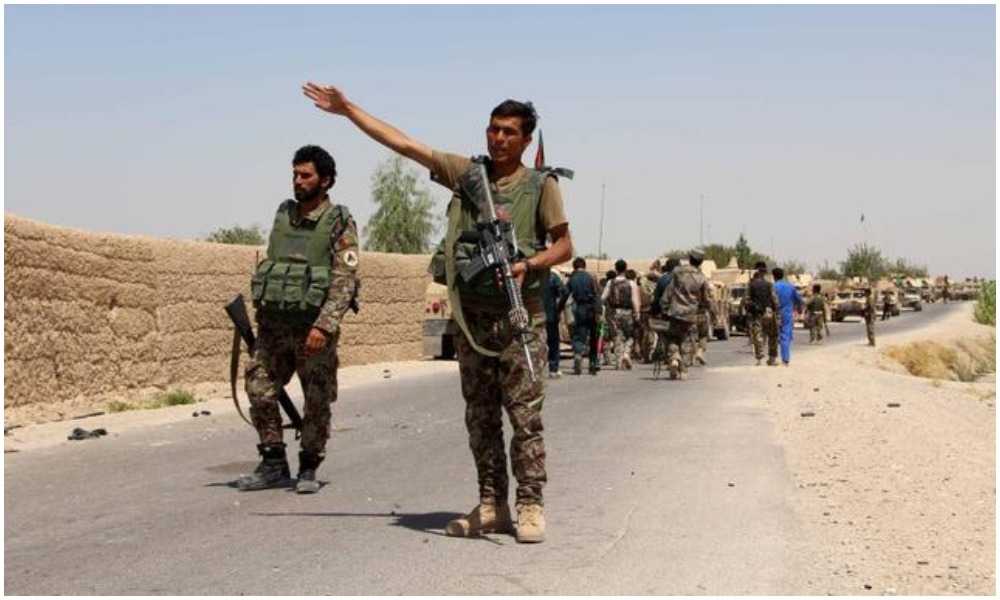
Taliban militants have made worrying progress towards the gates of three provincial capitals in the country in the past 24 hours, Afghan officials said.
According to officials, Taliban gains across territory came after they launched coordinated attacks in Helmand, Ghazni, and Zabul provinces in this time.
In Helmand, Taliban fighters carried out attacks on the outskirts of the provincial capital Lashkargah city just two days after the US forces withdrew from a local base. However, some sources claim clashes are ongoing inside the city.
Officials from the provincial public hospital said on Tuesday that at least 30 wounded people including five women were taken to the hospital in the past 24 hours.
In addition, hundreds of families have been displaced due to ongoing clashes in the city, local officials said.
“The Taliban’s latest terror attacks on Helmand must not be ignored. Their leaders in Doha must be asked why despite of freeing 6000 Taliban prisoners, foreign troops withdrawal, and meetings of foreign officials with Taliban in Doha, they continue to kill and maim the Afghans!?,” said Sediq Sediqqi, Deputy Minister of Interior Affairs for Strategy and Policies.
The Taliban’s latest terror attacks on Helmand must not be ignored. Their leaders in Doha must be asked why despite of freeing 6000 Taliban prisoners, foreign troops withdrawal, and meetings of foreign officials with Taliban in Doha, they continue to kill and maim the Afghans!? pic.twitter.com/9BRvohzMYT
— Sediq Sediqqi (@SediqSediqqi) May 4, 2021
“The situation in Helmand is concerning. The government needs to take action as people have been displaced,” MP Farhad Bawari said.
However, Afghan commando forces have been deployed to Lashkargah to push back the Taliban, but MP Shegofa Noorzai stated that Helmand is on the verge of collapse.
“However, government forces have put in their efforts but if the Afghan forces do not take immediate action, the province will collapse,” she said.
Meanwhile, militants overran a military base on the outskirts of Ghazni city this week.
MP Arif Rahmani warned that the Taliban wants to capture Ghazni city once again.
“The situation in Ghazni is worrying. The Taliban wants to take control of Ghazni city before Eid-ul-Fitr. The group said they want to perform Eid prayers in Ghazni,” Rahmani said.
Moreover, the group reportedly has security forces under siege in the Qarabagh district of the province. The provincial officials, however, have not commented yet.
“Unfortunately, the Taliban have intensified clashes in parts of the country. The conflicts do not mean that the Afghan security forces will not respond to them; in Ghazni, Helmand, and Kandahar the group suffered heavy casualties,” Fawad Aman, deputy spokesman for the Defense Ministry said.
Meanwhile, sources have said clashes are also underway close to Qalat city in Zabul province.
Officials have not yet commented about this.
In addition to this, reports Tuesday indicated that at least 22 members of the al-Qaeda terrorist group were killed in recent clashes in Helmand. Reports also indicate that dozens of security forces were also killed in the skirmish.












Kazakhstan’s Foreign Minister Mukhtar Tileuberdi has called for pragmatic and coordinated international engagement with Afghanistan, saying the country’s long-term stability is closely linked to the security and sustainable development of Central Asia.
Speaking during the general debate of the 81st session of the United Nations General Assembly in New York on Friday, Tileuberdi said humanitarian assistance to Afghanistan remains essential but alone cannot break the cycle of poverty, displacement and dependency.
He said Kazakhstan supports a “pragmatic, coordinated and step-by-step” approach to international engagement with Afghanistan, with the United Nations playing a central role.
Tileuberdi also said Kazakhstan is working with the UN to operationalize the United Nations Regional Centre for the Sustainable Development Goals for Central Asia and Afghanistan in Almaty.
He said the success of the centre should be measured by the results and assistance it delivers to the region.


Trump rejects Iranian proposal to open Hormuz and end fighting

Abu Muslim Farah defeat Khurasan Faryab 2-0 in ACL season six

Saar: Concerns over Pakistan’s political crisis discussed

Afghanistan Champions League: Omar Zawak Herat beat Toofan Herat 1-0

Blast in Pakistan’s Dera Ismail Khan kills 11, injures 30

Saudi energy group signs major Afghanistan deals covering gas exploration and pipeline plans

Trump floats idea of renaming Atlantic or Pacific Ocean

US hits Egyptian bank branches with Iran sanctions as war marks six months

Nepal flood rescue mission enters critical phase as thousands remain missing

Iranian clubs to face Gulf opponents at neutral venues in Asian Champions League Elite
Saar: Concerns over Pakistan’s political crisis discussed

Exclusive interview with Abdul Latif Mansoor, Minister of MRRD

Tawsia: Overview of Afghanistan’s iron mines

Tahawol: Discussion on fresh Pakistani airstrikes on Afghanistan

Saar: Calls for international support for Afghanistan discussed
-

 Latest News4 days ago
Ariana Afghan Airlines ranks seventh among 45 Central Asian airlines
-

 Latest News5 days ago
UN reiterates call for respect for international law after Kunar airstrikes
-

 Regional4 days ago
US and Iran hold first talks since June after Trump’s ‘annihilation’ threat
-

 Latest News4 days ago
Silk Road highway in Wakhan corridor now reaches the China border
-

 Regional3 days ago
Iran airlines cancel flights as US sanctions hit
-

 Latest News5 days ago
Afghan Official: Pakistan’s airstrikes will not go unanswered
-

 Sport5 days ago
Afghan boxing referee heads to China for international festival
-
 Latest News5 days ago
22 Russian tourists arrive in Badakhshan’s Wakhan