
Regional
Trump rejects Iran’s response to US peace proposal as ‘unacceptable’

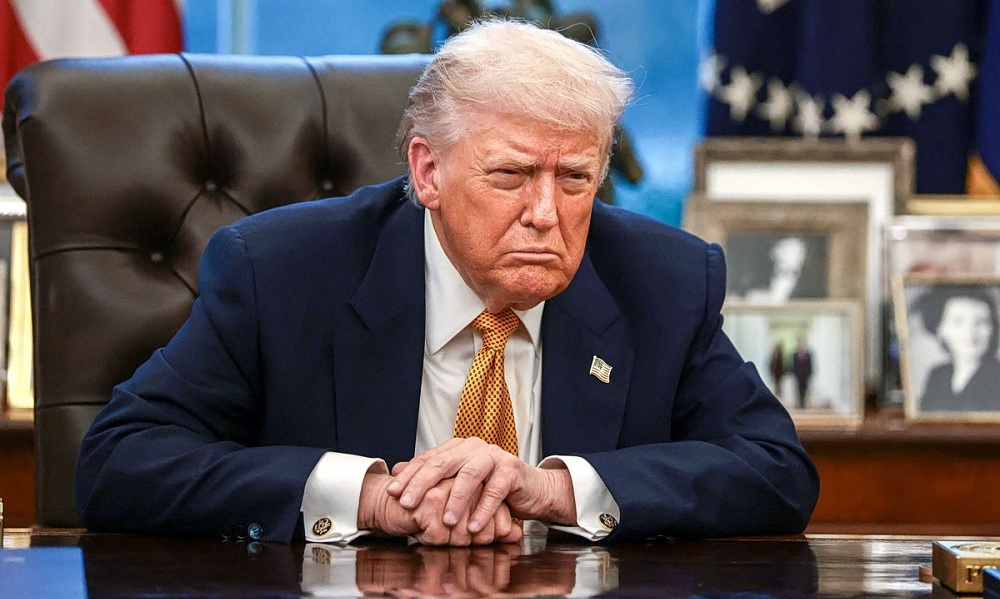
President Donald Trump’s swift rejection of Iran’s response to a U.S. peace proposal sent oil prices surging higher on Monday amid concerns the 10-week-old conflict will drag on, keeping shipping through the Strait of Hormuz paralyzed.
Days after the U.S. floated an offer in the hopes of re-opening negotiations, Iran on Sunday released a response focused on ending the war on all fronts, especially Lebanon, where U.S. ally Israel is fighting Iran-backed Hezbollah militants. Tehran also included a demand for compensation for war damages and emphasized Iranian sovereignty over the Strait of Hormuz, Iranian state TV said, Reuters reported.
It also called on the U.S. to end its naval blockade, guarantee no further attacks, lift sanctions and end a U.S. ban on Iranian oil sales, the semi-official Tasnim news agency said.
Within hours, Trump dismissed Iran’s proposal with a post on social media.
“I don’t like it — TOTALLY UNACCEPTABLE,” Trump wrote on Truth Social, without giving further detail.
The U.S. had proposed an end to fighting before starting talks on more contentious issues, including Iran’s nuclear program.
Oil prices jumped $3 a barrel on Monday following news of the continued stalemate that leaves the narrow Strait of Hormuz largely closed. Before the war the waterway carried one-fifth of the world’s oil supply and has emerged as one of the central pressure points in the war.
Surveys show the war is unpopular with U.S. voters facing sharply higher gasoline prices less than six months before nationwide elections that will determine whether Trump’s Republican party retains control of Congress.
The U.S. has also found little international support, with NATO allies refusing calls to send ships to open the Strait of Hormuz without a full peace deal and an internationally mandated mission.
It’s not clear what fresh diplomatic or military steps may be ahead.
Trump is expected to arrive in Beijing on Wednesday. With mounting pressure to draw a line under the war and the global energy crisis it has ignited, Iran is among topics Trump and Chinese President Xi Jinping are set to discuss.
Trump has been leaning on China to use its influence to push Tehran to make a deal with Washington.
Addressing whether combat operations against Iran were over, Trump said in remarks aired on Sunday: “They are defeated, but that doesn’t mean they’re done.”
Israeli Prime Minister Benjamin Netanyahu said the war was not over because there was “more work to be done” to remove enriched uranium from Iran, dismantle enrichment sites and address Iran’s proxies and ballistic missile capabilities.
The best way to remove the enriched uranium would be through diplomacy, Netanyahu said in an interview that aired Sunday on CBS News’ “60 Minutes.” But he did not rule out removing it by force.
Iran’s President Masoud Pezeshkian said in a social media post that Iran would “never bow down to the enemy” and would “defend national interests with strength.”
Despite diplomatic efforts to break a deadlock, the threat to shipping lanes and the economies of the region remained high.
Recent days have seen the biggest flare-ups in fighting in and around the strait since a ceasefire began.
On Sunday, the United Arab Emirates said it intercepted two drones coming from Iran, while Qatar condemned a drone attack that hit a cargo ship coming from Abu Dhabi in its waters. Kuwait said its air defences had dealt with hostile drones that entered its airspace.
Clashes have also continued in southern Lebanon between Israel and Iran-backed militant group Hezbollah, despite a U.S.-brokered ceasefire announced on April 16.
An end to hostilities with Iran would not necessarily bring an end to the war in Lebanon, Netanyahu said in the “60 Minutes” interview, in which he also said Israeli planners had underestimated Iran’s ability to choke off traffic through the Hormuz Strait.
“It took a while for them to understand how big that risk is, which they understand now,” he said.







Regional
Qatar denies detaining Iranian pilots, says it found remains of one
The spokesperson said Tehran had yet to respond to an invitation to review details of its operations.
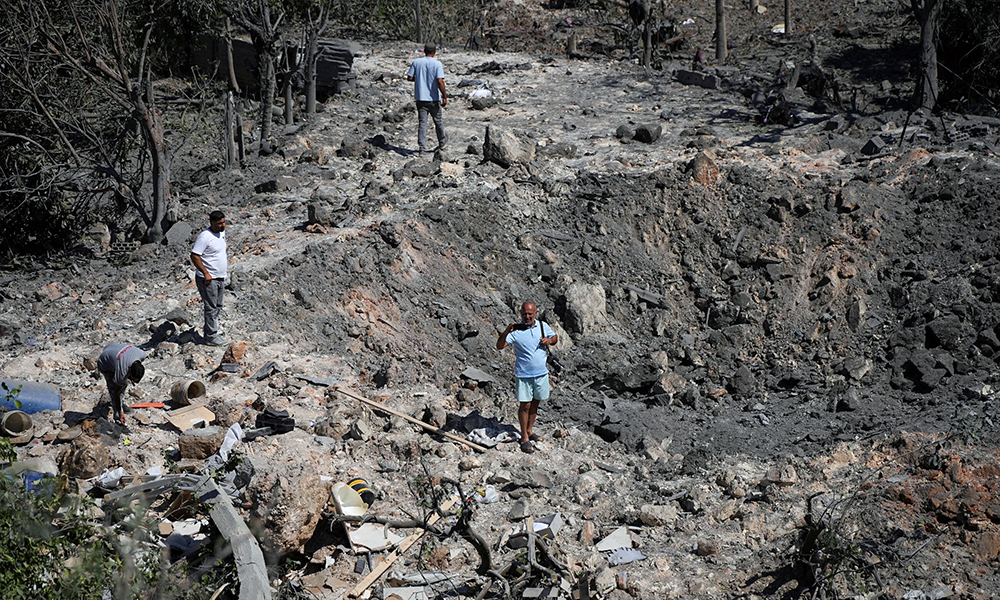
Qatar denied on Saturday that it was holding Iranian pilots, saying they had violated Qatari airspace earlier this year and had failed to respond to attempts to contact them.
A Qatari foreign ministry spokesperson said on X that search and rescue teams later found the remains of one of the pilots and that it had contacted Iran to coordinate a handover.
The spokesperson said Tehran had yet to respond to an invitation to review details of its operations.
Regional
Turkey lays out plans for defence pact with Pakistan and Saudi Arabia
Turkey, which has NATO’s second-largest army, has said the pact with nuclear-armed Pakistan and top oil exporter Saudi Arabia was open to expansion.
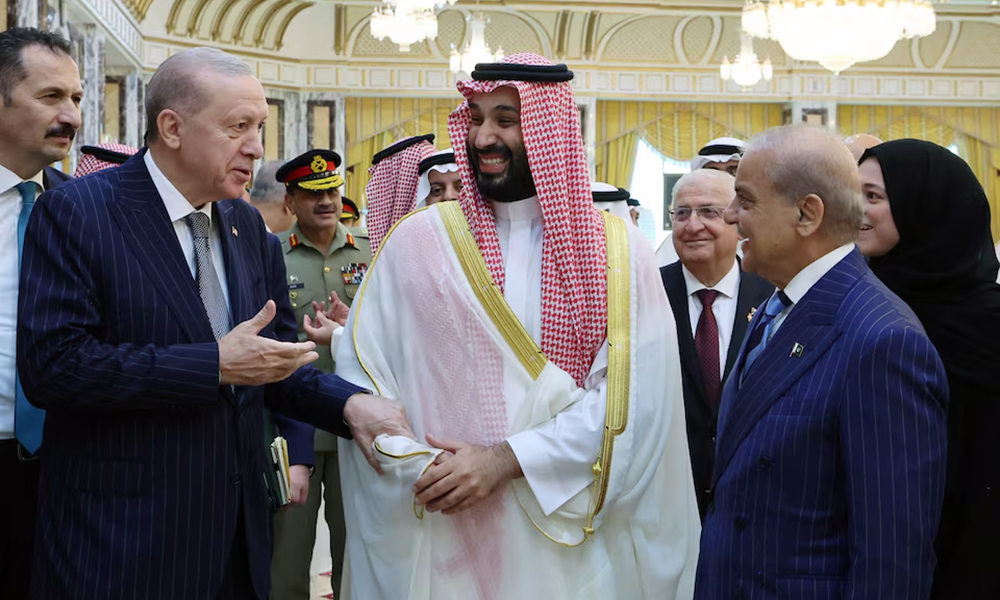
Turkey, Saudi Arabia and Pakistan will group senior ministers, hold joint exercises and deepen defence industry cooperation under a military pact signed between the regional powers last week, Turkey’s defence ministry said on Thursday.
The three Sunni Muslim U.S. allies, alarmed by a regional conflagration that has brought Iranian missile fire onto Gulf oil exporters, signed the “Mecca Joint Defence Agreement” on August 7. They said the accord stipulates that an armed attack against any member would be regarded as an attack on all, similar to NATO’s Article 5 collective defence clause, Reuters reported.
At a weekly briefing in Ankara, the defence ministry said the pact’s fundamental goal was to ensure defence and military ties were put on a “more institutional and sustainable” footing.
“Under the accord, strategic political and military mechanisms plan to be established involving the Defence Ministers, Foreign Ministers, and Chiefs of General Staff/Armed Forces Commanders, and that coordination among the three countries will be conducted at the highest level,” it said.
The ministry added that joint military exercises involving land, naval, and air forces, as well as air defence and unmanned systems were planned, in addition to deeper defence industry cooperation.
“The aim is to provide not only product and system supply, but also joint development and production, technology cooperation, and sustainable maintenance and logistics support,” it said, adding that unmanned and autonomous systems, electronic warfare and artificial intelligence capabilities would be prioritised.
Turkey, which has NATO’s second-largest army, has said the pact with nuclear-armed Pakistan and top oil exporter Saudi Arabia was open to expansion — with Egypt as a potential candidate — and did not seek to replace any existing alliances, read the report.
The ministry also said Turkey was participating in meetings in Jeddah aimed at establishing an international coalition to protect Red Sea shipping.
Regional
Iran says no progress on reviving interim peace deal with US
Throughout the conflict, Trump has alternated between threats of escalation and claims that a peace deal is imminent.
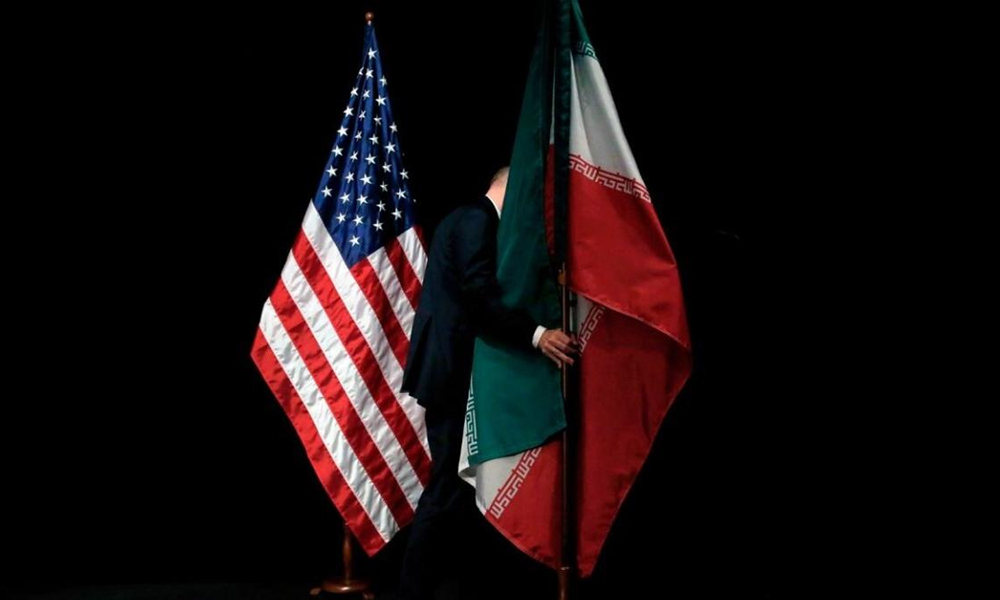
Iran and the United States remain at loggerheads over efforts to agree a permanent end to the war in the Gulf, according to a senior Iranian source, who said there had been no progress in talks to revive the interim deal agreed in June and define a time frame to implement it, Reuters reported.
The comments came as U.S. President Donald Trump issued yet another broadside against Iran’s leaders, dealing a further blow to hopes for a resolution to the crisis, following new attacks on shipping in the region on Tuesday.
The deal agreed in June declared an “immediate and permanent termination of military operations on all fronts”, but quickly unravelled, with Trump saying it was “over” on July 7 and Iran’s foreign ministry declaring it “suspended” a week later.
The U.S. accuses Iran of failing to honor an agreement under the deal to reopen the vital Strait of Hormuz shipping route. Tehran says Washington has reneged on its commitments, including lifting a blockade of Iranian ports and releasing frozen Iranian assets.
“One of the issues that is being discussed via mediators is the U.S. returning to the interim agreement and defining a time frame for implementing the commitments. There has been absolutely no progress on this issue,” the Iranian source said.
Trump said on Wednesday that the U.S. has “total control” over the Strait of Hormuz.
But the Persian Gulf Strait Authority, the body Iran set up to manage the waterway, said it remains blocked and will not be reopened until Iran’s conditions are accepted.
“Iran is all talk and no action, the Bully of the Middle East No Longer,” Trump said on his Truth Social platform.
Throughout the conflict, Trump has alternated between threats of escalation and claims that a peace deal is imminent.
Thousands of people have been killed in the conflict, mainly in Iran and Lebanon, since the U.S. and Israel launched attacks on Iran on February 28, read the report.
Iran has struck U.S. assets and infrastructure in countries including Oman, Jordan, Kuwait, Israel, the United Arab Emirates and Saudi Arabia.
The June interim ceasefire agreement set a 60-day period, extendable by mutual consent, within which Iran and the U.S. were expected to reach a final deal limiting Tehran’s nuclear program and lifting U.S. sanctions.
The Iranian source dismissed a report on Wednesday from Turkey’s Anadolu news agency that quoted Pakistani government sources as saying they had agreed to extend that 60-day period.
“There is no talk of an extension because, from Iran’s perspective, there is no period that began and therefore nothing to extend. The United States violated the interim agreement 48 hours after it was reached and withdrew from it a few days later,” the source told Reuters.
The Strait of Hormuz, a narrow waterway between Iran and Oman and the entrance to the Gulf, handled a fifth of global oil and liquefied natural gas flow before the war.
Benchmark Brent crude futures have surged since the start of the war in February, hitting a peak of $126 a barrel, roughly 75% above pre-war levels, with choppy trade reflecting concerns over disruptions to Gulf oil supplies and shifting signals on peace talks.
On Tuesday, in separate incidents, a suspected and a U.S. Navy MH-60 helicopter fired two Hellfire missiles to , the U.S. military said.
Oil prices rose but then steadied in volatile trading on Wednesday, after forecasters cut projections for 2026 oil demand. Brent crude futures were trading at around $88 a barrel and U.S. West Texas Intermediate crude at around $83 a barrel.


China’s special envoy for Afghanistan visits Türkiye, Pakistan and Afghanistan

Polio vaccination campaign set to roll out in five Afghan provinces amid new cases

Trump wants more economic pressure on Iran

Tahawol: U.S. non-recognition of IEA

Saar: Tensions between Iran and the United States

Pakistan’s governance system has ‘collapsed’: Mohsin Naqvi

Spain sweep FIFA World Cup player awards after historic triumph

First Chinese transit shipment arrives in Herat via Iran’s railway corridor

Afghanistan exports first stone shipment to US in $100,000 trade milestone

AFC confirms clubs for 2026/27 competitions; draw set for August 18
Tahawol: U.S. non-recognition of IEA
Saar: Tensions between Iran and the United States

Debate with Nooruddin Azizi, Minister of Industry and Commerce

Saar: Marking IEA’s fifth anniversary in Afghanistan discussed

Tawsia: $420M investment in TAPI gas distribution network in Herat discussed
-

 Latest News4 days ago
HesabPay unveils new visa card and digital payment app in Kabul
-

 International Sports4 days ago
AFC Champions League Elite draw nears as Al-Nassr seeded above Al-Hilal
-
 Latest News4 days ago
Afghan envoy invites Fazlur Rehman to embassy event marking IEA’s return to power
-
 Sport5 days ago
Afghanistan face Ireland with series win in sight
-
 World5 days ago
US military operations killed 153 civilians in 2025, Pentagon assessment shows
-

 Sport5 days ago
Kabul Premier League: Abasin Defenders thrash Band-e Amir Stars by 163 runs
-
 Regional4 days ago
Iran says no progress on reviving interim peace deal with US
-

 Sport4 days ago
Afghanistan clinch Ireland series with record ODI score