
Regional
UN says Gaza death toll still over 35,000 but not all bodies identified

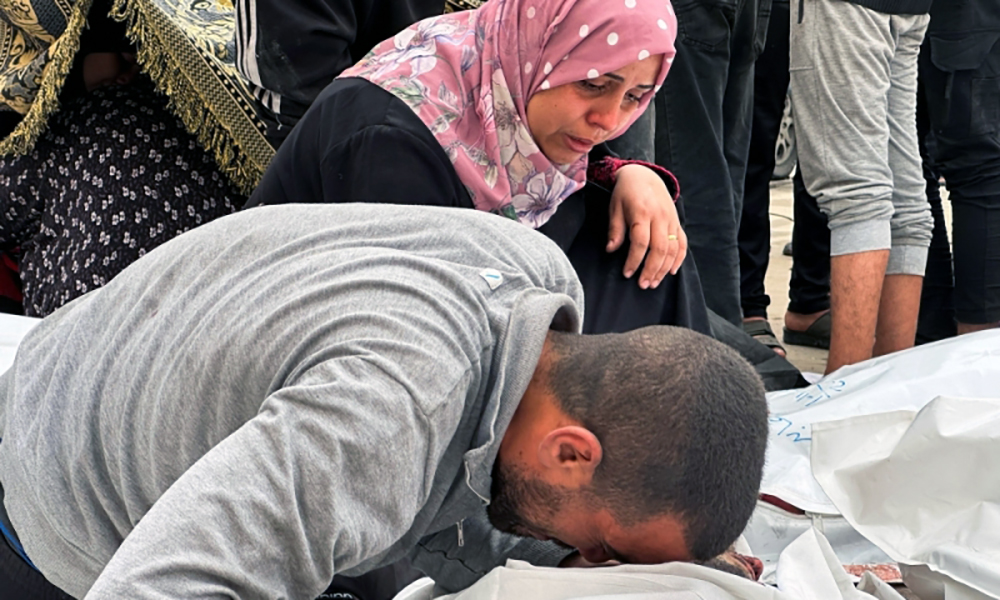
The death toll in the Gaza Strip from the Israel-Hamas war is still more than 35,000, but the enclave’s Ministry of Health has updated its breakdown of the fatalities, the United Nations said on Monday after Israel questioned a sudden change in numbers, Reuters reported.
U.N. spokesperson Farhan Haq said the ministry’s figures – cited regularly by the U.N. its reporting on the seven-month-long conflict – now reflected a breakdown of the 24,686 deaths of “people who have been fully identified.”
“There’s about another 10,000 plus bodies who still have to be fully identified, and so then the details of those – which of those are children, which of those are women – that will be re-established once the full identification process is complete,” Haq told reporters in New York.
Israel last week questioned why the figures for the deaths of women and children has suddenly halved, read the report.
Haq said those figures were for identified bodies – 7,797 children, 4,959 women, 1,924 elderly, and 10,006 men – adding: “The Ministry of Health says that the documentation process of fully identifying details of the casualties is ongoing.”
Oren Marmorstein, spokesperson for Israel’s Ministry of Foreign Affairs, on Monday accused Palestinian militants Hamas of manipulating the numbers, saying: “They are not accurate and they do not reflect the reality on the ground.”
“The parroting of Hamas’ propaganda messages without the use of any verification process has proven time and again to be methodologically flawed and unprofessional,” he said in a social media post.
Haq said U.N. teams in Gaza were not able to independently verify the Gaza Ministry of Health (MoH) figures given the ongoing war and sheer number of fatalities.
“Unfortunately we have the sad experience of coordinating with the Ministry of Health on casualty figures every few years for large mass casualty incidents in Gaza, and in past times their figures have proven to be generally accurate,” Haq said.
The World Health Organization “has a long-standing cooperation with the MoH in Gaza and we can attest that MoH has good capacity in data collection/analysis and its previous reporting has been considered credible,” said WHO spokesperson Margaret Harris.
“Real numbers could be even higher,” she said.


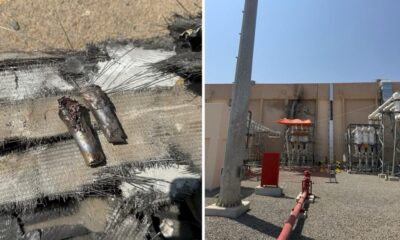


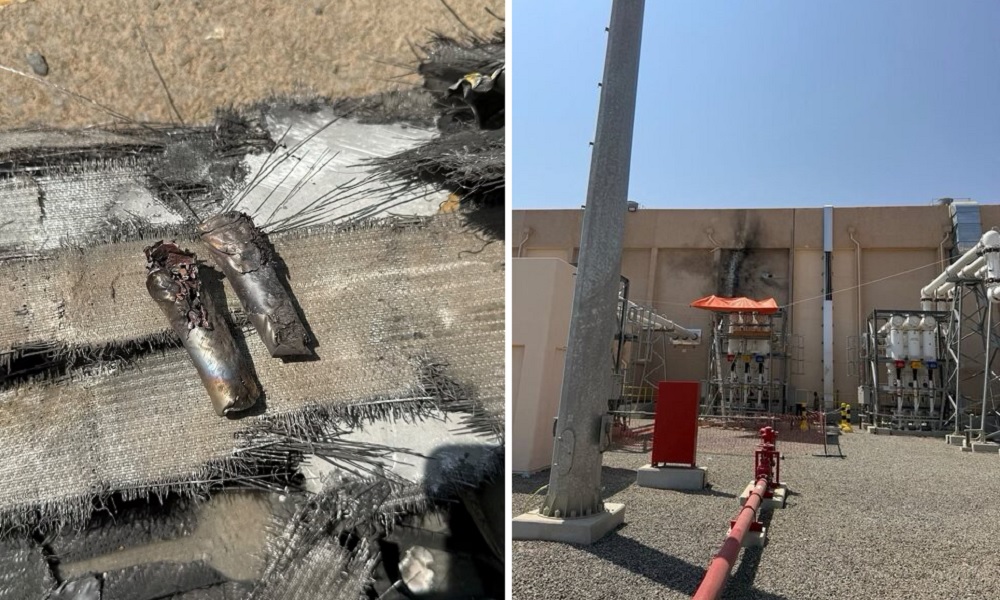
The Saudi-led coalition fighting Yemen’s Houthis said on Thursday that the Iran-aligned group had attacked a power distribution station in Medina which supplies electricity to the Prophet’s Mosque, one of Islam’s holiest sites.
The coalition said the attack put one transformer out of service but did not affect the power network. A Houthi military source, quoted by the Houthi-run Saba news agency, denied the coalition report, according to Reuters.
The Houthis later reported Saudi strikes on the Yemeni capital Sanaa and other parts of Yemen, with no immediate Saudi confirmation of the strikes.
A spokesperson for Yemen’s armed forces, which are aligned with the internationally recognised government, said coalition forces had attacked what it described as “high-value targets” in the capital Sanaa, without providing further details.
The recent escalation is the most serious fighting between Saudi Arabia and the Iran-aligned Houthis since a UN-brokered truce largely halted cross-border attacks in 2022.
Hostilities resumed this year after the Houthis declared a naval blockade on Saudi Arabia in July and began attacking Saudi territory and shipping, while Houthi forces also made major territorial gains along Yemen’s Red Sea coast.
Saudi Arabia has responded with air strikes in Yemen and backed government forces fighting to repel the Houthis.
The Saudi-led coalition said an investigation and examination of drone wreckage confirmed Houthi involvement in planning and carrying out Tuesday’s attack on the Medina power station.
A Houthi military source said the coalition claim was a “lie” intended to cover up what he described as Saudi Arabia’s failure to substantiate its earlier accusation that the Houthis targeted the Muslim holy city of Mecca, said the Saba news agency.
Saudi Arabia said two weeks ago it had intercepted and destroyed a Houthi drone south of Mecca before it entered restricted airspace over the city. The coalition described the incident as the second Houthi attempt to target Mecca since 2017, while the Houthis denied targeting Mecca or any other Islamic holy site.
The coalition said the Medina attack was part of what it described as repeated Houthi attempts to target the Two Holy Mosques and “provoke” Muslims worldwide. It said it would continue taking measures to protect the holy sites and pilgrims.
The coalition also said it had intercepted and destroyed a ballistic missile launched by the Houthis toward the southern Saudi city of Khamis Mushait. It gave no immediate details on any damage or casualties.
Local officials said early on Friday that the Houthis had also targeted the headquarters of the Saudi-led coalition forces command in Aden with several ballistic missiles and drones. There was no immediate comment from the coalition or the Houthis.
Regional
US imposes sanctions on 13 tied to Iran weapons procurement
Treasury Secretary Scott Bessent said, “Treasury will not tolerate any support to the regime and will continue to identify, expose, and isolate Iran’s enablers.”
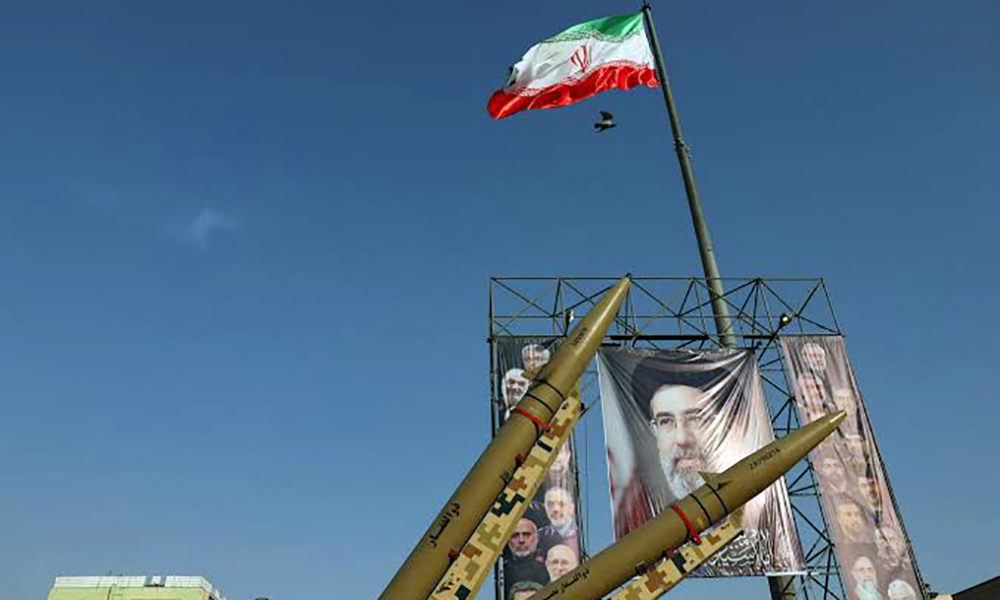
The US government announced fresh sanctions on Tuesday against 13 individuals and entities, including some based in Russia, China, Hong Kong and Pakistan, saying they helped Iran procure weapons and components.
The sanctions announced by the Treasury and State departments are part of the Trump administration’s effort to isolate Iran economically and force it to negotiate an end to the war that began with a US-Israeli strike on Iran on February 28.
Treasury Secretary Scott Bessent said, “Treasury will not tolerate any support to the regime and will continue to identify, expose, and isolate Iran’s enablers.”
Treasury said the sanctions were aimed at degrading Tehran’s ability to reconstitute its weapons programs, while increasing the costs for those who supported its procurement efforts.
Those targeted in Tuesday’s sanctions announcements include:
Seyyed Asghar Alizadeh Tabatabai, a Beijing-based representative of Iran’s Ministry of Defense and Armed Forces Logistics agency, who Treasury said had coordinated the procurement of finished weapons systems and dual-use components in China on Iran’s behalf.
Iran-based Kavoshcom Asia R and D Group, which Treasury said had procured electronics including connectors for Iran Aircraft Manufacturing Industrial Company.
Hong Kong-based EC Mojo Technology Co Limited, which Treasury said had provided electronic components in support of Kavoshcom’s procurement efforts, and EC Mojo’s China-based representative Li Fen.
Pakistan-based Waseem Pasha Tajammal, who serves as chairman of Cavalier Group, a privately owned defense company with locations in Pakistan and internationally.
Joint Stock Company Experimental Design Bureau Named After A.S. Yakovlev, a Russia-based aircraft manufacturer.
MG-Flot LLC, a Russia-based shipping company whose vessels transport weapons for the Russian government.
Saha Airlines, an Iran-based airline affiliated with the country’s air force.
Brett Erickson, managing principal with Obsidian Risk Advisors, said the latest sanctions action would do little to impede Iran’s ability to launch missiles and drones in the Strait of Hormuz. “This is optics management for the Trump administration to claim ‘We’re hammering them,’ when the reality is we’re poking them with a toothpick,” he said.
Regional
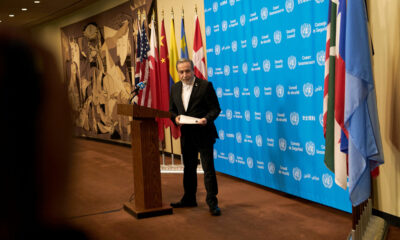
US, Iran separately talk with mediators in latest bid to end war
US officials separately spoke with mediators on Monday, US President Donald Trump told reporters at the White House, without giving further details.
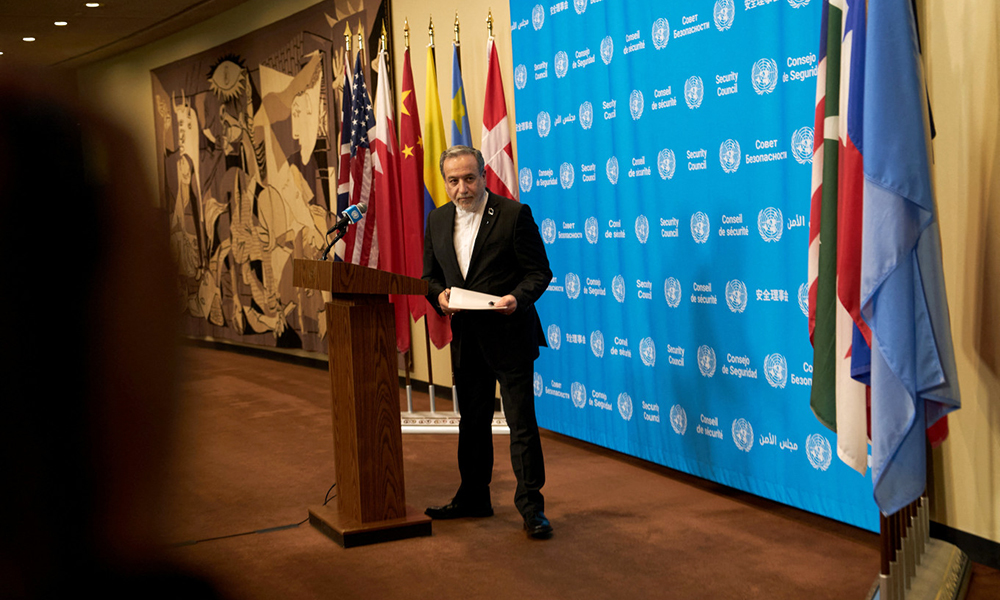
US and Iranian officials spoke separately with mediators on Monday as part of a renewed effort to end seven months of war, according to officials of both countries, Reuters reported.
Any further talks are expected to focus on an amended version of a seven-day proposal that Iran presented last week on the sidelines of the United Nations General Assembly, an official briefed on the negotiations told Reuters.
The war began in late February with US and Israeli attacks on Iran, killing thousands of people over seven months and shocking global markets as vital waterways for oil remained choked. The US and Iran have twice previously agreed to ceasefires in mediated peace talks, in April and June. Those agreements quickly unraveled.
Iranian Foreign Minister Abbas Araqchi, who remained in New York after attending the General Assembly, said Iran expected to receive the US response to its latest ceasefire proposals and its conditions for restoring passage of maritime traffic in the Strait of Hormuz, according to state news agency IRNA.
“If the Americans claim they are seeking an agreement or a peaceful solution, we have presented that solution,” Araqchi said.
US officials separately spoke with mediators on Monday, US President Donald Trump told reporters at the White House, without giving further details.
Iran’s seven-day plan envisages an end to all hostilities in Iran and Lebanon, the unfreezing of billions of dollars’ worth of Iranian assets, an end to sanctions on Iranian oil and the lifting of the US blockade on Iranian ports.
Iran would then allow the reopening of the Strait of Hormuz, a vital conduit for oil tankers, and the two sides would also resume talks on Iran’s nuclear program and Trump’s wish to seize or eliminate its highly enriched uranium, read the report.
Trump said on Saturday he had rejected Iran’s proposal, saying Iran wanted a swift agreement because of the crippling economic pressure it is under. However, he also told Axios on Sunday that he expected US negotiators to engage in further talks this week.
Araqchi said on Sunday that mediators had not formally conveyed a US rejection, and that Iran was awaiting Washington’s definitive position before deciding its next steps.
“Our conditions are clear, and any move toward reopening the Strait of Hormuz is contingent on these conditions being met,” he said on Sunday, adding that only a negotiated solution could resolve the impasse.


Russia expects to ease Afghanistan-Pakistan tensions at Moscow Format meeting

DABS chief meets Tajikistan’s energy minister to discuss cooperation

Afghanistan to face Pakistan, India and Australia at 2027 Cricket World Cup

Saudi-led coalition says Houthis attacked power station for Prophet’s Mosque in Medina

UN expert calls for accountability after Pakistani airstrikes kill civilians in Afghanistan

Saudi energy group signs major Afghanistan deals covering gas exploration and pipeline plans

Khalilzad: Afghanistan ready to attract major investment

El Niño likely to intensify, may become strongest ever recorded, WMO says

Khyber Chamber demands reopening of Torkham crossing

Messi returns to Inter Miami after Argentina retirement

Tahawol: Pakistan’s airstrikes on civilians in Afghanistan discussed

Tahawol: Improvement in Afghanistan-China relations discussed

Saar: Expanding ties with regional and global countries discussed

Tahawol: Absence of Afghanistan’s envoy at UNGA discussed

Saar: Assessment of war between Afghanistan and US discussed
-

 Latest News5 days ago
Afghanistan says 28 killed, 32 captured in Nuristan operation
-
 Sport4 days ago
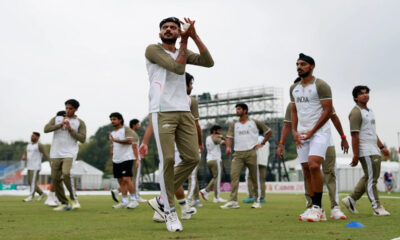
Afghanistan vs India Asian Games quarter-final abandoned without a toss
-
 Latest News5 days ago
Germany reports 488 Afghans for possible deportation, 267 have no criminal convictions
-
 Regional4 days ago
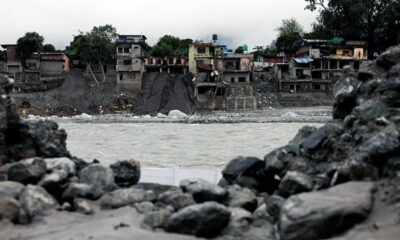
Floods, landslides kill 56 in India and 14 in Nepal
-
 World4 days ago
Trump says men arrested at UK air base used by US planned ‘big damage’
-
 Regional3 days ago
US, Iran separately talk with mediators in latest bid to end war
-
 World4 days ago
Serbia’s President Vucic resigns ahead of October parliamentary elections
-
 Business4 days ago
Afghanistan raises import tariffs on several goods to support domestic industry