
Latest News
Khalilzad reflects on fall of Kabul govt and military

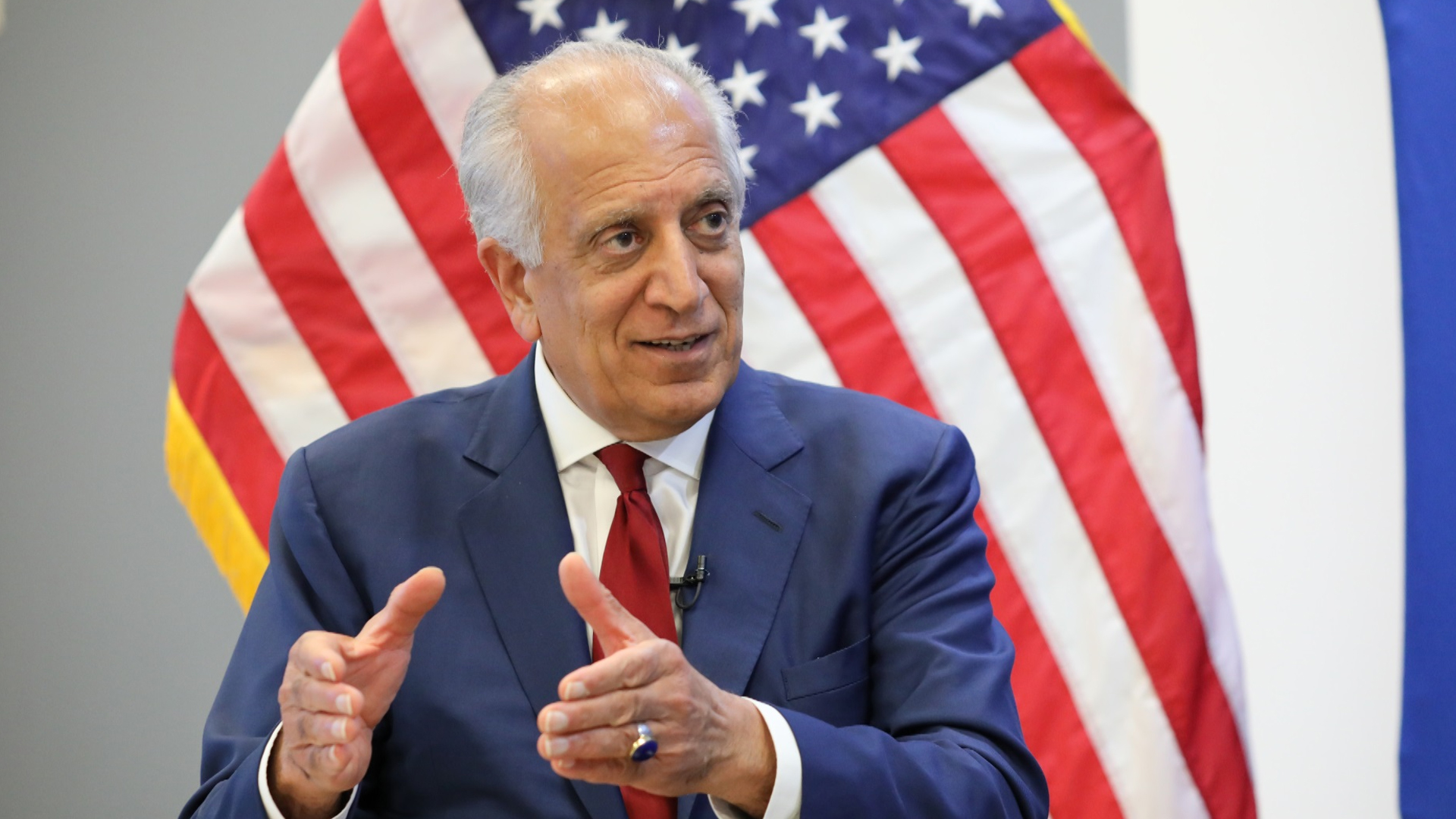
US special envoy for Afghanistan Zalmay Khalilzad said this week that many questions remain unanswered on why former president Ashraf Ghani fled the country unexpectedly and why the Afghan military forces dissolved within just a few hours.
He also stated that in his opinion, the leadership of the former government made a “grand miscalculation” – that the US would never withdraw its troops.
In an interview with Foreign Policy on Tuesday, Khalilzad said: “Why did President Ghani do what he did? Why did the forces behave the way they did? The question is, you know, we invested so much in this force. The numbers were impressive on paper, the capabilities were there, internal weapons, air power – especially special forces of the military, which we thought was quite significant and capable and dedicated, some of them, that perform extremely courageously as individuals, as units.
“There were forces at work for our various other agencies that were all there. What happened?,” he asks.
He said while the US did not have information yet on the issue it does seem the security forces were left fighting for a government they didn’t want to defend.
“We haven’t done enough work to say what definitively happened in terms of that. But that’s what it looks like,” he said.
“And there have been some quick assessments of why, even as districts were falling, people saying that many commanders were changed. There are others who say, you know, people didn’t think this thing was worth fighting for.
“Could it be the standing of the government changed with the soldiers because of corruption and perceptions of corruption? I don’t know; we don’t know. This will take a lot more time,” he said.
Khalilzad also said many Afghans complain that the US pushed Ghani too hard, while others have said Ghani should have been pushed harder on the negotiations.
He said he thinks Ghani may have been “ill advised” but that no one, except some individuals, expected the military and government to collapse so quickly.
“People thought it might take years if it happens. Then as these districts started to fall, some people shrank the time that it might take.
“But Ghani, whenever I saw him and when the secretary (of state Antony Blinken) spoke to him the night before all of this happened, he was of the view that even after our departure (troops withdrawal), sometimes he would say it was a blessing.”
Khalilzad said he had many conversations with Ghani in the lead up to the collapse of the former government, but the former president was “of the view that the Talibs (IEA members) would not be able to win militarily.
“He believed that very, very passionately and strongly until, I think, they (the IEA) were surrounding Kabul.”
He said in reference to the Doha talks between the US and the IEA, which led to the Doha deal in February last year, that he “respects those who say we shouldn’t have negotiated with the Talibs (IEA) without the government being there.”
He said commentators “don’t deal with the underlying forces or balance that caused us to do that which was that we were losing ground”.
“Since after (former U.S. President Barack Obama’s) surge, each year we were losing ground to the Talibs (IEA), meaning Talibs (IEA) were taking more territory. So unless we agreed to another surge, time was not on our side.”
“I think that the grand miscalculation of the Afghan leadership was this: that we were not going to leave.”
He said putting a condition in place with the IEA that troops would be withdrawn only once an agreement was in place between the IEA and the former government, “could have been an option”.
“But there was a lot of pessimism here, whether the Afghans could ever come to an agreement with each other. And therefore, if you made it a tight condition; You’d never leave; in a sense, you’re saying you’re going to stay”
Khalilzad stated that in his opinion Ghani was reluctant to forge an agreement with the IEA as a new government would mean he might lose power.
“This new government idea meant that perhaps he wouldn’t have led the government. It took us a long time to get him to even appoint an inclusive delegation to go to Doha.
Khalilzad also said however that the IEA played a key role in ending ISIS-K’s (Daesh) foothold in Afghanistan.
“I think on ISIS, they played a vital role in ending the territory of ISIS in Afghanistan. We will watch that closely. We are, this is obviously of vital importance, we hold them to their commitments on terrorism, including al Qaeda.
Khalilzad said that the US has made some achievements in Afghanistan over the past 20 years.
“People live longer, are more educated, wealthier. The physical face of Afghanistan, of Kabul, changed fundamentally. On the building of a vision – that of a democratic, self-sufficient, secure Afghanistan – I think we fell short together. And you have to learn from what happened.
“Could we have done things differently? Was there a problem of ends and means that our ambitions were too large compared to the strategy and resources?
“How we built the [armed] forces? Could it have been done differently to make it more resilient and more self-reliant and motivated to fight? Should we have pushed harder for a political settlement earlier? Yes, I reflect on those, and I will reflect on them for some time to come,” he said.












Kazakhstan’s Foreign Minister Mukhtar Tileuberdi has called for pragmatic and coordinated international engagement with Afghanistan, saying the country’s long-term stability is closely linked to the security and sustainable development of Central Asia.
Speaking during the general debate of the 81st session of the United Nations General Assembly in New York on Friday, Tileuberdi said humanitarian assistance to Afghanistan remains essential but alone cannot break the cycle of poverty, displacement and dependency.
He said Kazakhstan supports a “pragmatic, coordinated and step-by-step” approach to international engagement with Afghanistan, with the United Nations playing a central role.
Tileuberdi also said Kazakhstan is working with the UN to operationalize the United Nations Regional Centre for the Sustainable Development Goals for Central Asia and Afghanistan in Almaty.
He said the success of the centre should be measured by the results and assistance it delivers to the region.


Abu Muslim Farah defeat Khurasan Faryab 2-0 in ACL season six

Saar: Concerns over Pakistan’s political crisis discussed

Afghanistan Champions League: Omar Zawak Herat beat Toofan Herat 1-0

Blast in Pakistan’s Dera Ismail Khan kills 11, injures 30

Ariana Afghan Airlines increases Kabul-Delhi cargo flights

Saudi energy group signs major Afghanistan deals covering gas exploration and pipeline plans

Trump floats idea of renaming Atlantic or Pacific Ocean

US hits Egyptian bank branches with Iran sanctions as war marks six months

Nepal flood rescue mission enters critical phase as thousands remain missing

Iranian clubs to face Gulf opponents at neutral venues in Asian Champions League Elite
Saar: Concerns over Pakistan’s political crisis discussed

Exclusive interview with Abdul Latif Mansoor, Minister of MRRD

Tawsia: Overview of Afghanistan’s iron mines

Tahawol: Discussion on fresh Pakistani airstrikes on Afghanistan

Saar: Calls for international support for Afghanistan discussed
-

 World5 days ago
CNN, MS NOW and Politico sue Trump, challenging White House ban
-

 Latest News3 days ago
Ariana Afghan Airlines ranks seventh among 45 Central Asian airlines
-

 Latest News4 days ago
UN reiterates call for respect for international law after Kunar airstrikes
-

 Regional3 days ago
US and Iran hold first talks since June after Trump’s ‘annihilation’ threat
-

 Latest News3 days ago
Silk Road highway in Wakhan corridor now reaches the China border
-

 Latest News4 days ago
Afghan Official: Pakistan’s airstrikes will not go unanswered
-

 Sport4 days ago
Afghan boxing referee heads to China for international festival
-

 Regional5 days ago
G7 foreign ministers call on Iran to stop arming Houthis