
Latest News
UN warns of impending acute food insecurity for the already struggling people of Afghanistan and Pakistan


The Global Report on Food Crisis produced by the Food Security Information Network, an international alliance of the United Nations (UN), the European Union (EU) and other agencies working to tackle food crises, which was released last month, drew urgent attention to the steep and alarming increase in the number of people worldwide experiencing acute hunger and requiring food, nutrition and livelihood assistance.
Acute food insecurity is defined as when a person’s inability to consume adequate food puts their lives or livelihoods in immediate danger.
The report concluded that the number of people facing acute food insecurity in 58 countries and territories in 2022 was 258 million, and this was the highest in the seven-year history of the report, signifying a deteriorating trend in global acute food insecurity.
In 2021, 193 million people in 53 countries and territories faced acute hunger, so the figure for 2022 reflected a 34% jump within just one year.
Among South Asian countries, Afghanistan was facing the most challenging situation, with the report including the country among seven nations that is assessed were on the brink of starvation.
The report assessed that the key drivers of this crisis were economic shocks, conflict/insecurity, and weather/climate extremes, with economic shocks (the socio-economic impacts of COVID-19 and the repercussions of the war in Ukraine) having surpassed conflict as the primary driver of acute food insecurity and malnutrition in several major food crises.
UN Secretary-General António Guterres, in the report’s foreword, drove home the harsh reality that “More than a quarter of a billion people are now facing acute levels of hunger, and some are on the brink of starvation. That’s unconscionable”.
The UN, meanwhile, published a report on 29 May that placed Afghanistan, Pakistan and Myanmar among the hunger hotspots across the world.
Titled ‘Hunger Hotspots: FAO and WFP early warnings on acute food insecurity’, the report has been jointly published by two Rome-based UN agencies, the Food and Agriculture Organization (FAO) and the World Food Program (WFP).
It marks 18 hunger hotspots across the globe where acute food insecurity is expected to increase in the period from June to November 2023.
The 18 hunger hotspots include two regional clusters and comprise 22 countries.
In these hotspots, the UN predicted that parts of the population already facing acute food insecurity will experience “significant deterioration”. While Afghanistan is at the “highest concern level”, Pakistan and Myanmar, the latter having been included in the latest UN report for the first time, have been marked as areas of “very high concern”.
The UN warned that economic, political, and social crises in these countries threaten to aggravate the problem of acute food insecurity and malnutrition.
The report pointed out that all the hotspots at the highest level have populations facing or projected to face starvation or are at risk of deterioration towards catastrophic conditions, given they already have critical food insecurity and are facing severe aggravating factors. These countries, therefore, require the most urgent attention.
The Pakistani daily Dawn reported on 30 May that according to the UN report, acute food insecurity in Pakistan was likely to rise in the coming months, especially so if the country’s prevalent economic and political turmoil intensified, aggravating the consequences of the devastating 2022 floods.
The report said that “Pakistan, the Central African Republic, Ethiopia, Kenya, the Democratic Republic of the Congo and the Syrian Arab Republic are hotspots with very high concern, and the warning is also extended to Myanmar in this edition”. It elaborated that, “All these hotspots have a high number of people facing critical acute food insecurity, coupled with worsening drivers that are expected to further intensify life-threatening conditions in the coming months”.
In Pakistan’s case, the report noted that amid the current global economic slowdown, mounting public debt had exacerbated the ongoing financial crisis in the country.
In addition to political turmoil, the country’s International Monetary Fund (IMF) financial bailout had been delayed for the past seven months. Pakistan has to pay back international creditors US$ 77.5 billion over the next three years, a substantial repayment amount bearing in mind the country’s GDP of US$ 350 billion in 2021.
The UN report added that growing political instability and lagging reforms in Pakistan were preventing the release of crucial new lines of credit from international organizations and additional support from bilateral partners. It predicted that, “The political crisis and civil unrest are likely to worsen ahead of general elections scheduled for October 2023, amid growing insecurity in the northwest of the country. A shortage of foreign reserves and a depreciating currency are diminishing the country’s ability to import essential food items and energy supplies and increasing food items’ prices besides causing nationwide energy cuts”. The situation has been compounded by the effects of last year’s floods, which caused damages and economic losses of Rs 30 billion to the agriculture sector.
According to the report, over 8.5 million Pakistanis were likely to experience high levels of acute food insecurity between September and December 2023.
Further, the food insecurity and malnutrition situation was likely to worsen, as economic and political crises were having the effect of reducing the purchasing power of households and their ability to buy food and other essential goods.
The Pakistani daily The Express Tribune noted that while political wrangles raged in public, in courts, and on the streets, Pakistan did not have the money to secure food imports on ships anchored at its ports. This resulted in shortages of even bare necessities, including wheat flour for the daily bread.
The Diplomat reported on 2 May that in March-April this year, the Pakistani government had set up distribution sites across the country to provide low-cost and free flour to people to ease their burden amid spiraling prices brought about by the ongoing economic crisis.
However, instead of benefitting the public, the initiative caused trouble in several places where stampedes broke out, killing and injuring people.
Alina Effendi, a member of The Express Tribune’s editorial team, in a timely 4 June article stressed that urgent action was needed to address malnutrition, which had become endemic in Pakistan.
She wrote, “In Pakistan, malnutrition poses a silent threat to the health, development and future of its people. Despite progress in various sectors, malnutrition remains alarmingly prevalent, hindering the nation’s growth and prosperity… Within Pakistan’s borders, millions of vulnerable individuals, especially children and women, silently bear the consequences of malnutrition. Shocking statistics reveal that nearly half of children under the age of five experience stunted growth, and 30% suffer from wasting. This situation highlights the seriousness of the issue and demands our unwavering attention”.
Effendi underlined that it was crucial for Pakistan to prioritize this crisis of malnutrition and take immediate action to address its root causes.
The UN report, meanwhile, recommended that Pakistan enhance the shock-responsive character of existing social protection mechanisms such as the Benazir Income Support Programme to promote effective preventive action and humanitarian response via social protection systems.
It called for building the capacity of national and provincial disaster management authorities to include forecast-based financing and risk insurance as part of disaster management and sectoral contingency plans.
Regarding Myanmar, the UN report said that in addition to a fragile economy and climate catastrophes like the recent Cyclone Mocha, conflict and repression under Myanmar’s military junta has further increased the risk of food security in the country in the past six months. The at-risk population increased by 2 million in 2022 compared to 2021.
The most precarious situation, as per the UN report, was in Afghanistan. The country has turned insular since the Taliban returned to power in August 2021, forcing women to stay at home. No country in the world has recognized the Taliban regime.
The report noted that falling humanitarian funding under international sanctions, a major source of foreign reserves for funds-deprived Afghanistan, coupled with drought-like conditions were likely to put 15.3 million people at the risk of high acute food insecurity in the country. As per the UN, 70% of people in Afghanistan already do not get two proper meals a day.
Economic and political crises are drastically reducing households’ purchasing power and ability to buy food and other essential goods.
The report said that economic and political crises in Afghanistan’s neighbor and main trading partner Pakistan will also worsen food security problems across the two nations. It noted that Afghanistan’s coal and food export revenues could drop if the economic and political crisis in Pakistan and the security situation in the border areas between the two countries continued to deteriorate.
Earlier, the UN’s Office for the Coordination of Humanitarian Affairs (OCHA) had observed that in all of Afghanistan, poverty and hunger had increased significantly since the Taliban retook control of the country. Approximately 28.3 million Afghans, or roughly two-thirds of the country’s population, will require urgent humanitarian and protective assistance in 2023, according to the organization’s findings.
The irony of the situation in Afghanistan is that possibly the most positive policy decision that the Taliban regime has taken since it came to power – banning the cultivation of poppy and rigorously enforcing that decision – is likely to add to the food insecurity that is plaguing the country. Yogita Limaye’s coverage for BBC News of the implications of the poppy cultivation ban threw some light on this aspect. Pointing out that Afghanistan used to produce more than 80% of the world’s opium, and that heroin made from Afghan opium made up 95% of the market in Europe, Limaye observed during her research on the ground in eastern and southern Afghanistan that the Taliban appeared to have been more successful in cracking down on poppy cultivation than anyone ever had been before. She wrote, “In April 2022, Taliban supreme leader Haibatullah Akhundzada decreed that cultivation of the poppy – from which opium, the key ingredient for the drug heroin can be extracted – was strictly prohibited. Anyone violating the ban would have their field destroyed and be penalised according to Sharia law… We found a huge fall in poppy growth in major opium-growing provinces, with one expert saying annual cultivation could be 80% down on last year. Less-profitable wheat crops have supplanted poppies in fields – and many farmers saying they are suffering financially… The evidence we saw on the ground is backed up by imagery taken from above. David Mansfield, a leading expert on Afghanistan’s drugs trade, is working with Alcis – a UK firm which specialises in satellite analysis. ‘It is likely that cultivation will be less than 20% of what it was in 2022. The scale of the reduction will be unprecedented’, he says. A large number of farmers have complied with the ban, and Taliban fighters have been destroying the crops of those that haven’t. Toor Khan, the commander of the Taliban patrol unit we are with in Nangarhar, tells us he and his men have been destroying poppy fields for nearly five months, and have cleared tens of thousands of hectares of the crop”.
The adverse economic impact that the Taliban’s otherwise laudable ban was having on a severely distressed population was evident from Limaye’s conversations with farmers whose poppy crops had been destroyed by Taliban enforcement teams.
Farmer Ali Mohammad Mia, when asked why he was cultivating poppy despite the ban, responded with “If you have no food at home, and your children are going hungry, what else would you do”. Another farmer said, “I can’t meet my family’s needs. I’ve had to take a loan. Hunger is at its peak and we haven’t got any help from the government”.
Urgent humanitarian action is needed to save lives and livelihoods and prevent starvation and death in hotspots where acute hunger is at a high risk of worsening.
As FAO Director-General QU Dongyu said in a statement, “We need to provide immediate time-sensitive agricultural interventions to pull people from the brink of hunger, help them rebuild their lives, and provide long-term solutions to address the root causes of food insecurity. Investing in disaster risk reduction in the agriculture sector can unlock significant resilience dividends and must be scaled up”.
Ensuring that predictable hazards do not become full-blown humanitarian disasters is very important in today’s fast-changing world in which millions are at risk, and as QU Dongyu put it, “Business-as-usual pathways are no longer an option in today’s risk landscape if we want to achieve global food security for all, ensuring that no one is left behind”.



Latest News
Trump: Unlike Afghanistan, US took all equipment from Iraq
Trump said the withdrawal from Iraq marked the end of what he described as a costly military involvement, adding that he had set a clear mission and instructed commanders to complete it without allowing the US presence to become permanent.

US President Donald Trump on Wednesday compared the withdrawal of US forces from Iraq with the 2021 US withdrawal from Afghanistan, saying military equipment had been left behind in Afghanistan, while US forces leaving Iraq took their equipment with them.
Speaking at a White House event, Trump referred to the final departure of US-led coalition forces and equipment from Erbil Air Base in northern Iraq, which marked the end of the US military mission against Daesh in Iraq.
“I said, take a little longer. Take everyone. We left all of the equipment, if you remember, in Afghanistan. Everything was left behind,” Trump said.
“I said, ‘I want every screw taken. If there’s a screw lying on the ground, take it. If we have a canvas tent, take it.’ We took everything,” he added.
He also mentioned the August 2021 attack at Kabul airport that killed 13 US soldiers.
Trump said he had become acquainted with the families of the US service members killed in the attack and also highlighted those who were seriously wounded.
“What happened to those—to their children should never have been allowed to happen,” he said, adding that 48 wounded service members were severely injured and “never get mentioned.”
Trump said the withdrawal from Iraq marked the end of what he described as a costly military involvement, adding that he had set a clear mission and instructed commanders to complete it without allowing the US presence to become permanent.
The US military announced on Wednesday that its forces and equipment had completed an orderly departure from Erbil Air Base, formally ending Operation Inherent Resolve in Iraq. The US-led mission began in 2014 to fight Daesh after the group seized large areas of Iraq and Syria. The US is continuing its counter-Daesh mission in Syria from a headquarters in Jordan.
Trump said the US had entered Iraq to fight the Islamic State and that the group no longer controlled a territorial “caliphate.”
“We came to fight a caliphate, and there is no longer a caliphate, so we are going home indeed,” he said.
Latest News
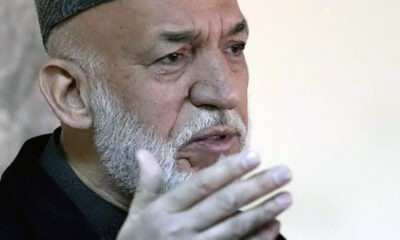
Karzai condemns Pakistani airstrikes on Kunar and Helmand
In a statement, Karzai expressed condolences to the families of those killed and wished a swift recovery to those injured.
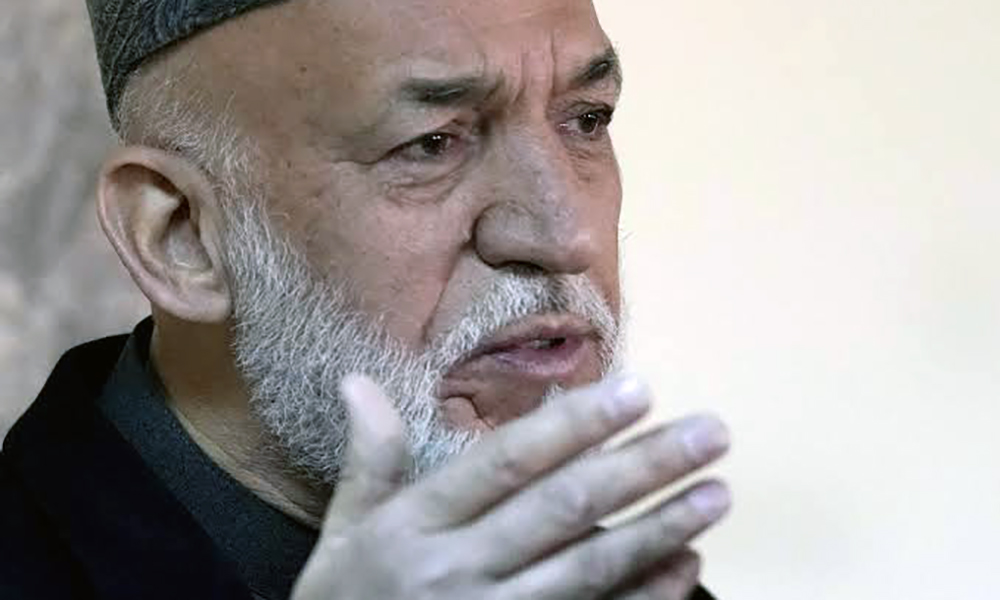
Former Afghan President Hamid Karzai has strongly condemned recent Pakistani airstrikes on residential areas in Kunar and Helmand provinces, saying the attacks resulted in civilian casualties, including women and children.
In a statement, Karzai expressed condolences to the families of those killed and wished a swift recovery to those injured.
Karzai described the actions by Pakistani forces as a violation of Afghanistan’s sovereignty and territorial integrity, stressing that Afghans would stand united in defending their country against foreign aggression.
He also called on Pakistan’s leaders to review what he described as confrontational and hostile policies toward Afghanistan, urging Islamabad to avoid actions that harm Afghan civilians.
Karzai further called for an end to the promotion of extremism and division, and urged Pakistan to engage with Afghanistan on the basis of good-neighborly relations and civilized cooperation.
Latest News
Moscow to host 8th meeting of Afghanistan consultations on October 5
Russian Foreign Minister Sergey Lavrov is expected to address the participants during the consultations.
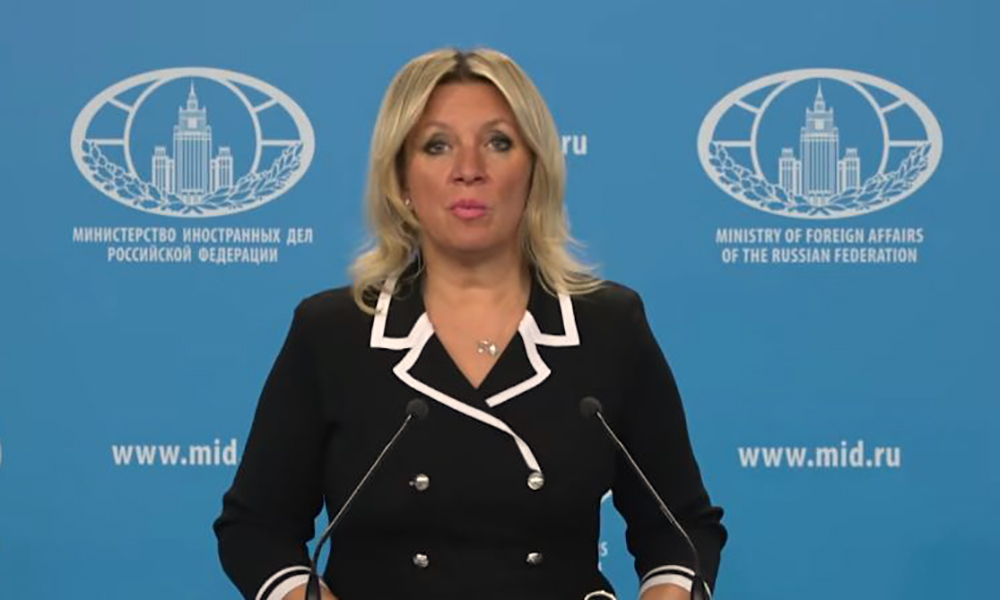
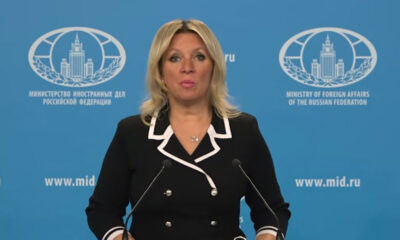
The eighth round of the Moscow Format consultations on Afghanistan will be held in Moscow on October 5, Russian Foreign Ministry spokesperson Maria Zakharova said Wednesday.
The meeting will bring together special representatives and senior officials from Afghanistan, Russia, China, Iran, India, Pakistan, Kazakhstan, Kyrgyzstan, Tajikistan and Uzbekistan.
Belarus and Egypt have also been invited to participate as guest countries, Zakharova said during a briefing.
Russian Foreign Minister Sergey Lavrov is expected to address the participants during the consultations.
According to Zakharova, the Afghan delegation will be led by Afghanistan’s foreign minister, who is also scheduled to hold a separate meeting with Lavrov on the sidelines of the event.
The bilateral talks are expected to focus on current issues related to cooperation between Russia and Afghanistan.
At the broader consultations, participants are expected to discuss political and economic cooperation between Afghanistan and regional countries, as well as efforts to strengthen regional cooperation in combating terrorism and drug trafficking.
A joint statement is expected to be adopted at the conclusion of the meeting, Zakharova said.


Trump: Unlike Afghanistan, US took all equipment from Iraq

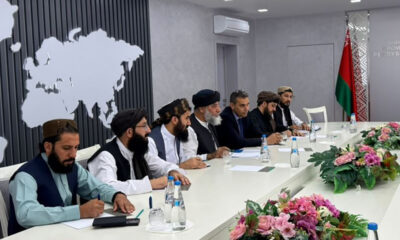
Afghanistan, Belarus discuss expanding industrial and trade cooperation

Karzai condemns Pakistani airstrikes on Kunar and Helmand

Moscow to host 8th meeting of Afghanistan consultations on October 5

Da Afghanistan Bank reports increase in public bank deposits

Saudi energy group signs major Afghanistan deals covering gas exploration and pipeline plans

Iranian clubs to face Gulf opponents at neutral venues in Asian Champions League Elite

Khalilzad: Afghanistan ready to attract major investment

Ariana Television Network secures exclusive rights to Afghanistan’s 2026/27 cricket series

El Niño likely to intensify, may become strongest ever recorded, WMO says

Tahawol: Improvement in Afghanistan-China relations discussed

Saar: Expanding ties with regional and global countries discussed

Tahawol: Absence of Afghanistan’s envoy at UNGA discussed

Saar: Assessment of war between Afghanistan and US discussed

Saar: Afghanistan’s image at UNGA
-

 Sport4 days ago
Afghan bodybuilder Ali Bilal finishes runner-up at Mr Olympia for third straight year
-

 Latest News4 days ago
Afghanistan says 28 killed, 32 captured in Nuristan operation
-
 World4 days ago
Trump rejects Iranian proposal to open Hormuz and end fighting
-

 Sport5 days ago
Afghanistan Champions League: Omar Zawak Herat beat Toofan Herat 1-0
-
 Latest News4 days ago
UNDP, UN Women launch financing initiative for Afghan women entrepreneurs
-

 Sport3 days ago
Afghanistan vs India Asian Games quarter-final abandoned without a toss
-
 Latest News4 days ago
Germany reports 488 Afghans for possible deportation, 267 have no criminal convictions
-

 Regional4 days ago
Aimal Wali Khan calls Dera Ismail Khan attack a ‘state failure’