
Latest News
Afghanistan and Pakistan have Islamic duty to work together for peace: Pezeshkian


Amid escalating tensions between Afghanistan and Pakistan, Iranian President Masoud Pezeshkian has called on the two neighboring Muslim nations to resolve their differences through dialogue, emphasizing that, according to the teachings of the Holy Qur’an, Muslim countries are religiously and morally obligated to stand together in pursuit of peace, justice, and development.
Speaking at a gathering in Iran on Wednesday evening, Pezeshkian expressed deep concern over the ongoing conflict between what he described as two “brotherly” and closely linked Islamic countries. He said the situation has caused sorrow not only in Iran but throughout the wider region.
“Muslim countries, especially those that share common cultural and historical roots, are bound by deep and unbreakable ties of faith and heritage,” Pezeshkian stated. “According to the Qur’an, we are commanded to act as parts of one body, supporting one another in the face of challenges and striving together for justice and progress.”
He attributed the discord between Islamic nations to the influence of what he called “enemies of Islam and international Zionism,” accusing them of seeking to divide and weaken the Muslim world. “The enemies of the Islamic ummah have always worked to sow division and instability among Muslim nations,” he added.
Pezeshkian stressed that dialogue and the strengthening of fraternal ties are essential to de-escalating tensions between Afghanistan and Pakistan. “The Islamic Republic of Iran, in accordance with Qur’anic principles, will use all its capacities to ease tensions, encourage dialogue, and reinforce the bonds of brotherhood between these two neighboring and friendly countries.”
Underscoring the urgent need for peace and unity in the region, he concluded: “We are confident that the esteemed governments and peoples of Afghanistan and Pakistan will, with wisdom and foresight, choose the path of mutual understanding and dialogue — and once again embrace friendship, cooperation, and trust.”


Latest News
Mansour: Unjustified bloodshed is forbidden, whether Afghan or Pakistani
At the same time, Mansour stressed that the situation should not escalate into indiscriminate bloodshed.
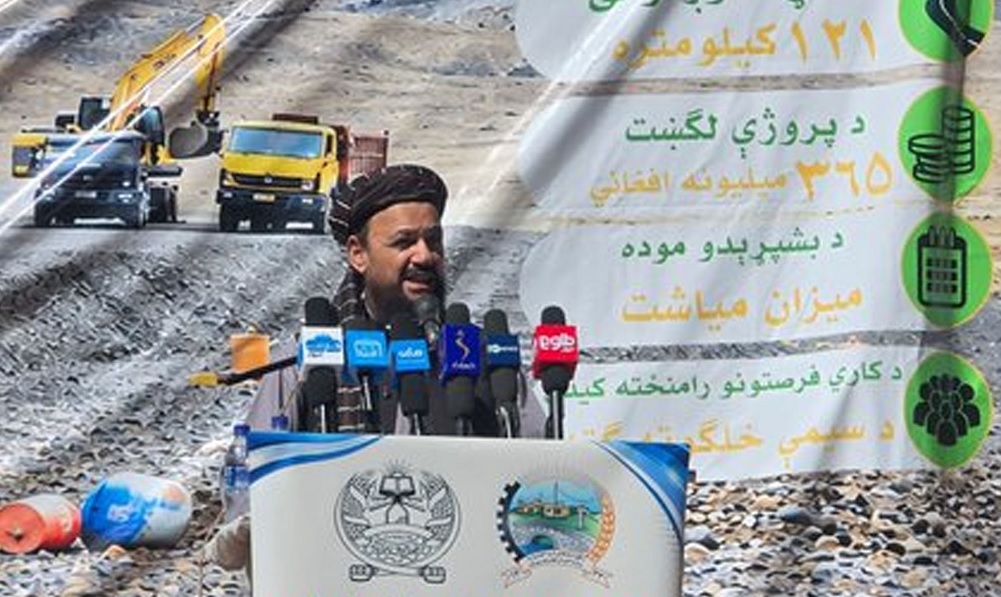
Abdul Latif Mansour, Afghanistan’s Minister of Rural Rehabilitation and Development, says the Islamic Emirate considers the unjustified shedding of Afghan and Pakistani blood forbidden, as both sides are Muslims.
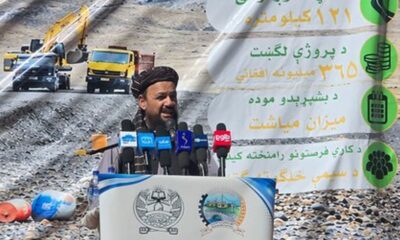
Mansour made the remarks at the inauguration of the Wakhan road in Badakhshan on Sunday, while responding to Pakistan’s recent attacks on Afghanistan.
He said some people become emotional over Pakistani bombings, but stressed that Afghanistan needs to become self-reliant enough to defend its citizens.
“We must build this system to the point where we become self-reliant and can defend every Afghan in such a way that we can neutralize the person causing harm in his own country,” Mansour said.
He acknowledged that the current system has not yet achieved full self-reliance, but said efforts are underway to strengthen Afghanistan’s ability to defend its people.
At the same time, Mansour stressed that the situation should not escalate into indiscriminate bloodshed.
“We consider the unjustified shedding of our own people’s blood forbidden, and we also consider the shedding of Pakistani blood forbidden because they are Muslims,” he said.
Pakistani military officials have repeatedly accused Afghanistan of allowing militant attacks on Pakistan to be planned or carried out from Afghan territory.
The Islamic Emirate has rejected the allegations, saying Afghanistan is not responsible for Pakistan’s security problems.
Latest News
Afghanistan inaugurates 121 km Wakhan road to China border
Mansour described the project as politically, strategically and economically important.
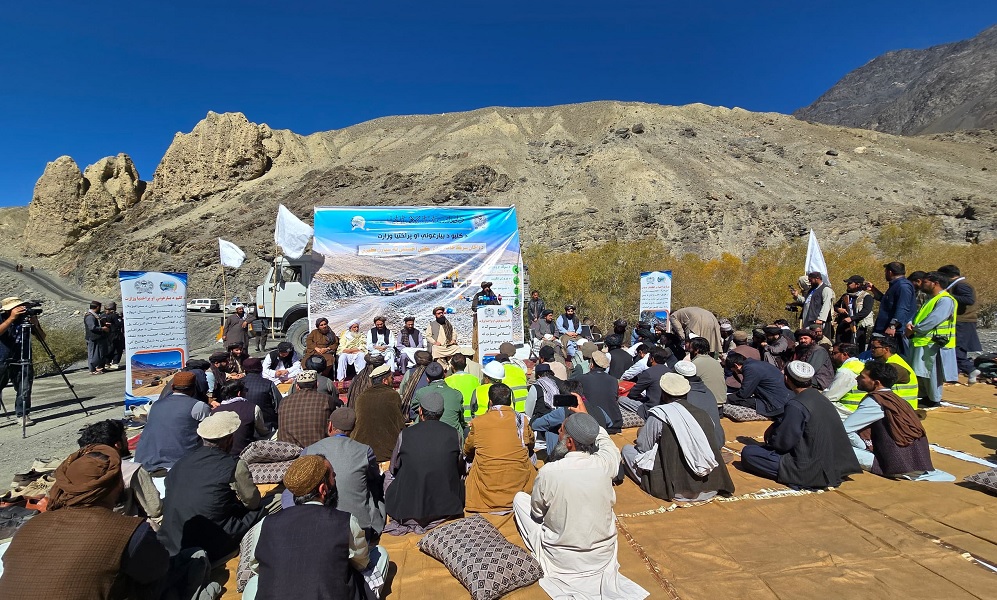
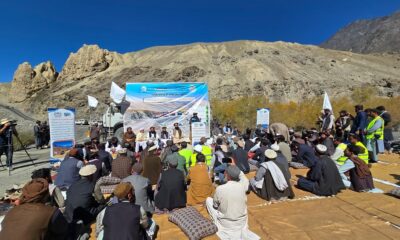
A 121-kilometer gravel road from the Sarhad-e Broghil in Wakhan district of Badakhshan to the Chinese border was officially opened today, Sunday, October 4.
Abdul Latif Mansour, Minister of Rural Rehabilitation and Development, said at the inauguration ceremony that the road includes 66 culverts and four major bridges, while a total of 3,100 meters of retaining walls have been built along parts of the route.
According to Mansour, 365 million afghanis from the Islamic Emirate’s development budget were spent on the construction and graveling of the road.
Mansour described the project as politically, strategically and economically important.
Rahmatullah Najib, governor of Badakhshan, also said at the ceremony that security has been ensured across the province and that there are no security problems in any part of Badakhshan.
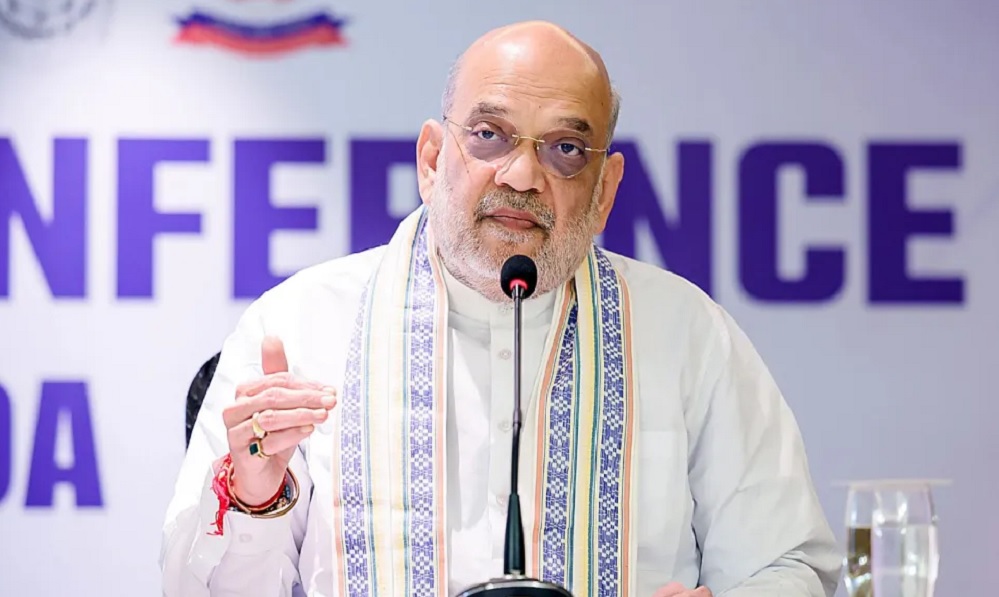
India says a fugitive drug-trafficking kingpin accused of smuggling heroin and methamphetamine from Afghanistan into India has been deported from Turkey and brought back to the country.
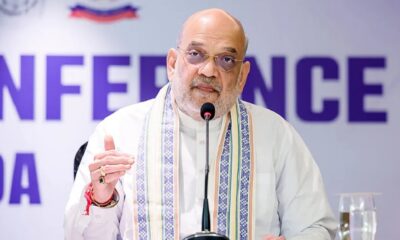
Indian Home Minister Amit Shah said on Saturday that Navpreet Singh, also known as “Nav,” was deported from Turkey after Indian authorities tracked him down.
Shah said Singh had obtained Turkish citizenship using the fake identity “Navab Virk” and continued to smuggle heroin and methamphetamine from Afghanistan to India.
The 34-year-old, a native of Punjab, had been wanted in several narcotics cases and was on the run for more than two years. Indian authorities allege that he headed an international narcotics syndicate whose operations in India were managed by his cousin, Prabhdeep Singh.
Prabhdeep Singh, also known as “Harry,” was extradited from Azerbaijan to India in May in connection with a case involving the seizure of 358 kilograms of heroin in 2021.
India submitted its request for Navpreet Singh’s extradition to Turkish authorities in 2023-24, according to officials familiar with the case.
Shah described Singh’s deportation as a “historic milestone” and said the Indian government was committed to dismantling drug-trafficking networks.
The Indian Home Ministry says 288 fugitives from 36 countries have been brought back to India between 2019 and August 2026 as part of efforts to pursue wanted criminals abroad.


Mansour: Unjustified bloodshed is forbidden, whether Afghan or Pakistani

Afghanistan inaugurates 121 km Wakhan road to China border

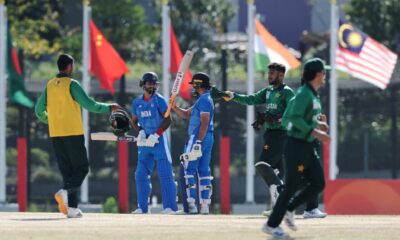
India clinch Asian Games cricket gold after beating Pakistan

India says drug kingpin linked to Afghan heroin, meth deported from Turkey

DABS, Tajikistan’s Pamir Energy sign agreement on electricity supply to Badakhshan

Saudi energy group signs major Afghanistan deals covering gas exploration and pipeline plans

Khalilzad: Afghanistan ready to attract major investment

Messi returns to Inter Miami after Argentina retirement

Imam Abu Hanifa exhibition to draw exhibitors from more than 20 countries

Maryam Nawaz says Punjab faces greater security threats from neighbouring provinces

Tahawol: Escalation of internal political crisis in Pakistan discussed

Saar: Continuation of crisis in the Middle East discussed

Tawsia: Review of three key economic developments in Afghanistan

Tahawol: Pakistan’s airstrikes on civilians in Afghanistan discussed

Tahawol: Improvement in Afghanistan-China relations discussed
-
 Latest News3 days ago
Four members of one family killed in Helmand in Pakistan airstrike
-
 Regional4 days ago
US imposes sanctions on 13 tied to Iran weapons procurement
-
 Sport5 days ago
Istiqlal Kabul beat Khurasan Faryab 2-0 with late goals
-
 Sport5 days ago
Afghanistan Champions League: Toofan Herat and Aino Mina Kandahar draw 1-1
-
 Sport2 days ago
ACB announces Afghanistan squads for Bangladesh, Zimbabwe series
-
 Business4 days ago
Afghanistan, Tajikistan seek stronger trade and investment ties
-
 Latest News3 days ago
Moscow to host 8th meeting of Afghanistan consultations on October 5
-
 Latest News4 days ago
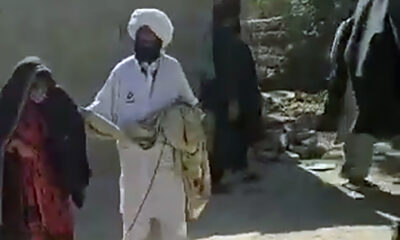
WATCH: Woman rescued after 14 years of alleged confinement in Helmand