
Latest News
Afghanistan hosts inaugural Afghanistan–Central Asia Consultative Dialogue to strengthen regional cooperation
On the issue of Pakistan, Muttaqi reiterated Afghanistan’s commitment to resolving bilateral issues through dialogue and diplomacy, while safeguarding its sovereignty.

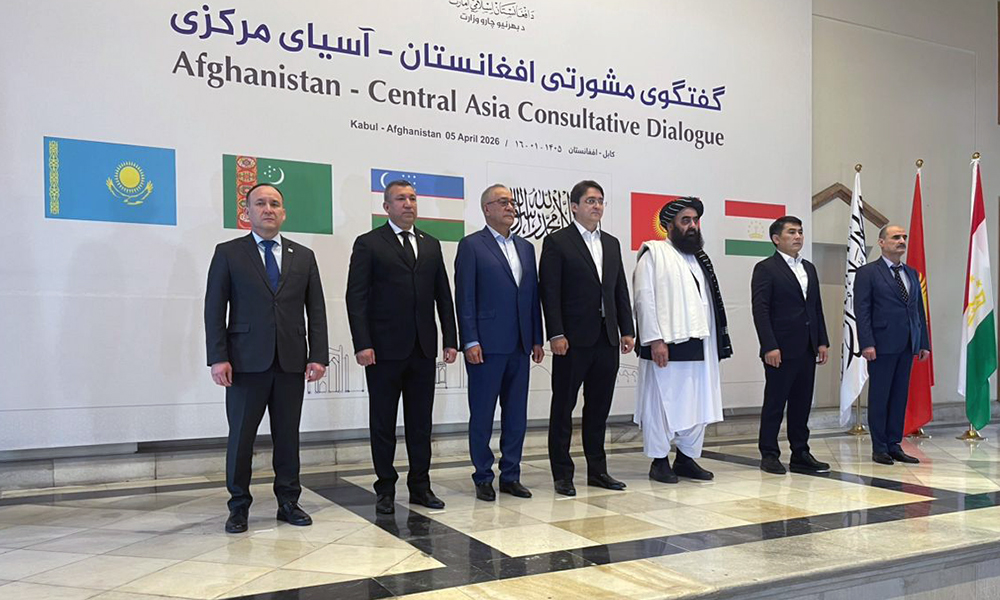
In a significant step towards regional cooperation, Afghanistan hosted the first-ever Afghanistan–Central Asia Consultative Dialogue on Sunday. The high-level event took place in Kabul, bringing together key representatives from five Central Asian nations—Uzbekistan, Kyrgyzstan, Turkmenistan, Tajikistan, and Kazakhstan. The dialogue, initiated by the Ministry of Foreign Affairs of the Islamic Emirate of Afghanistan, aims to establish a multilateral political mechanism to foster diplomatic coordination, enhance economic cooperation, and promote connectivity across the region.
Key Themes of the Dialogue
The meeting, which marked an important milestone in regional diplomacy, was inaugurated by Amir Khan Muttaqi, the Foreign Minister of Afghanistan. In his address, he expressed his satisfaction at hosting such a crucial gathering, emphasizing the platform’s role in advancing mutual trust, stability, and regional collaboration.
“The dialogue aims to enhance political dialogue, promote economic integration, and strengthen diplomatic coordination between Afghanistan and Central Asia,” said Muttaqi. “It will also focus on exploring opportunities for cooperation in key areas such as trade, transit, and regional connectivity.”
Historical Ties and Shared Challenges
Muttaqi took the opportunity to highlight the deep historical, cultural, and geographical bonds between Afghanistan and the Central Asian nations. He referenced the region’s rich intellectual and cultural history, pointing to influential figures such as Imam Abu Hanifa, Imam Bukhari, and other notable scholars and thinkers from the region who have contributed to a shared heritage.
He underscored that the current narrative between Afghanistan and Central Asia is one of opportunity and cooperation, rather than confrontation. “Our collective aim is to address regional challenges in a coordinated manner to achieve prosperity, stability, and development,” he said.
Regional Context and Afghanistan’s Role
The foreign minister also highlighted Afghanistan’s role in a rapidly changing global context, where geopolitical shifts and regional challenges are reshaping the international landscape. He stressed the need for Afghanistan and Central Asia to navigate these challenges together, particularly in relation to the ongoing security dynamics in West Asia.
On the issue of Pakistan, Muttaqi reiterated Afghanistan’s commitment to resolving bilateral issues through dialogue and diplomacy, while safeguarding its sovereignty. “Afghanistan seeks peaceful resolutions based on mutual respect and dialogue, but we also retain the right to protect our territorial integrity,” he added.
Afghanistan’s Foreign Policy and Achievements
Outlining the key principles of Afghanistan’s foreign policy, Muttaqi emphasized the importance of balance, economic cooperation, and good neighborly relations. He noted that Afghanistan’s foreign policy framework has been centered on strengthening ties with its neighbors, particularly Central Asia, to foster regional stability and development.
Among Afghanistan’s notable achievements in recent years, he pointed to the establishment of a stable Islamic governance system, the elimination of widespread corruption, and the near-complete eradication of narcotics cultivation. He also highlighted the country’s economic policy, which aims to attract foreign investment and foster economic growth, particularly through trade with Central Asia.
Economic and Trade Cooperation
The dialogue also served as a platform to discuss economic cooperation, with Muttaqi sharing promising trade figures. In 2025, Afghanistan’s trade with Central Asia reached approximately $2.7 billion, marking a significant growth compared to previous years. The goal, he said, is to expand trade volume to $10 billion within the next 3-4 years.
Afghanistan’s strategic position, linking Central Asia to South and West Asia, positions it as a vital hub for regional trade. Key projects that were discussed included:
TAPI Gas Pipeline: Significant progress on the Herat–Turkmenistan border, with 120 km of pipeline ready for construction.
CASA-1000 Energy Project: Advancing energy transmission between Kyrgyzstan, Tajikistan, Afghanistan, and Pakistan.
Lapis Lazuli Trade Route and Six-Nation Corridor: Prioritizing regional connectivity for enhanced trade.
Security and Border Cooperation
Another critical area of discussion was security and border cooperation. Afghanistan shares over 2,300 kilometers of borders with Central Asian countries, including Tajikistan, Uzbekistan, and Turkmenistan. The dialogue included discussions on joint security efforts, particularly in tackling cross-border threats such as drug trafficking, illegal migration, and extremism. The Afghan security forces’ efforts in maintaining stable borders were also highlighted as a key factor in ensuring regional security.
Proposals for Strengthening Regional Integration
Muttaqi proposed several measures to further strengthen regional cooperation:
1. Institutionalizing the Afghanistan–Central Asia Consultative Dialogue to meet regularly.
2. Organizing expert conferences to develop actionable cooperation roadmaps.
3. Creating a joint security framework to address shared regional challenges.
4. Coordinating efforts to combat climate change and address environmental concerns.
5. Expanding regional participation in initiatives like the Shanghai Cooperation Organization and Green Central Asia.
Conclusion: A New Era of Cooperation
In his closing remarks, Muttaqi expressed his gratitude to all participating nations for their support and commitment to the dialogue. He reaffirmed Afghanistan’s pragmatic and cooperative approach to regional engagement, calling the dialogue a historic step towards building a stable, prosperous, and interconnected region.
This inaugural Afghanistan–Central Asia Consultative Dialogue signals the beginning of a new chapter in regional cooperation, focused on shared economic growth, security, and sustainable development. With continued dialogue and collaboration, the nations of Central Asia and Afghanistan are set to chart a path towards a more integrated and prosperous future.




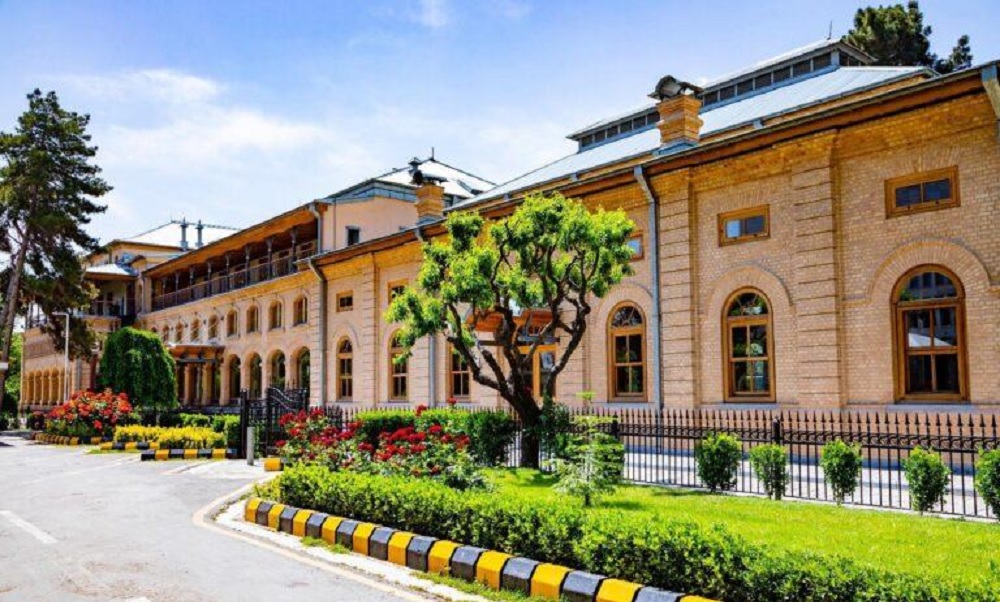
The Islamic Emirate’s Ministry of Foreign Affairs says it has summoned Pakistan’s chargé d’affaires in Kabul and handed him a formal protest over the alleged entry of armed and hostile elements across the Durand Line toward Nuristan.
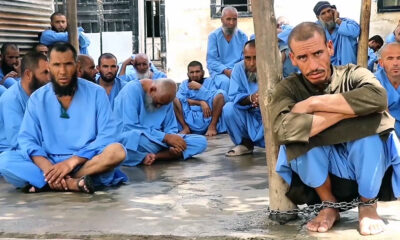
The move follows an operation announced by Afghanistan’s Ministry of Defense two days earlier in Kamdesh district of Nuristan, in which it said 28 people were killed and 32 others captured.
In its statement, the Defense Ministry said several groups affiliated with Daesh and what it described as “Shar-o-Fasad” elements had crossed into Afghan territory with the support and encouragement of Pakistani militias. It claimed the groups were seeking to carry out acts of subversion and create insecurity.
The ministry also alleged that Pakistani military personnel, Pakistan-affiliated “Arbaki” forces and Daesh elements were involved in coordinating with the groups, but fled the area after Afghan forces launched their operation.
According to the Defense Ministry, some of those involved were former military personnel who served under Afghanistan’s previous government. It alleged that Pakistani intelligence agencies had taken some of them to Pakistan after promising assistance with asylum and employment abroad, before transferring them to military camps along the Durand Line for training and subsequently sending them into Afghanistan.
On Tuesday, the Ministry of Foreign Affairs said the individuals involved in the latest incident, including Daesh-affiliated elements, attempted to cross into Afghanistan with what it described as direct support and guidance from Pakistan’s military authorities. Afghan security forces prevented them from entering the country, it said.
The ministry also accused Pakistan of facilitating the recruitment, organization, training and equipping of hostile elements on its territory before directing their deployment across the Durand Line.
It said such actions, in the Islamic Emirate’s view, violate Afghanistan’s sovereignty and territorial integrity and run contrary to Islamic, international, humanitarian and good-neighborly principles.
The ministry warned that Pakistan’s military authorities would bear full responsibility for any consequences if such actions continue.
Pakistan has rejected allegations of involvement by its security and intelligence forces in the Nuristan incident, describing the claims as baseless.
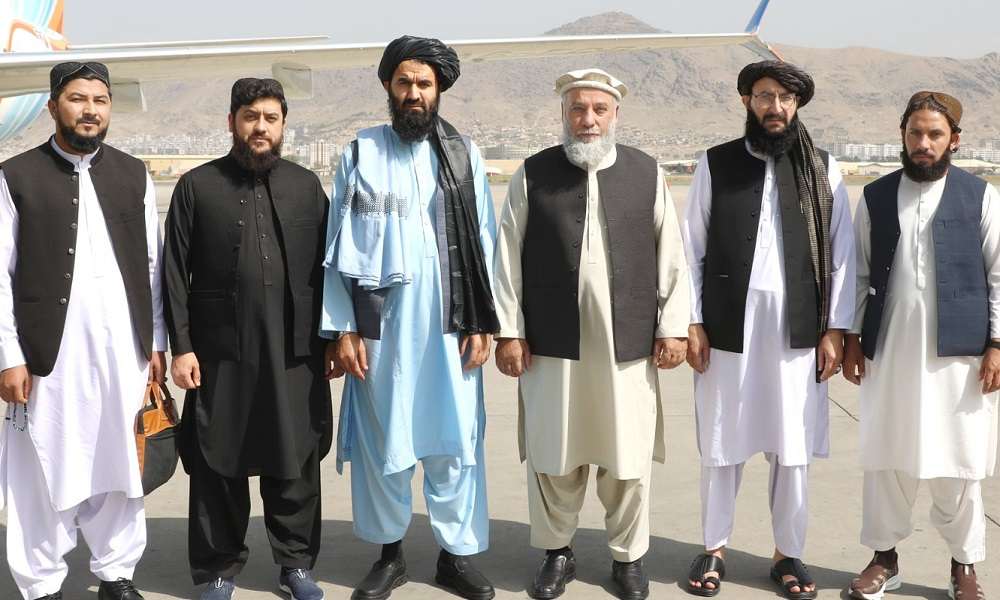
Afghanistan’s Minister of Industry and Commerce Nooruddin Azizi has traveled to Belarus at the head of a delegation, at the invitation of the Belarusian government, to strengthen economic and trade cooperation between the two countries.
The ministry said the visit includes participation in the Second Belarus International Industrial Exhibition and meetings with senior Belarusian officials.
During the visit, the minister is expected to tour the exhibition and attend a general meeting of participating countries.
He is also scheduled to meet with Belarusian ministers of foreign affairs, agriculture, and industry to discuss trade and economic relations, industrial and agricultural cooperation, investment, and new areas of bilateral cooperation.
The Ministry of Industry and Commerce said it hopes the visit will help expand trade and economic ties, boost industrial cooperation, and create more opportunities for investment between Afghanistan and Belarus.
Latest News
US Afghanistan War Commission meets Asim Munir over Pakistan’s role in conflict
The commission is examining the military, diplomatic, intelligence and foreign assistance aspects of the US engagement.
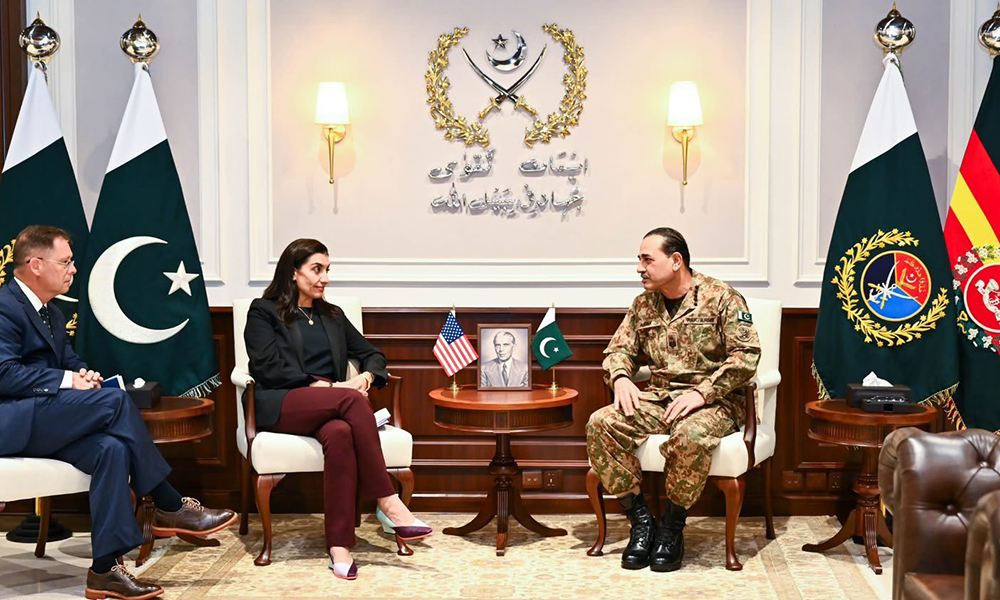
A delegation from the US Afghanistan War Commission met Pakistan’s army chief, Field Marshal Asim Munir, in Rawalpindi on Monday as the commission reviews the United States’ 20-year engagement in Afghanistan.
The delegation, led by commission co-chairs Shamila N. Chaudhary and Colin F. Jackson, met Munir at General Headquarters, according to Pakistan’s military.
Discussions covered Pakistan’s support during the Afghanistan conflict, the regional security environment and developments in Afghanistan, with a focus on issues relevant to the commission’s review.
Munir presented Pakistan’s perspective on the security dynamics that shaped the conflict and highlighted the challenges faced by the country during the prolonged war in neighbouring Afghanistan.
He also stressed the importance of incorporating the regional perspective and Pakistan’s experience when assessing the strategic, diplomatic and operational dimensions of the conflict, according to the military statement.
The delegation acknowledged Pakistan’s “longstanding role and sacrifices” during the conflict and appreciated what it described as the country’s continued contribution to regional peace and stability.
The Afghanistan War Commission was established by the US Congress in 2021 to conduct an independent review of US decisions and actions during the Afghanistan war from June 2001 to August 2021. The commission is examining the military, diplomatic, intelligence and foreign assistance aspects of the US engagement.
US forces completed their withdrawal from Afghanistan on August 30, 2021, ending nearly two decades of US military involvement in the country.
Pakistan was a key regional actor throughout the conflict, sharing a long border with Afghanistan and providing logistical and other support to US-led operations while also facing significant security challenges linked to the war.
The commission’s meeting with Munir comes as it gathers regional perspectives on the decisions and events that shaped the US engagement in Afghanistan. Its final report is expected to examine the broader strategic, diplomatic and operational lessons of the conflict.


Saar: Assessment of war between Afghanistan and US discussed

Istiqlal Kabul beat Khurasan Faryab 2-0 with late goals

Islamic Emirate summons Pakistan’s chargé d’affaires over Nuristan incident

Minister of Industry and Commerce travels to Belarus to expand economic ties

Kazakhstan grain shipments to Afghanistan rise over 4-fold

Saudi energy group signs major Afghanistan deals covering gas exploration and pipeline plans

Iranian clubs to face Gulf opponents at neutral venues in Asian Champions League Elite

Khalilzad: Afghanistan ready to attract major investment

Ariana Television Network secures exclusive rights to Afghanistan’s 2026/27 cricket series

Afghanistan drawn in Group A of AFC U17 Asian Cup qualifiers
Saar: Assessment of war between Afghanistan and US discussed

Saar: Afghanistan’s image at UNGA

Saar: Concerns over Pakistan’s political crisis discussed

Exclusive interview with Abdul Latif Mansoor, Minister of MRRD

Tawsia: Overview of Afghanistan’s iron mines
-

 Sport2 days ago
Afghan bodybuilder Ali Bilal finishes runner-up at Mr Olympia for third straight year
-
 Latest News2 days ago
Afghanistan says 28 killed, 32 captured in Nuristan operation
-
 World3 days ago
Trump rejects Iranian proposal to open Hormuz and end fighting
-
 Sport3 days ago
Afghanistan to face India in Asian Games cricket quarter-final
-

 Sport4 days ago
Afghanistan Champions League: Arman FC and Aino Mina play out goalless draw
-

 Latest News3 days ago
Khalilzad questions Pakistan’s commitment to Afghan welfare
-
 World4 days ago
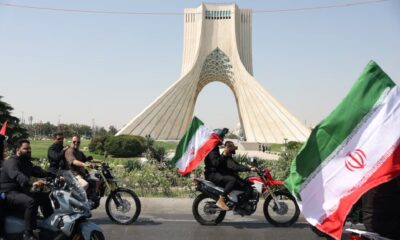
Iran awaits US move after WSJ report says Trump rejects peace plan
-

 Business3 days ago
Ariana Afghan Airlines increases Kabul-Delhi cargo flights