
Latest News
Afghan delegation leaves Kabul for talks with Taliban in Doha

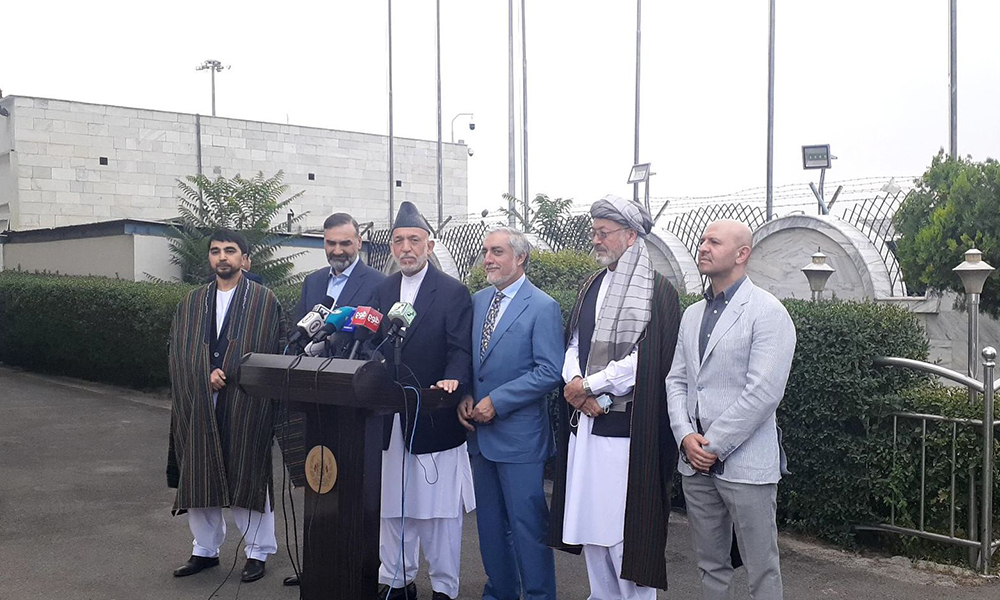
A delegation led by Abdullah Abdullah, Chairman of the High Council for National Reconciliation, on Friday afternoon left Kabul for Doha, the capital of Qatar, to hold talks with the Taliban as the militants’ offensives dramatically increased across Afghanistan.
The delegation includes Former Vice President Mohammad Karim Khalili; Head of the splinter faction of the Jamiat-e-Islami Party Ata Mohammad Noor; Islamic Republic Chief Negotiator Masoom Stanekzai; President Ghani’s Adviser Salam Rahimi; State Minister for Peace Affairs Sadat Mansoor Naderi; Bator Dostum and Fatima Gailani members of peace negotiating team.
However, the agenda of the talks is not clear so far. Abdullah noted that the Afghan team has fully authoritative and that a ceasefire is a priority in the talks with the Taliban delegation.
Heading an inclusive and authoritative delegation, H.E. Dr. A. Abdullah, Chair of the HCNR left for Qatar today to engage in meaningful peace & reconciliation talks with Taliban representatives. Upon departure from Kabul, Dr. Abdullah stressed that the consensus representing 1/n pic.twitter.com/EXTcWTYbDd
— Dr. Abdullah Abdullah (@DrabdullahCE) July 16, 2021
“On behalf of the Islamic Republic of Afghanistan, an inclusive delegation is leaving for Qatar, a number of esteemed members of the delegation are currently in Qatar and some are going with us. I thank the support that resulted from a political consensus on the deployment of this delegation. This delegation represents the Islamic Republic of Afghanistan,” Abdullah said.
“The people of Afghanistan in different parts of the country are suffering from the tragedy of continuing the war. Today, war is raging in several provinces of Afghanistan. But your question will be, ‘when the war is going on, why are you talking about peace’, yes, because the war is going on intensively, and this war has been going on for 42 years in our country and hundreds of thousands of our people sacrificed their lives, so then we must work for providing peace.”
He added: “God willing, we hope that the Taliban side will see this as an opportunity and know that there will be no peace with continues or capturing of a district or areas. The result of peace can only be achieved from the negotiating table, despite all the pain that our people are suffering today, and there is pressure to focus on war, we still believe that there is still a chance for a peace that should be acceptable to all.”
Former president Hamid Karzai, who accompanied the delegation until the Kabul airport, stated that he fully supports the Afghan team.
Sources, meanwhile, told Ariana News that Karzai is expected to visit Islamabad to meet with Pakistani officials on Saturday.
Taliban stated that a delegation, led by the head of Taliban’s political wing Mullah Abdul Ghani Baradar, will negotiate with the Afghan team in Doha.
The development comes a day after US State Department spokesman Ned Price said that Washington continues to believe the only solution to Afghanistan’s problem is a political settlement and in line with this the Afghan government is sending a senior delegation to Doha.
Addressing a press conference on Wednesday, Price stated: “We have been very clear about this, that we continue to believe the Islamic Republic – that is to say, the Afghan Government continues to believe that diplomacy is the only durable and just way to reach a political settlement here.
“I won’t speak for the Taliban, but they continue to engage in that diplomacy in Doha. The Islamic Republic, the Afghan Government is sending a senior delegation to Doha. The special envoy (Zalmay Khalilzad) and his team are engaged, supporting these intra-Afghan discussions in Doha,” Price said.
“We continue to believe – and the international community continues to believe, including if you look at recent statements from some of our closest allies, but also from countries with whom we share little else – that this diplomatic path is the most effective, and certainly the best path to bring peace and stability to Afghanistan.”






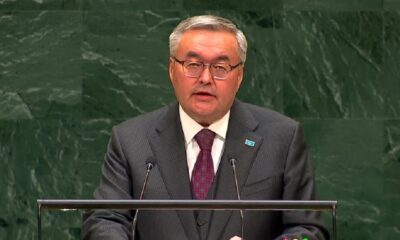




Kazakhstan’s Foreign Minister Mukhtar Tileuberdi has called for pragmatic and coordinated international engagement with Afghanistan, saying the country’s long-term stability is closely linked to the security and sustainable development of Central Asia.
Speaking during the general debate of the 81st session of the United Nations General Assembly in New York on Friday, Tileuberdi said humanitarian assistance to Afghanistan remains essential but alone cannot break the cycle of poverty, displacement and dependency.
He said Kazakhstan supports a “pragmatic, coordinated and step-by-step” approach to international engagement with Afghanistan, with the United Nations playing a central role.
Tileuberdi also said Kazakhstan is working with the UN to operationalize the United Nations Regional Centre for the Sustainable Development Goals for Central Asia and Afghanistan in Almaty.
He said the success of the centre should be measured by the results and assistance it delivers to the region.


Afghanistan Champions League: Omar Zawak Herat beat Toofan Herat 1-0

Blast in Pakistan’s Dera Ismail Khan kills 11, injures 30

Ariana Afghan Airlines increases Kabul-Delhi cargo flights

Khalilzad questions Pakistan’s commitment to Afghan welfare

India, UN envoy discuss Afghanistan’s humanitarian needs

Saudi energy group signs major Afghanistan deals covering gas exploration and pipeline plans

Trump floats idea of renaming Atlantic or Pacific Ocean

US hits Egyptian bank branches with Iran sanctions as war marks six months

Nepal flood rescue mission enters critical phase as thousands remain missing

Iranian clubs to face Gulf opponents at neutral venues in Asian Champions League Elite

Exclusive interview with Abdul Latif Mansoor, Minister of MRRD

Tawsia: Overview of Afghanistan’s iron mines

Tahawol: Discussion on fresh Pakistani airstrikes on Afghanistan

Saar: Calls for international support for Afghanistan discussed

Tahawol: Opening of the 81st UN General Assembly Session
-

 World4 days ago
CNN, MS NOW and Politico sue Trump, challenging White House ban
-

 Latest News3 days ago
Ariana Afghan Airlines ranks seventh among 45 Central Asian airlines
-

 Latest News4 days ago
UN reiterates call for respect for international law after Kunar airstrikes
-
 Latest News5 days ago
Khalilzad condemns Pakistan airstrikes, says current strategy is not working
-

 Regional3 days ago
US and Iran hold first talks since June after Trump’s ‘annihilation’ threat
-

 Latest News3 days ago
Silk Road highway in Wakhan corridor now reaches the China border
-

 Latest News4 days ago
Afghan Official: Pakistan’s airstrikes will not go unanswered
-

 Regional4 days ago
G7 foreign ministers call on Iran to stop arming Houthis