
Business
Afghan historical pieces, handicrafts exhibition held in Washington

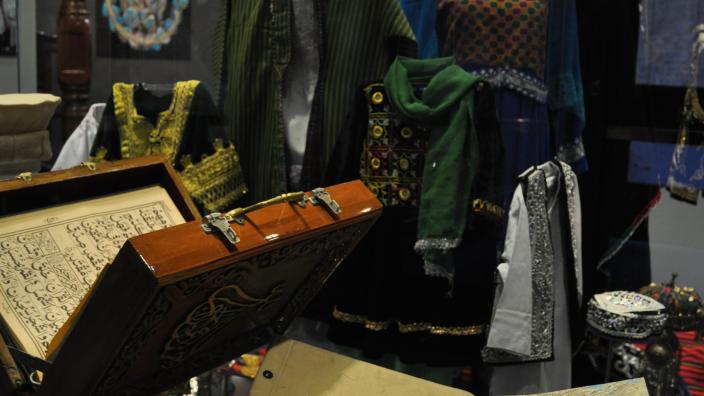

By the initiative of DC Cultural and Tourism Organization, Afghanistan handicrafts and historical pieces exhibition held in Afghan embassy in Washington.
The aim of holding such exhibitions was said to be the introduction of Afghan culture, customs and traditions.
A large number of tourists have visited the Afghan handicrafts exhibition; saying Afghanistan has a rich culture but what they have heard about Afghanistan was only war and violence; now they are witnessing the true face of Afghanistan.
Meanwhile, Afghan officials in Afghanistan embassy at Washington say that holding such exhibitions are very effective and positive in order to introduce the culture and ancient history of Afghanistan.
The written history of Afghanistan can be traced back to around 500 BCE when the area was under the Achaemenid Empire, although evidence indicates that an advanced degree of urbanized culture has existed in the land since between 3000 and 2000 BCE.
For centuries, Afghanistan has been a mosaic of people with diverse cultures, religions and languages.
Afghanistan’s ethnically and linguistically rich and mixed population reflects its location at the crossroads of Central, South and Southwest Asia.
Communities with separate religions, languages, and ethnic backgrounds have lived side by side for generations. Afghanistan still remains a country of dynamic diversity.

Business
Kazakhstan eyes rare metals mining projects in Afghanistan and Rwanda
As Kazakhstan looks to expand its global mining footprint, the exploration of rare metals in Afghanistan and Rwanda marks a significant step towards diversifying its mining interests.

Kazakhstan is actively exploring mining opportunities in Afghanistan and Rwanda, focusing on rare metals, as part of a broader strategy to expand its resource development portfolio. According to a report by Kazinform, Tau-Ken Samruk, Kazakhstan’s national mining company, is conducting laboratory studies on mineral samples obtained from both countries.
The announcement was made by Iran Sharkhan, Kazakhstan’s Vice Minister of Industry and Construction, during the Geoscience & Exploration Central Asia 2026 event. Sharkhan emphasized the substantial resource potential in Afghanistan and Rwanda, noting that current efforts are directed towards evaluating the legal and regulatory frameworks in these countries, as well as verifying the geological prospects before proceeding with potential mining operations.
The laboratory testing, which is taking place at Tau-Ken Samruk’s facilities and additional labs in Kazakhstan’s Karaganda region, involves comprehensive analysis of base metals, rare metals, and rare earth elements from the two countries. These tests will determine the viability of large-scale mining operations in the future.
Sharkhan further indicated that if the laboratory results confirm promising geological findings, more detailed plans for mining projects will be disclosed in the coming months.
The report also highlighted that Kazakhstan’s major mining companies have already invested nearly 150 billion tenge into scientific research in the country’s mining sector, reinforcing the nation’s commitment to advancing its mining industry on both the local and international stages.
As Kazakhstan looks to expand its global mining footprint, the exploration of rare metals in Afghanistan and Rwanda marks a significant step towards diversifying its mining interests.
Business
Tripartite agreement to launch new Russia–Turkmenistan–Afghanistan transit corridor
The agreement is scheduled to be finalized on the sidelines of the Kazan Forum 2026, according to Russian media reports.
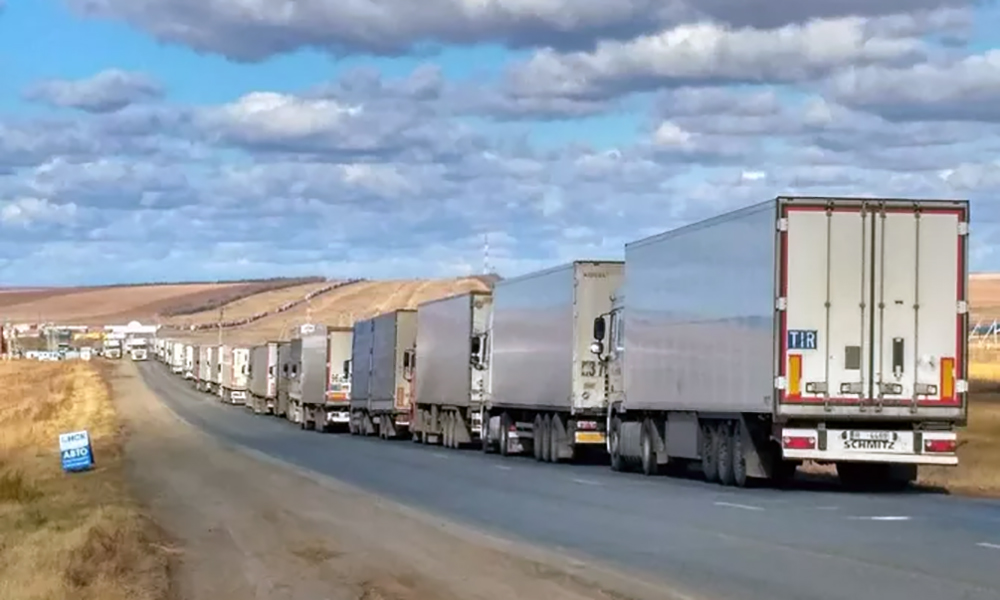
A tripartite agreement to establish a new trade and transit corridor linking Russia’s Republic of Tatarstan, Turkmenistan, and Afghanistan is expected to be signed in May, opening a fresh route for the movement of goods between Russia and Afghanistan.
The agreement is scheduled to be finalized on the sidelines of the Kazan Forum 2026, according to Russian media reports. The proposed corridor is seen as a strategic alternative to existing routes, particularly the North–South Corridor, which has faced disruptions due to ongoing tensions in Iran.
Rustam Khabibullin, head of the Russian Business Center in Afghanistan, said the new route could significantly streamline cargo transport between Russia and Afghanistan. He added that the corridor may also attract companies from Europe and Asia seeking more stable and reliable logistics options.
Afghanistan is considered a key supporter of the initiative. Once operational, the corridor is expected to facilitate direct shipments from Tatarstan to Afghanistan, reducing reliance on indirect transit routes through Central Asia.
The development has been welcomed by members of Afghanistan’s private sector, who say that expanding transit infrastructure and logistics networks could boost trade and contribute to economic growth.
In recent years, Afghanistan has emerged as an important market for Tatarstan’s halal products. According to reports, Afghan imports of halal goods from Tatarstan reached $51.7 million in 2025, marking a notable increase compared to the previous year. However, much of this trade has so far been conducted indirectly via third countries.
The planned corridor is expected to enhance direct trade links and improve efficiency in regional commerce.
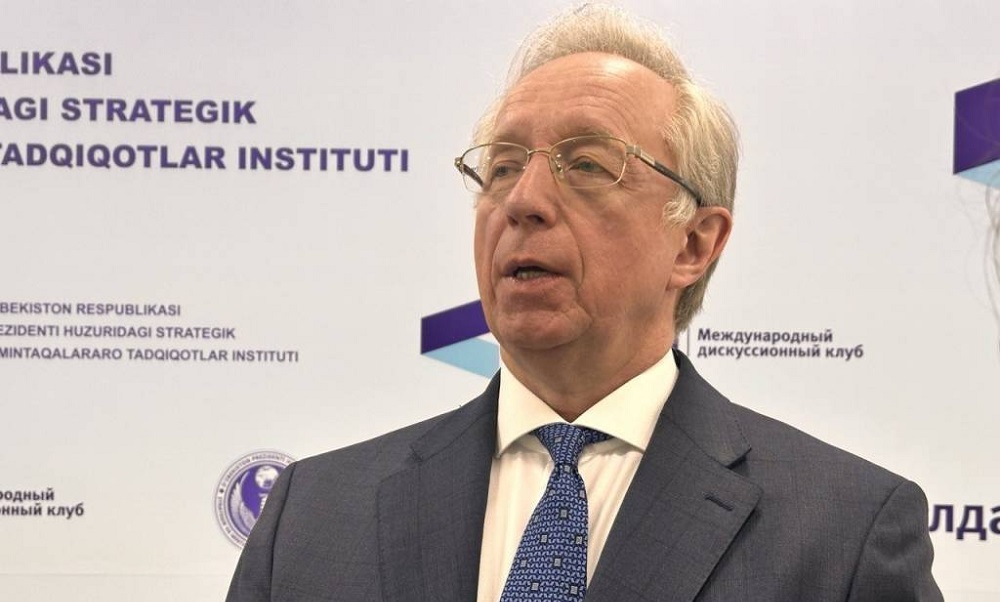
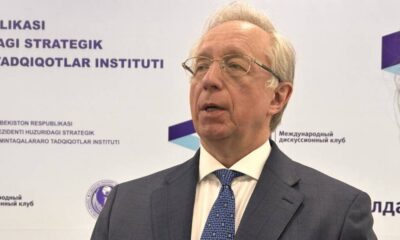
A senior Russian diplomat has praised Uzbekistan’s efforts to boost regional trade and economic cooperation, highlighting the strategic importance of a new international trade hub near the Afghan border.
Mikhail Galuzin, Deputy Minister of Foreign Affairs of the Russia, made the remarks to media representative covering an international conference titled “Uzbekistan – Russia: Strategic Partnership in the Eurasian Space,” at the Termez International Trade Center in southern Uzbekistan.
Speaking to media representatives, Galuzin commended the development of the Surkhandarya region, describing it as a “unique oasis” with significant economic potential. He said the Termez International Trade Center—located in a free trade zone—represents a major step forward in strengthening trade links, particularly between Uzbekistan and Afghanistan.
“The project deserves the highest praise,” Galuzin said, adding that the center is expected to play a key role in expanding trade and economic ties and advancing broader strategic partnerships across the Eurasian region.
The trade center was established under a resolution by Shavkat Mirziyoyev and is designed to facilitate commerce by providing a platform for Uzbek and Afghan entrepreneurs to showcase goods and investment projects. According to Galuzin, such initiatives are already contributing to increased trade turnover, with Afghanistan currently ranking among Uzbekistan’s top trading partners.
He also noted growing interest from Russian regions and businesses in participating in the project, calling for further expansion of cooperation among the countries involved.
Galuzin emphasized that platforms like the Termez trade hub and international conferences play a vital role in building direct economic connections, which in turn help create stable supply chains and open new opportunities for trade and investment across the region.


Kabul to host ‘Afghanistan–Central Asia Consultative Dialogue’ tomorrow

Tahawol: Continuation of Middle East crisis discussed

Saar: Ongoing Kabul-Islamabad talks in China discussed

Around 15,000 cases of vulnerable Afghan children addressed over past year

Severe rainfall and natural disasters cause heavy casualties across Afghanistan

Prominent Muslim scholar issues fatwa calling for Afghanistan-Pakistan ceasefire

IEA Supreme Leader issues Eid-ul-Fitr message urging unity and support for Islamic system

14 Pakistani soldiers killed after military post falls along Durand line: MoD

Afghanistan steps in to replace Iran in supplying fruits and vegetables to Russia

Afghan airstrikes target Pakistani military sites in retaliation for air attacks
Tahawol: Continuation of Middle East crisis discussed
Saar: Ongoing Kabul-Islamabad talks in China discussed

Tawsia: This week’s key economic developments in Afghanistan discussed

Tahawol: Start of talks between Kabul-Islamabad in China discussed

Saar: Ongoing US and Israeli attacks on Iran discussed
-
 Latest News3 days ago
Baradar approves 17 projects worth over one billion AFN
-
 Business5 days ago
Russia backs Uzbekistan–Afghanistan trade hub, praises regional economic cooperation
-
 Sport5 days ago
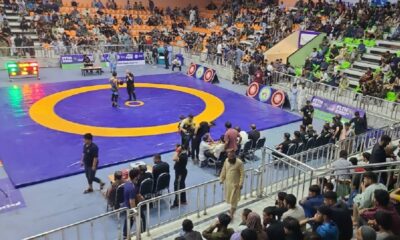
ATN secures broadcast rights for inaugural Afghanistan Wrestling Premier League
-

 Sport4 days ago
ATN to broadcast second season of Ariana Snooker Championship
-
 Regional5 days ago
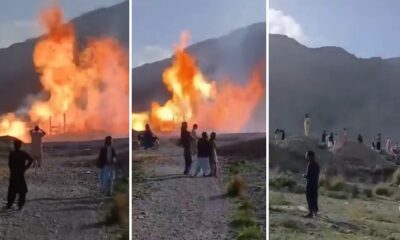
Gas pipeline blown up in southern Pakistan, says official
-

 Sport5 days ago
Rajasthan Royals outclass Chennai Super Kings as IPL action continues
-
 Latest News5 days ago
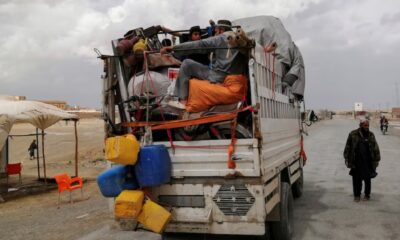
Islamic Relief Worldwide urges Afghanistan–Pakistan de-escalation, calls for aid to displaced
-
 Latest News4 days ago
Afghan delegation heads to China for talks with Pakistan