
Latest News
Afghan refugees in UK told to look for private accommodation

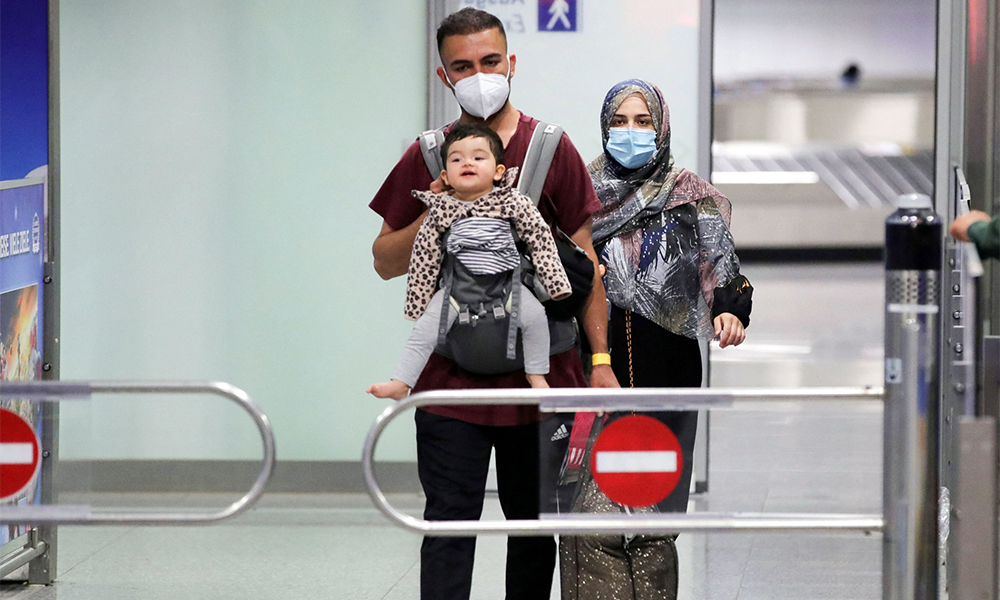
Afghan refugees who sought asylum in the UK after the Islamic Emirate of Afghanistan (IEA) took over Afghanistan a year ago have been told to look for private accommodation as the government-funded accommodation scheme winds down.
In a letter sent to the Afghan refugees, the Home Office warned that not every council would accept their request for a place on the social housing list and has told them to use estate agent websites in the private sector, Anadolu News Agency reported.
“The use of hotels to house those resettling from Afghanistan is a temporary solution, and we continue to work with over 350 local authorities to move Afghan families from hotels to permanent accommodation as quickly as possible,” a statement from the Home Office said.
“To support the resettlement of Afghan families, local authorities are given £20,520 ($24,809) per person over a three-year period. They have the flexibility to use this funding to contribute towards renting accommodation, including deposits, letting fees and furnishing,” it added.
Although the government is still accommodating up to 9,500 Afghan refugees in hotels, with 7,000 rehoused, the Home Office is planning to wind down the use of hotels to house refugees, Anadolu reported.
Rights groups and charities, however, have voiced concerns over the lack of funding, guidance and assistance offered to the refugees and fear that many families will fall into homelessness as a result.
Afghan families and individuals, many of whom have only been in the UK for a year, will struggle to find accommodation. Due to language barriers which will prevent them from negotiating their rental agreements and the lack of necessary documentation, many fear that these families will fall through the system.
“Afghan families couldn’t have imagined that one year after arriving they’d still be warehoused in unsuitable accommodation, without space, privacy and stability. There is also a serious risk of homelessness for these families if suitable accommodation is not offered under the current Home Office plans,” said Eva Tabbasam, the director of Gender Action for Peace and Security.
“The government has had a year to sort things out – instead, it’s getting worse. If suitable accommodation was readily available for the 9,500 people still in hotels, families would already have been moved into it. We don’t yet know what kind of move on accommodation families will be offered,” she added.
The government’s plans to rehouse Afghan refugees include sending them to different parts of the country. However, as the majority are based in London and with children enrolled into school and family members at work, the scheme may prove difficult, Anadolu reported. .
Furthermore, councils have voiced concern over the lack of housing options for Afghan families with Claire Holland, London Councils’ executive member for communities, saying “boroughs are very concerned by the lack of alternative housing options for these families – a particular challenge in the capital due to the chronic shortage of affordable housing here.”
UK council housing lists are notoriously long with many having to wait up to a year to find a house fit for a large family. Additionally, although Afghan families have the right to rent, many landlords are reluctant to sign agreements with them due to a lack of necessary and sufficient documentation.
The plan to rehouse Afghan refugees in private accommodation comes on the one-year anniversary of the Islamic Emirate of Afghanistan (IEA) rule.











Kazakhstan’s Foreign Minister Mukhtar Tileuberdi has called for pragmatic and coordinated international engagement with Afghanistan, saying the country’s long-term stability is closely linked to the security and sustainable development of Central Asia.
Speaking during the general debate of the 81st session of the United Nations General Assembly in New York on Friday, Tileuberdi said humanitarian assistance to Afghanistan remains essential but alone cannot break the cycle of poverty, displacement and dependency.
He said Kazakhstan supports a “pragmatic, coordinated and step-by-step” approach to international engagement with Afghanistan, with the United Nations playing a central role.
Tileuberdi also said Kazakhstan is working with the UN to operationalize the United Nations Regional Centre for the Sustainable Development Goals for Central Asia and Afghanistan in Almaty.
He said the success of the centre should be measured by the results and assistance it delivers to the region.


Abu Muslim Farah defeat Khurasan Faryab 2-0 in ACL season six

Saar: Concerns over Pakistan’s political crisis discussed

Afghanistan Champions League: Omar Zawak Herat beat Toofan Herat 1-0

Blast in Pakistan’s Dera Ismail Khan kills 11, injures 30

Ariana Afghan Airlines increases Kabul-Delhi cargo flights

Saudi energy group signs major Afghanistan deals covering gas exploration and pipeline plans

Trump floats idea of renaming Atlantic or Pacific Ocean

US hits Egyptian bank branches with Iran sanctions as war marks six months

Nepal flood rescue mission enters critical phase as thousands remain missing

Iranian clubs to face Gulf opponents at neutral venues in Asian Champions League Elite
Saar: Concerns over Pakistan’s political crisis discussed

Exclusive interview with Abdul Latif Mansoor, Minister of MRRD

Tawsia: Overview of Afghanistan’s iron mines

Tahawol: Discussion on fresh Pakistani airstrikes on Afghanistan

Saar: Calls for international support for Afghanistan discussed
-

 World5 days ago
CNN, MS NOW and Politico sue Trump, challenging White House ban
-

 Latest News3 days ago
Ariana Afghan Airlines ranks seventh among 45 Central Asian airlines
-

 Latest News5 days ago
UN reiterates call for respect for international law after Kunar airstrikes
-

 Regional4 days ago
US and Iran hold first talks since June after Trump’s ‘annihilation’ threat
-

 Latest News3 days ago
Silk Road highway in Wakhan corridor now reaches the China border
-

 Latest News5 days ago
Afghan Official: Pakistan’s airstrikes will not go unanswered
-
 Regional5 days ago
G7 foreign ministers call on Iran to stop arming Houthis
-

 Regional3 days ago
Iran airlines cancel flights as US sanctions hit