
Latest News
Afghanistan airspace is occupied: defense minister


The Minister of National Defense has expressed concern about the patrolling of drones in the airspace of Afghanistan and said that the country’s airspace is under occupation and they do not have the technology to prevent the patrolling of these aircraft.
Speaking at a ceremony for graduation of cadets at the National Defense University, Mohammad Yaqub Mujahid told the officers that they should use both “pen and gun” at the same time so that they can defend the country.
“Did we make M-4, M-16, Black Hawk and B-52? These are made by those who prevent us from having weapons and want to deceive in the name of pen. Today, everyone is patrolling over us. Our airspace is occupied. I look at it with despair and you also look at it with despair. The ministers, commanders, officials and generals of the army corps all look to the sky, but they could do nothing against it,” Mujahid said.
Mujahid emphasized on providing security and protecting the borders and said that the goals must be clear and there should be no discrimination on ethnic grounds.
The Minister of National Defense also highlighted the importance of education and said that the army should be trained in such a way that no one would think about the occupation of Afghanistan.
“You must be very alert and vigilant. God forbid that we become a burden on people’s shoulders or bring disgrace. We must not sell our souls; we must not betray. Let us not be unscrupulous and not lose our Afghan honor,” Mujahid said.
Meanwhile, the political deputy of the Ministry of Foreign Affairs, Sher Mohammad Abbas Stanikzai, emphasized that the country’s borders should be protected and there should be no negligence in this regard.
At the ceremony, a total of 384 cadets of the National Defense University’s young officers’ academy graduated from military training.

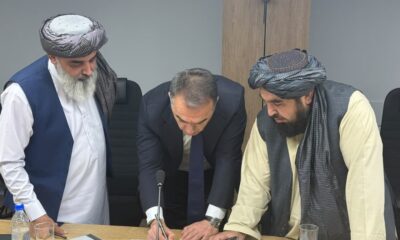






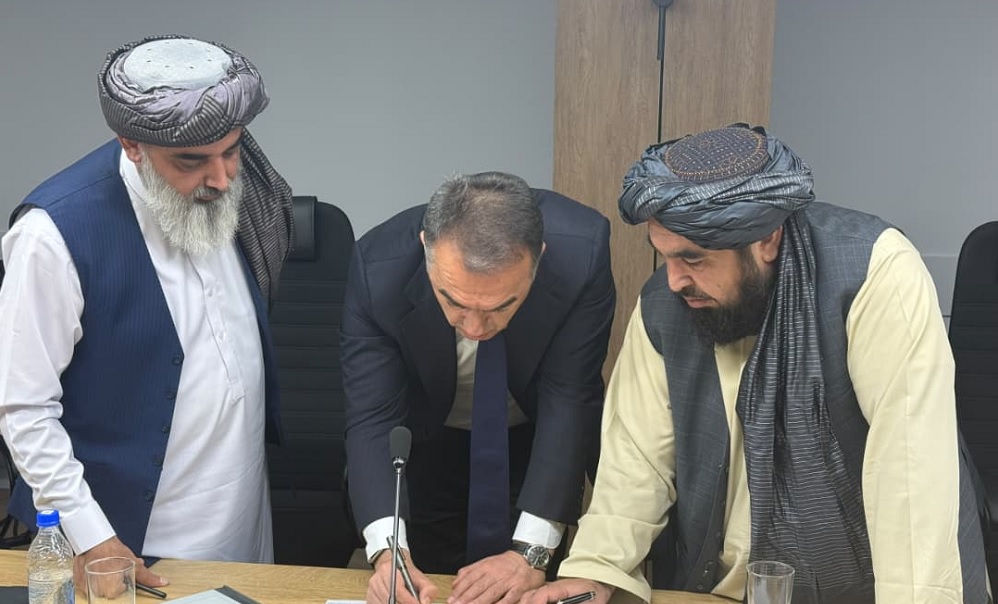
Abdul Haq Hamkar, Chief Executive Officer of Da Afghanistan Breshna Sherkat (DABS), has met with Tajikistan’s Minister of Energy and Water Resources Daler Juma during a visit to Tajikistan.
According to DABS, the two sides discussed increasing electricity imports from Tajikistan and expanding power transmission infrastructure between the two countries.
They also discussed a proposed 500-kilovolt transmission line from Tajikistan through Afghanistan to Iran, which they said could contribute to expanding regional power transmission networks and strengthening energy cooperation.
The meeting also covered planned energy projects in Badakhshan province and Afghanistan’s border districts. Both sides emphasized expanding cooperation to help provide a stable electricity supply to these areas.
Hamkar said energy is not only a technical requirement but also essential for the operation of hospitals, industrial development, education, and the country’s economic and social growth.
He called for further expansion of energy cooperation between Afghanistan and Tajikistan.
Latest News
UN expert calls for accountability after Pakistani airstrikes kill civilians in Afghanistan

UN Special Rapporteur on the situation of human rights in Afghanistan Richard Bennett has called for accountability following Pakistani airstrikes in Afghanistan’s Kunar and Helmand provinces that killed multiple civilians.
“Accountability is paramount after another air strike that has killed civilians, most of them children,” Bennett said in a post on X.
He questioned whether the incident resulted from “incompetence, negligence or worse,” adding that there was no justification for what he described as “irreparable harm” to civilians.
Bennett said the reported incident appeared to violate international human rights and humanitarian law.
The United Nations Assistance Mission in Afghanistan (UNAMA) said it had confirmed that at least 10 civilians were killed and nine others injured in the airstrikes carried out on Thursday.
Latest News
Four members of one family killed in Helmand in Pakistan airstrike
The family, originally from Ghazni province, reportedly operated a small restaurant in the area.
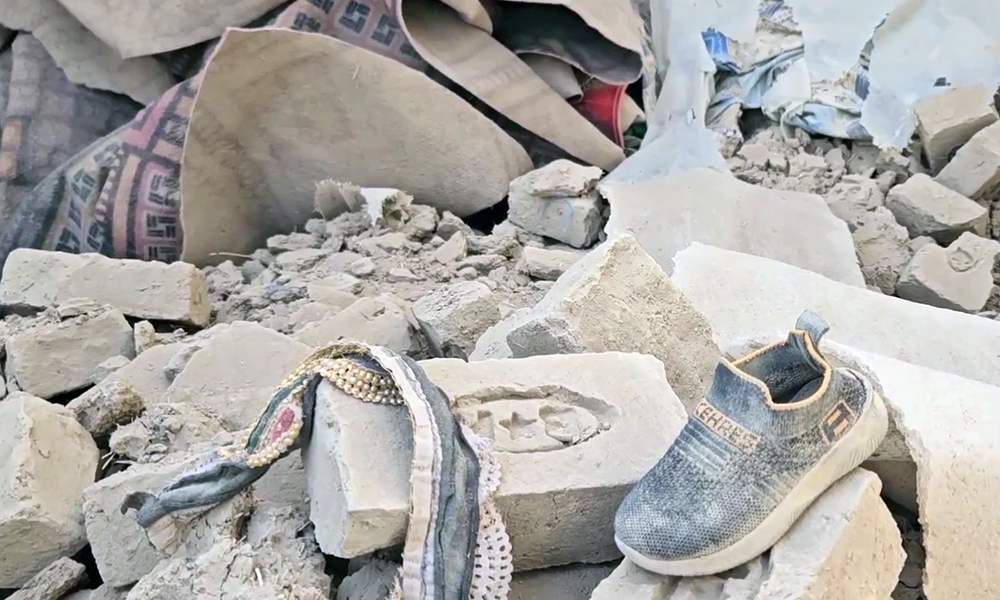
Four members of a family were killed and seven others wounded in an airstrike in Safar area of Garmser district in southern Afghanistan’s Helmand province, according to local reports.
The family, originally from Ghazni province, reportedly operated a small restaurant in the area.
The bodies of those killed and the wounded were transported by helicopter to Ghazni province for burial and medical treatment, according to the reports.


DABS chief meets Tajikistan’s energy minister to discuss cooperation

Afghanistan to face Pakistan, India and Australia at 2027 Cricket World Cup

Saudi-led coalition says Houthis attacked power station for Prophet’s Mosque in Medina

UN expert calls for accountability after Pakistani airstrikes kill civilians in Afghanistan

Tahawol: Pakistan’s airstrikes on civilians in Afghanistan discussed

Saudi energy group signs major Afghanistan deals covering gas exploration and pipeline plans

Iranian clubs to face Gulf opponents at neutral venues in Asian Champions League Elite

Khalilzad: Afghanistan ready to attract major investment

El Niño likely to intensify, may become strongest ever recorded, WMO says

Khyber Chamber demands reopening of Torkham crossing
Tahawol: Pakistan’s airstrikes on civilians in Afghanistan discussed

Tahawol: Improvement in Afghanistan-China relations discussed

Saar: Expanding ties with regional and global countries discussed

Tahawol: Absence of Afghanistan’s envoy at UNGA discussed

Saar: Assessment of war between Afghanistan and US discussed
-

 Sport5 days ago
Afghan bodybuilder Ali Bilal finishes runner-up at Mr Olympia for third straight year
-

 Latest News5 days ago
Afghanistan says 28 killed, 32 captured in Nuristan operation
-

 Sport4 days ago
Afghanistan vs India Asian Games quarter-final abandoned without a toss
-

 Latest News5 days ago
Germany reports 488 Afghans for possible deportation, 267 have no criminal convictions
-
 Regional4 days ago
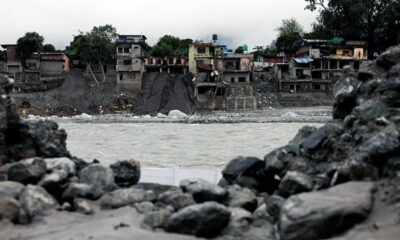
Floods, landslides kill 56 in India and 14 in Nepal
-

 World4 days ago
Trump says men arrested at UK air base used by US planned ‘big damage’
-
 Regional3 days ago
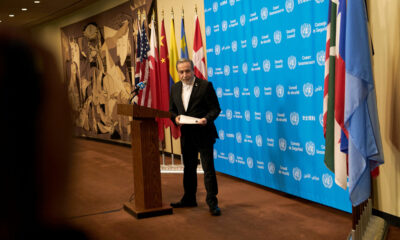
US, Iran separately talk with mediators in latest bid to end war
-

 World4 days ago
Serbia’s President Vucic resigns ahead of October parliamentary elections