Climate Change
Afghanistan floods affect more than 97,000 people so far this year
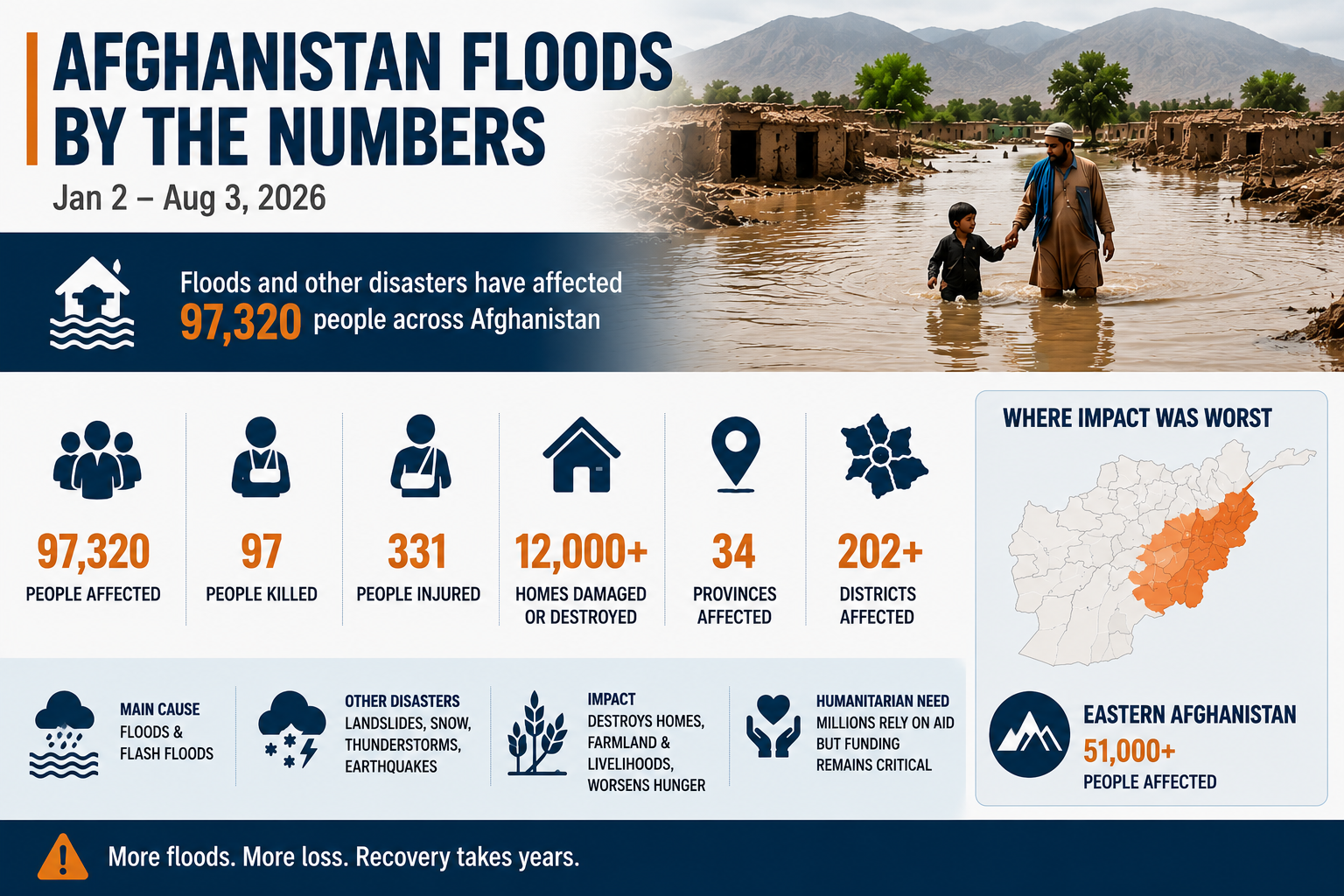
At least 97 people have died and 331 have been injured, while more than 12,000 homes have been damaged or destroyed.

More than 97,000 people have been affected by natural disasters across Afghanistan this year, with floods and flash floods causing most of the devastation, according to the United Nations.
The UN Office for the Coordination of Humanitarian Affairs (OCHA) recorded 97,320 people affected between January 2 and August 3 across all 34 provinces and at least 202 districts.
At least 97 people have died and 331 have been injured, while more than 12,000 homes have been damaged or destroyed.
Floods and flash floods affected nearly 88,000 people, far more than any other type of disaster. Heavy snow, landslides, thunderstorms and earthquakes have also caused deaths and destruction.
Eastern Afghanistan has suffered the greatest impact, with more than 51,000 people affected. Mountainous terrain, narrow valleys and poor road networks leave many communities particularly vulnerable to sudden flooding and landslides.
The disasters have also damaged farmland, irrigation systems, roads and livestock, threatening the livelihoods of rural families and worsening food insecurity.
Afghanistan is already facing a severe humanitarian crisis, with millions dependent on assistance for food, healthcare, shelter and clean water. The UN says funding shortages are limiting the ability of humanitarian agencies to respond to growing needs.
OCHA is seeking $1.71 billion to assist 17.5 million people under its 2026 humanitarian response plan, but the appeal remains severely underfunded.
Climate change is adding to the risks, contributing to more erratic rainfall, rising temperatures and faster snow and glacier melt. Experts say stronger early-warning systems, evacuation routes, flood-resistant infrastructure and support for rebuilding livelihoods are needed to reduce the impact of future disasters.
For many affected families, however, recovery remains difficult as each new disaster threatens to erase the limited progress made after the previous one.