
Latest News
Andarabi claims new Daesh leader is a Haqqani member

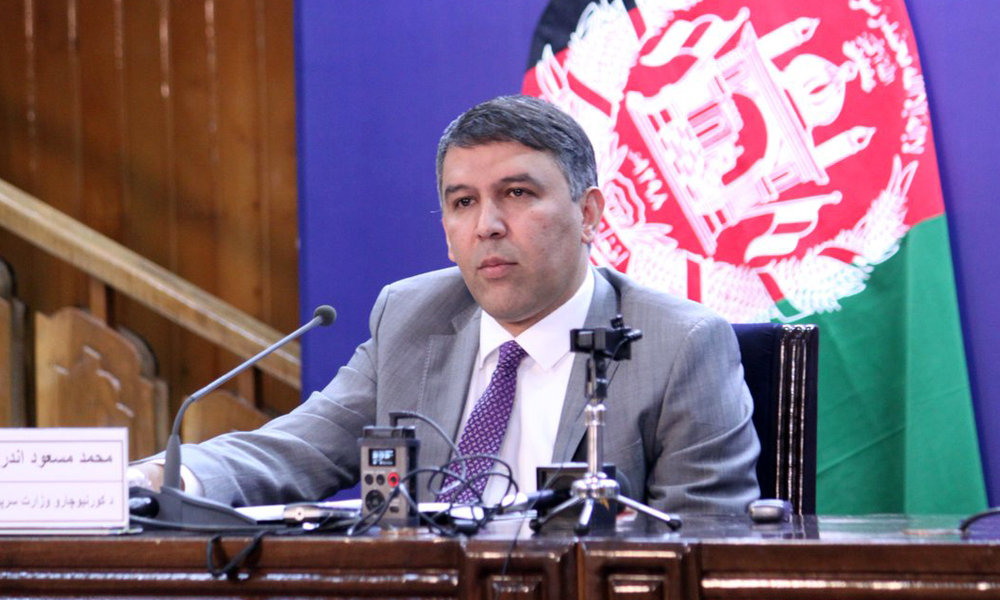
Masoud Andarabi, the acting minister of interior, said Monday night that Shahab al-Muhajir, the newly appointed leader of Daesh in Afghanistan, was in fact a member of the Haqqani Network.
Commenting on Twitter, Andarabi said: “Haqqani and the Taliban carry out their terrorism on a daily basis across Afg and when their terrorist activities does not suit them politically they rebrand it under ISKP (Daesh Afghanistan).”
Shahab Almahajir, the newly appointed leader of Islamic State of Khorasan Province-ISKP is a Haqani member. Haqani & the Taliban carry out their terrorism on a daily basis across Afg & when their terrorist activities does not suit them politically they rebrand it under ISKP.
— Masoud Andarabi (@andarabi) August 3, 2020
Andarabi’s tweet came just hours after security forces brought an end to the Jalalabad prison siege in the eastern province of Nangarhar.
The attack started on Sunday night shortly after 6.30 pm and carried on throughout the night and most of Monday.
Soon after militants detonated a car bomb at the gates of the prison, and gunmen stormed the facility, Daesh claimed responsibility for the attack.
Sunday was also the final day of a three-day Eid ceasefire that had been called by both the Taliban and the Afghan government.
However, the prison siege resulted in the death of at least 30 people, including civilians, security force members, and prisoners.
In addition, prisoners escaped during the chaos but security forces said they rounded hundreds of them up.
The attack came just a day after the Afghan intelligence agency, the National Security Directorate (NDS), killed a senior Daesh group commander near Jalalabad.
A statement late Saturday by the National Directorate of Security said the slain militant was Assadullah Orakzai, an intelligence leader for the IS affiliate (Daesh) in Afghanistan. The statement said he was killed near Jalalabad, the capital of Nangarhar province. IS has its headquarters in the province.
Orakzai was suspected of being involved in several deadly attacks against both military and civilian targets in Afghanistan.





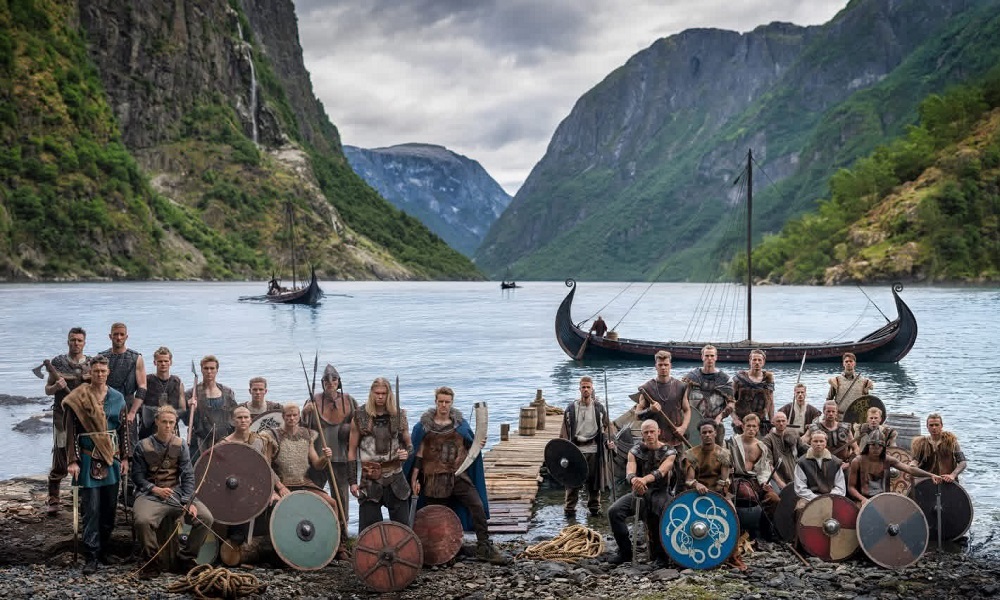
Norway’s men’s national football team has generated widespread attention after unveiling a striking Viking-themed squad photograph ahead of the FIFA World Cup 2026.
The image, featuring stars Erling Haaland and Martin Ødegaard dressed in traditional Viking-inspired attire, celebrates Norway’s cultural heritage as the country prepares for its first World Cup appearance since 1998.
Moving away from the conventional team portrait, the Norwegian Football Federation commissioned acclaimed British photographer David Yarrow to create a dramatic scene inspired by the country’s Norse history.
The photograph shows the 26-man squad assembled as a Viking force, complete with shields, swords and longships against a rugged coastal backdrop. While the image has prompted some social media users to speculate that it was generated using artificial intelligence, the production was created entirely through an elaborate photoshoot.
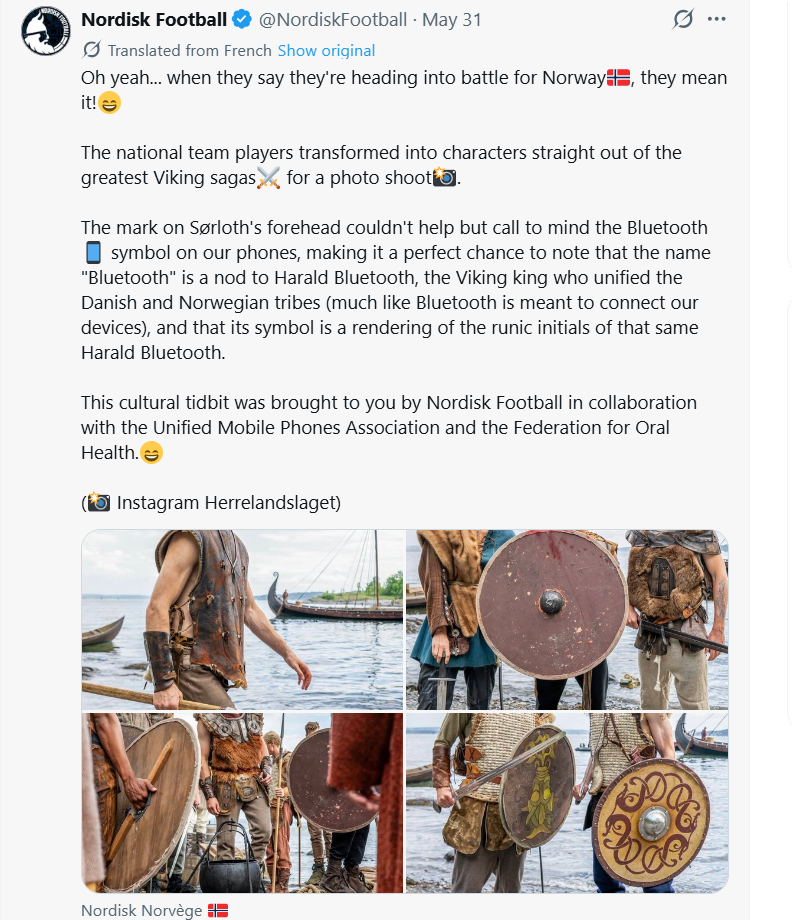
The shoot took place on a private beach outside Oslo, where players underwent extensive costume, makeup and staging preparations. Elements inspired by Viking Valley in Gudvangen were also incorporated into the production design.
According to Yarrow, the concept drew inspiration from the Vikings’ historic voyages across the Atlantic, mirroring Norway’s journey to North America for the World Cup in the United States, Canada and Mexico.
Although Haaland is one of the most recognisable figures in the image, the concept was designed to highlight the collective identity of the squad rather than focus on individual stars.
Norwegian Football Federation president Lise Klaveness said the Viking theme reflects values such as unity, resilience and togetherness, qualities the team hopes to carry into the tournament.
The photograph has been warmly received by supporters as excitement continues to build ahead of Norway’s return to football’s biggest stage after a 28-year absence.
Norway will open its World Cup campaign on June 16 in Foxborough, Massachusetts, before taking on France and Senegal in the group stage.
While much of the focus in the coming weeks will be on Norway’s performances on the field, the team’s Viking-inspired portrait has already become one of the most talked-about moments of the tournament build-up.
Latest News
US says international community cannot engage indefinitely without real IEA progress
Russia presented a contrasting position, calling for a more pragmatic approach. Anna Evstigneeva, Russia’s deputy permanent representative to the UN, said Afghanistan has faced serious challenges since the withdrawal of foreign forces but has managed to maintain relative stability.

The UN Security Council meeting on Afghanistan on Monday highlighted sharply diverging views among member states on the country’s political and security situation, the role of the Islamic Emirate, and the future of international engagement with Kabul.
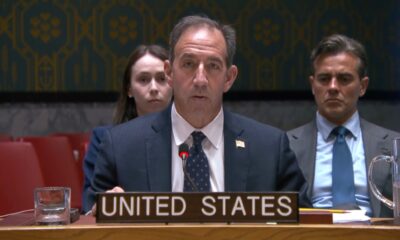
Jeffrey Bartos, the US representative for UN Management and Reform, said tangible progress in the UN-led Doha process is “not optional, it is urgent.” He warned that the international community cannot continue engaging indefinitely with the Islamic Emirate while key concerns remain unresolved.
“The international community cannot indefinitely sustain a framework for engagement while the Taliban (Islamic Emirate) detain innocent Americans, ignore the needs of the Afghan people, deny Afghan women their basic rights, and fail to meet their counterterrorism commitments,” Bartos said.
He also criticized what he described as “hostage diplomacy” by the Islamic Emirate and urged Security Council members to condemn the detention of US citizens and the alleged harboring of terrorist groups.
Bartos further said restrictions on women and girls in Afghanistan, including limitations affecting female staff working with the UN, are undermining the effectiveness of the UN Assistance Mission in Afghanistan (UNAMA).
“The Taliban’s (IEA) intransigence forces us to ask hard questions about the value of continued international engagement and resources. UNAMA remains the most expensive Special Political Mission in the United Nations system, warranting close scrutiny,” he said. “All missions, including UNAMA, must provide value for money and must adapt to conditions on the ground.”
He stressed that any normalization of relations with the Islamic Emirate would depend entirely on concrete actions rather than statements, and called for the immediate appointment of a UN Special Representative for Afghanistan.
Russia presented a contrasting position, calling for a more pragmatic approach. Anna Evstigneeva, Russia’s deputy permanent representative to the UN, said Afghanistan has faced serious challenges since the withdrawal of foreign forces but has managed to maintain relative stability.
She argued that the Islamic Emirate is attempting to build a self-reliant state and urged the international community to engage constructively rather than rely on pressure and sanctions. Russia also called for the unfreezing of Afghan assets, lifting of sanctions, and expanded economic cooperation.
India emphasized humanitarian and development assistance, noting its ongoing projects across all 34 provinces of Afghanistan. India’s Permanent Representative Harish Parvathaneni said New Delhi continues to provide food aid, medical supplies, vaccines, and infrastructure support.
He also expressed concern over the large-scale return of Afghan migrants and called for stronger international support for returnees. India further condemned reported Pakistani airstrikes inside Afghanistan, describing them as violations of sovereignty and international law.
Pakistan rejected the criticism, arguing that militant groups operating from Afghan territory remain a major security threat. Its representative said organizations such as Tehrik-i-Taliban Pakistan (TTP), ISIS-K, the Balochistan Liberation Army (BLA), and others continue to operate from Afghanistan.
Pakistan claimed that more than 5,300 terrorist attacks occurred in 2025, resulting in over 1,200 deaths, and said many of these incidents were planned from Afghan soil.
Islamabad also criticized aspects of UN reporting on Afghanistan, arguing that it underrepresents threats posed by militant groups and does not adequately address issues such as leftover weapons, illicit financing, and the informal economy.
The meeting took place amid growing concern from the United Nations over worsening humanitarian conditions, economic pressure, and human rights restrictions in Afghanistan, particularly affecting women and girls.
The Islamic Emirate has previously said it remains committed to the Doha Agreement and that women’s rights are ensured in line with Islamic law.
Latest News
UN warns of mounting pressures facing Afghans despite relative stability
Gagnon said many returnees are arriving with limited resources and face difficulties reintegrating into communities already struggling with economic hardship.
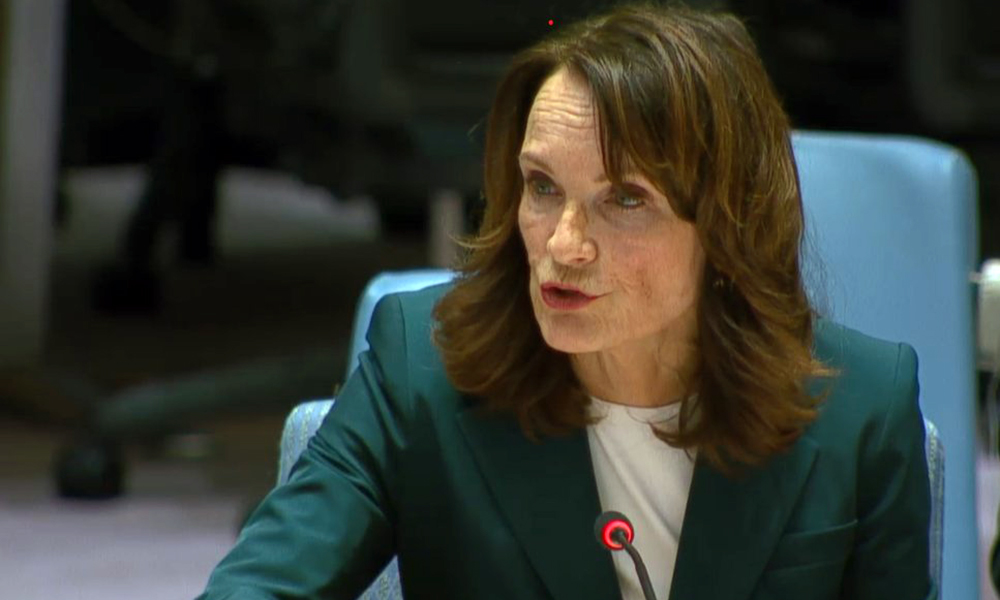
A senior United Nations official warned the Security Council on Monday that Afghans are facing growing economic, humanitarian and human rights challenges despite relative stability under the Islamic Emirate.
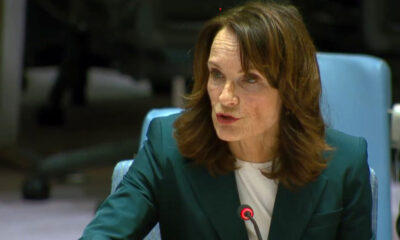
Addressing the Council, Georgette Gagnon, the UN Secretary-General’s Deputy Special Representative for Afghanistan, said the country remained free from any significant armed or political challenge to the current authorities, but cautioned that long-term risks continue to accumulate.
“On the surface, Afghanistan under the de facto authorities remains stable,” Gagnon said, noting that territorial and administrative control has been consolidated and that the authorities view nationwide peace and security as a key achievement.
However, she said economic and demographic pressures are increasing, particularly as millions of Afghans return from neighboring countries.
“Macroeconomic indicators reflect elements of stabilization: economic growth has been positive in absolute terms, with some long term-investments in infrastructure, fiscal stability has been maintained, and revenue mobilization has improved, despite challenges such as sanctions, wider regional tensions, and closure of the eastern border since last October.
“Relative stability has also allowed for positive measures such as sustained near eradication of poppy cultivation,” she said.
“Key risks remain, however, that underscore the fragility of current economic stabilization efforts with serious political impacts. The most significant is demographic. Large-scale returns from neighboring countries have led to a sudden population increase,” Gagnon said.
She pointed out that nearly 5.9 million people have returned to Afghanistan since 2023, while up to 2.8 million more are expected to return this year.
Gagnon said many returnees are arriving with limited resources and face difficulties reintegrating into communities already struggling with economic hardship.
She urged countries repatriating Afghans to ensure that returns are voluntary, safe and dignified and comply with international protection obligations.
The UN official also highlighted Afghanistan’s ongoing humanitarian challenges, noting that an estimated 21.9 million people – about 45 percent of the population – will require humanitarian assistance in 2026.
Gagnon said an estimated 3.8 million girls between the ages of seven and 18 are currently out of school, including more than 2.6 million adolescent girls. She warned that continued restrictions on education and employment opportunities for women are having long-term consequences for Afghanistan’s development and economy.
She also expressed concern over broader human rights issues, citing recent reports of the detention of around 30 women in Herat for allegedly violating dress code regulations, as well as arrests of journalists and the closure of media outlets.
On regional issues, Gagnon said relations between Afghanistan and Pakistan remain strained, with crossing closures and security incidents affecting trade, humanitarian operations and civilians on both sides of the frontier. She called for dialogue and de-escalation to address disputes.
The UN official reaffirmed the importance of continued international engagement with Afghanistan, stressing that dialogue does not constitute endorsement of the current authorities but is necessary to support the Afghan people and address regional and international concerns.
Gagnon urged participants in the Doha Process to maintain efforts aimed at supporting Afghanistan’s eventual reintegration into the international community.
In conclusion she said: “UNAMA remains invested in achieving this Council’s affirmed end state for Afghanistan. Ongoing and constant dialogue is essential, together with principled and pragmatic engagement, even where progress towards the end state is incremental. With strategic patience, coherent and coordinated diplomacy, and open dialogue, progress can be made in full support of the Afghan people.”


Norway’s Viking-inspired World Cup team photo goes viral

ICC prosecutor suspended pending wider vote on misconduct allegations

US says international community cannot engage indefinitely without real IEA progress

Upsets and historic milestones highlight men’s action at Rome Taekwondo Grand Prix

Iran and Israel say they have halted strikes on each other for now

Afghanistan signs $46 million deal to develop standard laboratory complexes

Large blast near Beit Shemesh part of pre-planned test: Israeli defense firm

Trump returns from China with stability but little progress

Afghanistan announce squad for India series

Afghanistan, Russia sign military cooperation agreement

Tahawol: The Shadow of War Returns to the Middle East

Saar: New report on US troop withdrawal from Afghanistan

SAAR: UN Security Council Holds Quarterly Meeting on Afghanistan

Tahawol: Impact of Middle East crisis on aid transfers to Afghanistan

Saar: Calls to strengthen economic and trade cooperation discussed
-
 Sport4 days ago
Gaikwad set to replace injured Kohli for Afghanistan ODI Series
-

 International Sports4 days ago
Eight Goalkeepers Set to Shine at the 2026 FIFA World Cup
-
 Business4 days ago
Tashkent Deputy Governor set to visit Kabul with Uzbek trade delegation
-

 International Sports3 days ago
From AI to Robot Dogs: What’s new at FIFA World Cup 2026
-
 Latest News3 days ago
Uzbekistan advances feasibility study for Trans-Afghan Railway Project
-

 Regional4 days ago
Trump says he does not need deal with Iran to get enriched uranium
-
 Latest News5 days ago
IEA leader says General Amnesty helped bring security and stability to Afghanistan
-

 Latest News2 days ago
UNAMA voices concern over reported detention of women in Herat