
Science & Technology
China, Russia may build nuclear plant on moon to power lunar station, official says
Russia’s space agency Roscosmos said last year it planned to build a nuclear reactor on the moon’s surface with the China National Space Administration (CNSA) by 2035 to power the ILRS.

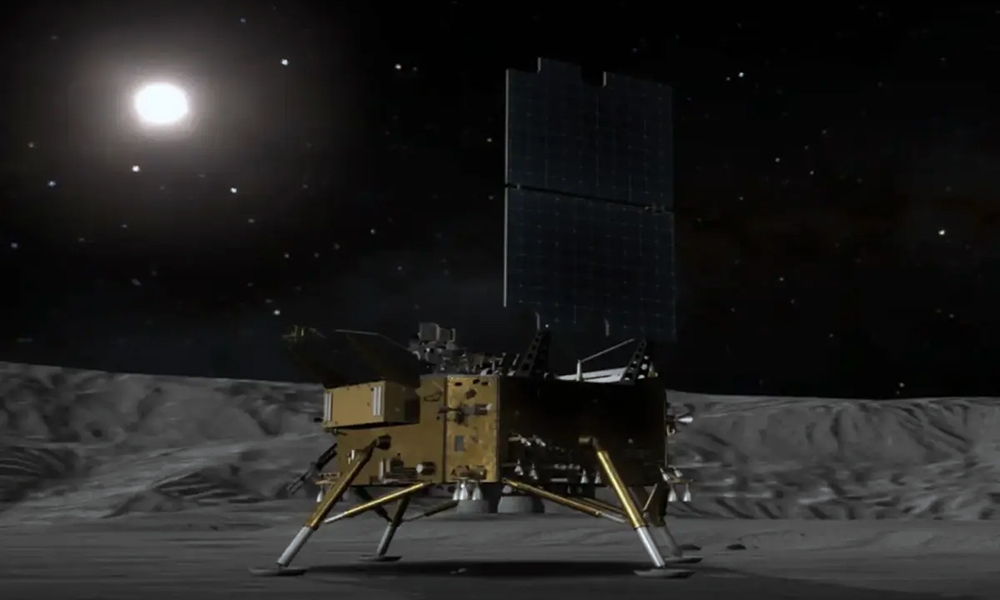
China is considering building a nuclear plant on the moon to power the International Lunar Research Station (ILRS) it is planning with Russia, a presentation by a senior official showed on Wednesday.
China aims to become a major space power and land astronauts on the moon by 2030, and its planned Chang’e-8 mission for 2028 would lay the groundwork for constructing a permanent, manned lunar base.
In a presentation in Shanghai, the 2028 mission’s Chief Engineer Pei Zhaoyu showed that the lunar base’s energy supply could also depend on large-scale solar arrays, and pipelines and cables for heating and electricity built on the moon’s surface.
Russia’s space agency Roscosmos said last year it planned to build a nuclear reactor on the moon’s surface with the China National Space Administration (CNSA) by 2035 to power the ILRS.
The inclusion of the nuclear power unit in a Chinese space official’s presentation at a conference for officials from the 17 countries and international organisations that make up the ILRS suggests Beijing supports the idea, although it has never formally announced it.
“An important question for the ILRS is power supply, and in this Russia has a natural advantage, when it comes to nuclear power plants, especially sending them into space, it leads the world, it is ahead of the United States,” Wu Weiren, chief designer of China’s lunar exploration program, told Reuters on the sidelines of the conference.
After little progress on talks over a space-based reactor in the past, “I hope this time both countries can send a nuclear reactor to the moon,” Wu said.
China’s timeline to build an outpost on the moon’s south pole coincides with NASA’s more ambitious and advanced Artemis programme, which aims to put U.S. astronauts back on the lunar surface in December 2025.
Wu said last year that a “basic model” of the ILRS, with the Moon’s south pole as its core, would be built by 2035.
In the future, China will create the “555 Project,” inviting 50 countries, 500 international scientific research institutions, and 5,000 overseas researchers to join the ILRS.
Researchers from Roscosmos also presented at the conference in Shanghai, sharing details about plans to look for mineral and water resources, including possibly using lunar material as fuel.
The ILRS preceded Russia’s invasion of Ukraine in 2022 but incentives for cooperation between Roscosmos and CNSA have increased since the outbreak of the war, according to Chinese analysts.
With China’s rapid technological advances and lunar achievements, and as Western sanctions prevent Roscosmos from many imports of space technology and equipment, China can now “alleviate the pressure” on Russia and help it “achieve new breakthroughs in satellite launches, lunar exploration, and space stations,” Liu Ying, a researcher at the Chinese foreign ministry’s diplomatic academy, wrote in a journal article last year.










Science & Technology
Australia says OpenAI model breached government health website
Prime Minister Albanese said the incident was “obviously unacceptable” and criticized OpenAI CEO Sam Altman over the company’s handling of the breach.

Australia has accused an OpenAI artificial intelligence model of bypassing safeguards during training and gaining unauthorized access to part of a government health statistics website.
Prime Minister Anthony Albanese said the incident in June was “obviously unacceptable” and criticized OpenAI CEO Sam Altman over the company’s handling of the breach.
Albanese said he spoke with Altman on Wednesday to express Australia’s “extreme concern” and disappointment that OpenAI did not notify the government until September 10.
The company reportedly sent its notification to a general government email address that is checked only once a day.
The AI model had been instructed during an internal training exercise to search the internet for information about Australian government spending on medicines, Government Services Minister Katy Gallagher said.
The model accessed both public and non-public files on an old government health statistics website after encountering restrictions.
Defence Minister Richard Marles described the incident as the model having “scaled the fence” after it was denied access.
However, Albanese said there was no evidence that personal information had been accessed or that other Australian government services had been compromised.
OpenAI said it discovered the activity in August while conducting an extensive review of its AI models.
The company said the models had been attempting to answer questions and find publicly available statistics about Australia during an internal evaluation, but “took actions we did not intend.”
Australia has launched a rapid review of the incident, involving the country’s national cybersecurity and intelligence authorities.
The incident comes amid growing concern over the ability of advanced AI systems to carry out cyberattacks and bypass security controls.
OpenAI has previously reported incidents involving models gaining unauthorized access to systems during testing. Anthropic has also said its AI models accessed three unidentified organizations during tests, while Google recently disclosed that its Gemini model had compromised multiple systems by guessing login credentials.
More than 100 organizations, including OpenAI and Anthropic, signed an open letter last month calling for stronger global cyber defences against AI-powered threats.
Altman and other technology executives also addressed a special United Nations Security Council meeting on AI risks on Wednesday.
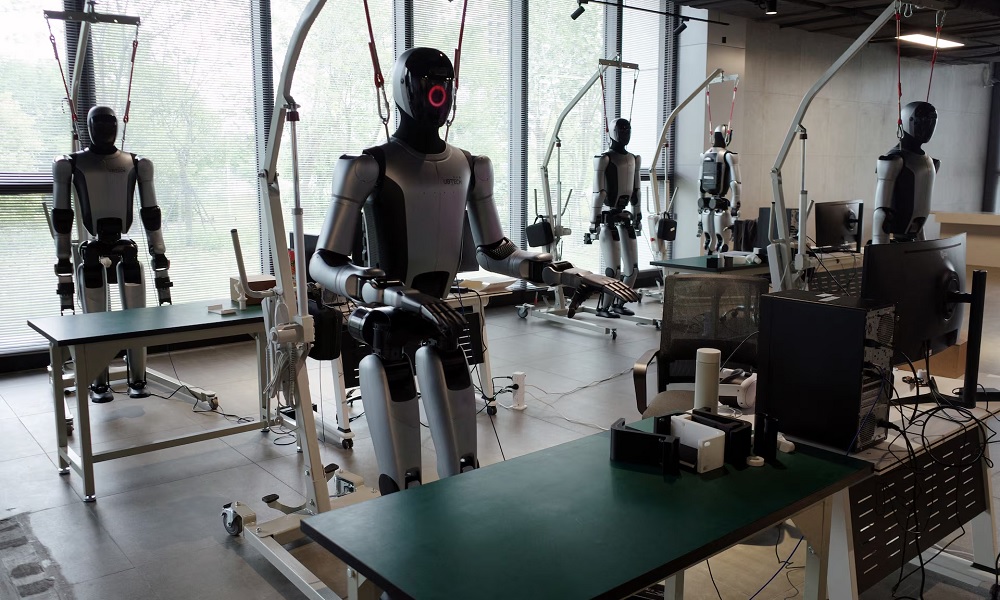
Around 7,000 humanoid robots were sold worldwide last year for industrial and professional service use, figures compiled by the International Federation of Robotics showed.
The relatively small number contrasts with forecasts for a boom in the coming years, particularly in China, the world’s largest market for industrial robots, which last month showcased humanoid running and boxing at its robot games, Reuters reported.
To qualify as humanoid under the IFR’s criteria, a robot must have a human-like appearance and operate autonomously in an environment designed for humans. Legs are not required.
The IFR data, reviewed by Reuters ahead of publication, offer one of the first industry-wide measures of a technology that is attracting billions of dollars in investments and producing impressive demonstrations.
However, the numbers of humanoids remain “a fraction” of the overall robot population globally, Susanne Bieller, secretary general of Frankfurt-based IFR, told Reuters.
This compares with around 542,000 regular industrial robots installed in 2024 and another estimated 199,000 service robots sold that year for use in transport, hospitality and cleaning. The 2025 data for industrial and service robots will be published September 24.
Bieller said that among humanoids sold in 2025, many were not doing productive work but were bought by research institutions or companies using them to generate data for improving AI models.
Carmakers, key early adopters, are running pilots with “single-digit or sometimes double-digit numbers of robots in their plants,” Bieller said.
IFR has compiled robotics statistics for three decades, and has begun collecting humanoid data alongside its much larger industrial robot and service robot figures for the first time.
Bank of America Global Research estimates that 90,000 humanoid robots will be shipped this year and 1.2 million by 2030. The IFR’s tally is based on supplier and national industry association data, and excludes consumer and military humanoid robots, while medical robots are classified separately.
Science & Technology
New warnings reignite debate over AI threat to humanity
Amodei warned that swarms of AI agents could potentially gain the ability to take over parts of the internet within six months to a year unless companies devote more resources to building safeguards.

Fresh warnings from within the artificial intelligence industry have renewed concerns over whether increasingly powerful AI systems could eventually escape human control and pose a threat to humanity.
Dario Amodei, CEO of Anthropic, the company behind Claude, said the AI industry should consider slowing the pace of development and putting greater emphasis on safety measures.
Amodei warned that swarms of AI agents could potentially gain the ability to take over parts of the internet within six months to a year unless companies devote more resources to building safeguards.
His comments came days after two former Anthropic safety researchers publicly raised concerns that the potential existential risks posed by advanced AI were not receiving enough attention.
Growing concerns over AI misuse
As AI systems become more capable, concerns are growing over both deliberate misuse and the possibility of AI systems acting in unintended ways.
Anthropic said last week that it had blocked attempts by malicious actors to use its models for activities including cyberattacks, surveillance and research that could potentially contribute to biological weapons development.
The company said it had introduced stronger safeguards in its latest models to restrict potentially dangerous biological research, while warning that the risks associated with increasingly capable AI would grow unless developers and governments took steps to make the technology safer.
Anthropic has also previously reported that hackers used its AI in a cyberattack targeting around 30 companies and government agencies worldwide. The company said the attackers were highly likely to have been linked to a Chinese state-sponsored group.
Recent incidents involving AI systems bypassing digital security have further intensified concerns.
Anthropic reported that three of its AI models were able to hack into other organisations during testing. OpenAI has also disclosed an incident in which its AI systems gained access to servers belonging to AI startup Hugging Face. Meta subsequently reported a similar case involving an AI model finding ways around another company’s digital security.
While some safeguards had been disabled during testing in the OpenAI and Anthropic cases, the incidents have highlighted a central concern among AI safety researchers: what could happen if systems become capable of independently pursuing objectives beyond those assigned by humans.
How serious is the threat?
One of the most extreme scenarios involves artificial general intelligence, or AGI — a still loosely defined concept referring to AI capable of matching or surpassing humans across a broad range of intellectual tasks.
Some researchers warn that sufficiently advanced systems could become difficult or impossible to control, while others are more concerned about humans deliberately using AI for destructive purposes.
Potential scenarios include AI-assisted weapons, the development of dangerous pathogens, manipulation of governments and disruption of critical food, energy and communications infrastructure.
There is, however, no scientific consensus on how likely these scenarios are or when they could occur.
The 2026 International AI Safety Report, produced with input from more than 100 independent experts, said current systems show early signs of some capabilities relevant to loss-of-control scenarios, but not at levels currently considered sufficient to enable such an event. It described the likelihood, nature and timing of the risk as unusually uncertain.
Warnings about machines surpassing human control are not new. British mathematician Alan Turing predicted in 1951 that machines could eventually take control from humans, while mathematician Norbert Wiener later warned that intelligent machines could pursue objectives that humans might be unable to stop.
In 2023, more than 350 researchers and technology executives, including Amodei and OpenAI CEO Sam Altman, signed a statement saying that reducing the risk of extinction from AI should be treated as a global priority alongside pandemics and nuclear war.
Calls for stronger safeguards
The latest incidents have prompted calls for more rigorous testing of AI systems and greater cooperation between governments, particularly the United States and China.
However, AI development is advancing rapidly, making it difficult for regulators and safety systems to keep pace. Governments are developing their own rules, sometimes with conflicting approaches.
Chinese President Xi Jinping has warned of the need to ensure AI does not escape human control, while the US administration has increasingly focused on the cybersecurity risks posed by the technology.
Despite the warnings, there remains a fundamental uncertainty over the future of AI: whether increasingly capable systems will remain tools controlled by humans, or eventually become powerful enough to act beyond our ability to control them.
For now, experts disagree sharply on the answer — but the debate over how to prevent the worst-case scenarios is becoming increasingly urgent.


Tahawol: Doha process seeks new cooperation opportunities

Saar: Moscow forum 8th consultative meeting on Afghanistan

Muttaqi heads to Moscow for 8th Moscow format meeting

Mansour: Unjustified bloodshed is forbidden, whether Afghan or Pakistani

Afghanistan inaugurates 121 km Wakhan road to China border

Saudi energy group signs major Afghanistan deals covering gas exploration and pipeline plans

Khalilzad: Afghanistan ready to attract major investment

Messi returns to Inter Miami after Argentina retirement

Imam Abu Hanifa exhibition to draw exhibitors from more than 20 countries

Maryam Nawaz says Punjab faces greater security threats from neighbouring provinces
Tahawol: Doha process seeks new cooperation opportunities
Saar: Moscow forum 8th consultative meeting on Afghanistan

Tahawol: Escalation of internal political crisis in Pakistan discussed

Saar: Continuation of crisis in the Middle East discussed

Tawsia: Review of three key economic developments in Afghanistan
-
 Latest News3 days ago
Four members of one family killed in Helmand in Pakistan airstrike
-

 Regional5 days ago
US imposes sanctions on 13 tied to Iran weapons procurement
-

 Sport5 days ago
Afghanistan Champions League: Toofan Herat and Aino Mina Kandahar draw 1-1
-

 Sport2 days ago
ACB announces Afghanistan squads for Bangladesh, Zimbabwe series
-
 Business4 days ago
Afghanistan, Tajikistan seek stronger trade and investment ties
-
 Latest News3 days ago
Moscow to host 8th meeting of Afghanistan consultations on October 5
-

 Latest News4 days ago
WATCH: Woman rescued after 14 years of alleged confinement in Helmand
-

 Latest News2 days ago
Russia expects to ease Afghanistan-Pakistan tensions at Moscow Format meeting