
Latest News
First round of Intra-Afghan Negotiations to take place in Qatar

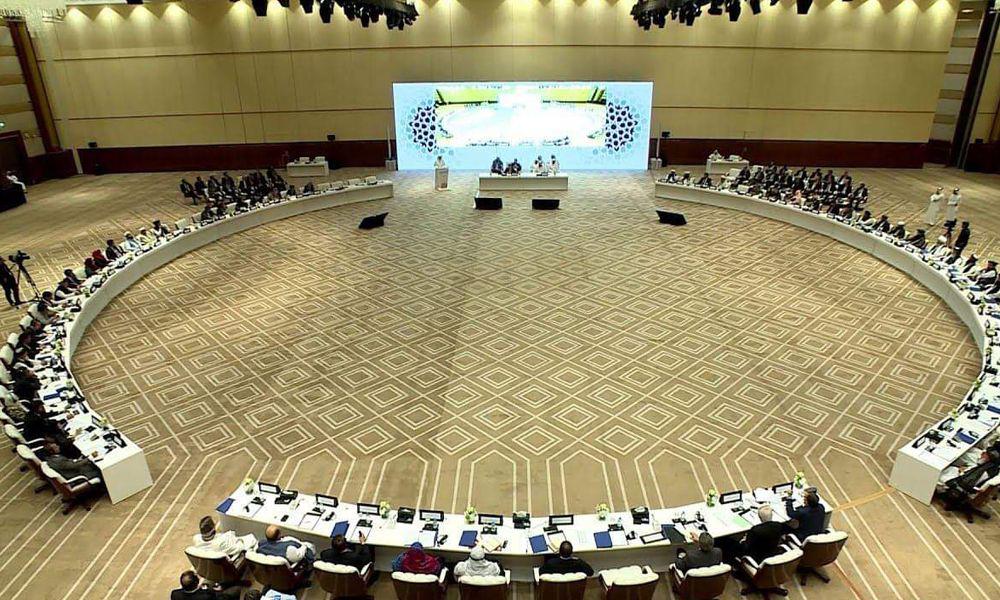
Although the time for the talks is unclear, government sources confirm that all sides have agreed on Qatar as the location for the first round of talks.
“Qatar has already cooperated in the Afghan peace process, and many other countries besides Qatar have cooperated well in this process,” said Dawakhan Minapal, the President’s deputy spokesman.
The Qatari foreign ministry’s special envoy to Afghanistan, who met with government leaders and the Taliban delegation during his visit to Kabul, said more prisoners will be released in the coming days and the release process would be completed this week.
Motaliq al-Qahtani, the Qatari foreign ministry’s special envoy for Afghanistan, expects the prisoner release to complete this week. He called the next stage of negotiations a “historic milestone” for the Afghan people to find a solution to the conflict.
Meanwhile, the Office of National Security Council has talked about the agenda of the talks and have proposed it to the Taliban, saying that the government is waiting for the group’s response to begin negotiations.
“The Taliban are hindering progress in the dialogue. We have proposed the agenda to discuss with the Taliban, but it has not responded yet,” said Jawid Faisal, the spokesman for the National Security Council.
So far, 3,000 Taliban prisoners have been released from government custody and hundreds of government prisoners have been released from the Taliban prisons.
The technical delegations of the two sides in Kabul are working on a list of 2,000 other prisoners to release
According to the National Security Council, with the end of the work of the technical delegations of the government and the Taliban, the process of releasing the prisoners will resume.
The first round of Intra-Afghan talks is expected to take place in June, with the release of 2,000 other Taliban prisoners.




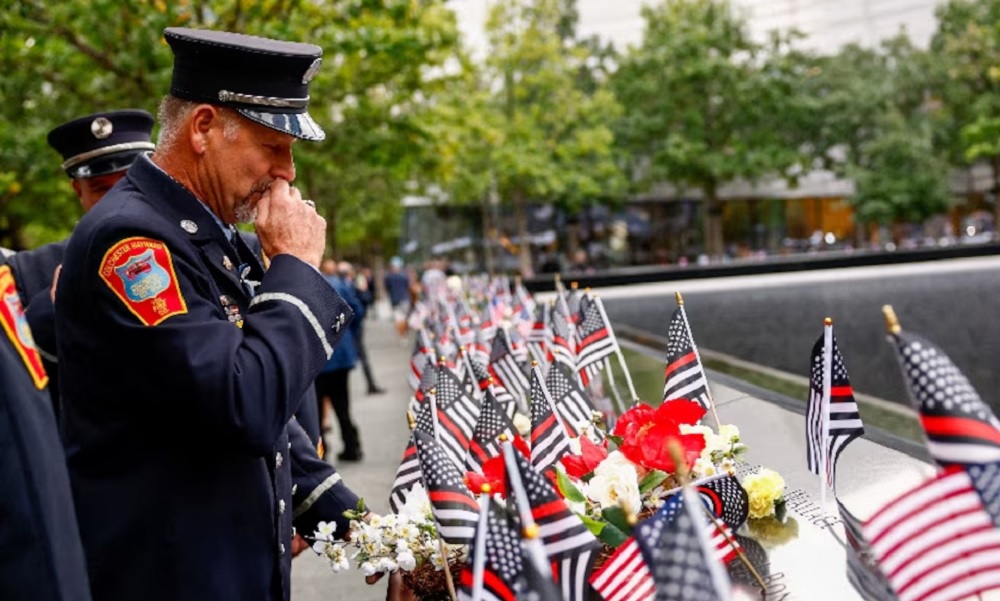
The attorneys general of 30 US states have asked the US Supreme Court to review a case involving around $3.5 billion in frozen assets of Da Afghanistan Bank that victims and families of the September 11 attacks are seeking to use for compensation.
The Iowa Attorney General’s Office said in a statement on Monday that the states filed a brief with the Supreme Court in support of the victims and their families, who have obtained compensation judgments in US federal courts.
According to the office, after years of legal proceedings, the victims and their families have secured nearly $17 billion in court-ordered compensation.
However, the US Second Circuit Court of Appeals ruled that around $3.5 billion in assets belonging to Afghanistan’s central bank cannot be used to satisfy those compensation awards.
The assets were frozen by the U.S. Treasury Department on August 15, 2021, the day the Islamic Emirate entered Kabul.
The state attorneys general argue that US law allows the frozen assets to be used to satisfy court-ordered compensation.
Iowa Attorney General Brenna Bird said the victims and their families had pursued justice and compensation through the US legal system and should be able to access the money awarded to them by the courts.
This comes as the Islamic Emirate has repeatedly called for the release of Da Afghanistan Bank assets.
Latest News
Ariana Afghan Airlines ends 15-year control of ticketing and operational systems by Pakistani firm
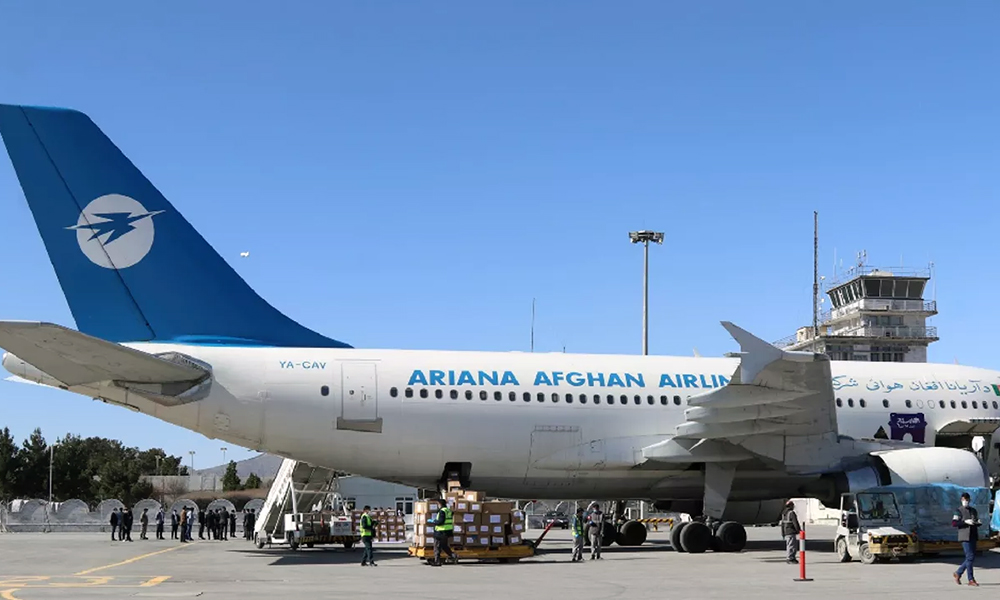
Ariana Afghan Airlines has ended a nearly 15-year arrangement under which a Pakistani company, Zapways, controlled the airline’s ticketing, operational systems and website, the airline said.
Ariana’s press office said Zapways had managed the airline’s ticketing and operational systems for years despite charging high fees. It added that technical information and data related to the systems were also held by the Pakistani company.
The airline said it has now launched a new system in cooperation with a Turkish company whose modern and standardized services are used by more than 80 international airlines across Europe, Asia and Africa.
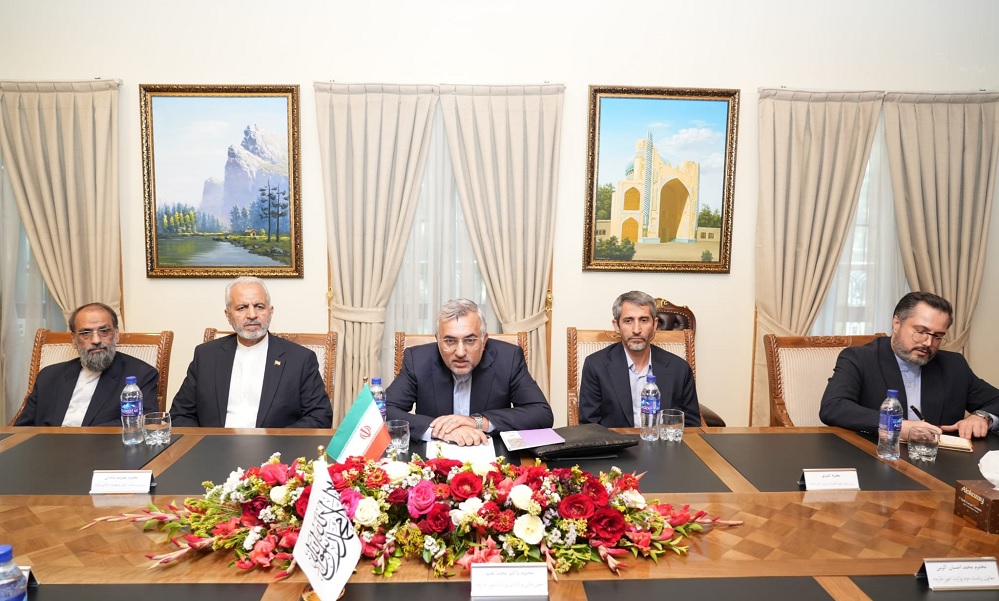
Afghanistan and Iran discussed expanding economic, political and trade ties, with Tehran offering to cooperate on major infrastructure and development projects, including the construction of the Herat-Mazar-e-Sharif railway.
The Afghan Foreign Ministry said its Deputy Minister for Finance and Administration, Mohammad Naeem, met with Hamid Qanbari, Iran’s Deputy Foreign Minister for Economic Diplomacy, to discuss bilateral relations, economic cooperation and ways to make better use of existing opportunities.
The two sides also discussed challenges facing Afghan migrants in Iran and ways to facilitate visa procedures, as well as closer cooperation on migration-related issues.
According to the ministry, Qanbari said Iran is ready to cooperate with Afghanistan in the construction of the Herat-Mazar-e-Sharif railway, mining and electricity generation.
Naeem described the expansion of economic relations between the two countries as important and stressed the need for joint efforts and cooperation in this area.
Iran’s Embassy in Kabul also said the two officials discussed expanding economic and trade cooperation, particularly in developing and strengthening infrastructure, including the Herat-Mazar-e-Sharif railway.


▶️Saudi Arabia, Turkey and Pakistan activate collective defence pact

Thirty US states seek access to Afghan assets for 9/11 victims

Yemeni government forces seize strategic strait from Houthis

Ariana Afghan Airlines ends 15-year control of ticketing and operational systems by Pakistani firm

Iran offers cooperation on Herat-Mazar railway, mining and power generation

Saudi energy group signs major Afghanistan deals covering gas exploration and pipeline plans

Khalilzad: Afghanistan ready to attract major investment

Imam Abu Hanifa exhibition to draw exhibitors from more than 20 countries

UAE firm eyes investment in Salang’s second tunnel and pharmaceutical factories

US envoys make first Kyiv visit amid Ukraine war peace push

Tahawol: Afghanistan-Iran: shared opportunities and challenges discussed

Saar: Pakistan’s hostile policy toward Afghanistan discussed

Tahawol: Doha process seeks new cooperation opportunities

Saar: Moscow forum 8th consultative meeting on Afghanistan

Tahawol: Escalation of internal political crisis in Pakistan discussed
-
 Latest News5 days ago
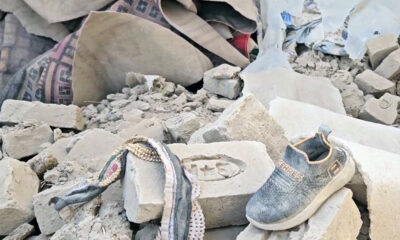
Four members of one family killed in Helmand in Pakistan airstrike
-
 Sport4 days ago
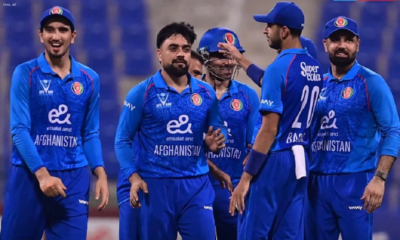
ACB announces Afghanistan squads for Bangladesh, Zimbabwe series
-
 Latest News4 days ago
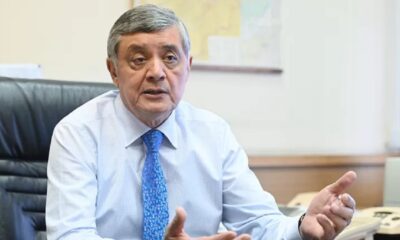
Russia expects to ease Afghanistan-Pakistan tensions at Moscow Format meeting
-

 Sport5 days ago
Rashid Khan, Azmatullah Omarzai maintain top spots in ICC ODI rankings
-

 Sport22 hours ago
Cricket Bonanza: Afghanistan set for packed international schedule
-

 International Sports4 days ago
Afghanistan to face Pakistan, India and Australia at 2027 Cricket World Cup
-
 Regional4 days ago
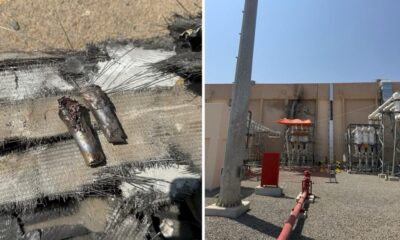
Saudi-led coalition says Houthis attacked power station for Prophet’s Mosque in Medina
-
 Regional4 days ago
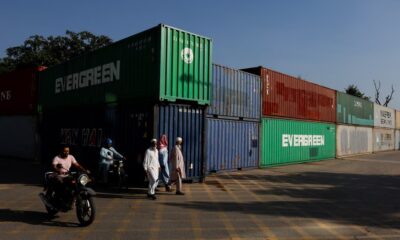
Cargo stacks up as Pakistan seizes containers to block capital routes