
Latest News
Four mediators struggle to secure lasting Pakistan-Afghanistan ceasefire
The involvement of four mediators has provided important diplomatic channels, but the article argues that their efforts have not always operated within a single framework.

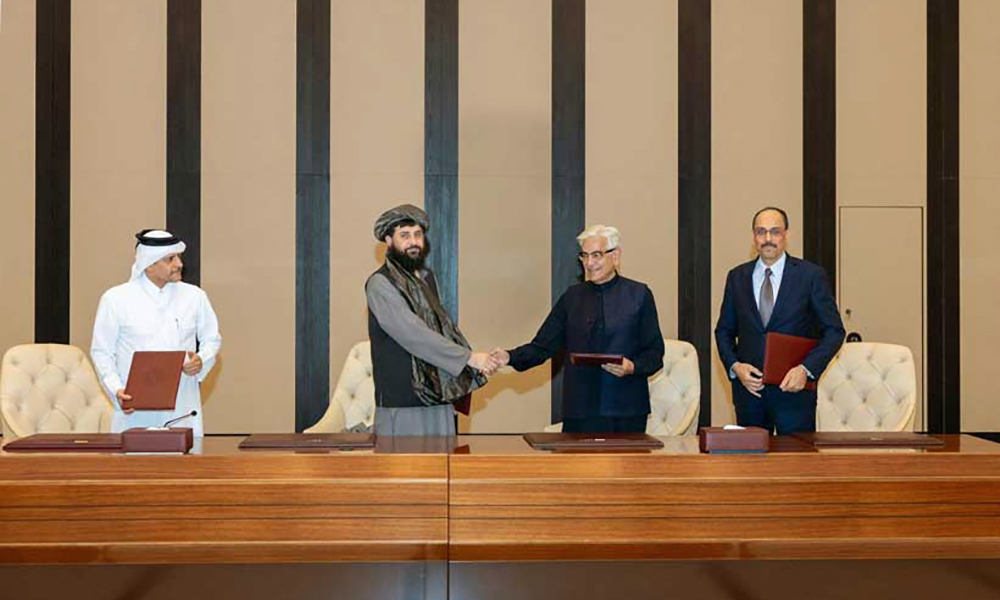
A ceasefire between Pakistan and Afghanistan remains fragile despite sustained diplomatic efforts by Qatar, Türkiye, Saudi Arabia and China, according to an analysis published by Modern Diplomacy.
The article by Sher Ali Ranjha, published on August 22, says the four countries have helped contain tensions at critical moments but have so far been unable to resolve the underlying security disagreements between Islamabad and Kabul.
The diplomatic process intensified after serious border clashes in October 2025, when Türkiye and Qatar helped facilitate a ceasefire in Doha. Subsequent talks in Istanbul explored ways to strengthen the agreement, including a possible monitoring and verification mechanism.
However, the two sides continue to differ over what constitutes a ceasefire violation. Pakistan has raised concerns about attacks by the Tehreek-e-Taliban Pakistan (TTP), which it says are carried out from Afghan territory. The Islamic Emirate of Afghanistan has rejected allegations that it provides a safe haven to the group and has maintained that Pakistan should address its own security challenges.
The article says this disagreement remains at the centre of the diplomatic impasse. Pakistan is seeking verifiable measures to prevent militant activity from Afghan territory, while Kabul has expressed concern over Pakistani military actions inside Afghanistan and the impact on its sovereignty.
The relationship between Afghanistan and India has added another dimension to the dispute. India has increased its engagement with Kabul, including through diplomatic and trade initiatives and cooperation involving Iran’s Chabahar Port.
The article notes that Pakistan views closer Afghan-Indian relations through the wider context of its rivalry with New Delhi. Pakistani allegations that India supports militant groups operating from Afghanistan remain disputed and have not been independently established, but they contribute to Islamabad’s security concerns.
The involvement of four mediators has provided important diplomatic channels, but the article argues that their efforts have not always operated within a single framework.
Qatar has strong access to Afghan officials and extensive experience in negotiations, Türkiye maintains relations with both sides, Saudi Arabia has financial and diplomatic influence, while China has significant economic and strategic interests in both countries.
China subsequently hosted Pakistani and Afghan representatives in Urumqi in 2026, helping bring the two sides back to negotiations.
The article argues that these efforts should not be considered complete failures. Rather, the mediators have been more successful in managing periods of tension than in addressing the deeper causes of the dispute.
For a more durable arrangement, the article proposes measurable security commitments, including restrictions on militant movement, disruption of financing, intelligence cooperation and measures to prevent cross-border attacks.
It also suggests that any Afghan commitments could be accompanied by greater restraint from Pakistan, including reducing reliance on unilateral military action.
The article says an independent verification mechanism could help both sides address their competing concerns. Such a mechanism could allow Kabul to demonstrate that Afghan territory is not being used for attacks against Pakistan while providing Islamabad with a process for raising specific security concerns.
Among the four mediators, the article identifies China as potentially best placed to coordinate such a framework because of its relationships with both Pakistan and Afghanistan and its interest in regional stability and economic connectivity.
It suggests that China could coordinate the overall process, with Qatar supporting diplomatic engagement, Türkiye assisting with technical negotiations and Saudi Arabia providing economic incentives.
The article concludes that another temporary ceasefire may not be enough to prevent renewed confrontation. A lasting arrangement would require clear definitions of violations, credible verification, measurable security commitments and corresponding restraint from both sides.
It argues that the four mediators have helped keep diplomacy alive, but a more coordinated framework may be needed to turn repeated crisis management into a longer-term peace process.



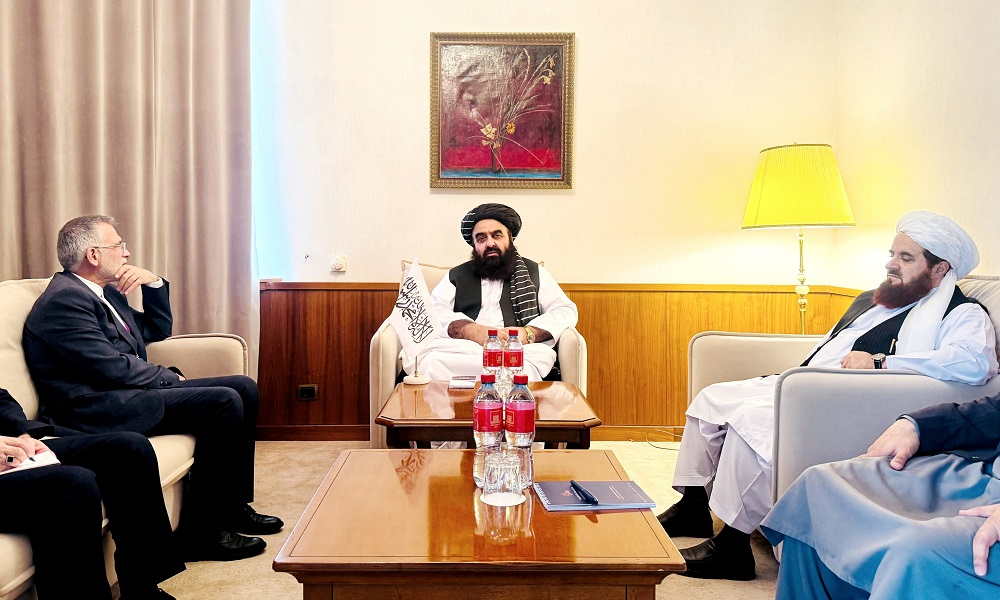
Amir Khan Muttaqi, Minister of Foreign Affairs, met on Wednesday with Mohammad Reza Bahrami, a representative of Iran’s Ministry of Foreign Affairs, on the sidelines of the eighth meeting of the Moscow Format and discussed ways to expand bilateral relations.
The Ministry of Foreign Affairs said the two sides exchanged views on Afghanistan-Iran relations, regional developments, and ways to strengthen mutual cooperation between the two countries.
Muttaqi expressed appreciation for Iran’s engagement with Afghanistan and its constructive participation in regional meetings, emphasizing the need to further expand relations between Kabul and Tehran.
Meanwhile, Mohammad Reza Bahrami stressed the importance of relations between the two countries and shared Iran’s views on regional cooperation, stability, and expanding economic engagement between Afghanistan and Iran.
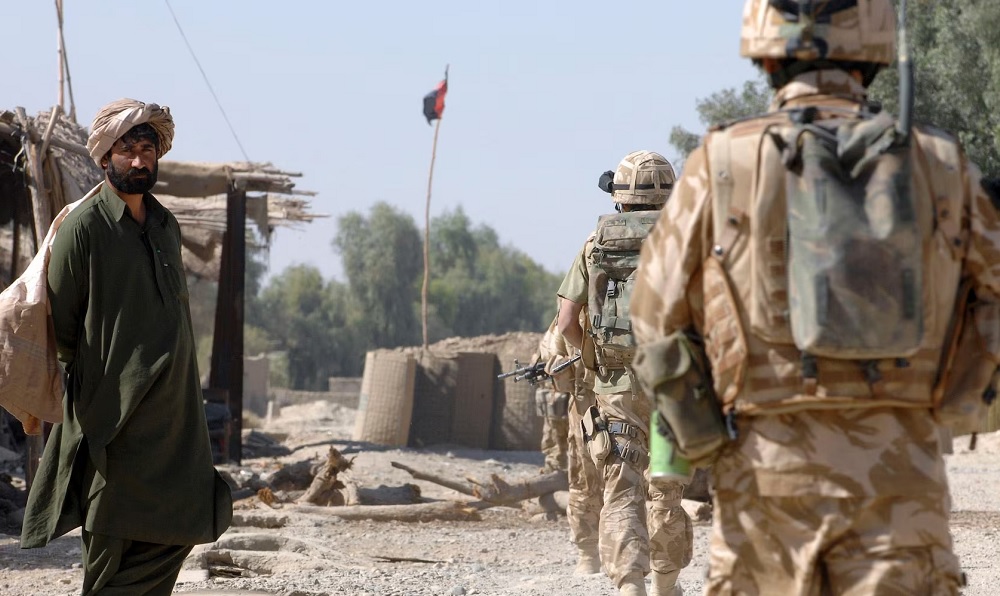
The UK Ministry of Defence identified material suggesting that British service personnel may have committed “serious offences” in Afghanistan, including possible murder, manslaughter and grievous bodily harm, a High Court hearing in London was told.
The information was referred by UK Special Forces (UKSF) to the Defence Serious Crime Command earlier this year, The Independent reported.
According to the court, any criminal investigation into the allegations has been paused pending the outcome of the Afghanistan Inquiry.
The inquiry, chaired by Lord Justice Haddon-Cave, is examining allegations that UK special forces unlawfully killed people during operations in Afghanistan between 2010 and 2013, as well as claims of a subsequent cover-up.
It is also investigating allegations of inadequate investigations by the Royal Military Police.
The latest court proceedings relate to a senior British soldier, identified only as Witness IIA126, who is challenging the inquiry’s decision to restrict his and his lawyers’ access to certain evidence.
His lawyer, Kate Grange KC, argued that the restrictions had prevented the soldier from reviewing evidence concerning an allegation that a person was shot in the head while possibly asleep during a “deliberate detention operation.”
The inquiry is opposing the legal challenge, arguing that the restrictions were necessary to protect the identities of witnesses whose evidence was considered highly sensitive.
Jonathan Glasson KC, representing the inquiry, told the court that the discovery of material potentially indicating serious offences did not mean that any particular individual would necessarily face criminal charges.
The inquiry is expected to continue its examination of the allegations, with a written judgment on the latest legal challenge due at a later date.
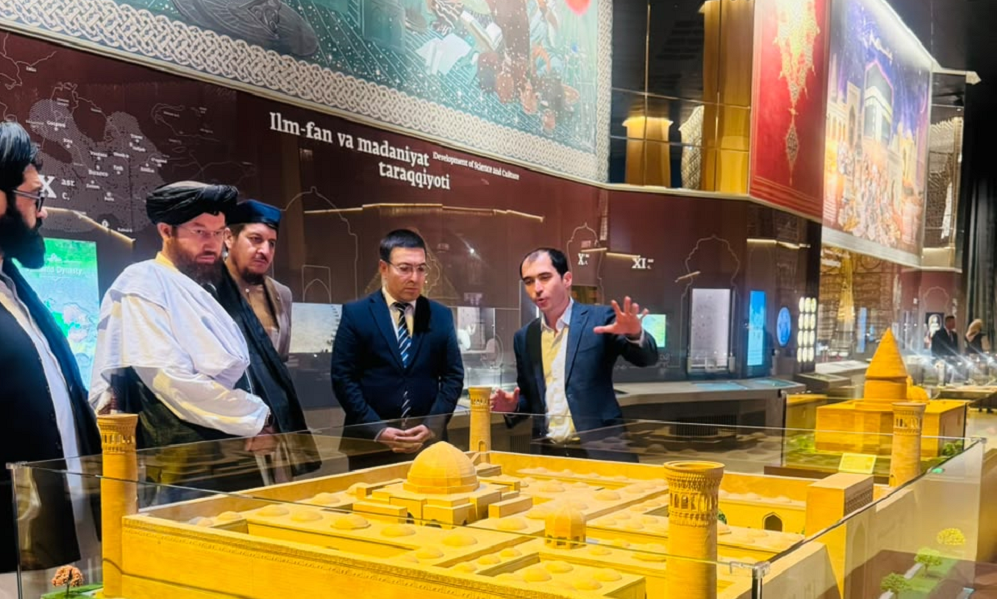
Afghanistan’s Minister of Agriculture, Irrigation and Livestock, Attaullah Omari, has arrived in Uzbekistan’s capital, Tashkent, to attend an international forum on food security and sustainable development.
Omari is visiting Tashkent at the invitation of Uzbekistan’s Ministry of Agriculture and is scheduled to participate in the Global Technical Forum for Landlocked Countries on Food Security and Sustainable Development Goals, being held from October 7 to 8.
Afghanistan’s Ministry of Agriculture said the visit will provide an opportunity to discuss expanding bilateral and regional cooperation with Uzbekistan in agriculture, irrigation, livestock, trade and investment.
The Afghan delegation is also expected to meet officials and representatives from participating countries to discuss agricultural exports, trade, investment opportunities, and the exchange of technical knowledge and expertise.


Tahawol: Consequences of US war in Afghanistan reviewed

Saar: Expulsion of Afghan refugees from Pakistan discussed

Kohi shines as Toofan Herat beat Abu Muslim Farah 2–0

Muttaqi and Iranian representative discuss expansion of bilateral relations

Baradar opens Fifth Imam Abu Hanifa International Exhibition in Kabul

UAE firm eyes investment in Salang’s second tunnel and pharmaceutical factories

US Treasury ratchets up pressure on Iran with sweeping new aviation sanctions

AI could pose ‘existential’ risk to humanity, UN rights chief warns

EU and FAO launch €5m programme to strengthen Afghanistan’s agrifood sector

Omar Zawak, Toofan Herat secure victories in Afghanistan Champions League
Tahawol: Consequences of US war in Afghanistan reviewed
Saar: Expulsion of Afghan refugees from Pakistan discussed

Tahawol: Discussion on outcome of Moscow Format meeting

Saar: Expansion of relations between Kabul and Moscow discussed

Tahawol: Afghanistan-Iran: shared opportunities and challenges discussed
-

 Sport2 days ago
Cricket Bonanza: Afghanistan set for packed international schedule
-
 Latest News5 days ago
Kazakhstan, Uzbekistan and UAE sign MoU on CASA railway project via Afghanistan
-
 Regional5 days ago
Pakistan says Mecca pact members to hold emergency talks on engaging Houthis
-
 Regional4 days ago
India, Pakistan summon top diplomats over border incident
-
 Latest News3 days ago
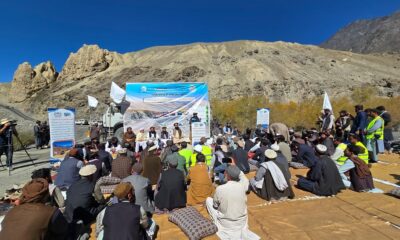
Afghanistan inaugurates 121 km Wakhan road to China border
-
 Sport5 days ago
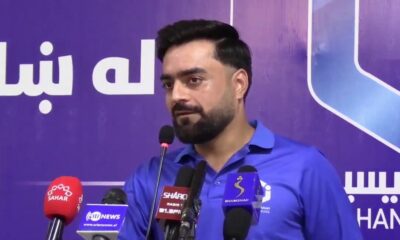
Rashid Khan plans to build cricket academy and stadium in Nangarhar
-

 Sport3 days ago
ACL: Sorkh Poshan extend perfect run with 1-0 win over Khurasan
-

 Sport3 days ago
Afghanistan U19 to face Bangladesh, Oman in Youth ODIs