
Latest News
Gov’t imposed via use of military force won’t be recognized: Intl community

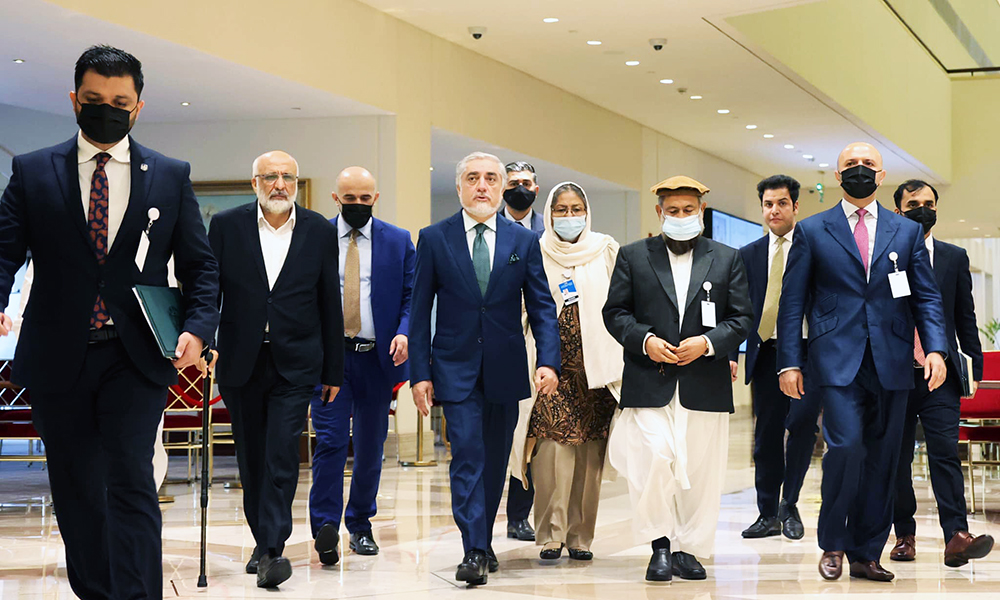
The participants of the Doha meeting on Afghanistan have called on the warring parties to accelerate efforts to reach a political settlement and a comprehensive ceasefire, amid the advance of the Taliban militants towards Provincial capitals.
The Afghan government and the Taliban delegations and special representatives of UN, US, UK, EU, China, Uzbekistan, Qatar, Pakistan, Germany, Norway, Tajikistan, Turkey, Turkmenistan and India participated the meeting.
The participants issued a joint statement at the end of the meeting on Thursday.
According to the statement, all participants agreed on the importance of accelerating the Afghan peace process and negotiating “concrete proposal from both sides.
The International community also called for an immediate cessation of violence and attacks on the Provincial capitals.
Meanwhile, the participants reiterated that the International community will not recognize any government in Afghanistan that imposed by a military takeover.
The joint statement highlighted the following key points:
1. Participants agreed that the peace process needs to be accelerated as a matter of great urgency on the basis of the negotiations of concrete proposals from both sides.
2. Participants urged both sides to take steps to build trust and accelerate efforts to reach a political settlement and comprehensive ceasefire as quickly as possible.
3. Participants called for a stop to violence and attacks immediately in and against provincial capitals and other cities.
4. Participants took note of converging statements of both sides on the following guiding principles for a political settlement: (a) inclusive governance; (b) respect for human rights, including the rights of women and minorities; (c) a mechanism to deliver a representative government, (d) a commitment does not allow any individuals or groups to use the soil of Afghanistan to threaten the security of other countries; and, (e) respect for international law, including international humanitarian law.
5. Participants called on all Afghan sides to act in accordance with these principles and build on them in the future political settlement.
6. Participants raised grave concerns about reports from across Afghanistan with respect to continued violence, large numbers of civilian casualties and extra-judicial killings, widespread and credible allegations of human rights violations, all attacks (ground and air) against provincial capitals and cities, and the destruction of physical infrastructure that perpetuate conflict and make reconciliation efforts more difficult.
7. Participants reaffirmed that they will not recognize any government in Afghanistan that is imposed through the use of military force.
8. Participants committed to assist in the reconstruction of Afghanistan once a viable political settlement is reached following good faith negotiations between the two sides.
9. Participants express full support and gratitude to the State of Qatar and its efforts in this regards.












Kazakhstan’s Foreign Minister Mukhtar Tileuberdi has called for pragmatic and coordinated international engagement with Afghanistan, saying the country’s long-term stability is closely linked to the security and sustainable development of Central Asia.
Speaking during the general debate of the 81st session of the United Nations General Assembly in New York on Friday, Tileuberdi said humanitarian assistance to Afghanistan remains essential but alone cannot break the cycle of poverty, displacement and dependency.
He said Kazakhstan supports a “pragmatic, coordinated and step-by-step” approach to international engagement with Afghanistan, with the United Nations playing a central role.
Tileuberdi also said Kazakhstan is working with the UN to operationalize the United Nations Regional Centre for the Sustainable Development Goals for Central Asia and Afghanistan in Almaty.
He said the success of the centre should be measured by the results and assistance it delivers to the region.


Abu Muslim Farah defeat Khurasan Faryab 2-0 in ACL season six

Saar: Concerns over Pakistan’s political crisis discussed

Afghanistan Champions League: Omar Zawak Herat beat Toofan Herat 1-0

Blast in Pakistan’s Dera Ismail Khan kills 11, injures 30

Ariana Afghan Airlines increases Kabul-Delhi cargo flights

Saudi energy group signs major Afghanistan deals covering gas exploration and pipeline plans

Trump floats idea of renaming Atlantic or Pacific Ocean

US hits Egyptian bank branches with Iran sanctions as war marks six months

Nepal flood rescue mission enters critical phase as thousands remain missing

Iranian clubs to face Gulf opponents at neutral venues in Asian Champions League Elite
Saar: Concerns over Pakistan’s political crisis discussed

Exclusive interview with Abdul Latif Mansoor, Minister of MRRD

Tawsia: Overview of Afghanistan’s iron mines

Tahawol: Discussion on fresh Pakistani airstrikes on Afghanistan

Saar: Calls for international support for Afghanistan discussed
-

 World5 days ago
CNN, MS NOW and Politico sue Trump, challenging White House ban
-

 Latest News3 days ago
Ariana Afghan Airlines ranks seventh among 45 Central Asian airlines
-

 Latest News4 days ago
UN reiterates call for respect for international law after Kunar airstrikes
-

 Regional3 days ago
US and Iran hold first talks since June after Trump’s ‘annihilation’ threat
-

 Latest News3 days ago
Silk Road highway in Wakhan corridor now reaches the China border
-

 Latest News4 days ago
Afghan Official: Pakistan’s airstrikes will not go unanswered
-

 Sport4 days ago
Afghan boxing referee heads to China for international festival
-
 Regional5 days ago
G7 foreign ministers call on Iran to stop arming Houthis