
Latest News
Hekmatyar claims govt has yet to implement key decisions around peace process

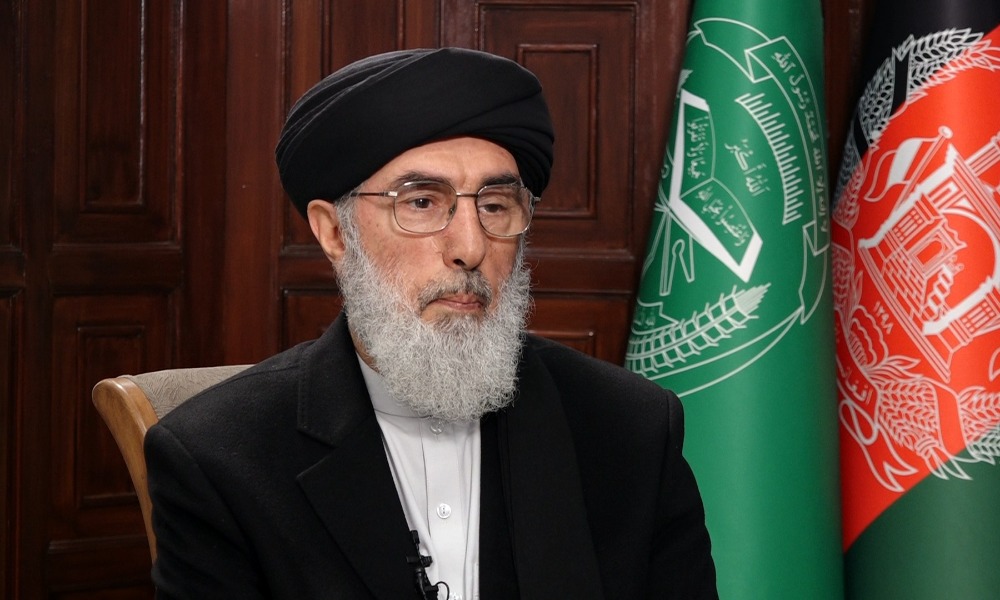
Gulbuddin Hekmatyar, the leader of Hiz-e-Islami, said Sunday that the Afghan government has failed to form a single and decisive authority for peace.
Addressing a press conference on Sunday, Hekmatyar stated that important issues over a unified plan for the Istanbul peace conference were agreed upon during a trilateral meeting with President Ashraf Ghani and former President Hamid Karzai.
According to him, all sides had agreed on the creation of a transitional government, and High Government Council, the release of all Hizb-e-Islami and Taliban prisoners from Afghan jails, a ceasefire, and elections but Ghani, however, has not “implemented any of these agreements.”
“I returned full-handed from this meeting. Although the President did not have a positive view on the Istanbul summit, he wanted the summit to be held in Kabul,” Hekmatyar said.
Emphasizing the importance of the creation of the High Government Council, Hekmatyar stated that the organization will consist of eight factions including the Taliban, which should be engaged in war and peace issues in Afghanistan.
He stated: “The High Council consists of the leaders of the seven effective parties in the war and peace of Afghanistan, and it must be the highest authority on the peace process of Afghanistan. The president should represent the government.”
The Presidential Palace, however, has not commented on the agreement.
Fatima Murchal, a Deputy Spokesperson for the Presidential Palace, stated that Ghani’s meetings with Karzai and Hekmatyar were aimed at strengthening internal consensus over the Afghan peace process.



Latest News
Afghan envoy says Kabul will not allow Afghan soil to be used against Pakistan
Shakeeb said a new political reality has emerged in Kabul since 2021 and stressed that Afghanistan does not want its territory to be used against Pakistan.
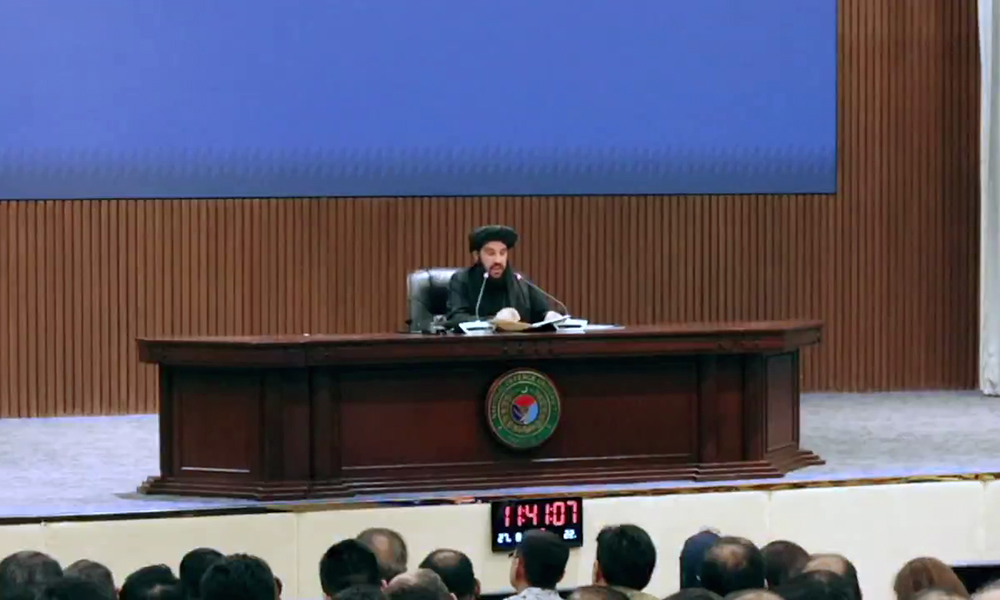
Afghanistan’s Ambassador to Pakistan, Sardar Ahmad Shakeeb, has reaffirmed Kabul’s position that Afghan territory will not be used against Pakistan, while calling for greater direct engagement between the two neighbouring countries on their shared security concerns.
Speaking at Pakistan’s National Defence University in Islamabad, Shakeeb said Afghanistan and Pakistan are closely connected by geography, shared communities, trade, transit and security, meaning developments in either country have a direct impact on the other.
He described the relationship as both a challenge and an opportunity for regional stability and stronger economic cooperation, and urged both sides to move beyond what he called outdated assumptions about each other’s current realities.
Shakeeb said a new political reality has emerged in Kabul since 2021 and stressed that Afghanistan does not want its territory to be used against Pakistan.
At the same time, he said Afghanistan cannot accept Pakistan’s security concerns being used to justify military action on Afghan territory.
The ambassador said Kabul understands Pakistan’s concerns over potential security threats originating from Afghanistan, but argued that such allegations should be specific and supported by concrete information, including details of individuals, networks and specific cases.
Shakeeb also said that if Pakistan expects Afghanistan to cooperate in addressing its security concerns, Kabul wants Islamabad to engage directly with Afghanistan over its own security concerns.
He called for continued dialogue and cooperation between the two countries, saying their close ties make constructive engagement essential to addressing security, political and economic challenges.
Latest News
Modi at SCO: Peace and Stability in Afghanistan Linked to Eurasian Security
On the West Asia crisis, Modi said conflicts cannot be resolved on the battlefield and called for dialogue and diplomacy to address regional tensions.
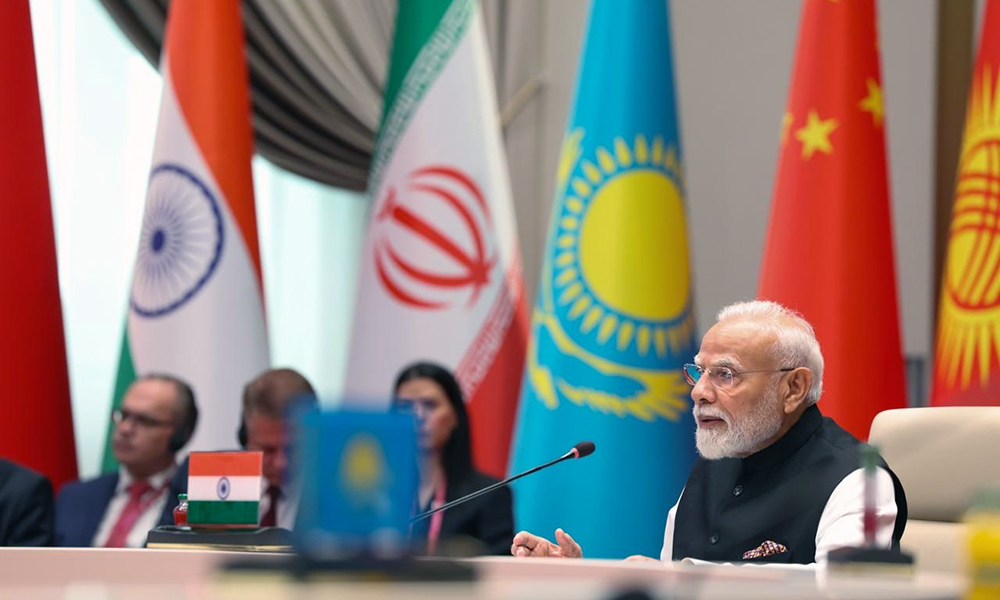
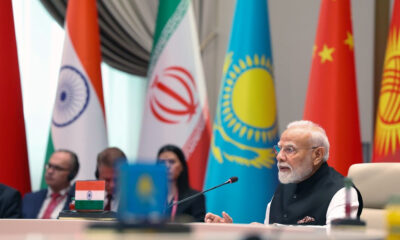
Speaking at the 26th Shanghai Cooperation Organisation (SCO) Summit in Bishkek, Indian Prime Minister Narendra Modi said peace and stability in Afghanistan are closely linked to security and stability across Eurasia.
Modi identified security, regional connectivity and economic opportunities as the three key pillars of India’s vision for the SCO and said India would continue its development and humanitarian assistance to the Afghan people.
He also stressed that there should be “no double standards” in the fight against terrorism, calling for the dismantling of the entire terrorist ecosystem, including financing, recruitment, radicalisation and safe havens.
Modi described terrorism as a serious threat to humanity and said countries that use terrorism as a tool of foreign policy or provide shelter and support to terrorists must receive a clear message that terrorism cannot be used as a strategic asset by any country.
On the West Asia crisis, Modi said conflicts cannot be resolved on the battlefield and called for dialogue and diplomacy to address regional tensions.
He also described drug trafficking and organised crime as serious threats to young people and regional security, urging stronger cooperation among SCO member states to tackle these challenges.
Latest News
Germany allows IEA officials to enter country to coordinate deportations
Germany has tightened its migration policies under conservative Chancellor Friedrich Merz following years of accepting large numbers of refugees and asylum seekers.
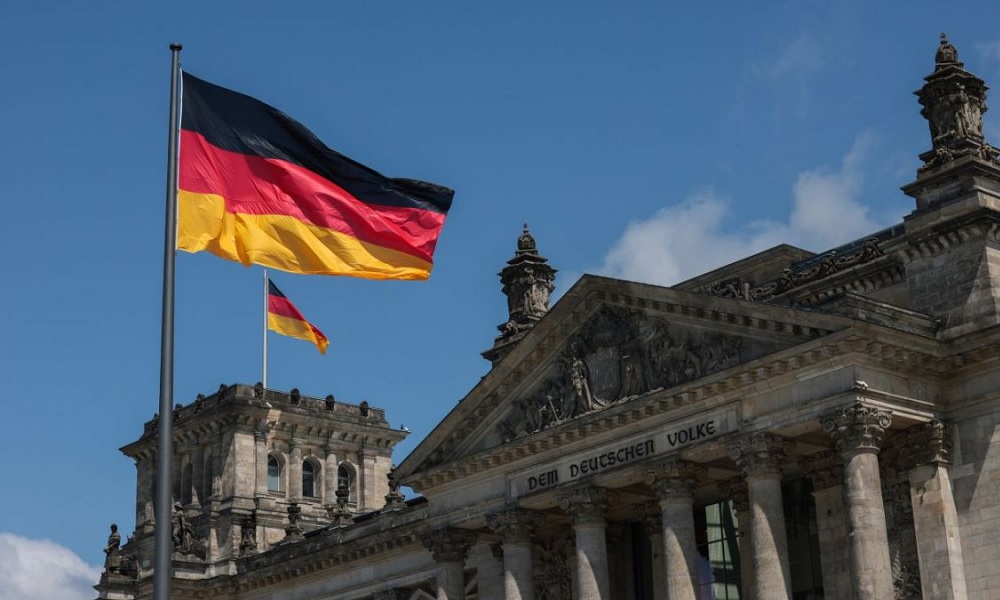
Germany has authorised a team of Islamic Emirate of Afghanistan (IEA) representatives to temporarily enter the country to help coordinate the deportation of Afghan nationals, the German government said Monday.
A German Foreign Ministry spokesman told a press conference in Berlin that the government had approved the short-term entry of a “technical support team” with the aim of increasing the number of deportations to Afghanistan.
“It is in our interest that Afghan representations are able to provide consular services for the roughly 450,000 Afghan nationals in Germany and contribute in particular to return operations,” the spokesman said.
He said the representatives had undergone security checks, were not accredited as diplomats in Germany and would leave the country after a short stay.
Germany has tightened its migration policies under conservative Chancellor Friedrich Merz following years of accepting large numbers of refugees and asylum seekers. The government has said deportations to Afghanistan would primarily target convicted criminals.
However, Germany deported 23 Afghan men to Afghanistan last week, including some who had not been convicted of a crime, according to reports.
Human rights organisations have strongly criticised deportations to Afghanistan, citing concerns over the human rights situation and alleged abuses under the IEA.


Afghan envoy says Kabul will not allow Afghan soil to be used against Pakistan

Modi at SCO: Peace and Stability in Afghanistan Linked to Eurasian Security

Germany allows IEA officials to enter country to coordinate deportations

Pakistan, Uzbekistan move to fast-track Trans-Afghan Railway Project

Mujahid: Shanghai cooperation summit decisions will be incomplete without Afghanistan

Four mediators struggle to secure lasting Pakistan-Afghanistan ceasefire

Only two days to go before Afghanistan and Ireland begin ODI series

Kabul opens cardiac hospital for children

HesabPay unveils new visa card and digital payment app in Kabul

AFC Champions League Elite draw nears as Al-Nassr seeded above Al-Hilal

Tahawol: Five years since the US withdrawal from Afghanistan

Saar: IEA criticizes US for continuing hostile policies

Tahawol: Latest on Stalled Kabul-Islamabad Talks

Saar: Afghanistan’s Relations with Regional Countries

Tahawol: Islamic Emirate seeks to normalize US ties
-

 World3 days ago
US hits Egyptian bank branches with Iran sanctions as war marks six months
-
 Latest News4 days ago
Tajikistan to receive military equipment to strengthen Afghan border
-
 Business4 days ago
TAPI pipeline nears first gas sales in Afghanistan
-

 Business3 days ago
Afghanistan transports more than 704,000 tonnes of goods by rail in August
-
 World2 days ago
Trump floats idea of renaming Atlantic or Pacific Ocean
-
 Latest News3 days ago
US Congress extends Afghanistan War Commission’s mandate by one year
-
 Latest News3 days ago
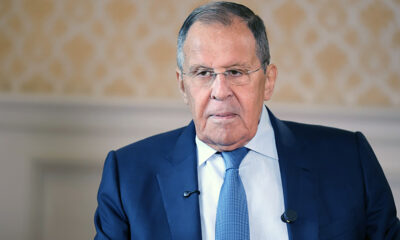
US chose to stay in Afghanistan instead of eliminating terrorism, says Russian FM
-
 Climate Change2 days ago
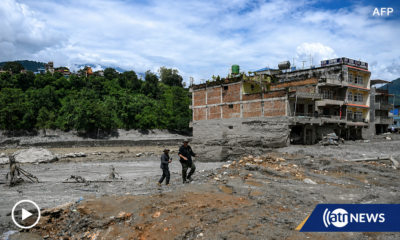
Nepal flood rescue mission enters critical phase as thousands remain missing