
Latest News
IEA’s new ambassador to Moscow meets with embassy staff
The Ministry expressed hope that this move would lead to expanded political, economic, and multilateral cooperation between Kabul and Moscow.

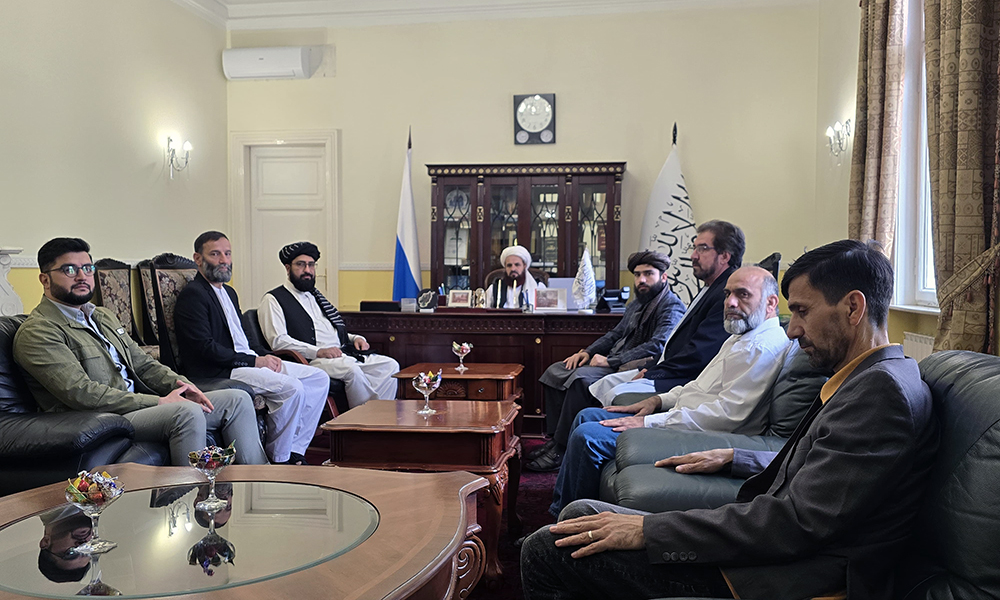
Gul Hassan, the newly appointed Ambassador of the Islamic Emirate of Afghanistan (IEA) to Russia, formally assumed his diplomatic duties on Tuesday, during an introductory meeting with embassy staff in Moscow.
In the meeting, Hassan addressed the diplomats and employees of the Afghan Embassy, emphasizing his full commitment to carrying out his responsibilities with integrity and fostering close collaboration with all embassy personnel.
The Ministry of Foreign Affairs of the Islamic Emirate of Afghanistan welcomed Russia’s formal acceptance of Hassan, describing it as a significant step toward strengthening bilateral relations.
The Ministry expressed hope that this move would lead to expanded political, economic, and multilateral cooperation between Kabul and Moscow.
This appointment follows a broader trend of deepening engagement between the two nations, as Russia continues to develop its diplomatic and economic ties with Afghanistan, despite not formally recognizing the IEA as the legitimate government.
Hassan is the highest-ranking IEA diplomat to be stationed in Moscow since IEA returned to power in August 2021. Prior to this appointment, he served as the IEA’s consul in Quetta, Pakistan.
Last month, the IEA’s Ministry of Foreign Affairs announced that Russia had formally agreed to accept Hassan as ambassador.
That decision followed a meeting between Dmitry Zhirnov, Russia’s ambassador in Kabul, and acting foreign minister Amir Khan Muttaqi, during which the letter of diplomatic accreditation was handed over.



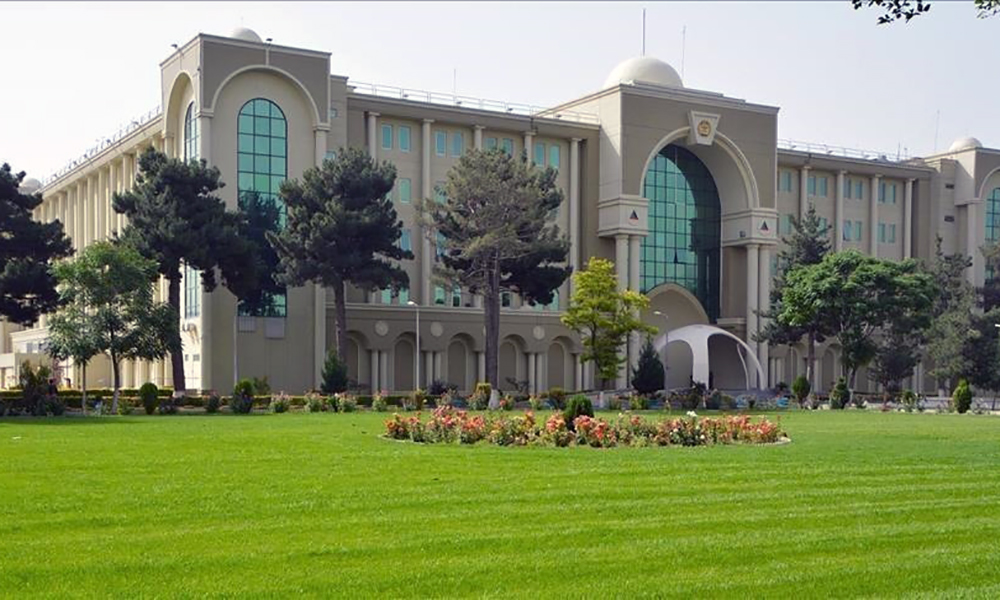
Afghanistan’s Ministry of Defense says its forces have seized significant quantities of weapons, ammunition, medical supplies, vehicles and other contraband during operations near the disputed Durand Line over the past three months.
According to the ministry, the seizures included 66 Kalashnikov rifles, 20 M16 rifles, 17 M4 rifles, 33 pistols, and 8,000 rounds of various types of light and heavy ammunition.
The forces also confiscated 45 vehicles, 2,600 kilograms of narcotics, 486 cartons of medicines, 2,373 sheep and 34 bundles of fuse cord, the ministry said.
The ministry added that 39 alleged smugglers were arrested in connection with the operations.
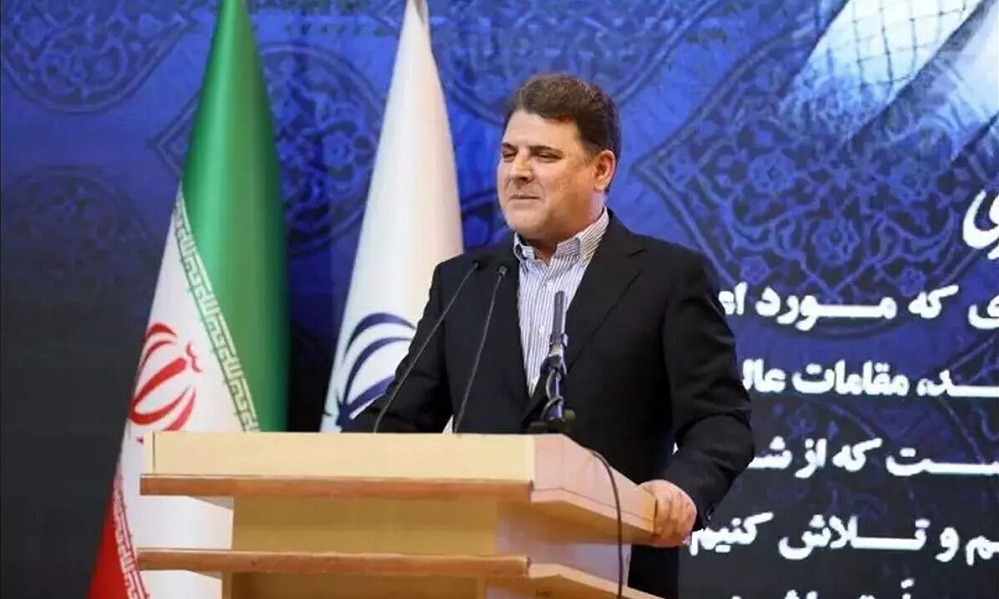
Ali Zeynivand, spokesperson for Iran’s Interior Ministry, has said that the process of repatriating undocumented Afghan migrants continues despite recent developments and crises in the region.
He stressed that the process does not target all Afghan nationals, but is aimed at managing the presence of foreign nationals in Iran and determining their legal residency status.
Zeynivand said some undocumented foreign nationals have been expelled from Iran based on judicial orders, while efforts to register and return others without legal documents are continuing.
According to Zeynivand, more than 200,000 undocumented Afghan migrants have voluntarily left Iran over the past five months.
He added that the main objective of the plan is to establish accurate records of foreign nationals, including how and through which border crossing they entered Iran, where they live and which public services they use.
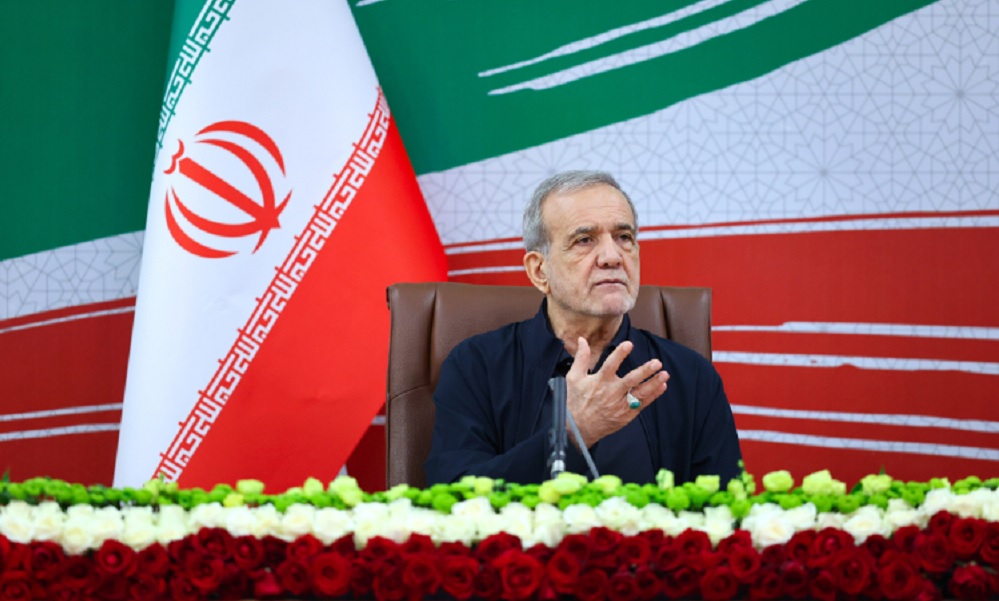
Iranian President Masoud Pezeshkian has said that Afghanistan and Pakistan cooperated with Tehran during the recent conflict to prevent individuals from using their territories to enter Iran and create unrest.
Speaking in a press conference on Saturday, Pezeshkian said Pakistan was cooperating with Iran “fully” while Afghanistan had also provided significant cooperation. He added that Turkmenistan, Russia and Iraq had helped Iran, while dialogue with Azerbaijan continued despite political differences.
Pezeshkian said regional cooperation had played an important role in helping Iran cope with the impact of the war and restrictions on the country.
The Iranian president also accused Iran’s adversaries of attempting to create insecurity along the country’s northwestern and southeastern borders, including plans to attack border posts and send armed individuals into Iran.
He said the plans were unsuccessful, partly because Iran responded to some of the efforts and because neighboring countries took measures to prevent individuals from using their territory to enter Iran.
Pezeshkian specifically highlighted the role of Afghanistan and Pakistan, saying both governments had deployed groups to monitor the situation along their territories.
According to the Iranian president, both countries had also made clear that no one would be permitted to use their soil to enter Iran and cause unrest inside the country.


Afghanistan seizes weapons, drugs and other contraband near Durand Line

Iran expels over 200,000 undocumented Afghan migrants in past five months

Pezeshkian says Afghanistan, Pakistan helped Iran prevent infiltration into Iran

Abasin Defenders stun Kabul Zalmi in Kabul Premier League

Fire at Saudi factory kills 16 Bangladeshi migrant workers

Pakistan’s governance system has ‘collapsed’: Mohsin Naqvi

India offers 1,000 online scholarships for Afghan students for 2026-27 academic year

FIFA’s inaugural YouTube Creator Cup to stream live on Ariana Television and Ariana Sport YouTube channels

FIFA World Cup semi-final line-up confirmed

ATN secures exclusive rights to broadcast Afghanistan vs Ireland cricket tour

Tahawol: Afghanistan: An Alternative to the Strait of Hormuz?

Saar: Pakistan-Saudi-Turkey Pact: Regional Impact

Tahawol: Escalating disputes over Iran war discussed

Saar: Turkey, Saudi Arabia and Pakistan defense pact reviewed

Tahawol: End of US sanctions waiver for Chabahar Port discussed
-

 Latest News5 days ago
First Afghanistan-Ireland ODI abandoned without a ball bowled
-

 Sport4 days ago
Afghanistan holds Russia to 3-3 draw, earns first point at Continental Futsal Championship
-

 Latest News5 days ago
Afghan boxer appears in Greek court over death of Scottish woman
-
 Business4 days ago
Uzbekistan’s Fergana region strengthens economic ties with Afghanistan
-
 Regional2 days ago
Goods transporters to go on strike from Saturday after talks with Pakistan govt fail
-
 Regional4 days ago
Iran threatens to hit Gulf states if US launches new strikes
-
 World2 days ago
US Senate passes Russia sanctions championed by Graham; US House next
-

 Sport2 days ago
Rashid Khan takes six as Afghanistan thrash Ireland by 92 runs