
Regional
Israel prepares for long conflict despite US–Iran ceasefire efforts
While Israel has reportedly halted direct strikes on Iran, it continues operations against Iran-aligned groups in neighbouring areas.

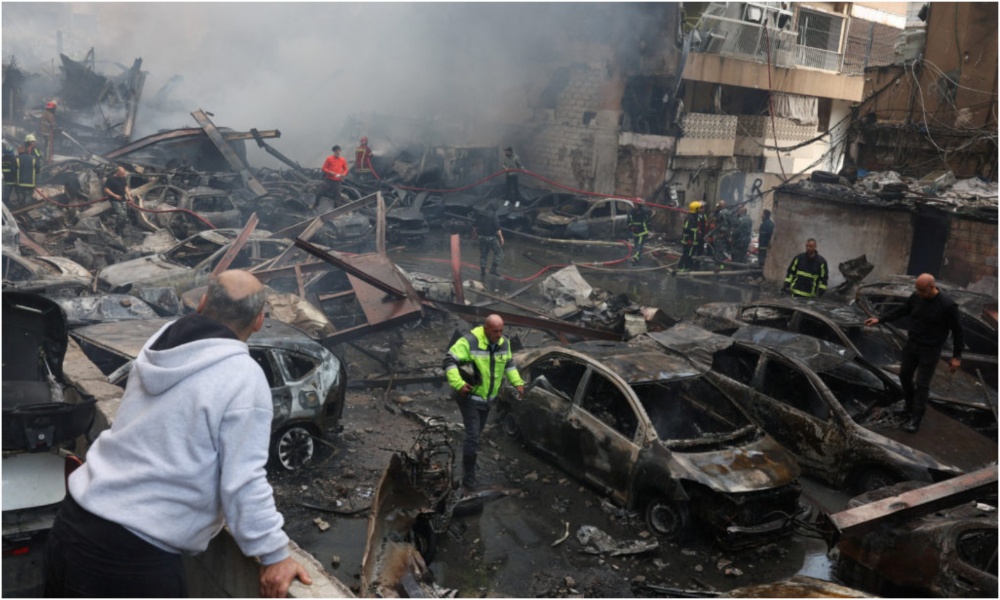
As the United States and Iran move toward cementing a ceasefire, Israeli military strategy appears increasingly focused on preparing for a prolonged and evolving regional conflict.
According to Israeli officials and analysts, the country has intensified efforts to establish and maintain “buffer zones” across multiple areas, including the Gaza Strip, southern Lebanon, and parts of Syria.
The approach reflects a shift in doctrine following the October 7 attacks, with an emphasis on containing threats rather than fully eliminating them.
Reuters reported that Israeli officials say the aim of these zones is to push potential threats further from border communities and reduce the risk of attacks. Military sources indicate that areas extending several kilometres beyond Israel’s borders are being cleared or monitored to limit the reach of armed groups such as Hezbollah and Hamas.
The developments come as Washington and Tehran agreed to a temporary pause in hostilities while negotiating a broader settlement following the latest escalation, which began in late February.
While Israel has reportedly halted direct strikes on Iran, it continues operations against Iran-aligned groups in neighbouring areas.
In southern Lebanon, Israeli forces have advanced into areas near the Litani River, with military officials describing efforts to establish a security belt aimed at preventing cross-border fire. The operation has reportedly involved evacuations and the destruction of structures suspected of being used for military purposes.
Israeli leaders have framed the strategy as necessary for long-term security.
In recent remarks, Benjamin Netanyahu said Israel has created defensive belts extending beyond its borders in multiple areas, including Gaza and Syria.
However, the approach has raised concerns among analysts and legal experts. Some warn that widespread destruction of civilian infrastructure may violate international law unless clearly justified by military necessity. Others caution that maintaining multiple fronts could place significant strain on Israeli forces over time.
The strategy also reflects deep scepticism within Israel about the prospects for lasting peace agreements. Surveys in recent years suggest limited public confidence in long-term stability with Palestinians or neighbouring states, reinforcing support for security-driven policies.
At the same time, statements from some members of Israel’s government have fuelled concern about possible territorial ambitions, particularly in Gaza and southern Lebanon. Still, military officials have indicated that buffer zones are intended as flexible security measures rather than permanent borders.
As diplomatic efforts continue, the contrast between ceasefire negotiations and military preparations highlights the uncertainty surrounding the region’s trajectory—raising the possibility that even if fighting subsides in the short term, a longer period of instability may lie ahead.






Regional
Seven killed in temple stampede in India
WATCH VIDEO. Reports said tens of thousands of people had gathered at Ashok Dham, with some estimates putting the crowd at around 50,000.

At least seven people were killed and 19 others injured in a stampede at the Ashok Dham temple in Bihar’s Lakhisarai district on Monday, as thousands of devotees gathered for prayers during the holy Hindu month of Shravan.
The victims were reportedly all women.
The incident occurred during the third Monday of Shravan, when large numbers of devotees visit Shiva temples to offer holy water to Lord Shiva. Reports said tens of thousands of people had gathered at Ashok Dham, with some estimates putting the crowd at around 50,000.
Authorities said overcrowding appears to have played a major role. Lakhisarai District Magistrate Shailendra Kumar said a barricade broke under pressure from the crowd, causing people to fall on one another. The arrival of two trains reportedly contributed to a sudden increase in the number of devotees at the site.
A senior police officer, Shivam Kumar, said an electric pole fell during the incident, triggering panic. Officials have stressed that the exact sequence of events and cause of the stampede will be established through an investigation. Some reports said rumours of a live electrical wire may have intensified the panic, but this has not been independently confirmed.
The injured were taken to nearby hospitals for treatment, while police and emergency teams were deployed at the temple and surrounding areas.
Prime Minister Narendra Modi expressed his condolences to the families of those killed and wished the injured a speedy recovery. Bihar Chief Minister Samrat Choudhary also expressed grief and directed authorities to ensure prompt medical treatment for the injured. President Droupadi Murmu also mourned the deaths.
The incident has renewed concerns about crowd management and safety arrangements at major religious gatherings in India. In March, nine people were killed in a separate stampede at a temple in Bihar’s Nalanda district.
Authorities are continuing to investigate the incident and determine whether further safety measures could have prevented the tragedy.
Regional
Qatar denies detaining Iranian pilots, says it found remains of one
The spokesperson said Tehran had yet to respond to an invitation to review details of its operations.
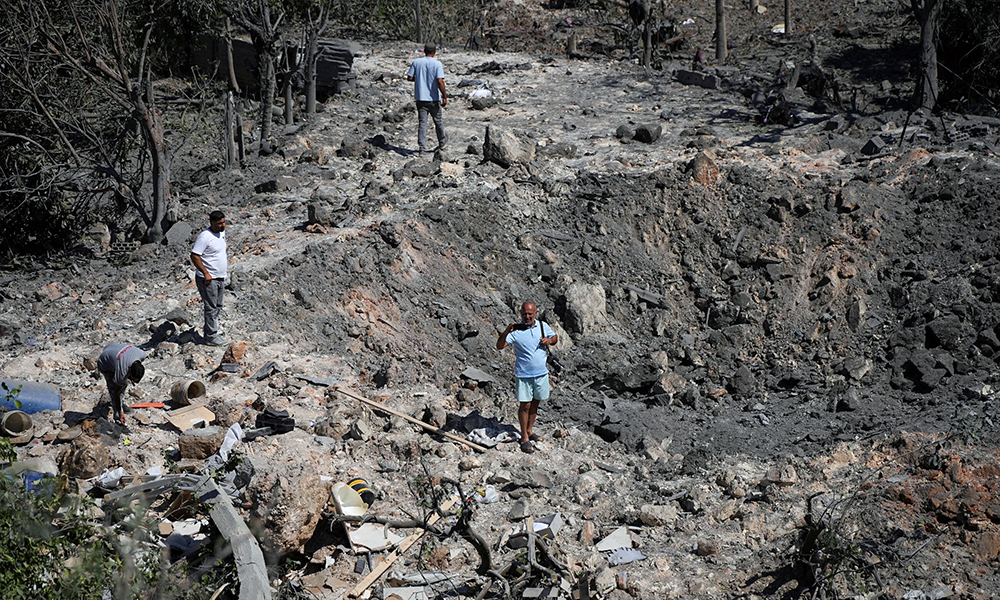
Qatar denied on Saturday that it was holding Iranian pilots, saying they had violated Qatari airspace earlier this year and had failed to respond to attempts to contact them.
A Qatari foreign ministry spokesperson said on X that search and rescue teams later found the remains of one of the pilots and that it had contacted Iran to coordinate a handover.
The spokesperson said Tehran had yet to respond to an invitation to review details of its operations.
Regional
Turkey lays out plans for defence pact with Pakistan and Saudi Arabia
Turkey, which has NATO’s second-largest army, has said the pact with nuclear-armed Pakistan and top oil exporter Saudi Arabia was open to expansion.
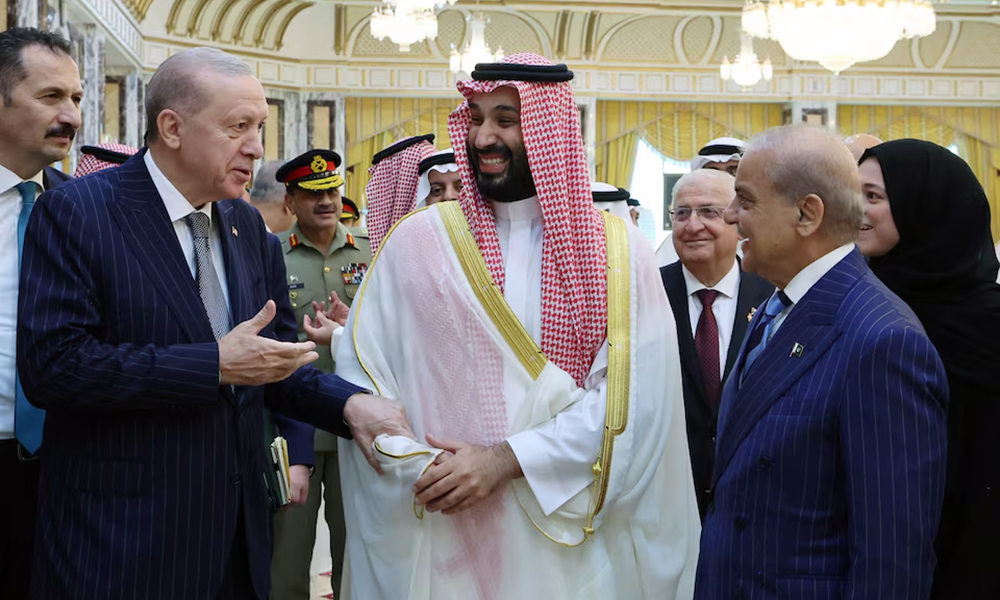
Turkey, Saudi Arabia and Pakistan will group senior ministers, hold joint exercises and deepen defence industry cooperation under a military pact signed between the regional powers last week, Turkey’s defence ministry said on Thursday.
The three Sunni Muslim U.S. allies, alarmed by a regional conflagration that has brought Iranian missile fire onto Gulf oil exporters, signed the “Mecca Joint Defence Agreement” on August 7. They said the accord stipulates that an armed attack against any member would be regarded as an attack on all, similar to NATO’s Article 5 collective defence clause, Reuters reported.
At a weekly briefing in Ankara, the defence ministry said the pact’s fundamental goal was to ensure defence and military ties were put on a “more institutional and sustainable” footing.
“Under the accord, strategic political and military mechanisms plan to be established involving the Defence Ministers, Foreign Ministers, and Chiefs of General Staff/Armed Forces Commanders, and that coordination among the three countries will be conducted at the highest level,” it said.
The ministry added that joint military exercises involving land, naval, and air forces, as well as air defence and unmanned systems were planned, in addition to deeper defence industry cooperation.
“The aim is to provide not only product and system supply, but also joint development and production, technology cooperation, and sustainable maintenance and logistics support,” it said, adding that unmanned and autonomous systems, electronic warfare and artificial intelligence capabilities would be prioritised.
Turkey, which has NATO’s second-largest army, has said the pact with nuclear-armed Pakistan and top oil exporter Saudi Arabia was open to expansion — with Egypt as a potential candidate — and did not seek to replace any existing alliances, read the report.
The ministry also said Turkey was participating in meetings in Jeddah aimed at establishing an international coalition to protect Red Sea shipping.


Trump envoy discusses Gaza plan with Netanyahu after rare Hamas meeting

Darwish Rasooli named captain as Afghanistan unveil Asian Games squad

Juma Khan Fateh surrenders to IEA forces in Badakhshan

Afghanistan Supreme Court says rights of almost 119,000 women addressed over five years

Seven killed in temple stampede in India

Pakistan’s governance system has ‘collapsed’: Mohsin Naqvi

Spain sweep FIFA World Cup player awards after historic triumph

First Chinese transit shipment arrives in Herat via Iran’s railway corridor

Afghanistan exports first stone shipment to US in $100,000 trade milestone

AFC confirms clubs for 2026/27 competitions; draw set for August 18

Tahawol: U.S. non-recognition of IEA

Saar: Tensions between Iran and the United States

Debate with Nooruddin Azizi, Minister of Industry and Commerce

Saar: Marking IEA’s fifth anniversary in Afghanistan discussed

Tawsia: $420M investment in TAPI gas distribution network in Herat discussed
-

 Latest News4 days ago
HesabPay unveils new visa card and digital payment app in Kabul
-

 International Sports4 days ago
AFC Champions League Elite draw nears as Al-Nassr seeded above Al-Hilal
-
 Latest News4 days ago
Afghan envoy invites Fazlur Rehman to embassy event marking IEA’s return to power
-
 Sport5 days ago
Kabul Premier League: Abasin Defenders thrash Band-e Amir Stars by 163 runs
-
 Regional4 days ago
Iran says no progress on reviving interim peace deal with US
-

 Sport4 days ago
Afghanistan clinch Ireland series with record ODI score
-
 Latest News4 days ago
Afghanistan’s future depends on inclusive progress and sustained international engagement: UNAMA
-
 Latest News4 days ago
Mujahid rejects UN sanctions monitoring team’s report on foreign militant groups in Afghanistan