
Latest News
Kakar: Kabul advised us to ‘look inwards’ and we did so

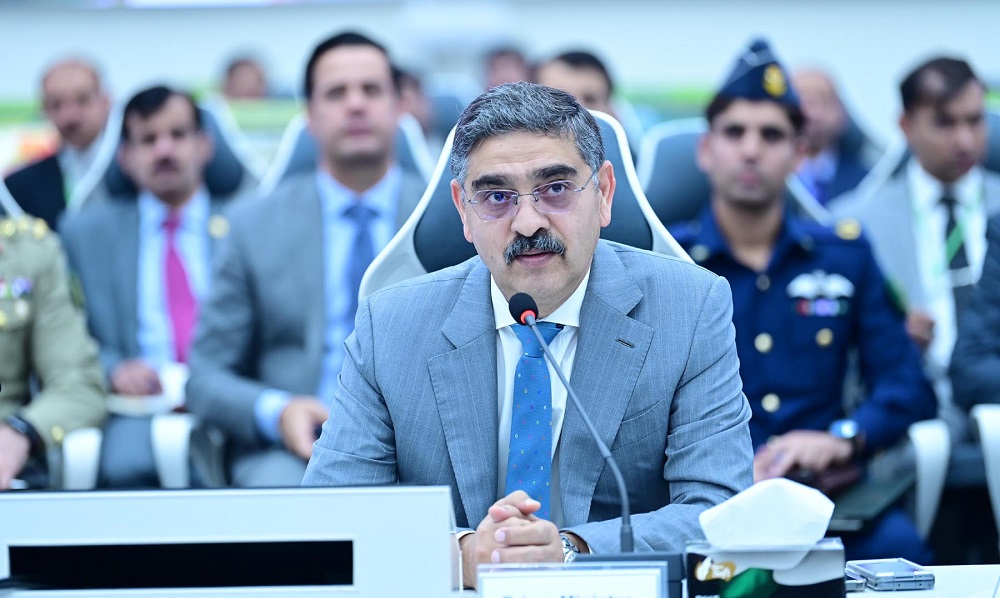
Pakistan’s interim prime minister, Anwaar-ul-Haq Kakar, has said that the Islamic Emirate of Afghanistan (IEA) advised Pakistan to “look inwards” to address the security problem and Islamabad took notice of this and started deporting illegal refugees.
In an op-ed published in The Telegraph late Sunday, Kakar said that since August 2021, at least 16 Afghan nationals have carried out suicide attacks inside Pakistan, while 65 terrorists killed in encounters with security forces, mainly in the bordering region, were identified as Afghans.
“No responsible government can ignore such concerns. Whenever we raised this with the interim Afghan government, they advised us to ‘look inwards’. We have finally decided to heed to their advice to put our house in order,” Kakar said.
He said that over the last three to four decades, “between four and five million migrants (roughly the population of Ireland)” had arrived in Pakistan.
“Many have no right to remain. Despite being a non-signatory to 1951 Convention on Refugees (and its 1967 Protocol), we have generously accommodated the single largest caseload of refugees.
“Hospitality is in Pakistan’s DNA which is why we have, and will continue to fulfill our legal, moral and humanitarian obligations,” he said.
According to Kakar, despite frequent opportunities to repatriate voluntarily, and multiple government attempts to register those who remain undocumented, “a significant number has persistently refused to formalize their status, choosing instead to stay in the shadows.”
He further said that while Pakistan had benefited from “hard-working and law-abiding migrants”, the socio-economic and security cost of the influx had been “staggering.”
Kakar said that hundreds of thousands of Afghan nationals crossed the border after the abrupt withdrawal of the West from Afghanistan.
“Unfortunately, only 59,033 of the new arrivals have been resettled outside Pakistan, while 42,068 await evacuation to the west. The rest have failed to put forward a convincing case to anyone for asylum, and continue to stay in Pakistan illegally,” he said.
He said that Pakistan today stood at the crossroads of history.
“We can no longer continue to compromise our national security by accommodating such huge numbers of undocumented individuals. Our ultimate aim is to build a safer, more peaceful and prosperous Pakistan — with associated benefits for our own people, for the region, and the wider world,” Kakar concluded.
IEA has previously said that it is not responsible for the security of Pakistan and refugees are not involved in attacks in the country.











Kazakhstan’s Foreign Minister Mukhtar Tileuberdi has called for pragmatic and coordinated international engagement with Afghanistan, saying the country’s long-term stability is closely linked to the security and sustainable development of Central Asia.
Speaking during the general debate of the 81st session of the United Nations General Assembly in New York on Friday, Tileuberdi said humanitarian assistance to Afghanistan remains essential but alone cannot break the cycle of poverty, displacement and dependency.
He said Kazakhstan supports a “pragmatic, coordinated and step-by-step” approach to international engagement with Afghanistan, with the United Nations playing a central role.
Tileuberdi also said Kazakhstan is working with the UN to operationalize the United Nations Regional Centre for the Sustainable Development Goals for Central Asia and Afghanistan in Almaty.
He said the success of the centre should be measured by the results and assistance it delivers to the region.


Abu Muslim Farah defeat Khurasan Faryab 2-0 in ACL season six

Saar: Concerns over Pakistan’s political crisis discussed

Afghanistan Champions League: Omar Zawak Herat beat Toofan Herat 1-0

Blast in Pakistan’s Dera Ismail Khan kills 11, injures 30

Ariana Afghan Airlines increases Kabul-Delhi cargo flights

Saudi energy group signs major Afghanistan deals covering gas exploration and pipeline plans

Trump floats idea of renaming Atlantic or Pacific Ocean

US hits Egyptian bank branches with Iran sanctions as war marks six months

Nepal flood rescue mission enters critical phase as thousands remain missing

Iranian clubs to face Gulf opponents at neutral venues in Asian Champions League Elite
Saar: Concerns over Pakistan’s political crisis discussed

Exclusive interview with Abdul Latif Mansoor, Minister of MRRD

Tawsia: Overview of Afghanistan’s iron mines

Tahawol: Discussion on fresh Pakistani airstrikes on Afghanistan

Saar: Calls for international support for Afghanistan discussed
-

 World5 days ago
CNN, MS NOW and Politico sue Trump, challenging White House ban
-

 Latest News3 days ago
Ariana Afghan Airlines ranks seventh among 45 Central Asian airlines
-

 Latest News5 days ago
UN reiterates call for respect for international law after Kunar airstrikes
-

 Regional4 days ago
US and Iran hold first talks since June after Trump’s ‘annihilation’ threat
-

 Latest News3 days ago
Silk Road highway in Wakhan corridor now reaches the China border
-

 Regional3 days ago
Iran airlines cancel flights as US sanctions hit
-

 Latest News5 days ago
Afghan Official: Pakistan’s airstrikes will not go unanswered
-

 Sport5 days ago
Afghan boxing referee heads to China for international festival