Connect with us

Regional

Tajikistan says migrants fleeing Russia after concert hall attack

Published

on

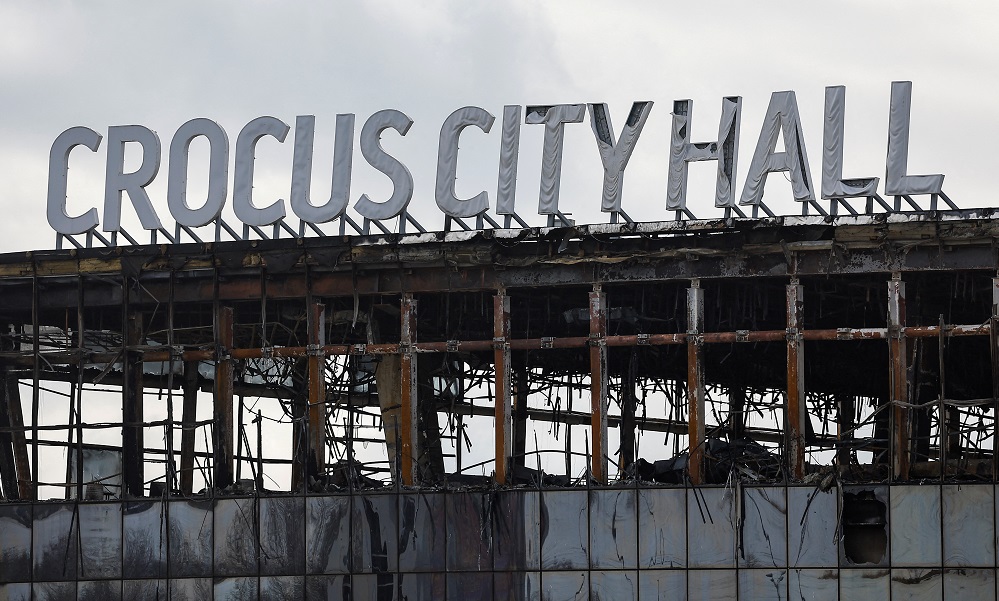
There has been a surge of migrant workers leaving Russia for Tajikistan after a March 22 concert hall attack near Moscow which left dozens dead, according to Tajikistan’s Ministry of Labour, Migration and Employment.

Gunmen opened fire with automatic weapons at concertgoers over a week ago in the worst attack in Russia in two decades which left at least 144 people dead.

Four of the suspected gunmen are Tajik citizens and were arrested along with seven other suspects, some of whom also come from the ex-Soviet Central Asian nation.

“We receive a lot of calls. These are most likely not complaints about harassment, but fear of our citizens, panic, many want to leave. We are now monitoring the situation, we have more people coming (to Tajikistan) than leaving,” Shakhnoza Nodiri, deputy head of the ministry, was quoted by Russian state news agency TASS as saying.

Tajikistan detained nine people this week suspected of having links to the mass shooting and also to Daesh that claimed responsibility, a Tajik security source told Reuters.

A labour shortage in Russia’s economy may become even worse due to the outflow of migrant workers, with a deficit in the construction industry growing by 36% this year compared to 2022, Anton Glushkov, president of the National Association of Builders (NOSTROY), told Interfax news agency on Friday.

The Russian Central Bank has said that staff shortages and resulting jump in wages were among risks to inflation that have compelled it to keep the key interest rate elevated.

Tajikistan’s labour ministry expects that the outflow of migrants from Russia will be temporary.

According to the ministry’s website, 652,014 labour migrants left the country in 2023 compared to 775,578 in 2022.


(Reuters)

Regional

Trump says Kazakhstan to join Abraham Accords

Published

on

U.S. President Donald Trump said on Thursday that Kazakhstan will join the Abraham Accords to have normalized relations between Israel and Muslim-majority nations.

The announcement came after Trump said he had held a call with Israel’s Prime Minister Benjamin Netanyahu and Kazakhstan’s President Kassym-Jomart Tokayev, Reuters reported.

The Kazakh government said in a statement that the matter was in the final stage of negotiations.

“Our anticipated accession to the Abraham Accords represents a natural and logical continuation of Kazakhstan’s foreign policy course — grounded in dialogue, mutual respect, and regional stability,” it added.

Kazakhstan already has full diplomatic relations and economic ties with Israel, meaning the move would be largely symbolic, something Secretary of State Marco Rubio pushed back against on Thursday.

“It’s an enhanced relationship beyond just diplomatic relations,” he said.

“It is… with all the other countries that are part of the accord. You’re now creating a partnership that brings special and unique economic development on all sorts of issues that they can work on together.”

Trump met with Tokayev alongside four other Central Asian leaders from Kyrgyzstan, Tajikistan, Turkmenistan, and Uzbekistan at the White House on Thursday as the U.S. seeks to gain influence in a region long dominated by Russia and increasingly courted by China.

“Some of the countries represented here are going to be joining the Abraham Accords… and those announcements will be made over the next little while,” Trump said.

WITKOFF RETURNING FOR ANNOUNCEMENT

U.S. special envoy Steve Witkoff said earlier at a business forum in Florida that he would be returning to Washington for the announcement, without naming the country.

Axios first reported that the country would be Kazakhstan.

A second source familiar with the matter said the United States hopes that Kazakhstan’s entry will help reinvigorate the Abraham Accords, the expansion of which has been on hold during the Gaza war.

Trump has repeatedly said he wants to expand the accords that he brokered during his first term in the White House.

The United Arab Emirates and Bahrain established ties with Israel in 2020 under the Trump-brokered Abraham Accords. Morocco established ties with Israel later the same year.

Trump has been upbeat about the prospects that regional heavyweight Saudi Arabia will finally join the accords since a ceasefire went into effect in Gaza last month, but Riyadh has shown no willingness to move ahead without at least a pathway to Palestinian statehood.

Saudi Arabia’s Crown Prince Mohammed bin Salman is expected to visit the White House on November 18.

Other Central Asian countries such as Azerbaijan and Uzbekistan, both of which have close ties with Israel, have also been seen as potentially joining the Abraham Accords, which is considered a signature foreign policy achievement of Trump’s first term.


Continue Reading

Regional

Iran’s supreme leader issues ultimatum to Trump amid rising tensions

Ayatollah Ali Khamenei said any future U.S. request for engagement would only be considered after Washington met Tehran’s conditions.

Published

on

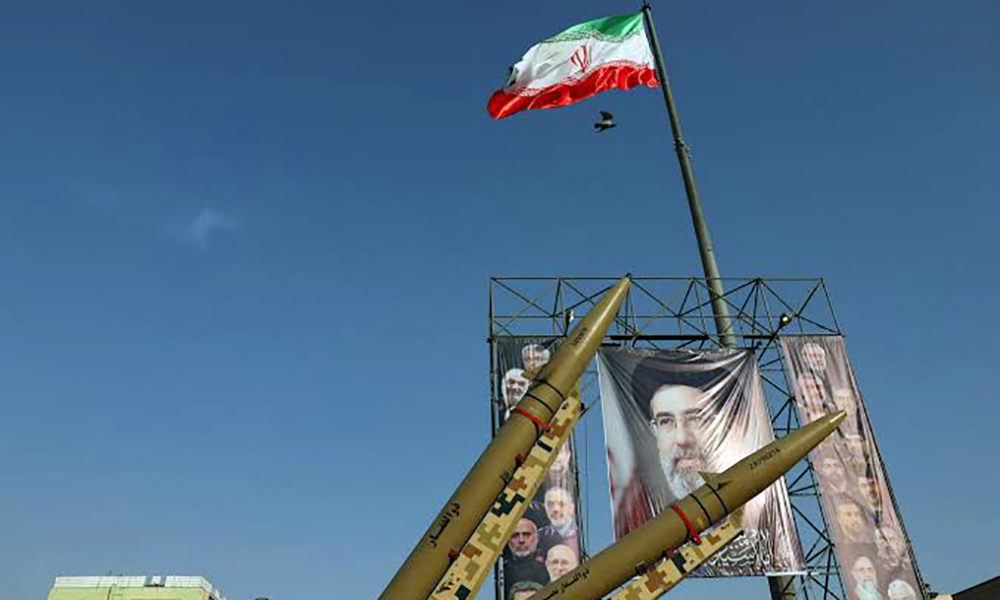
Iran’s supreme leader Ayatollah Ali Khamenei has issued a sharp ultimatum to U.S. President Donald Trump, warning that Tehran will not engage in any dialogue with Washington unless the United States ends its support for Israel, withdraws its military from the Middle East, and stops interfering in regional affairs.

Speaking in Tehran on Monday during a ceremony marking the anniversary of the 1979 U.S. Embassy takeover, Khamenei accused the United States of “arrogance, imperialism, and hypocrisy,” and said American leaders have always sought to subjugate Iran.

“Every American president has demanded Iran’s surrender, even if they did not say it aloud,” Khamenei said. “The current president said it openly—he revealed the true face of America.”

He added that any future U.S. request for engagement would only be considered after Washington met Tehran’s conditions, Newsweek reported.

“Only if the United States completely cuts its backing for the Zionist regime, removes its military bases from the region, and ceases interfering in its affairs,” Khamenei said, adding that such changes were unlikely “in the near future.”

Khamenei described the 1979 embassy takeover—when Iranian students held 52 U.S. diplomats hostage for 444 days—as “a day of pride and victory.” The event, he said, exposed “the true identity of the American government” and reflected what he called fundamental, not tactical, differences between the two nations.

The seizure followed Washington’s decision to admit the deposed Shah Mohammad Reza Pahlavi for medical treatment, an act that fueled fears of another U.S.-backed attempt to overturn Iran’s revolution.

However, in a CBS 60 Minutes interview aired Sunday, Trump defended his administration’s military actions against Iran, calling them essential for Middle East stability.

“You essentially had a nuclear Iran, and I blasted the hell out of ‘em,” Trump said, claiming that U.S. operations had neutralized Iran’s nuclear capabilities.

He added that curbing Iran’s ambitions was key to continued progress on Arab-Israeli normalization and said American strikes were “measured to deter Tehran while leaving room for diplomacy.”

The exchange underscores a deepening rift between Washington and Tehran at a time of mounting instability in the region. Recent months have seen Israeli attacks on Iranian positions, U.S. strikes on suspected nuclear sites, and a breakdown in diplomatic efforts, Newsweek reported.

Analysts warn that unless either side softens its stance, the current impasse could harden into a prolonged confrontation—raising the risk of renewed military clashes involving the United States, Iran, and their regional allies.

Continue Reading

Regional

Pakistan set to deploy first Chinese-built submarine in 2026 under $5 billion deal

Pakistan remains China’s top arms customer, with Islamabad accounting for more than 60% of Beijing’s total weapons exports between 2020 and 2024.

Published

on

Pakistan’s Navy expects its first Chinese-designed submarine to enter active service next year, marking a key milestone in a $5 billion arms agreement aimed at strengthening Islamabad’s maritime power and deepening defense ties with Beijing.

Admiral Naveed Ashraf, Pakistan’s naval chief, told China’s Global Times that progress on the delivery of eight Hangor-class diesel-electric attack submarines by 2028 is “proceeding smoothly.” He said the new fleet will significantly enhance Pakistan’s ability to patrol the North Arabian Sea and the wider Indian Ocean.

The defense deal, one of the largest in Pakistan’s history, will see four submarines built in China and the remaining four assembled domestically, a move designed to boost Pakistan’s technical and industrial capabilities. Three of the vessels have already been launched into China’s Yangtze River from a shipyard in Hubei province, Reuters reported.

“Chinese-origin platforms and equipment have proven reliable, technologically advanced, and well-suited to Pakistan Navy’s operational requirements,” Admiral Ashraf said. He added that the Navy is increasingly focused on adopting emerging technologies such as unmanned systems, artificial intelligence, and electronic warfare — areas where Pakistan is exploring expanded cooperation with China.

Pakistan remains China’s top arms customer. According to data from the Stockholm International Peace Research Institute (SIPRI), Islamabad accounted for more than 60% of Beijing’s total weapons exports between 2020 and 2024.

The submarine announcement follows a tense military encounter earlier this year, when Pakistan’s air force used Chinese-made J-10 fighter jets to shoot down an Indian Air Force Rafale, a French-built aircraft. The incident reignited debate over the balance of military technology between the nuclear-armed neighbours.

Beyond defense, the partnership is part of China’s broader strategic and economic ambitions in the region. Through the multibillion-dollar China-Pakistan Economic Corridor (CPEC) — a 3,000-kilometre network linking China’s Xinjiang province to Pakistan’s deep-sea port of Gwadar — Beijing aims to secure a direct route for Middle Eastern energy imports, bypassing the vulnerable Straits of Malacca.

The initiative extends China’s influence across South and Central Asia, including toward Afghanistan and Iran, while reinforcing its position in the Indian Ocean region — a sphere where India, with its mix of nuclear-powered and conventional submarines, has long maintained dominance.

“This cooperation goes beyond hardware,” Ashraf said. “It reflects a shared strategic outlook, mutual trust, and a long-standing partnership. In the coming decade, we expect this relationship to grow through enhanced training, interoperability, research, and industrial collaboration.”

Continue Reading
Advertisement
Advertisement
Advertisement
Advertisement

Trending

Copyright © 2025 Ariana News. All rights reserved!