
Latest News
UN calls for increased efforts to stamp out violence against women

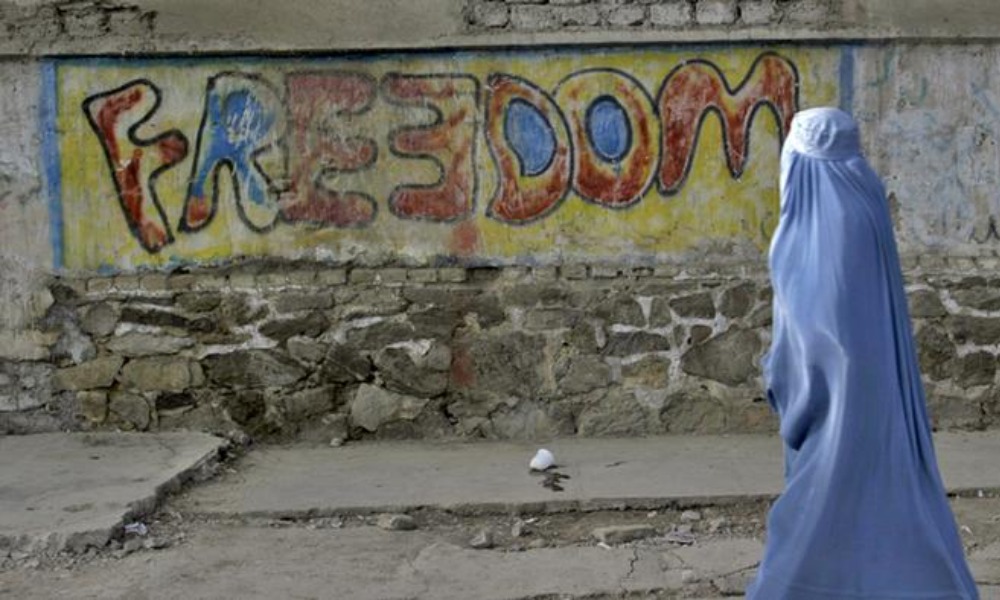
The United Nations has called on all Afghans to increase efforts to prevent violence against women and that the violence has negative consequences not only for survivors, but also for their families, communities, and society.
Marking the International Day for the Elimination of Violence against Women (EVAW), the UN called on Afghans “to increase efforts to prevent and redress violence against women and girls, particularly in the context of the outbreak of COVID-19.”
This comes on the heels of the Afghan Women’s Affairs Ministry’s announcement that violence against women has increased in the country in the past year.
Speaking at the launch of 16 Days of Activism Against Gender-based Violence, officials said 2,582 cases of violence against women have been recorded in the past six months.
According to the ministry, the cases of violence against women included forced marriage, rape, and murder.
The 16-day campaign, launched on Wednesday will through to December 10 – International Human Rights Day.
The EU meanwhile stated in a tweet: “We, the EU and its member states stand against Gender-Based Violence.”
They called for every girl and woman to live free from violence, oppression and discrimination. “Join our voices to put an end to violence against girls and women,” the EU said.
Meanwhile, the United Nations stated that this year’s EVAW theme – “Orange the World: Fund, Respond, Prevent, Collect!” – is focused on accelerating concrete policy responses to gender-based violence in the context of COVID-19 and promoting zero tolerance of gender-based violence across all spheres of society.
“The COVID-19 pandemic has exacerbated key risk factors for violence against women and girls, such as food shortages, unemployment, economic insecurity, and school closures,” a statement read.
“Worldwide, there has been an alarming increase in multiple forms of violence against women and girls, and information indicates that Afghanistan is no exception.”
The statement pointed out that the consequences of violence against women and girls – including physical, sexual, and psychological impacts – could prevent them from fully participating in society.
“Violence against women and girls has negative consequences not only for survivors, but also for their families, communities, and society. It is an impediment to the eradication of poverty, sustainable development, and efforts towards peace,” said Deborah Lyons, the Secretary-General’s Special Representative for Afghanistan and Head of UNAMA.
“In Afghanistan, violence against women and girls jeopardizes their enjoyment of fundamental human rights and freedoms at one of the most critical times in the modern history of the country”, stated Lyons.
“For millions around the world, the home became a safe space to protect us from a deadly virus. But for too many women and girls, the home became the place where they found themselves trapped with their abusers”, said Aleta Miller, UN Women Representative in Afghanistan.
“Our daily engagement with Afghan women across the country from the beginning of the pandemic flagged an alarming rise in the levels of violence against women and girls. Our data on the gender-differentiated impact of COVID-19 also matched this.”
“As it is an unprecedented time for Afghanistan, our solidarity with Afghan women and commitment to promoting and protecting their human rights must be equally unprecedented,” the UN noted.
The UN said that it is working with the Government, civil society, non-governmental organizations, and development partners in Afghanistan to respond to all forms of violence against women and girls through direct support to service providers, social norms programs to prevent violence, and campaigns and advocacy.
“During the 16 Days Campaign, the Afghan government, supported by the UN, is intensifying its advocacy and awareness-raising activities to address violence against women and girls,” the organization stated.












Kazakhstan’s Foreign Minister Mukhtar Tileuberdi has called for pragmatic and coordinated international engagement with Afghanistan, saying the country’s long-term stability is closely linked to the security and sustainable development of Central Asia.
Speaking during the general debate of the 81st session of the United Nations General Assembly in New York on Friday, Tileuberdi said humanitarian assistance to Afghanistan remains essential but alone cannot break the cycle of poverty, displacement and dependency.
He said Kazakhstan supports a “pragmatic, coordinated and step-by-step” approach to international engagement with Afghanistan, with the United Nations playing a central role.
Tileuberdi also said Kazakhstan is working with the UN to operationalize the United Nations Regional Centre for the Sustainable Development Goals for Central Asia and Afghanistan in Almaty.
He said the success of the centre should be measured by the results and assistance it delivers to the region.


Abu Muslim Farah defeat Khurasan Faryab 2-0 in ACL season six

Saar: Concerns over Pakistan’s political crisis discussed

Afghanistan Champions League: Omar Zawak Herat beat Toofan Herat 1-0

Blast in Pakistan’s Dera Ismail Khan kills 11, injures 30

Ariana Afghan Airlines increases Kabul-Delhi cargo flights

Saudi energy group signs major Afghanistan deals covering gas exploration and pipeline plans

Trump floats idea of renaming Atlantic or Pacific Ocean

US hits Egyptian bank branches with Iran sanctions as war marks six months

Nepal flood rescue mission enters critical phase as thousands remain missing

Iranian clubs to face Gulf opponents at neutral venues in Asian Champions League Elite
Saar: Concerns over Pakistan’s political crisis discussed

Exclusive interview with Abdul Latif Mansoor, Minister of MRRD

Tawsia: Overview of Afghanistan’s iron mines

Tahawol: Discussion on fresh Pakistani airstrikes on Afghanistan

Saar: Calls for international support for Afghanistan discussed
-

 World5 days ago
CNN, MS NOW and Politico sue Trump, challenging White House ban
-

 Latest News3 days ago
Ariana Afghan Airlines ranks seventh among 45 Central Asian airlines
-

 Latest News4 days ago
UN reiterates call for respect for international law after Kunar airstrikes
-

 Regional3 days ago
US and Iran hold first talks since June after Trump’s ‘annihilation’ threat
-

 Latest News3 days ago
Silk Road highway in Wakhan corridor now reaches the China border
-

 Latest News5 days ago
Afghan Official: Pakistan’s airstrikes will not go unanswered
-

 Sport4 days ago
Afghan boxing referee heads to China for international festival
-
 Regional5 days ago
G7 foreign ministers call on Iran to stop arming Houthis