
Latest News
Watchdogs call for immediate end to attacks on activists and journalists

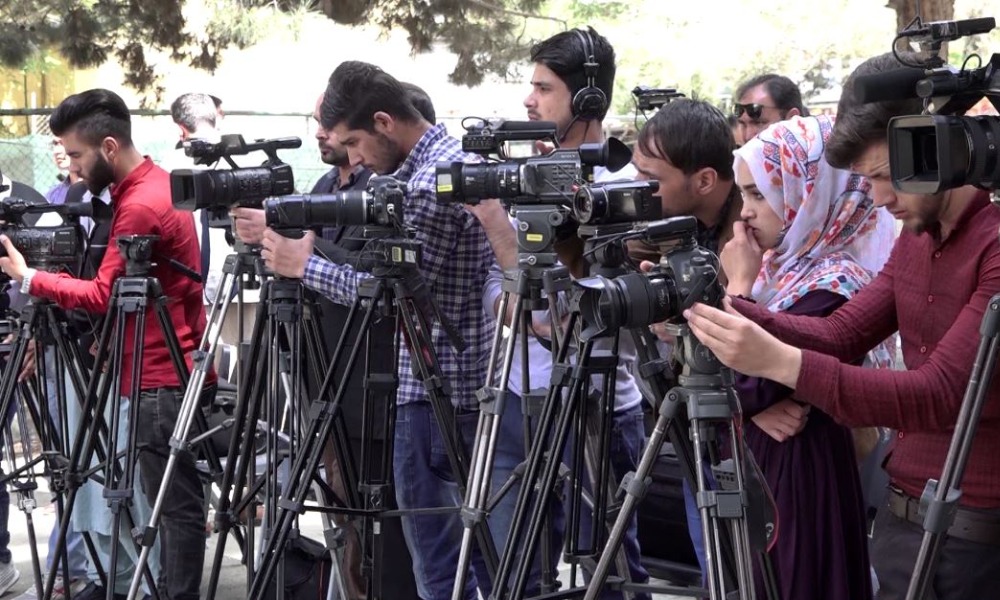
Amnesty International along with nine other watchdog organizations said in a joint statement on Wednesday that the Afghan government has failed to adequately respond to complaints of threats and early warning signals of attacks against human rights defenders and journalists.
“Defenders are faced with an impossible choice of balancing their commitment to work in their country with threats against themselves and their families,” the statement read.
“We call on the Government of Afghanistan to take greater responsibility to ensure the safety and security of defenders, activists, and journalists, and to end impunity for the attacks against them.”
The group stated “the timing of escalating attacks against human rights defenders, activists and journalists appears to be linked to the ongoing peace process between the Government of Afghanistan, the United States, and the Taliban”.
They said from September 2020 until May 2021, a total of 17 human rights defenders have been killed, including nine journalists.
During this period, over 200 human rights defenders and media representatives reported that they were receiving serious threats.
According to the statement: “These attacks are aimed at silencing peaceful dissent and those working on human rights, especially women’s rights, as well as those seeking justice and accountability for human rights violations.
In addition, the group said: “The attack targeting school children in Kabul on 8 May, is a devastating reminder of escalating violence against civilians, especially against women and girls.”
They also stated that with the announcement of an unconditional withdrawal and no progress on the peace process, the promotion and protection of the rights of human rights defenders and journalists does not seem to be a priority.
“The lack of respect for International Humanitarian Law and the absence of accountability for attacks against human rights defenders and activists, have only increased the danger to defenders and emboldened perpetrators,” they said.
The use of civilian targets for military gains was also slammed by the group who said the Afghan authorities and the international community must call on all
parties to end this and to safeguard the progress in human rights made over the last two decades so as to ensure they are not scaled back as a result of the
ongoing negotiations.
The group noted that civil society members, women human rights defenders and journalists often have had to relocate within Afghanistan and, in some cases, even temporarily leave the country with their families for safety concerns.
“State mechanisms for the protection of defenders including the recently appointed Joint Commission for the Protection of Human Rights Defenders have yet to be operationalized,” the statement read.
They also said much more must be done to ensure that the peace process takes into account the threats, harassment, intimidation and attacks occurring in the country and to ensure that it does not exacerbate people’s suffering.
“The crisis unfolding in the country requires a strong commitment to direct engagement and support for Afghan defenders to work and live in safety and dignity,” the statement read.
In turn, the group called on the Afghan government and relevant international actors to take certain steps, including that the newly established government-led Joint Commission deliver on its objectives to provide effective protection to human rights defenders at risk.
“We call for access to information on the measures that the Joint Commission has taken so far to provide immediate protection to defenders, investigate the threats against them and to bring suspected perpetrators to justice,” the statement read.
They also called on the Taliban and other groups targeting civilians and human rights defenders to immediately end the violence and prioritize intra-Afghan peace talks as a way to ensure sustainable peace.
The group also suggested the establishment of a national monitoring mechanism, and an impartial and independent mechanism internationally to investigate the killings of human rights defenders and journalists in order to clarify the circumstances in which the defenders were killed, and to expeditiously bring those responsible to justice.
In conclusion the group stated that effective representation of human rights defenders, especially women, needs to be ensured in any peace process that has a bearing on their security.
“Participation must include guarantees of safety, and effective and equitable representation of views.”
Signatory Organizations:
Amnesty International
Asian Forum for Human Rights and Development (FORUM-ASIA)
Civicus
FIDH, within the framework of the Observatory for the Protection of Human Rights Defenders
World Organisation Against Torture
(OMCT), within the framework of the Observatory for the Protection of Human Rights Defenders
Front Line Defenders
South Asians for Human Rights
Urgent Action Fund for Women’s Human Rights – Asia & Pacific
Women’s International League for Peace and Freedom












Kazakhstan’s Foreign Minister Mukhtar Tileuberdi has called for pragmatic and coordinated international engagement with Afghanistan, saying the country’s long-term stability is closely linked to the security and sustainable development of Central Asia.
Speaking during the general debate of the 81st session of the United Nations General Assembly in New York on Friday, Tileuberdi said humanitarian assistance to Afghanistan remains essential but alone cannot break the cycle of poverty, displacement and dependency.
He said Kazakhstan supports a “pragmatic, coordinated and step-by-step” approach to international engagement with Afghanistan, with the United Nations playing a central role.
Tileuberdi also said Kazakhstan is working with the UN to operationalize the United Nations Regional Centre for the Sustainable Development Goals for Central Asia and Afghanistan in Almaty.
He said the success of the centre should be measured by the results and assistance it delivers to the region.


Abu Muslim Farah defeat Khurasan Faryab 2-0 in ACL season six

Saar: Concerns over Pakistan’s political crisis discussed

Afghanistan Champions League: Omar Zawak Herat beat Toofan Herat 1-0

Blast in Pakistan’s Dera Ismail Khan kills 11, injures 30

Ariana Afghan Airlines increases Kabul-Delhi cargo flights

Saudi energy group signs major Afghanistan deals covering gas exploration and pipeline plans

Trump floats idea of renaming Atlantic or Pacific Ocean

US hits Egyptian bank branches with Iran sanctions as war marks six months

Nepal flood rescue mission enters critical phase as thousands remain missing

Iranian clubs to face Gulf opponents at neutral venues in Asian Champions League Elite
Saar: Concerns over Pakistan’s political crisis discussed

Exclusive interview with Abdul Latif Mansoor, Minister of MRRD

Tawsia: Overview of Afghanistan’s iron mines

Tahawol: Discussion on fresh Pakistani airstrikes on Afghanistan

Saar: Calls for international support for Afghanistan discussed
-

 World5 days ago
CNN, MS NOW and Politico sue Trump, challenging White House ban
-

 Latest News3 days ago
Ariana Afghan Airlines ranks seventh among 45 Central Asian airlines
-

 Latest News5 days ago
UN reiterates call for respect for international law after Kunar airstrikes
-

 Regional4 days ago
US and Iran hold first talks since June after Trump’s ‘annihilation’ threat
-

 Latest News3 days ago
Silk Road highway in Wakhan corridor now reaches the China border
-

 Latest News5 days ago
Afghan Official: Pakistan’s airstrikes will not go unanswered
-

 Regional3 days ago
Iran airlines cancel flights as US sanctions hit
-

 Sport4 days ago
Afghan boxing referee heads to China for international festival