
Latest News
Khalilzad warns militia groups could complicate negotiations further

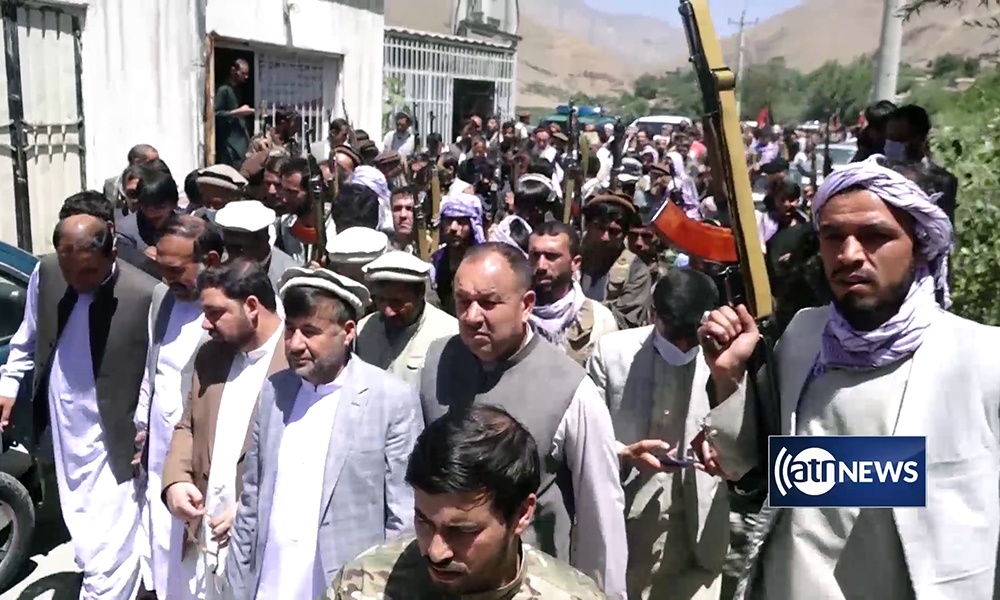
US Special Representative for Afghanistan Reconciliation Zalmay Khalilzad said this week that there are “alternative futures” for Afghanistan but warned that the establishment of militia groups could complicate matters even further.
He said the best outcome now would be for negotiations to restart.
Speaking to PBS News Hour this week, Khalilzad said: “The Talibs have to know, and we have said that to them, that if they take over Afghanistan by force they will forgo what they say they want, which is recognition and support and legitimacy.
“We also believe the war will not end with the Taliban advances because other Afghans will resist them,” he said adding that the recent increase in militia groups that have taken up arms against the Taliban could complicate matters.
“Rather than two organized forces negotiating peace, there could be a multiplicity of forces that could emerge as a result making negotiations that much more difficult.”
He said this could increase the prospects of a long war and for Afghanistan’s neighbors to come in on different sides and that’s repeating the situation that was the case in the 1990s (during the civil war).”
Both sides need to be realistic, they need to find a solution that works for Afghanistan,” he said adding that it would be a “tragedy” if they don’t come to an agreement and the long war becomes even longer.
Khalilzad said he is “not comfortable” with what is happening in Afghanistan at the moment and that he is “not happy” that peace negotiations have not progressed as much as they should have between the two sides.
He also said the continuation of the war is “heartbreaking” and that he feels for the Afghan people.
He told PBS that the withdrawal of US troops is based on an agreement signed last year with the Taliban and is part of a package which includes a number of commitments including, but not limited to, a ceasefire and the start of negotiations that would lead to a new government.
Asked how the US justifies the decision to withdraw forces given the high levels of violence, Khalilzad said the withdrawal could have been conditions based but ultimately the US president decided it was best to withdraw troops and “to encourage the Afghans to support the government to reach a negotiated agreement”.
Reports indicate that US troops are just days away from completing the withdrawal process yet there are still no concrete plans in place to secure the airport in Kabul, no finalized plan to maintain the Afghan Air Force, and no finalized plan on US military support from neighboring countries.
Khalilzad said however that the US government is working to address all these issues and said progress has been made with some countries including Turkey over the issue of securing the Hamid Karzai International Airport in Kabul. He said US forces were still at the airport and a final plan needs to be in place before American troops withdraw completely.
“We are also working with the Afghans to make sure they have the contracting services that they need to maintain their airforce and we are committed to achieving that too before September.”
He said the US is dealing with both those issues, “and more”.
“We are also reorganizing our counterterrorism posture to have the access and the presence needed to monitor the situation in Afghanistan and to be able to strike terrorist targets should that be necessary,” Khalilzad said.





Latest News
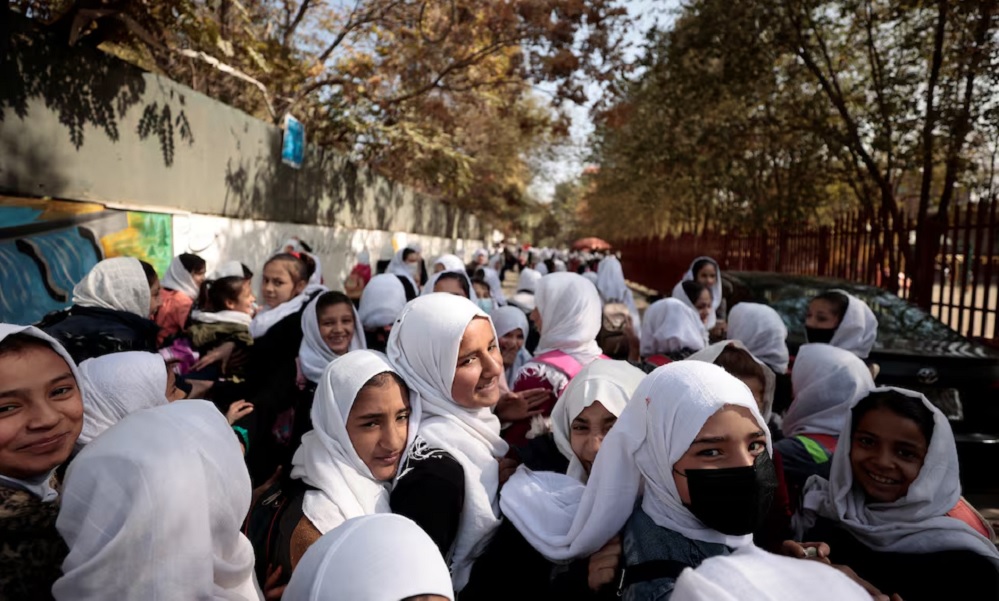
UNESCO: 2.4 million Afghan girls denied education since 2021
UNESCO estimates that the ban could force around 600,000 Afghan women out of the workforce by 2066 and cause $9.6 billion in lost income. It could also increase the risk of early marriage.
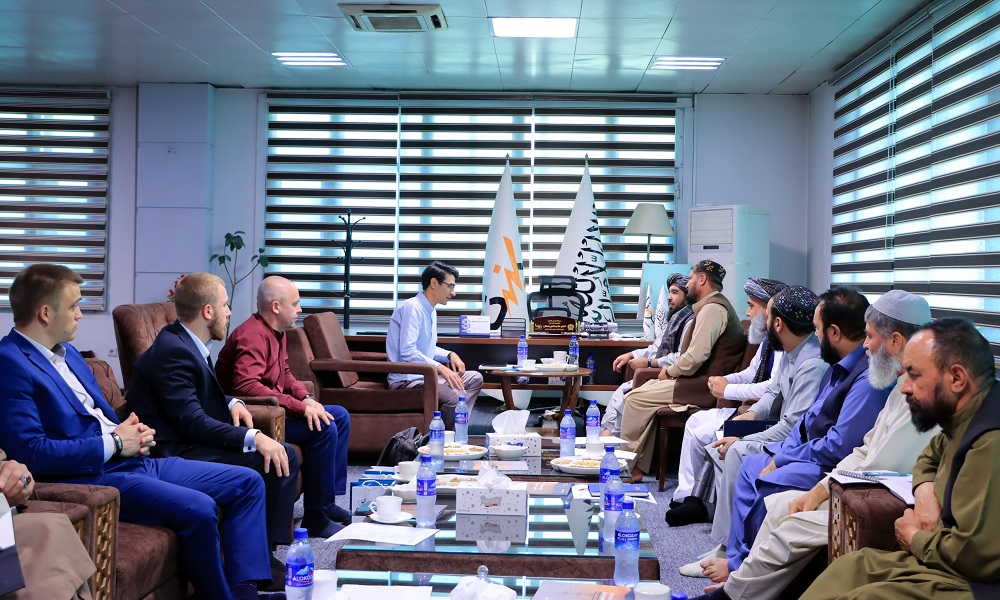
Russia’s Power Machines Company is interested in investing in the rehabilitation and modernization of Afghanistan’s power plants, Da Afghanistan Breshna Sherkat (DABS) said on Tuesday.
DABS Chief Executive Officer Abdul Haq Hamkar discussed the potential investment with technical officials from Power Machines, with talks focusing on rehabilitating existing power plants, modernizing equipment and expanding power-generation capacity.
According to DABS, Hamkar said the company would cooperate in facilitating preliminary technical assessments of Afghanistan’s power plants and in exploring investment opportunities in the sector.
Denis Rudakov, head of Power Machines’ commercial department, said the Russian company plans to conduct preliminary technical assessments of existing power plants in Afghanistan.
Based on the findings, Power Machines will prepare proposals for rehabilitating facilities, modernizing equipment and increasing electricity-generation capacity, DABS said.
Afghanistan currently has several operational power plants, while efforts are underway to increase their generation capacity and upgrade their equipment, according to DABS.
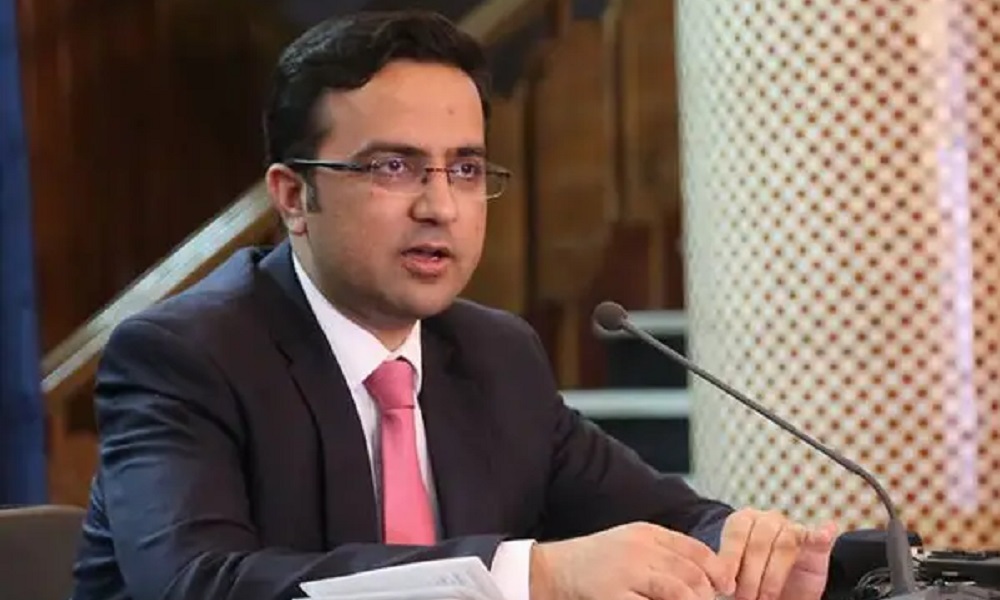
Zabihullah Mujahid, spokesman for the Islamic Emirate of Afghanistan (IEA), on Tuesday denied that IEA authorities detained Mahmood Shah Habibi, an Afghan-American businessman the US claims disappeared in Kabul four years ago.
“We have no information about Mahmood Shah Habibi. He is not with the Islamic Emirate of Afghanistan. If he were, this issue would have been resolved long ago,” Mujahid said.
His remarks came a day after the FBI marked the fourth anniversary of Habibi’s disappearance and renewed its appeal for information about his whereabouts.
According to the FBI, Habibi disappeared near his home in Kabul on August 10, 2022. At the time, he was working as a consultant for Asia Consultancy Group, a Kabul-based telecommunications company. He had previously served as Afghanistan’s director of civil aviation.
The FBI has alleged that Habibi was detained by the IEA’s General Directorate of Intelligence.
The FBI has continued its investigation and in 2025 released a missing-persons poster for Habibi. The U.S. State Department has also offered a reward of up to $5 million for information leading to his location, recovery and return.


UNESCO: 2.4 million Afghan girls denied education since 2021

New attacks on shipping as Iran war talks hit fresh impasse

Tahawol: Hamid Karzai’s call for Afghan reconciliation discussed

Saar: Preparations for IEA’s fifth anniversary discussed

Russian firm eyes investment in Afghanistan’s power plants

Pakistan’s governance system has ‘collapsed’: Mohsin Naqvi

Spain sweep FIFA World Cup player awards after historic triumph

Mango growers suffer heavy losses as exports fall and climate takes its toll

Countdown begins for inaugural Afghanistan Wrestling Premier League

Iran, Afghanistan and Tajikistan discuss expanding regional transit cooperation
Tahawol: Hamid Karzai’s call for Afghan reconciliation discussed
Saar: Preparations for IEA’s fifth anniversary discussed

Tahawol: Iran’s acknowledgment of Afghanistan’s cooperation discussed

Saar: Five years of Islamic Emirate rule in Afghanistan reviewed

Tahawol: Afghanistan: An Alternative to the Strait of Hormuz?
-

 Sport3 days ago
Afghanistan secure direct qualification for 2027 Men’s ODI World Cup
-
 Regional4 days ago
Goods transporters to go on strike from Saturday after talks with Pakistan govt fail
-
 Latest News3 days ago
Pakistan-backed armed groups in Balochistan using former Afghan government forces: report
-

 Sport4 days ago
Rashid Khan takes six as Afghanistan thrash Ireland by 92 runs
-

 World4 days ago
US Senate passes Russia sanctions championed by Graham; US House next
-
 Sport5 days ago
Afghanistan ends continental futsal championship with dominant win over New Zealand
-
 Business5 days ago
Uzbekistan, Kazakhstan target Afghanistan in push to expand regional trade
-
 Regional5 days ago
Trump says he thinks war with Iran will end ‘pretty soon’