
World
Biden says Netanyahu’s approach to war in Gaza is a ‘mistake’

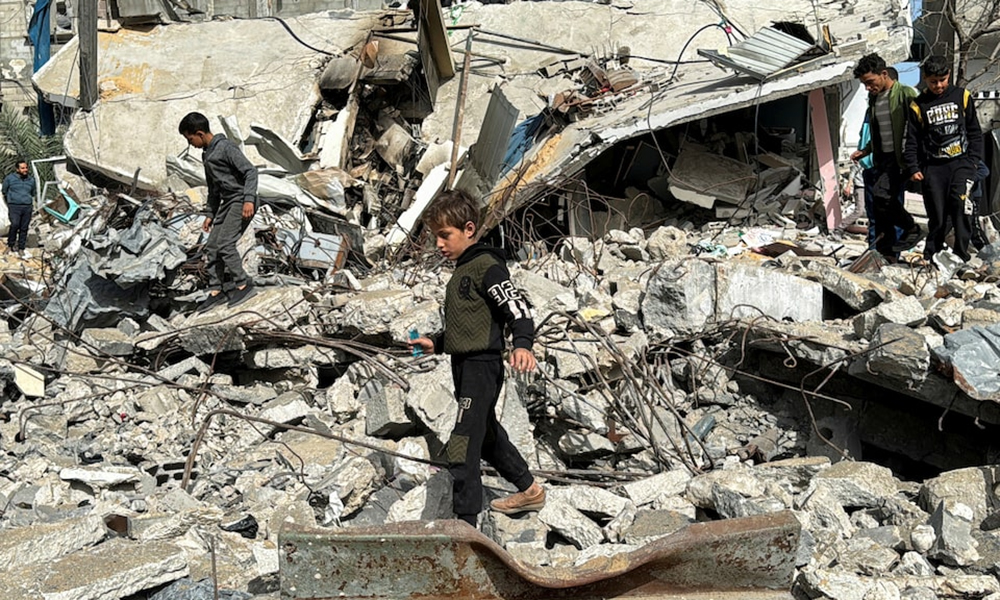
Israeli Prime Minister Benjamin Netanyahu’s approach to the war in Gaza is a “mistake,” U.S. President Joe Biden said in an interview published on Tuesday, offering further criticism of Israel’s handling of the conflict, Reuters reported.
“I think what he’s doing is a mistake. I don’t agree with his approach,” Biden said in comments to Univision, a U.S. Spanish-language TV network.
Biden has also previously called Israel’s bombing in Gaza “indiscriminate, opens new tab” and its military actions “over the top, opens new tab.”
The White House said last week that the president, in a call with Netanyahu, threatened to make conditional, opens new tab U.S. support for Israel’s offensive on it taking concrete steps to protect aid workers and civilians. That call followed an Israeli airstrike that killed seven staff, opens new tab of the aid group World Central Kitchen.
“What I’m calling for is for the Israelis to just call for a ceasefire, allow for the next six, eight weeks, total access to all food and medicine going into the country,” Biden said in Tuesday’s interview.
Israel’s military assault on Gaza, opens new tab has been the subject of mounting international criticism, opens new tab. Domestically, Biden has also faced months of protests, opens new tab from anti-war activists, Muslims and Arab Americans across the country, who have demanded a permanent ceasefire in Gaza and restrictions on U.S. military assistance for Israel, read the report.
Hamas’ Oct. 7 attack, opens new tab on Israel killed 1,200 people, according to Israeli tallies. Israel’s subsequent military assault on Hamas-governed Gaza has killed over 33,000, according to the local health ministry, displaced nearly all of its 2.3 million population and led to genocide allegations, opens new tab that Israel denies. The coastal enclave also suffers widespread hunger.
Israel has received more U.S. foreign aid than any other country since World War Two, although annual assistance has been dwarfed for two years by funding and military equipment sent to Ukraine since Russia’s 2022 invasion.
According to Reuters the United States has traditionally shielded Israel in the U.N. Security Council and vetoed three draft resolutions on the war in Gaza. It abstained last month when the Security Council demanded an immediate ceasefire.









World
CNN, MS NOW and Politico sue Trump, challenging White House ban
Trump has stepped up his actions targeting the media since winning a second term, suing multiple outlets and repeatedly urging broadcasters to drop programs he deems unfair.
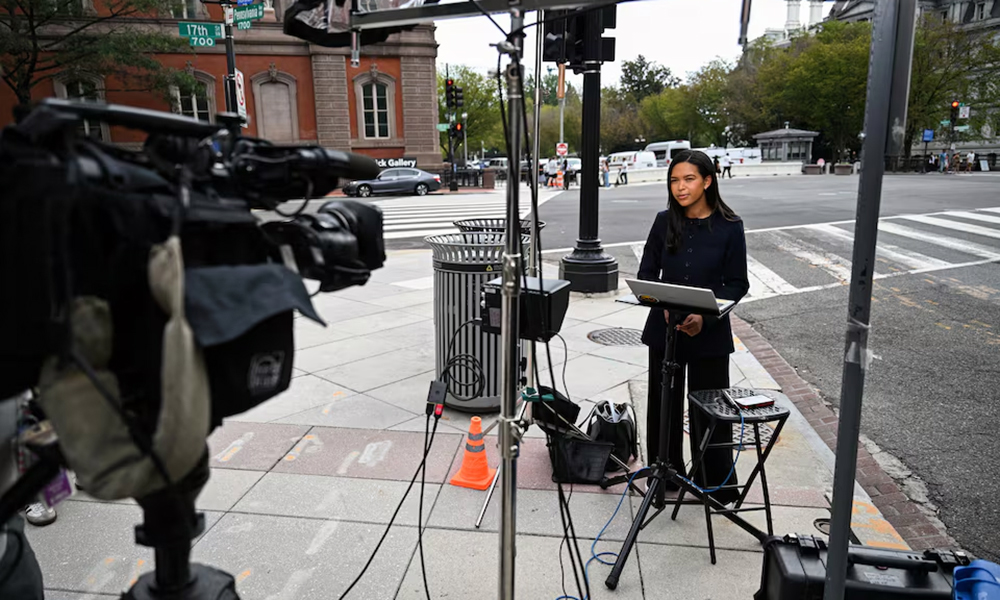
CNN, MS NOW and Politico sued President Donald Trump and other members of his administration on Monday for banning them from White House grounds, saying the action violated their rights to free speech and a free press under the US Constitution’s First Amendment, Reuters reported.
The news outlets are seeking a temporary restraining order to block Trump’s action in federal court in Washington, D.C., with a hearing scheduled for Wednesday.
“This ban could not be a more direct assault on the First Amendment nor a more blatant violation of our most fundamental constitutional principles,” the lawsuit stated.
“Left unchallenged, this threatens press freedom and the public’s right to independent journalism free from government interference,” the outlets wrote in a joint statement. “The government does not decide what the press reports or publishes.”
Trump announced the ban on Friday on social media, saying those news outlets “shouldn’t be able to constantly write or report FICTION and LIES when they’re covering the President of the United States,” and defended it in another post on Monday.
“The White House is not instituting an assault on the Free Press, something which I cherish. It is instituting an assault on the FAKE NEWS. It is a threat to our National Security, and must be stopped, NOW!” Trump wrote on Monday, without providing evidence of a national security threat.
Past presidents have battled with the press, but Trump’s campaign against the media has been unprecedented. He has upended decades of tradition by denying basic access to many major news organizations, launching personal attacks on journalists for their reporting and elevating media outlets seen as more sympathetic to the administration. He also has filed lawsuits against multiple news outlets, read the report.
The White House launched a “Trump TV” stream on Monday evening, days after Trump banned the media outlets from the White House.
The White House said the stream will run videos and highlights of what it calls the Trump administration’s achievements but a press freedom advocate said it amounted to “a steady diet of government propaganda.”
A 60-second trailer displayed the Republican leader’s 2024 presidential win and the first video streamed after the platform went live was Trump’s remarks on July 3 at Mount Rushmore. The stream had only about 8,000 live views 15 minutes after it was launched on YouTube.
“This just makes it even clearer that the real goal here is to ensure that the American public is fed a steady diet of government propaganda,” Jameel Jaffer, executive director of the Knight First Amendment Institute at Columbia University, said.
CNN is one of the five news organizations – along with ABC, CBS, Fox News and NBC – that make up the primary White House television pool. They share the costs of covering the president, take turns organizing coverage and share the footage with outlets around the country.
CNN had been scheduled to cover Trump’s trip to New York for the United Nations General Assembly on Monday, but was not able to provide a pool feed.
In response, the other major TV networks suspended presidential pool coverage. This effectively eliminated the most widespread video source for White House events just as Trump is set to meet with numerous world leaders on the sidelines of the General Assembly and host Chinese President Xi Jinping in Washington later in the week.
“This is to advise that, effective today (Monday), the TV pool will not be covering events designated as pool coverage of the President,” Bryan Boughton, who runs the Fox News Washington bureau and is the current TV pool chair, said in an email Monday. “There will be no replacement pool put in place.”
Otherwise, it was business as usual in the White House press room on Monday as reporters planned for the day’s events, including an afternoon ribbon-cutting ceremony for the Republican president’s new Marine One helipad on the South Lawn.
The audio on the White House’s own live stream of the ceremony, which it promoted as an alternative to the pool feed, was inaudible.
Trump’s party is seeking to retain its narrow majorities in both chambers of Congress in the November midterm elections. Polls show the public souring on Republicans and Trump’s own approval ratings stand near historic lows.
A person familiar with the matter, speaking on condition of anonymity, said Natalie Harp, a close presidential aide, showed Trump clips and graphics of recent news coverage, which contributed to his decision to ban the three outlets.
Trump has been “very unhappy” with coverage of the midterm elections, the person added, and his frustration intensified after last week’s Supreme Court ruling that blocked his attempt to limit mail-in voting, Reuters reported.
“The Fake News has no place demanding a spot in the President’s Oval Office,” the White House said in response to Reuters questions about the lawsuit, Harp’s role and Trump’s views on election coverage. “They’re completely capable of reporting from directly outside.”
The affected news organizations moved quickly to present a united front. Within 10 minutes of Trump’s announcement on Friday, CNN reached out to MS NOW and Politico to discuss joint legal action, according to a person with direct knowledge of the matter, speaking on condition of anonymity.
“Banning news organizations from the White House prevents them from confronting government officials face-to-face and perhaps eliciting off-the-cuff unguarded comments that might shed new light onto political matters, which is especially important during an election year,” said Victor Pickard, a professor of media policy and political economy at the University of Pennsylvania’s Annenberg School for Communication.
Last year, Trump banned the Associated Press from the pool of reporters that cover his movements because the news agency did not adopt his preferred name for the Gulf of Mexico. The AP has sued over the ban. His administration also has limited the access of many journalists to the Pentagon.
In his first term, Trump’s White House sought to take away the credentials of then-CNN correspondent Jim Acosta and Playboy correspondent Brian Karem. Federal judges ordered their White House press passes be restored.
The lawsuit was assigned to US District Judge Timothy Kelly, who was appointed by Trump in 2017. It was Kelly who ruled against Trump in 2018 in the Acosta case.
Trump has stepped up his actions targeting the media since winning a second term, suing multiple outlets and repeatedly urging broadcasters to drop programs he deems unfair.
He has called on the Federal Communications Commission to strip disfavored broadcast stations of their licenses.
David Ellison, son of Trump ally and Oracle (ORCL.N), Executive Chairman Larry Ellison, took control of Paramount and its CBS news unit, leading to a shakeup at “60 Minutes,” the most popular US TV news magazine.
Ellison is now seeking to acquire CNN parent Warner Bros, in a move approved by Trump’s administration.
World
World leaders return to UN amid wars in Middle East and Ukraine
The 15-member UN Security Council may hold high-level meetings on Ukraine, AI and the Middle East, including talks with Arab leaders, diplomats said.
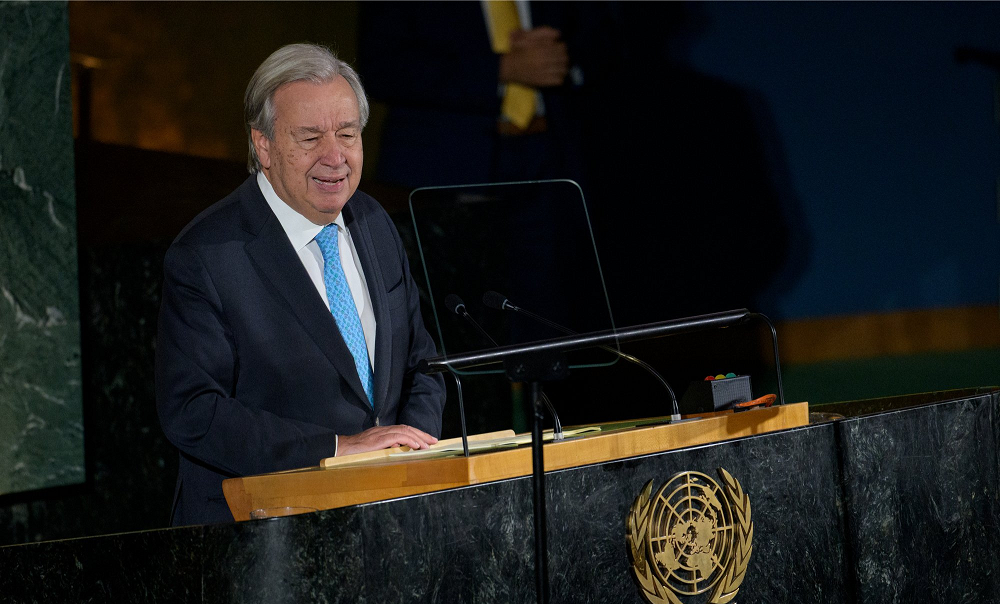
World leaders gather in New York this week for the UN General Assembly, bracing for President Donald Trump’s return to the rostrum for a second year running, with talks centering on the widening conflicts in the Middle East and Ukraine and the risks of artificial intelligence.
Nearly 130 heads of state meet with the post-World War Two order under strain and with the UN itself struggling to remain relevant and weathering attacks from Trump, who has slashed America’s contributions and withdrawn from dozens of UN bodies, Reuters reported.
Chinese leader Xi Jinping, who last addressed the diplomatic jamboree via video in 2021, will skip New York in favor of one-on-one talks with Trump in Washington on Thursday, fueling debate about the UN’s relevance in addressing global crises.
Compounding the crisis of morale and finance are questions about the next leader of the 80-year-old organization: Secretary-General Antonio Guterres completes his term at the end of 2026, with no clear frontrunner in the race to replace him.
The 15-member UN Security Council may hold high-level meetings on Ukraine, AI and the Middle East, including talks with Arab leaders, diplomats said.
More than a year into Trump’s second term, “we would no longer say that the UN is in freefall, but we would say that it’s stuck in an open-ended crisis,” said Richard Gowan of the International Crisis Group.
“The UN may not be in emergency care like it was last year, but it seems to be trapped in a trauma center for the foreseeable future,” Gowan said.
The US avoided losing its vote at the assembly by paying $725 million in contributions to the regular budget this week, but it still owes the organization more than a billion dollars and makes ongoing demands for cuts and reforms.
GROWING AI RISKS
The assembly meets shortly after several artificial intelligence industry leaders called for a coordinated slowdown of the development of the technology, warning that it could soon improve on its own and escape human control.
Guterres has said that AI will be a major topic, adding that countries pushing its frontiers should set up “common guardrails in order to avoid this race to the bottom that could lead one day to a gigantic disaster at the global level.”
The secretary-general has long proposed global governance of AI. In 2023, the UN created an advisory body on the technology, with members including tech executives, government officials and academics.
The warning has put Guterres at odds with Trump, who dismissed AI risks as a “hoax,” saying there is a “sick conspiracy” against it and that China would benefit from the doubt being cast on its development.
MIDDLE EAST ESCALATION
The Middle East will again be a focus of discussions, as the US-Israeli war on Iran continues to drive global inflation and destabilize the region. Recent gains by Houthi militants threaten shipping in the vital Bab el-Mandeb Strait and could further spike energy prices.
“It’s very difficult to have a military solution for that problem, and the experience of fighting in Yemen demonstrated how complicated it is to have successful interventions,” said Guterres, adding that the UN’s envoy on Yemen was making a “huge effort” to advance talks.
Peace talks remain stalled, however, as Iran and the US continue to exchange strikes and Trump threatens a major escalation of the war.
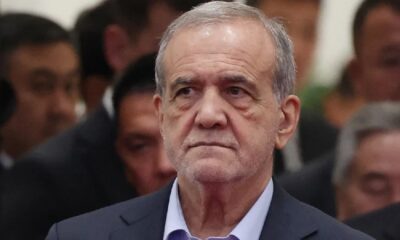
Iranian President Masoud Pezeshkian is scheduled to address the assembly on Wednesday.
Israeli Prime Minister Benjamin Netanyahu – wanted by the International Criminal Court over alleged war crimes and crimes against humanity in Gaza that Israel denies – is to speak on Thursday.
Palestinian President Mahmoud Abbas will for the second year running not be at the gathering in person. The US, a close Israeli ally, again denied him a visa. On Thursday, the General Assembly voted to allow Abbas to appear via video.
There is likely to be a high-level meeting on the conflict in Sudan on the sidelines, diplomats said, although a diplomatic breakthrough is unlikely.
UKRAINE, FOOD SECURITY
Also on the agenda is Russia’s more than four-year-old war in Ukraine.
Ukrainian President Volodymyr Zelenskiy and Russian Foreign Minister Sergei Lavrov will address the General Assembly. Zelenskiy will likely seek to shore up Ukraine’s position ahead of what is expected to be another tough winter, diplomats said.
The Security Council has been unable to take action to end the conflict because permanent member Russia holds a veto.
Trump has at times appeared frustrated that he has been unable to broker an end to the war, a goal he declared a priority when he began his second term in January last year. The US president spoke with his Russian counterpart Vladimir Putin earlier this month, but it was unclear whether he plans to meet Zelenskiy in New York.
Guterres highlighted the impact the war was having on civilians but also on food security and energy prices.
“The effective blockade existing in the Black Sea is creating enormous problems that add to the problems generated by the Middle East crisis, and I think it would be very important to find a way to allow Ukrainian exports and Russian exports of food, fertilizers and energy to take place in a safe way through the Black Sea,” he said.
World
US and Denmark reach deal on Greenland, Trump says
In a separate statement, US Secretary of State Marco Rubio said that the deal “permanently and completely” addressed Washington’s national security concerns with respect to the island.
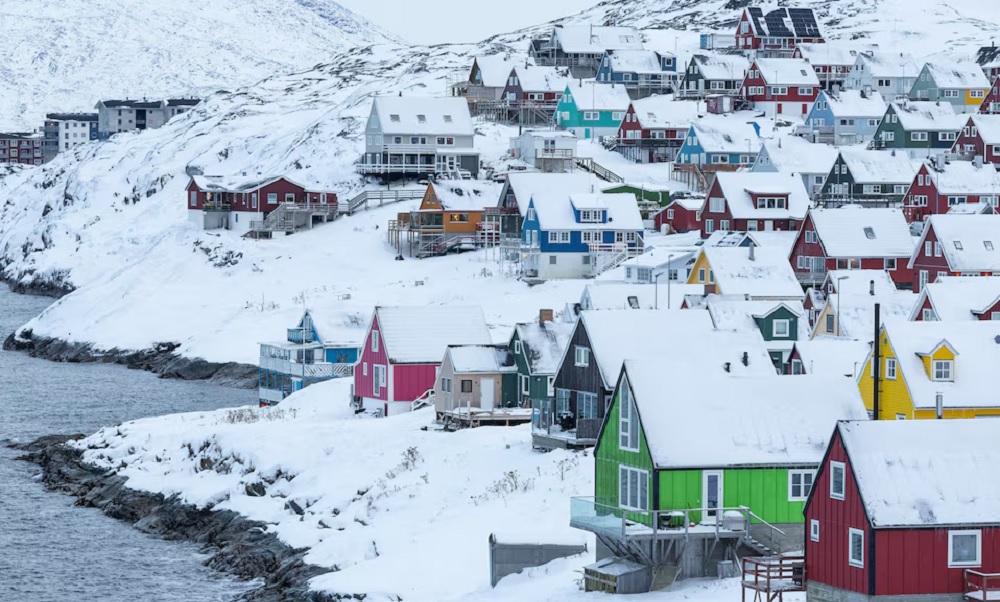
The United States, Denmark and Greenland have entered into an agreement for the US to develop a significant military presence on Greenland, while prohibiting US adversaries from building their own bases on the island, Donald Trump said on Friday.
In a Truth Social post, the US president wrote that no US enemies would be able to make sensitive investments on the island without the approval of the United States and that the agreement had no expiry date, Reuters reported.
“At my direction, we worked with representatives of Denmark and Greenland to guarantee that the United States will FOREVER have the complete ability to do what is necessary in Greenland in order to secure and defend the security of Greenland, and the United States of America,” Trump wrote.
Earlier on Friday, Reuters exclusively reported that the US and Denmark were closing in on a deal that would result in an increased US military presence in Greenland, an autonomous territory of Denmark, but would stop well short of Trump’s long-held dream of acquiring the island for the United States.
The US already has nearly total overflight and basing rights in Greenland due to a 1951 treaty.
Trump’s announcement suggests he was nonetheless pleased with the outcome of the negotiations and that he might not revive his territorial claims, at least in the near future. He said, without elaborating, that the US would soon be rolling out a large military presence on the island, which already hosts one Space Force base in its remote northwest.
“This is a dream come true for the United States of America,” Trump wrote.
EXTENT OF AGREEMENT REMAINS UNCLEAR
The Danish prime minister’s office said on Friday that the agreement would strengthen North Atlantic and Arctic security.
Greenland’s prime minister, Jens-Frederik Nielsen, said in a statement that the agreement recognized Greenland’s interests and the Arctic island’s place in international cooperation. “This benefits us all,” he said.
Much was unclear as of Friday night, including whether any new US bases would be constructed as a result of the agreement. Trump’s Truth Social posts about negotiations or agreements often lack context or specifics.
Imran Bayoumi, a former Pentagon official now with the Atlantic Council think tank, said it would be new if the US can build bases without the approval of Greenland or Denmark but that largely “it seems that Washington could have achieved a lot of these objectives through diplomacy and dialogue without straining the broader US-NATO relationship.”
It was also unclear how the agreement would be received in Greenland, an autonomous territory of Denmark. The island’s residents aspire to independence and have bristled at US attempts to assert control.
In a separate statement, US Secretary of State Marco Rubio said that the deal “permanently and completely” addressed Washington’s national security concerns with respect to the island.
“Greenland will forever be part of the strategic defense area of North America and exclude any adversary from it and the surrounding area,” he wrote.
A State Department official, speaking on condition of anonymity to discuss specific terms, said the deal prohibits non-NATO countries from building a base in Greenland and will allow only the US and its allies to make unspecified “sensitive investments.” The official said the agreement grants the US permanent access, basing and overflight rights, and would continue to apply even if Greenland becomes independent.


ACL: Sorkh Poshan Khafi maintain top spot after fourth straight win

Tahawol: Reactions to Pakistan’s attacks on Afghanistan discussed

Saar: Uncertain fate of Afghanistan’s seat at UN discussed

Omar Zawak edge Arman FC 4–2 in dramatic Afghanistan Champions League clash

Pezeshkian heads to UN as Iran vows to defend its position

Saudi energy group signs major Afghanistan deals covering gas exploration and pipeline plans

ATN secures exclusive rights to broadcast T20I series in India across Afghanistan

Afghanistan squad announced for three-match T20I series against India

China evacuates thousands as Typhoon Narra brings torrential rain

Trump floats idea of renaming Atlantic or Pacific Ocean
Tahawol: Reactions to Pakistan’s attacks on Afghanistan discussed
Saar: Uncertain fate of Afghanistan’s seat at UN discussed

Tahawol: Uncertain future of Afghanistan’s permanent UN seat

Saar: Pakistan military strikes Afghan provinces discussed

Tahawol: Impact of middle East war on Afghanistan
-
 Latest News5 days ago
Afghanistan seeks stronger ties with Saudi Arabia, dialogue with Pakistan: Mujahid
-

 Latest News5 days ago
Afghan man in Germany kills wife and goes to police station
-
 World4 days ago
US and Denmark reach deal on Greenland, Trump says
-

 Latest News3 days ago
Pakistan says Kohat attackers had roots in Afghanistan
-
 World5 days ago
UN allows Palestinian president to again speak via video after US denies visa
-

 Latest News4 days ago
Afghanistan condemns mosque attack in Khyber Pakhtunkhwa
-
 Latest News4 days ago
Afghan official meets Iranian oil minister to discuss energy cooperation
-
 Latest News3 days ago
OIC to hold Afghanistan Contact Group meeting on sidelines of UN General Assembly